Why Morocco Bought the Rafael SPYDER Air Defense System



Morocco is fielding Rafael’s SPYDER short-to-medium-range air defence system to close the low-altitude gap in a layered shield it began building after its 1980s-era MIM-23 Hawk batteries and 1970s Chaparral launchers were left exposed by drone and loitering-munition threats from the Western Sahara front and by Algeria’s build-up of advanced Russian combat aircraft. Israeli trade press reported Morocco had selected SPYDER for its short-range air defence requirement, though accounts differ on whether the choice was made as early as March 2023 or only “last year” by the time a January 2025 report described it. No contract value, quantity or signing date has ever been published. Commercial satellite imagery analysed by Spanish and Moroccan outlets in May 2026 showed a battery active at the Sidi Yahya el Gharb air defence base, the same site that hosts Morocco’s Israeli-built Barak MX system — but neither Rabat nor Tel Aviv has confirmed the deployment, the variant fielded, or any figure attached to the deal.
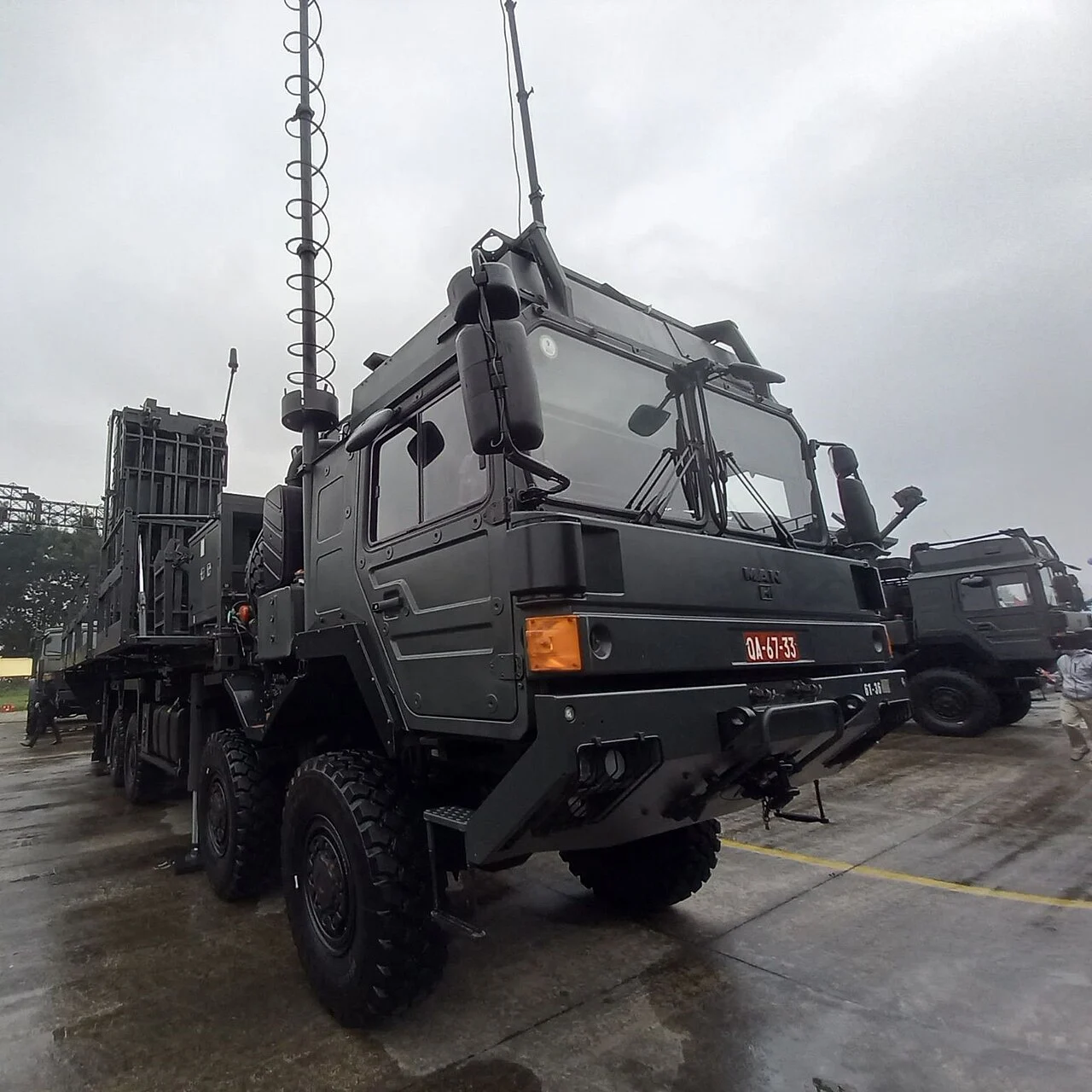
Photo: A Vietnam People’s Air Force SPYDER-MR transporter erector launcher (TEL), built on an RMMV HX tactical truck chassis. This is a Vietnamese army unit, not a Moroccan one; no photograph of Morocco’s SPYDER battery has been published. Credit: Đức Thịnh, Wikimedia Commons (CC BY-SA 4.0).
This explainer follows one question: why did this African and Arab customer choose this system? The answer below comes from Moroccan, Israeli, Spanish and French-language defense-trade reporting and open-source satellite-imagery analysis. Rabat has not officially confirmed any part of this purchase; where the record is silent or contested, this article says so rather than filling the gap with a plausible motive.
| Item | What the record shows | Status |
|---|---|---|
| Customer | Royal Moroccan Armed Forces (air defense command) | Reported, not officially confirmed |
| System | SPYDER short/medium-range air defence system (Rafael Advanced Defense Systems), using Python-5 and Derby missiles | Reported sale; deployment reported |
| Variant | Not officially specified; Spanish defense trade press has suggested SPYDER-SR/ER (short-range, 360°, up to about 40km) | Reported, not confirmed |
| Engagement range | Reported as 20–80km depending on variant, with radar detection cited to 180km | Manufacturer-range reporting, variant-dependent |
| Quantity | Not disclosed | Unknown |
| Route | Direct Israel-Morocco government sale following the December 2020 normalization and November 2021 defense MoU; not a US Foreign Military Sale | Inferred from the broader Israel-Morocco defense channel |
| Contract value | Not disclosed by either government or named in trade reporting | Unknown |
| Base | Reported at Sidi Yahya el Gharb air defense site, about 60km north-east of Rabat — the same base hosting Barak MX | Reported via satellite imagery analysis, May 2026 |
| Local production | None documented for SPYDER specifically | — |
What capability did Morocco need?
Morocco’s ground-based air defense going into the 2020s rested on Cold War-era equipment: MIM-23 Hawk batteries for medium-range coverage and a fleet of roughly three dozen Chaparral short-range vehicles firing AIM Sidewinder-derived missiles, according to a 2014 inventory count by Medias24. Neither system was designed for the mixed low-altitude threat that matured through the 2020s: small drones, loitering munitions and precision-guided munitions flying profiles that older, radar-reliant interceptors struggle to engage quickly. GlobalSecurity.org‘s assessment of Moroccan air defense describes an arm with “very few modern components.”
Two regional developments sharpened that gap. The Western Sahara ceasefire that had held since 1991 collapsed in November 2020, and the Polisario Front resumed low-intensity attacks; Dutch open-source researchers Oryx catalogued the group’s drone and loitering-munition inventory from that period. Separately, Morocco-Algeria relations deteriorated sharply, with Algeria severing diplomatic ties in August 2021 after acquiring advanced Russian aircraft, reporting tied by Defence Security Asia to Morocco’s subsequent, broader air-defense shopping spree. SPYDER’s low-altitude, quick-reaction profile targets the first of those two threat sets more directly than the longer-range Barak MX tiers do. For the current inventory, see our Morocco military strength overview.
What did Morocco operate before?
Before SPYDER, Morocco’s layered shield consisted of ageing Hawk batteries, the Chaparral short-range vehicles, and — from 2023 onward — the Israeli Barak MX system, reported active at the same Sidi Yahya el Gharb site since around January 2026 and covering three interceptor tiers out to 150km. Our earlier reporting covers that system in full: why Morocco bought the Barak MX. Morocco has also separately evaluated the US MIM-104 Patriot for the top tier of its architecture, reported field-testing it as of March 2025 (Army Recognition). None of these programmes replaced the others; together they describe several tiers of a single shield being built in parallel, a strategy Medias24 traces to a “territorial air defense” plan Morocco launched in 2011.
Procurement timeline
| Stage | Date | What happened | Source |
|---|---|---|---|
| Normalization | 10 Dec 2020 | Morocco and Israel agree to normalize relations, opening a direct defense-procurement channel | Al Jazeera |
| Defense MoU | 24 Nov 2021 | First Morocco-Israel defense memorandum signed in Rabat | Al Jazeera |
| Barak MX contract (separate, for context) | 13–15 Feb 2022 | IAI and Morocco sign a government-to-government Barak MX contract reported at “more than $500 million” | Globes; The Defense Post |
| Under evaluation | 20 Mar 2023 | Hespress Français reports Morocco is evaluating SPYDER among several systems for expanded air defense, citing the Spanish site Defensa | Hespress Français |
| Selection (reported, date disputed) | 2023 or 2024 | Israeli trade press (Globes/Raksha Anirveda) reports Morocco “selected” SPYDER for its short-range need; a later Hespress Français report citing Defense Arabic dates the choice to March 2023, while a January 2025 report describes the decision as having been made “last year” (2024) | Raksha Anirveda; Hespress Français; GBP |
| Barak MX reported operational | Jan 2026 | Satellite-detected signals consistent with Barak MX activation at Sidi Yahya el Gharb | The Defense Post; Hespress |
| SPYDER satellite confirmation | 5 May 2026 | Commercial satellite imagery (Maxar/Airbus layers via Google Earth) posted by a specialist account shows a SPYDER battery at Sidi Yahya el Gharb; relayed by Spanish outlet AS citing Infodefensa | Medias24; Morocco World News; Bladi |
| Wider reporting on Rafael-Morocco ties | 23 Aug 2026 | Hespress Français, citing Defense Arabic, lists SPYDER alongside Spike missiles as the only two Rafael systems in the relationship it describes as “acquired or selected” rather than merely evaluated | Hespress Français |
| Additional order | — | None found | Unknown |
Two things stand out. First, no single report fixes the exact month Morocco committed to SPYDER: the public record runs from “under evaluation” in March 2023 to competing claims that the decision itself landed in either 2023 or 2024, and this article treats the selection date as unresolved rather than picking one account. Second, more than three years separate the first evaluation reports from the first independent confirmation that hardware had actually arrived — a gap consistent with the pattern across Morocco’s Israeli-sourced purchases, where neither government discloses contracts and outside observers rely on satellite imagery to confirm delivery.
What was purchased?
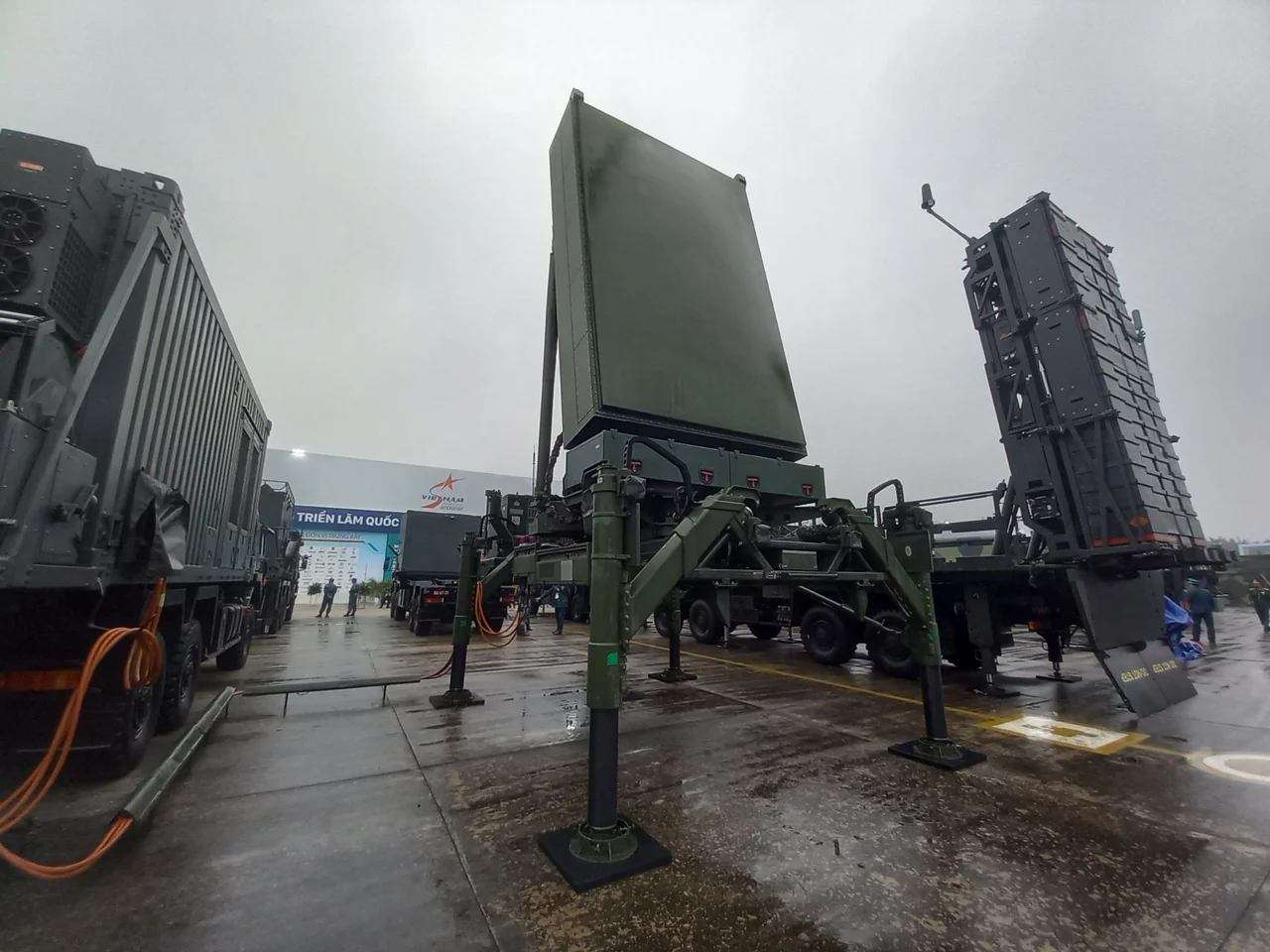
Trade reporting describes SPYDER as a mobile, 360-degree, quick-reaction system using two missile types in Rafael’s own naming: the shorter-range Python-5, adapted from an air-to-air missile, and the longer-range Derby, a radar-guided interceptor. Four factory variants exist: SPYDER-SR and SPYDER-ER (quick-reaction, out to about 40km) and SPYDER-MR and SPYDER-LR (vertical-launch, out to about 80km), per Raksha Anirveda, citing Rafael’s own release. Spanish defense trade press, cited by Hespress Français, has suggested Morocco is pursuing the SR/ER configuration paired with an ELM-2106 L-band radar offering 180km detection, but no Moroccan or Israeli government source has confirmed the variant. No public source specifies the number of launchers, radars or missile rounds in the Moroccan order.
What did it cost?
| Figure | What it is | Source |
|---|---|---|
| Not disclosed | SPYDER contract value — no figure has been published by either government or named in trade reporting reviewed for this article | Unknown |
| “More than $500 million” (separate) | Reported value of the Barak MX contract, a different system at the same base | Globes; The Defense Post |
| ~$150 million (separate) | Reported value of Morocco’s Israeli-built PULS rocket artillery purchase | euro-sd |
| ~$1 billion (separate) | Reported 2024 value of an Israeli-built Moroccan reconnaissance satellite | euro-sd; Globes |
| $300–500 million+ (separate, unconfirmed) | Estimated value cited for a reported, unconfirmed Delilah cruise-missile discussion with Rafael | Hespress Français, citing Defense Arabic |
No reliable per-unit price for the SPYDER system can be derived, because no total contract figure exists in public reporting for this specific program — unlike Barak MX, where a disputed but published range ($500–600 million) at least anchors the scale of the deal. For SPYDER, the absence of any published figure is itself the finding: this is the rare case in this series where even a rough order of magnitude for the cost cannot be sourced.
Why was the system selected?
| Factor | Evidence | Strength |
|---|---|---|
| Political opening via normalization | SPYDER evaluation and selection followed the same Israel-Morocco channel opened by the Dec 2020 normalization and Nov 2021 defense MoU that produced the Barak MX contract | Documented sequence, inferred link for SPYDER specifically |
| Complementary role to Barak MX, not a substitute | Israeli sources cited by Defense Arabic, relayed by Hespress Français, describe SPYDER as handling “close, fast threats” while Barak MX covers “longer ranges and higher altitudes” | Secondary trade reporting citing unnamed Israeli sources, not a Moroccan government statement |
| Low-altitude, quick-reaction engagement against drones | SPYDER’s SR/ER variants offer lock-on-after-launch, 360-degree, seconds-level reaction against aircraft, drones, cruise missiles and precision munitions, per Rafael’s own product description | Manufacturer specification, consistent with but not confirmation of Moroccan rationale |
| Proven export track record | SPYDER was in service with at least eight other states, including the first NATO operator (Czech Republic) and the first Arab operator (UAE), by the time Morocco’s evaluation was first reported in 2023 | Documented export history; not evidence Morocco cited this factor itself |
| Price versus other short-range systems | No published comparison | Unknown |
| Local production or technology transfer | None documented for SPYDER; Morocco did separately secure a BlueBird drone assembly line at Benslimane under a different Israeli contract | Documented for a different programme, not SPYDER |
| Financing | Not disclosed | Unknown |
No Moroccan official statement explains the choice in capability or cost terms; the government has not publicly acknowledged the purchase at all. The clearest documented rationale is relational rather than official: trade reporting frames SPYDER as filling the short-range slot in an architecture where Barak MX already covered the longer tiers, which is a logical complementarity argument advanced by anonymous Israeli sources rather than a Moroccan evaluation report.
Were alternatives considered?
| Category | System | Evidence |
|---|---|---|
| Confirmed competitor | None found | No public tender or head-to-head evaluation located; this appears to be a negotiated government-to-government sale, as with Barak MX |
| Reported parallel acquisition (not a rejected alternative) | Barak MX (Israel) | Longer-range complement at the same base, contracted a year before SPYDER’s reported evaluation began (Globes) |
| Reported parallel acquisition (not a rejected alternative) | MIM-104 Patriot (US) | Separate, higher-end tier; field-tested as late as March 2025, with no reported connection to the SPYDER decision (Army Recognition) |
| Theoretical same-class alternative | Chinese FD-2000B / Sky Dragon 50 | A May 2026 EFE dispatch, relayed by Morocco World News, lists these as part of the same multi-layered Moroccan air-defense network, but does not describe them as a rejected alternative to SPYDER specifically |
| Theoretical same-class alternative | Franco-Italian SAMP/T or similar short/medium NATO systems | Same broad role; no evidence Morocco evaluated these for this specific requirement |
It would misstate the record to say Morocco “chose SPYDER over” any named competitor. The available reporting shows a single Israeli procurement channel supplying multiple, complementary tiers of one architecture, not a competitive evaluation SPYDER won.
Training and support
No Moroccan or Israeli source reviewed for this article discloses crew training numbers, a field-service-representative arrangement, or a sustainment contract for SPYDER specifically. This mirrors the pattern documented for Barak MX, where no training or support details have been published either, in contrast to the detailed disclosures that accompany US Foreign Military Sales elsewhere in the region. Reported training and local-production arrangements for other Israeli-sourced Moroccan programs — for example, BlueBird Aero Systems’ SpyX drone line at Benslimane, opened in November 2025 after training a Moroccan team in Israel — apply to those separate programs and should not be read across to SPYDER.
Delivery and operational service
| Claim | Who made it | Grade |
|---|---|---|
| SPYDER battery visible and active at Sidi Yahya el Gharb | Commercial satellite imagery (Maxar/Airbus via Google Earth), relayed by a specialist X account, then by AS (Spain) citing Infodefensa, then by Medias24, Morocco World News and Bladi | Independent, imagery-based, unverified by either government |
| System described as “operational” | Ledesk.ma | Media characterization, not an official statement |
| Deployment “marks the culmination of an acquisition process launched several years ago” | Medias24 | Independent trade/local press interpretation |
| Official Moroccan or Israeli confirmation | Neither government | None found |
No source reviewed reports SPYDER being used in an actual engagement, and none claims it has intercepted a Polisario drone or loitering munition. As with Barak MX, the entire operational picture for SPYDER rests on commercial satellite imagery and open-source analysis rather than any disclosure by Rabat or Tel Aviv, consistent with Morocco’s broader pattern of not publicly confirming its Israeli-sourced hardware purchases since the 2020 normalization even as those purchases are reported in detail by Israeli, Moroccan, Spanish and international trade press.
Industrial cooperation
No local assembly, maintenance-repair-overhaul capability, or technology transfer is documented for SPYDER itself; what reporting exists describes a delivered system rather than a co-production arrangement. This is distinct from Morocco’s broader push to localize parts of its Israeli-sourced defense supply chain: BlueBird Aero Systems opened a SpyX drone production line at Benslimane in November 2025, and the same site has also been linked to a Turkish Baykar drone project, according to Medias24. Local drone assembly is not the same as local air-defense manufacturing, and nothing in the public record extends Benslimane’s drone work to SPYDER.
Was it a good fit? Documented trade-offs
| Dimension | Evidence in favour | Trade-off or open question |
|---|---|---|
| Mission | Quick-reaction, 360-degree engagement suits the drone and loitering-munition threat the Polisario front has demonstrated since 2020 | No published figure for how many batteries Morocco bought, so the breadth of coverage cannot be independently assessed |
| Environment | Reported siting at Sidi Yahya el Gharb, alongside Barak MX, suits a layered-defense posture around the capital region | No data on how the system performs in Moroccan desert or coastal conditions specifically |
| Layered architecture | Fills the short-range tier below Barak MX’s 35–150km bands and below a possible future Patriot top tier, within a 2011-origin territorial air-defense plan | Multiplies the training pipelines, spares chains and command-and-control integrations the Royal Armed Forces must manage across at least three distinct systems |
| Political | Uses the same fast, low-friction Israeli procurement channel that delivered Barak MX outside any US congressional-notification process | Defense ties with Israel remain politically sensitive domestically, which may explain the complete absence of official Moroccan acknowledgment |
| Transparency | Multiple independent Moroccan, Israeli, Spanish and French-language outlets corroborate the broad shape of the purchase and its deployment location | No official confirmation exists for the variant, quantity, cost, training or current operational status — and even the selection date is disputed between sources |
How it compares with same-class alternatives
A specification-for-specification comparison would overstate what is public, because Morocco has not published one and the systems below occupy different tiers of the same layered architecture rather than competing for the same role. What the record supports: Hawk and Chaparral are the 1960s–1970s systems SPYDER and Barak MX together are superseding; Barak MX is the longer-range complement reported active at the same base since January 2026; and Patriot, if Morocco eventually fields it, would sit above both at the highest tier against the most advanced threats. The Chinese FD-2000B and Sky Dragon 50 systems named in May 2026 Spanish reporting appear to belong to a separate part of the architecture, with no public account of how they relate operationally to SPYDER. No independent cost or performance comparison between SPYDER and any of these systems in Moroccan service has been published.
Africa-wide and regional consequence
Morocco’s build-out made it one of a small group of states — alongside the UAE, the first Arab SPYDER operator — using Israeli air-defense technology as part of their post-Abraham Accords defense relationships. Globes reported, citing SIPRI data, that Israel was Morocco’s third-largest defense import source for 2020–2024 at about 11% of procurement, behind France at 15%. Spanish institutional attention to the build-up has grown since African Lion 2026 and a new 10-year US-Morocco defense roadmap, with analyst Rachid El Houdaigui of the Policy Center for the New South describing the broader posture as “defensive deterrence” aimed at access denial rather than force projection, according to Morocco World News. Nothing in the sources reviewed shows Morocco’s SPYDER purchase specifically caused any Algerian or Spanish response, so this should be read as context for a regional build-up rather than proof of cause and effect.
What happened next
Morocco continued building out the same layered air-defense architecture rather than treating SPYDER as a complete answer: the Patriot evaluation continued separately, and Israeli suppliers reportedly expanded into drones, counter-UAS systems, the PULS rocket system, a reconnaissance satellite, and — per August 2026 Hespress Français reporting citing Defense Arabic — discussions, still unconfirmed, around Delilah cruise missiles, Sky Spear air-to-air missiles, Sky Sonic interceptors and Iron Beam laser defense. For the wider pattern across US, Israeli and Turkish suppliers, see our analysis of how Morocco balances its suppliers, for the full Israel relationship see how Israel became one of Morocco’s main arms suppliers, and for the Algeria dimension, our comparison of the two militaries. For how the same Rafael system was financed and delivered in a very different procurement track, compare our reporting on why Kenya bought SPYDER through Israeli government loans.
FAQ
Why did Morocco buy the SPYDER air defense system?
To fill a short-range, quick-reaction gap against drones and loitering munitions left by its ageing Hawk and Chaparral batteries, as a complement to the longer-range Barak MX system it bought from Israel in 2022 — according to Israeli and Moroccan trade reporting; Rabat has not officially confirmed the purchase or its rationale.
How much did Morocco pay for SPYDER?
No figure has been published by either government or found in trade reporting reviewed for this article. This is one of the least-documented costs in this series.
When did Morocco select SPYDER?
Sources disagree. Reporting places the decision as early as March 2023 or as late as 2024, and this article treats the exact date as unresolved.
Is SPYDER confirmed to be deployed in Morocco?
Not officially. Commercial satellite imagery analysed by Spanish and Moroccan outlets in May 2026 showed a battery at Sidi Yahya el Gharb, but neither Rabat nor Tel Aviv has confirmed it.
Did Morocco choose SPYDER over the Patriot or another system?
No evidence supports that framing. Patriot and Barak MX are separate systems at different tiers of the same layered architecture, pursued in parallel rather than as rival bids for the same requirement.
Does Morocco manufacture or assemble SPYDER locally?
No such arrangement is documented. Morocco does have a separate Israeli-backed drone assembly line (BlueBird’s SpyX loitering munitions at Benslimane), but that is a different programme.
Related reading
- Morocco’s military arsenal in 2026 (country inventory)
- Why Morocco bought the Barak MX air defense system (sibling system, same base)
- How Morocco balances American, Israeli and Turkish suppliers
- How Israel became one of Morocco’s main arms suppliers
- How Morocco and Algeria compare militarily in 2026
- Why Kenya bought the SPYDER air defense system (same system, different procurement track)
- Military equipment database
Sources
- Al Jazeera, US moving ahead with $1bn arms sale to Morocco (12 December 2020)
- Al Jazeera, Morocco, Israel sign first-ever defence agreement in Rabat (24 November 2021)
- Hespress Français, SPYDER: un système de défense aérienne dans le viseur du Maroc (20 March 2023)
- Raksha Anirveda, Morocco Selects Rafael’s SPYDER Air Defence System
- Global Business Press, Morocco Seeking Advanced Israeli Systems (31 January 2025)
- Globes, IAI agrees $500m missile defense systems deal with Morocco (13 February 2022)
- Globes, Morocco completes deployment of IAI air defense system — report (14 January 2026)
- Medias24, Air defense: Morocco’s Royal Armed Forces deploy new SPYDER shield in Sidi Yahia (11 May 2026)
- Morocco World News, Morocco’s SPYDER Air Defense Deployment Rattles Spain’s Defense Establishment (18 May 2026)
- Morocco World News, SPYDER, Barak MX, Apache, HIMARS: Morocco’s state-of-the-art military upgrades worry Spain (30 May 2026)
- Bladi.net, Des images satellites révèlent le nouveau bouclier aérien du Maroc (7 May 2026)
- Hespress Français, Défense: Rafael avance ses pions au Maroc (23 August 2026)
- Army Recognition, Morocco field-testing Patriot amid Algeria’s Su-57 purchase (March 2025)
- Oryx, Desert Storm: listing the Polisario’s arsenal (December 2021)
- Medias24, L’alerte militaire: quelles sont les batteries anti-aériennes déployées? (19 August 2014)
- GlobalSecurity.org, Royal Moroccan Air Force modernization
- Medias24, Benslimane: future hub of Morocco’s defense industry, Baykar and BlueBird projects unveiled (13 November 2025)