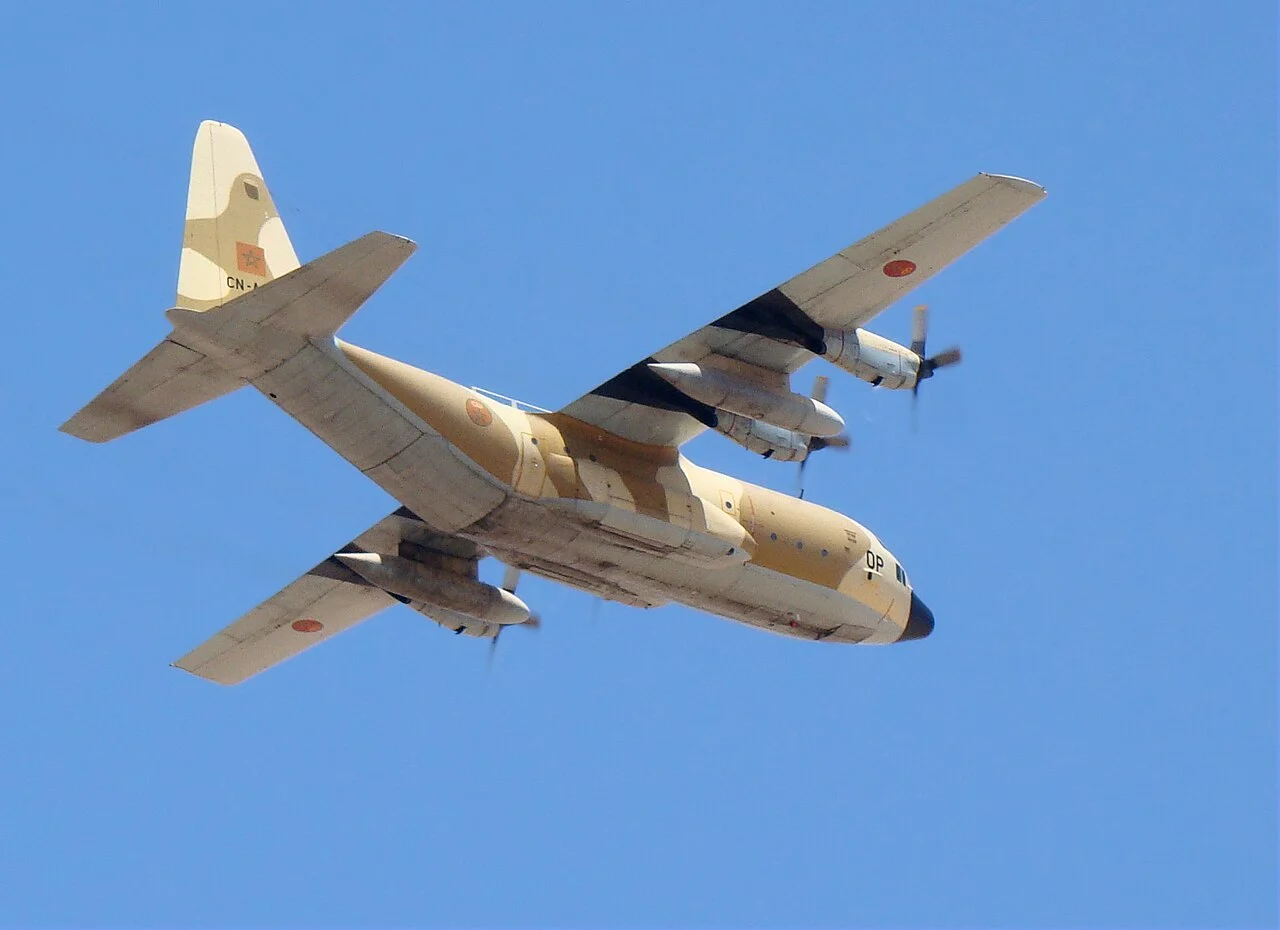
L3Harris Technologies has begun physically rebuilding the Royal Moroccan Air Force’s ageing C-130H Hercules fleet, with a third airframe due to enter the company’s Waco, Texas facility before the end of 2026. The programme, running through 2029, is one of the largest sustainment contracts the U.S. company has running with an African air force.
Photo: A Lockheed C-130 Hercules of the Royal Moroccan Air Force. Credit: Bjørn Christian Tørrissen, CC BY-SA 3.0, via Wikimedia Commons
Morocco’s Administration of National Defense signed the multi-year overhaul agreement with L3Harris in July 2025, and the first Royal Moroccan Air Force (RMAF) C-130H has already returned from Waco after a full inspection and repair cycle, according to Military Africa and Morocco World News. A second airframe arrived in Texas in late August, and a third is scheduled to be inducted before the programme’s next public milestone: L3Harris’ presentation at the Marrakech Air Show, running 7–10 October 2026.
What the overhaul covers
The work goes well beyond routine maintenance. L3Harris is carrying out full depot-level inspections, structural repairs and engine overhauls on each aircraft, alongside cockpit modernisation. The first aircraft to complete the programme received a new digital engine display and standby instrument; the next airframe in line is slated for a fuller glass-cockpit conversion, replacing decades-old analogue dials with digital flight displays. DefenceWeb reports that by the time of the Marrakech show, Morocco should have one modernised Hercules back in RMAF service, a second deep into maintenance, and a third about to begin the most extensive rebuild of the batch.
The contract covers the RMAF’s fleet of 14 C-130H aircraft plus two KC-130H tanker variants — airframes that in some cases have been flying for more than four decades. Rather than replace the fleet outright, Rabat has opted to extend the service life of its existing Hercules force while it weighs longer-term transport-aircraft decisions, a pattern common among African air forces operating legacy C-130s.
Morocco’s C-130 fleet and prior purchases
Morocco’s Hercules fleet has been built up gradually and largely through second-hand and excess-defense-articles transfers rather than new-build purchases. In July 2019, Rabat requested two additional C-130H airframes through the U.S. Excess Defense Articles programme; Washington approved the transfer in June 2020, handing over two aircraft valued at roughly $60.8 million — a fraction of the cost of new-build C-130Js. That pattern of incremental, cost-conscious fleet sustainment is consistent with the current overhaul programme, which keeps existing airframes flying rather than committing Morocco to a new transport-aircraft acquisition. The RMAF’s broader U.S.-sourced arsenal, including F-16 fighters, is detailed in DefenceMENA’s explainer on Morocco’s F-16 fleet and in the site’s wider look at how the United States became a major supplier to Morocco’s armed forces.
Why it matters for Africa
Tactical airlift is a chronic weak point for African air forces fighting counter-insurgency and logistics campaigns across vast, poorly connected territory, and Morocco leans on its Hercules fleet for exactly that role — resupply along the Western Sahara front line, troop movement, and support for African Lion, the annual U.S.-led exercise Morocco co-hosts. A capable, well-maintained C-130 fleet also underpins Morocco’s growing role as a logistics and airlift partner for multinational exercises across North and West Africa. The Waco overhaul programme is a reminder that for most African militaries, life-extension contracts on existing airlift fleets — not new aircraft orders — are where near-term capability gains actually happen. It also illustrates how U.S. industrial sustainment work, rather than headline-grabbing new sales, increasingly anchors the defence relationship between Washington and Rabat, Africa’s largest buyer of American-made military hardware after Egypt.
Sources
- Military Africa: L3Harris Begins Multi-Year Overhaul of Morocco’s C-130 Fleet
- DefenceWeb: L3Harris making progress on Moroccan C-130 modernization programme
- Morocco World News: L3Harris Advances Royal Moroccan Air Force C-130 Modernization Program
- The Defense Post: L3Harris Advances Morocco’s C-130 Modernization With First Aircraft