Five African navies operate frigates or corvettes bought from Germany, France, the Netherlands and China since the early 2000s, while most of the continent’s fleets rely on smaller patrol craft. This gallery surveys every frigate and corvette class currently in African naval service, with operators, status and sourced specifications, data as of September 2026.
DEFENCE AFRICA | Platform gallery | Data as of September 2026
Only a handful of African navies operate vessels large enough to be classified as frigates or corvettes: platforms built for open-ocean combat rather than coastal patrol. South Africa, Nigeria, Egypt, Algeria and Morocco account for nearly all of them, and every hull in this gallery was either built abroad or assembled locally under a foreign design. Germany’s MEKO family, France’s Gowind and FREMM designs, the Netherlands’ Sigma class and China’s C28A corvette dominate the roster.
The imbalance is structural. Frigates and corvettes cost far more to acquire, crew and sustain than offshore patrol vessels, and require training pipelines, spare-parts chains and shipyard support that few African defence budgets can guarantee over decades. Egypt’s Gowind programme is the closest thing on the continent to technology transfer at scale, with hulls two through four assembled at Alexandria Shipyard under Naval Group licence. Algeria pairs German-built frigates with Chinese-built corvettes rather than committing to a single supplier. Nigeria’s sole frigate, in service since 1982, illustrates the sustainment problem directly: it is currently undergoing a Turkish-led modernization rather than replacement.
Key facts
- South Africa’s four Valour-class (MEKO A200) frigates remain the largest African-operated frigate class outside Egypt, delivered 2003-2006 (DefenceWeb).
- Egypt’s four Gowind 2500 corvettes were delivered 2017-2021, with three of the four hulls assembled at Alexandria Shipyard (Naval News).
- Egypt’s three FREMM frigates cost Italy’s share of the deal alone 1.2 billion euros for two Bergamini-class hulls (DefenceWeb).
- Algeria’s three Adhafer-class (C28A) corvettes were built in China under a March 2012 contract and delivered by 2017 (DefenceWeb).
- Morocco operates four frigates from two different European suppliers: one FREMM from France and three Sigma-class from the Netherlands.
- Nigeria’s NNS Aradu, commissioned in 1982, is the oldest frigate in African service and is currently being refitted at a Turkish shipyard (Naval News).
1. South Africa’s Valour-class (MEKO A200) — four frigates, operational
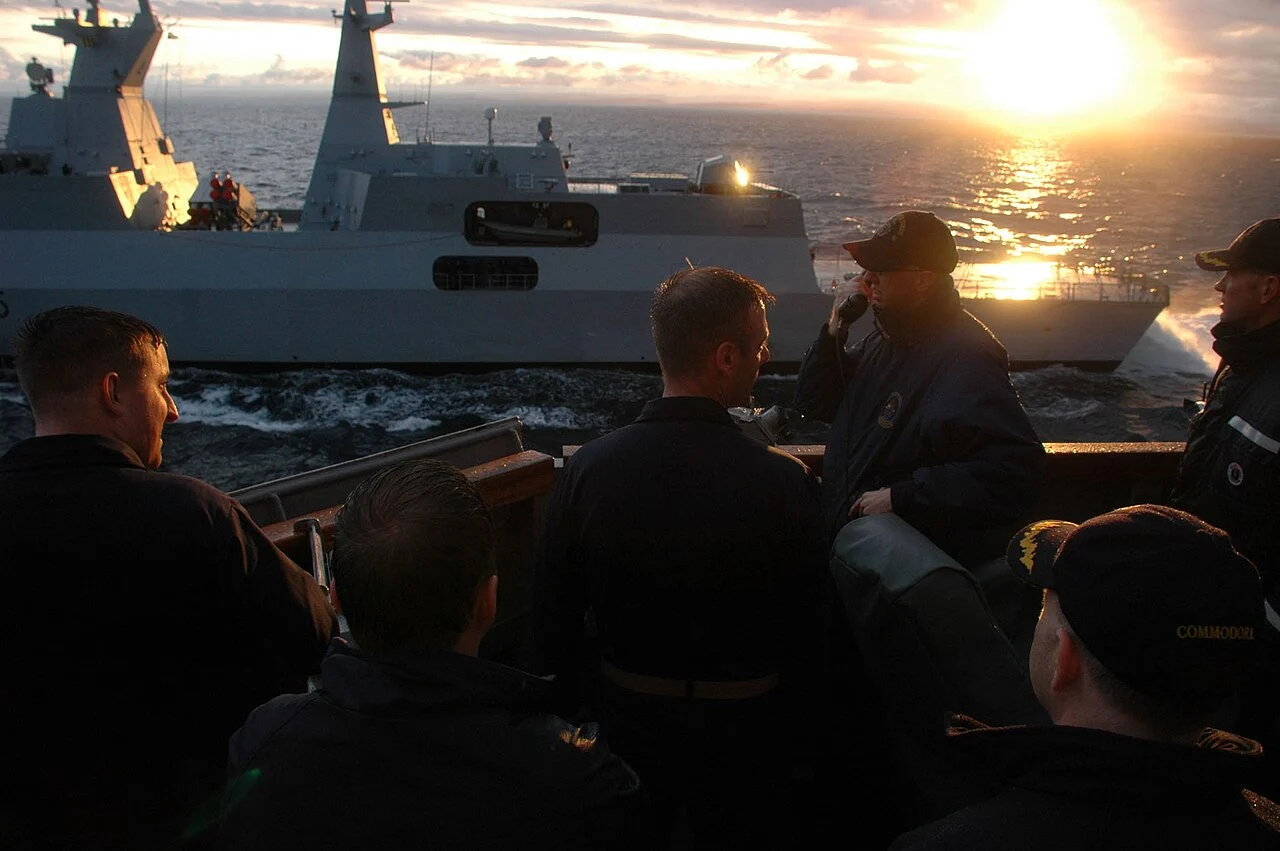
The South African Navy operates four Valour-class frigates — SAS Amatola, Isandlwana, Spioenkop and Mentjies/Manthatisi — built to the German MEKO A-200SAN design and delivered between 2003 and 2006 under the Strategic Defence Package (DefenceWeb). Each ship displaces 3,700 tonnes, reaches speeds above 28 knots on a combined diesel and gas-turbine waterjet plant, and carries the Denel Umkhonto-IR vertical-launch air-defence missile, eight MBDA MM40 Exocet Block 2 anti-ship missiles and an Oto Melara 76mm gun (DefenceWeb). Status: operational, forming the SAN’s entire modern surface-combatant fleet. Regionally, the class is significant less for its numbers than for its modular MEKO design, which was adapted locally with South African combat-management and missile systems, and for the class’s frequent role in joint exercises such as IBSAMAR and Exercise MILAN.
2. Nigeria’s NNS Aradu (MEKO 360) — the fleet’s lone frigate
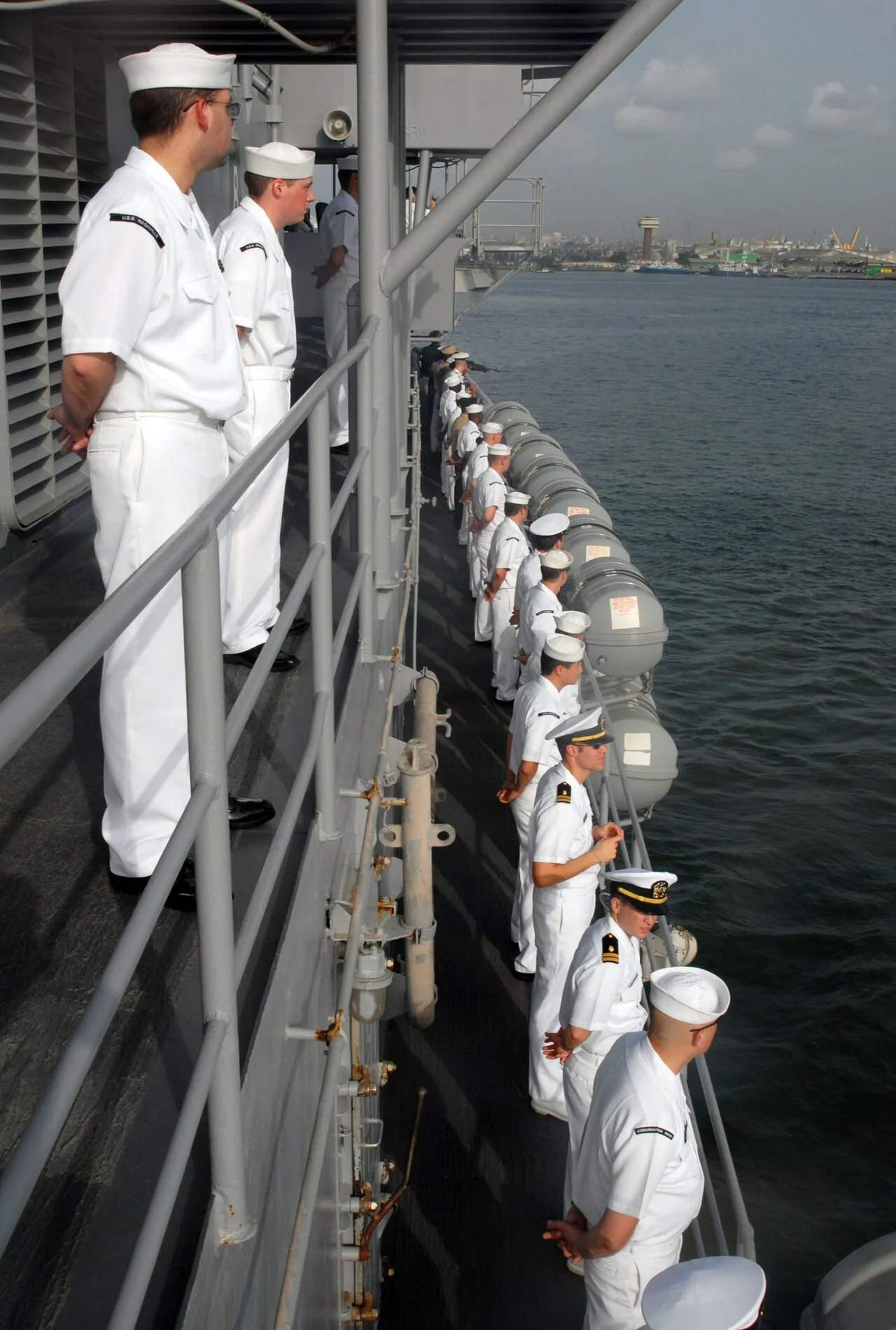
NNS Aradu is Nigeria’s only frigate and its largest surface combatant, a 125.6-metre Blohm+Voss-built MEKO 360 commissioned in 1982 with anti-air, anti-surface and anti-submarine capability (Naval News). In June 2023 the Nigerian Navy contracted Turkey’s Dearsan Shipyard in Tuzla to overhaul the ship’s ageing sensors, weapons and propulsion systems and bring it to modern-day standards, alongside delivery of a separate 57-metre Tuzla-class patrol vessel (Naval News). Status: operational, currently undergoing modernization rather than replacement. The refit illustrates a wider pattern of Turkish shipyards taking on legacy-platform overhaul work for African navies that cannot easily fund a new-build frigate.
The refit itself covers sensors, weapons and propulsion rather than missile armament; Turkey’s own navy arms comparable frigate and corvette classes with its indigenous ATMACA anti-ship missile, covered in DefenceMENA’s ATMACA explainer, though no African navy has a confirmed ATMACA order as of this writing.
3. Egypt’s Gowind 2500-class — four corvettes, partly locally built
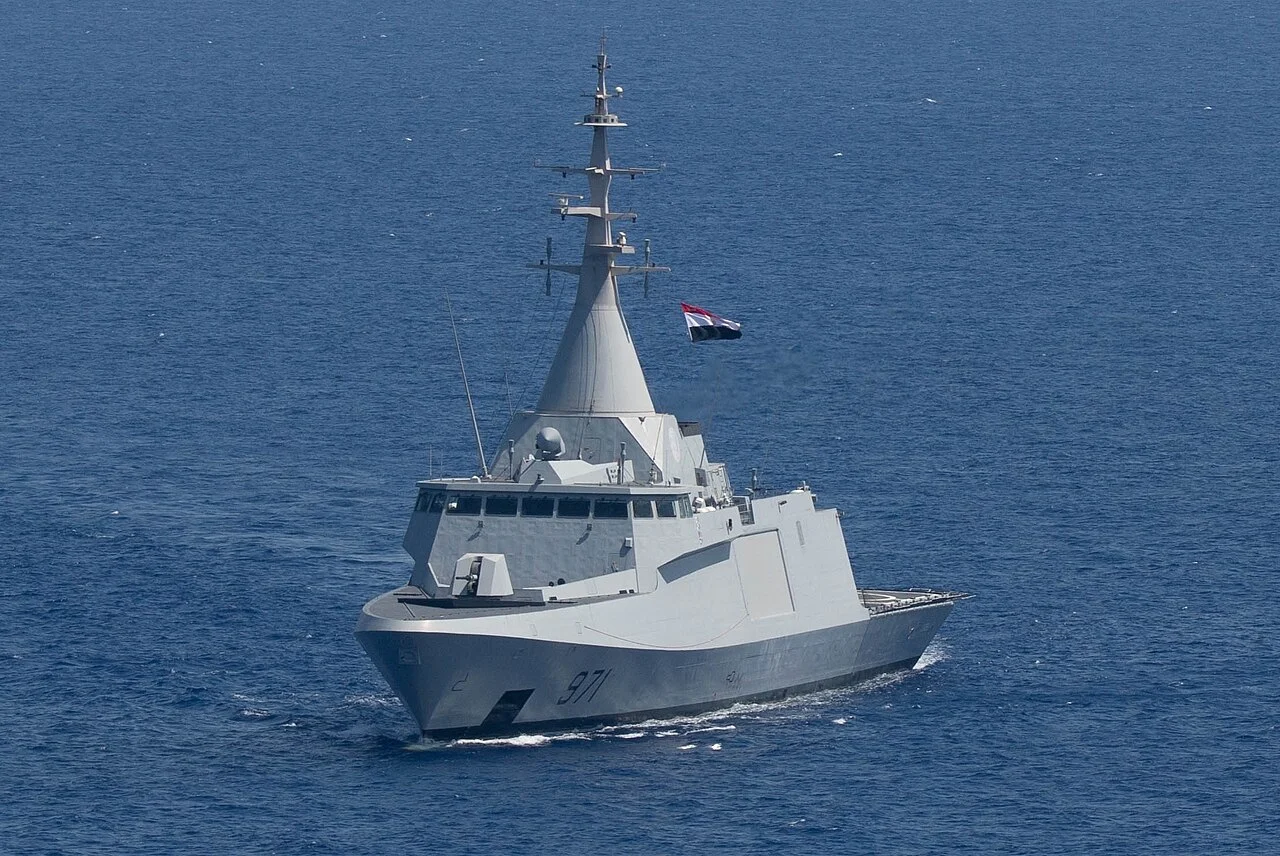
Egypt operates four Gowind 2500 corvettes — El Fateh, El Moez, El Aziz and Luxor — delivered between September 2017 and 2021 under a Naval Group programme in which the lead ship was built at Lorient, France, and the following three hulls were assembled locally at Alexandria Shipyard (Naval News; DefenceWeb). Each corvette displaces 2,600 tonnes, reaches 25 knots cruise speed, and carries MICA VL air-defence missiles alongside Exocet or Naval Strike Missile anti-ship weapons and Naval Group’s SETIS combat-management system (Naval News). Status: delivered, all four operational. The class is Egypt’s most substantial technology-transfer programme to date, giving Alexandria Shipyard hands-on experience integrating a Western combat system into locally assembled hulls.
4. Egypt’s FREMM-class — three frigates from France and Italy
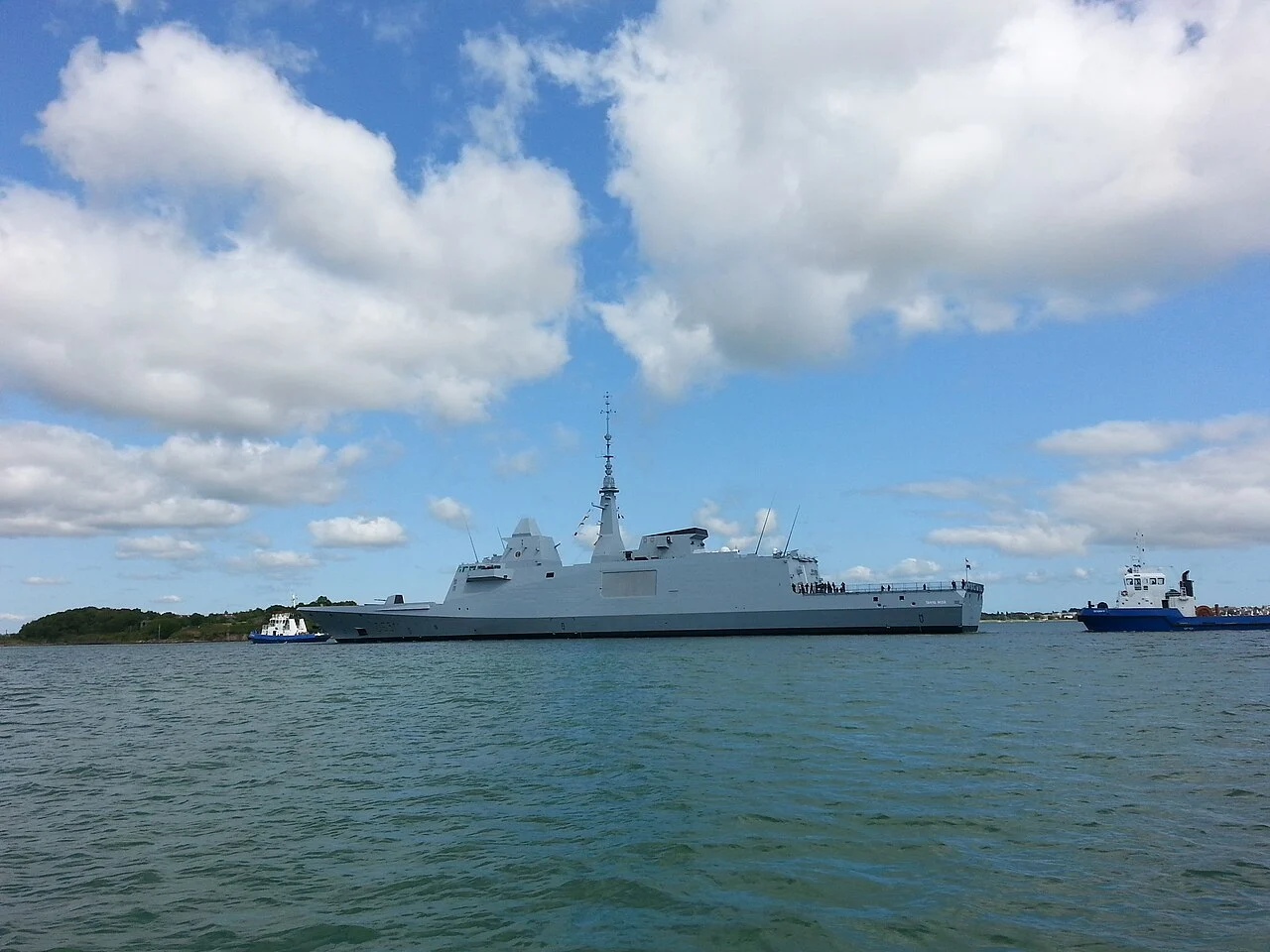
Egypt fields three FREMM-design multipurpose frigates: ENS Tahya Misr, originally built for France as Normandie and acquired by Egypt in 2015, and two ex-Italian Bergamini-class hulls, ENS Al-Galala and ENS Bernees, which arrived in Alexandria in December 2020 and April 2021 respectively as part of a deal worth 1.2 billion euros for the Italian pair (DefenceWeb). Tahya Misr displaces 6,000 tonnes and carries a 16-cell Sylver A43 vertical-launch system for Aster 15 missiles, eight MBDA MM40 Exocet Block 3 anti-ship missiles and MU90 torpedoes. Status: delivered, all three operational. The class gives Egypt’s navy its highest-end air-defence and anti-submarine capability, and reflects Cairo’s practice of buying second-hand European frigates to expand the fleet faster than new-build contracts allow.
5. Algeria’s Erradii-class (MEKO A-200) — two German-built frigates
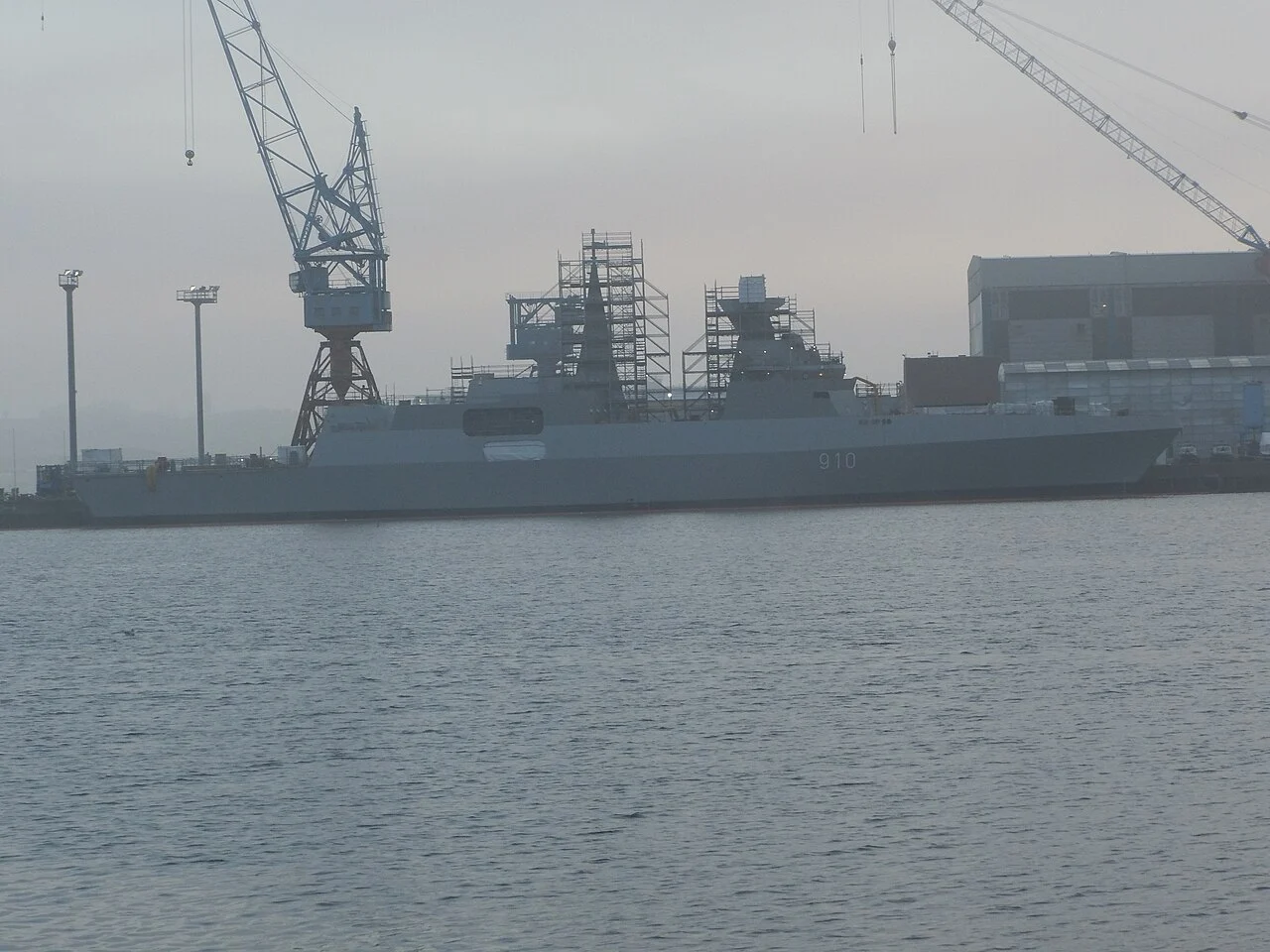
Algeria ordered two MEKO A-200 frigates from Germany’s ThyssenKrupp Marine Systems in April 2012, built under subcontract at the ADM/German Naval Yards Kiel shipyard. The lead ship, Erradii, was commissioned in April 2016, and the second, El Moudamir, followed in 2017 (Defense News). The 3,700-tonne frigates reach 28 knots and carry a 127mm Oto Melara gun, Denel Umkhonto-IR air-defence missiles and Saab/Diehl RBS-15 Mk3 anti-ship missiles, supported by Saab Sea Giraffe AMB radar (Defense News). Status: operational. The class gave Algeria its first Western-standard surface combatants alongside a navy otherwise built around Soviet- and Russian-origin frigates and corvettes.
6. Algeria’s Adhafer-class (C28A) — three Chinese-built corvettes
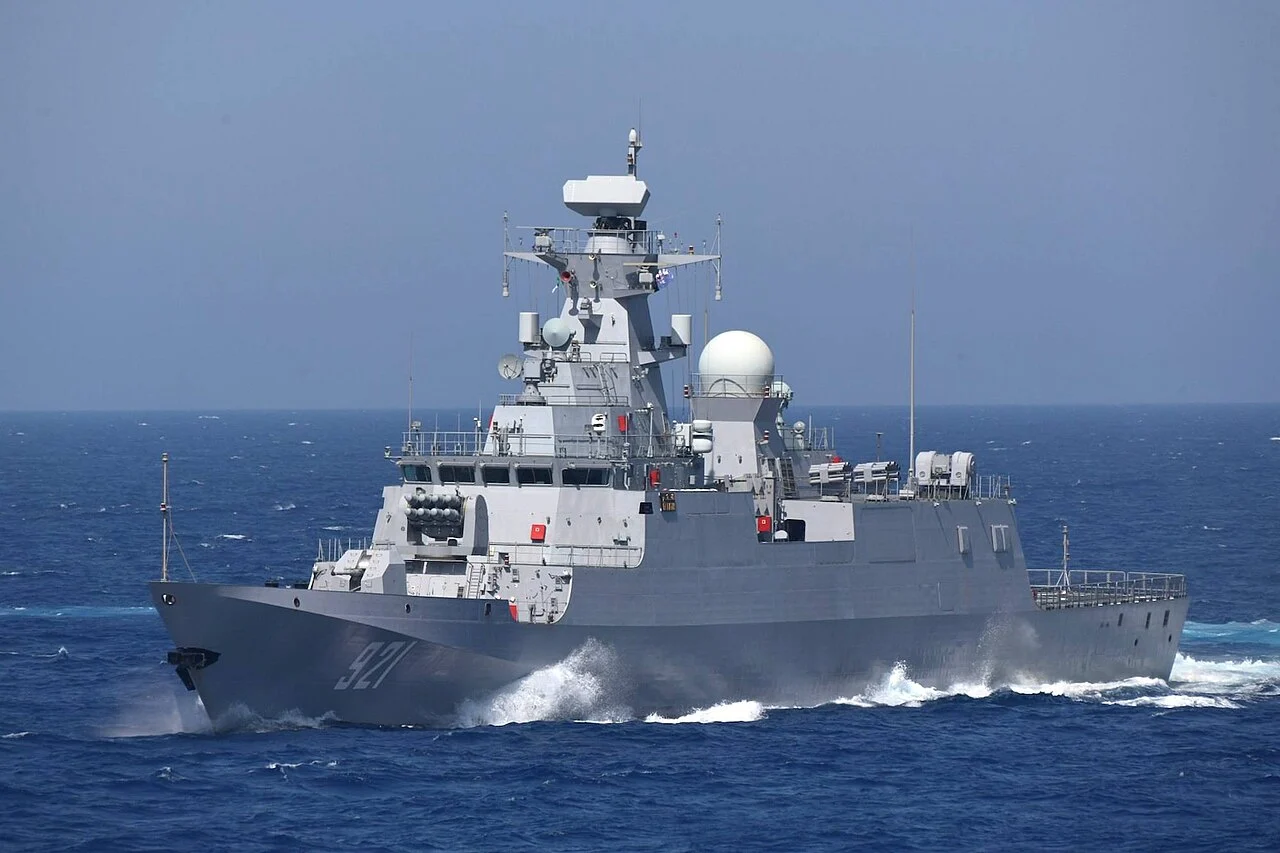
Under a contract signed with China in March 2012, Algeria received three C28A-design corvettes, with the third and final hull, Ezzadjer, handed over in Shanghai and arriving in Algeria in August (DefenceWeb). The corvettes displace roughly 2,880 tonnes fully loaded, reach 27 knots on four MTU diesel engines, and carry eight C-802 anti-ship missiles, an FM-90N launcher for HQ-7 short-range air-defence missiles, an H/PJ-26 76mm gun and two Type 730 close-in weapon systems, with capacity for an embarked Super Lynx helicopter (DefenceWeb). Status: operational, all three delivered. Alongside the German-built Erradii-class, the corvettes show Algeria deliberately splitting its surface-fleet modernization between European and Chinese suppliers rather than standardizing on one.
7. Morocco’s Mohammed VI — a single French FREMM frigate
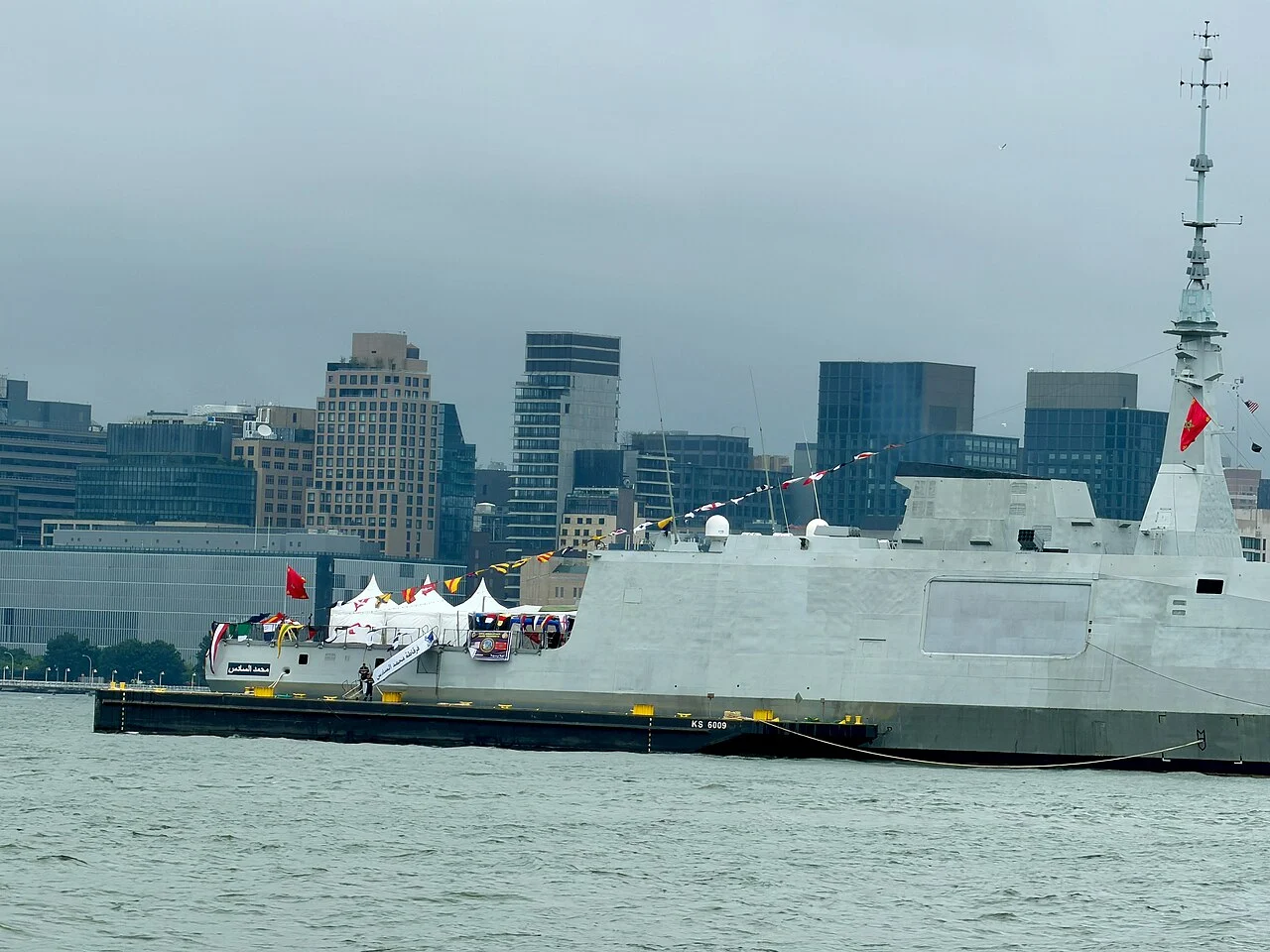
Morocco ordered its FREMM frigate from France’s DCNS (now Naval Group) under a contract signed in April 2008, becoming the first export customer for the FREMM design after France itself. The ship, Mohammed VI, was delivered and commissioned on 30 January 2014 (Naval Technology; Naval Today). It displaces 6,000 tonnes, reaches 27 knots, and is armed with a 16-cell Sylver A43 VLS for Aster 15 missiles, eight MBDA MM40 Exocet Block 3 anti-ship missiles and MU90 torpedoes, in a configuration optimized for anti-submarine warfare. Status: operational. As Morocco’s only high-end frigate, Mohammed VI anchors the kingdom’s Atlantic and Mediterranean surface presence and its close naval-industrial relationship with France.
8. Morocco’s Sigma-class — three Dutch-built frigates
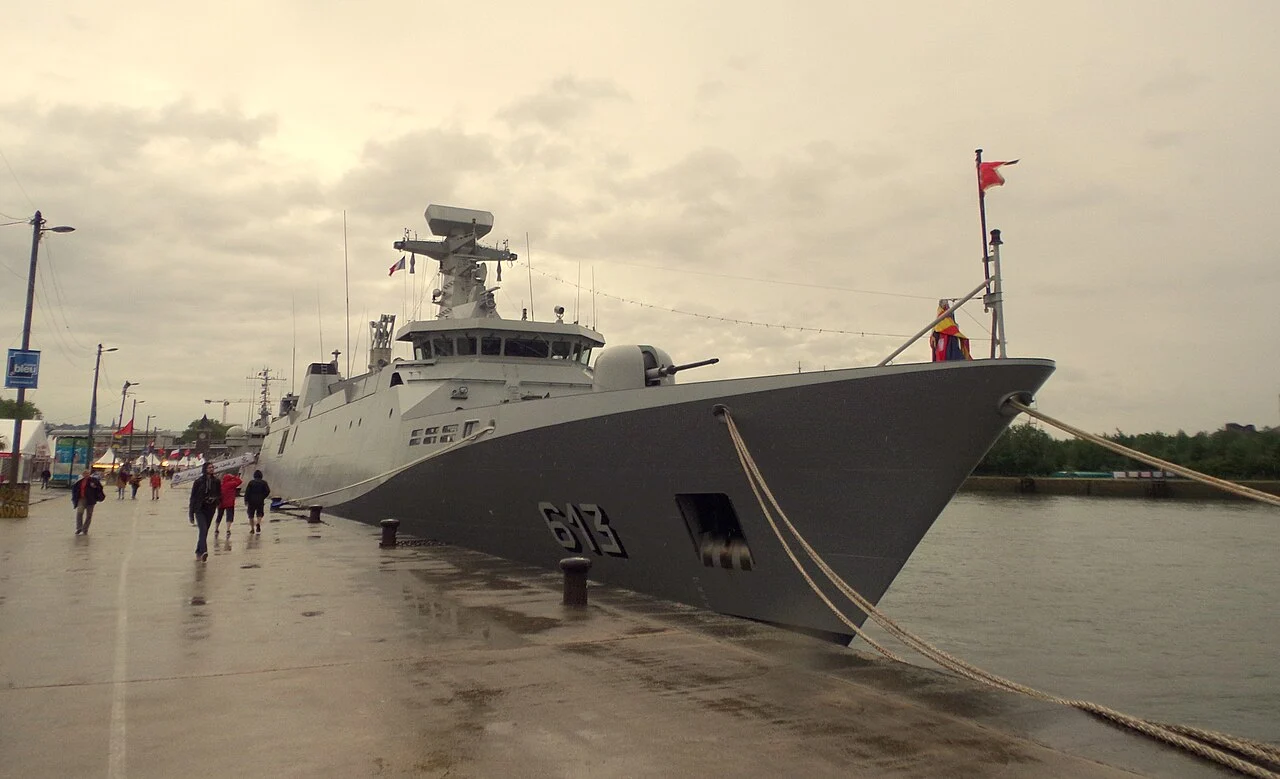
Morocco ordered three Sigma-design frigates from Damen Schelde Naval Shipbuilding in the Netherlands in April 2008: the larger Sigma 10513 Tarik Ben Ziyad, commissioned in December 2011, and two smaller Sigma 9813 sister ships, Allal Ben Abdellah and Sultan Moulay Ismail, delivered in 2012 (DefenceWeb). Tarik Ben Ziyad displaces 2,185 tonnes, reaches 27.5 knots, and carries a Thales Tacticos combat-management system with an Oto Melara 76mm gun as its main armament. Status: operational, all three in service. Together with the single FREMM, the Sigma-class gives Morocco a four-ship frigate force drawn from two separate European suppliers, spreading its naval-industrial relationships between France and the Netherlands.
| Country | Class | Units | Builder / origin | Status |
|---|---|---|---|---|
| South Africa | Valour-class (MEKO A200) | 4 | Germany / South Africa | Operational |
| Nigeria | Aradu (MEKO 360) | 1 | Germany | Operational (under refit) |
| Egypt | Gowind 2500 | 4 | France / Egypt | Operational |
| Egypt | FREMM (Tahya Misr + 2 ex-Italian) | 3 | France / Italy | Operational |
| Algeria | Erradii-class (MEKO A-200) | 2 | Germany | Operational |
| Algeria | Adhafer-class (C28A) | 3 | China | Operational |
| Morocco | Mohammed VI (FREMM) | 1 | France | Operational |
| Morocco | Sigma-class | 3 | Netherlands | Operational |
Why it matters for Africa
The frigate and corvette rosters of South Africa, Nigeria, Egypt, Algeria and Morocco show how narrow the band of African blue-water naval ambition still is, and how heavily it depends on foreign design and construction. Egypt’s Gowind programme is the only case where local assembly has progressed beyond the lead ship, giving Alexandria Shipyard direct experience with a modern combat system. Algeria’s parallel purchase of German frigates and Chinese corvettes, and Morocco’s split between French and Dutch suppliers, both reflect a deliberate strategy of avoiding dependence on a single foreign yard for spare parts and upgrades.
Sustainment remains the binding constraint. Nigeria’s Aradu, in service since 1982, shows what happens when a single frigate must last four decades without a like-for-like replacement: eventual reliance on a third-country shipyard, in this case Turkish, for a full modernization rather than new construction. South Africa’s Valour-class faces a similar long-term sustainment question as defence budgets remain tight. For African navies weighing whether to acquire a frigate or corvette class of their own, the record here points to combat-system compatibility, training pipelines and long-term spares access as bigger determinants of value than the initial purchase price.
Sources
- DefenceWeb — SAS Amatola: A light frigate with heavy potential
- Naval News — Turkish Shipyard Dearsan to Modernize Nigerian Navy’s Flagship
- Naval News — Egyptian Navy Commissions First Locally Built El Fateh-class Corvette
- DefenceWeb — First locally built Gowind corvette joins Egyptian Navy
- DefenceWeb — Second ex-Italian FREMM frigate delivered to Egypt
- Defense News — Algerian Navy Commissions Meko-Class Frigate Into Service
- DefenceWeb — Algeria receives third C28A corvette
- Naval Technology — Royal Moroccan Navy receives FREMM frigate from DCNS
- Naval Today — DCNS Delivers FREMM Frigate to Royal Moroccan Navy
- DefenceWeb — First SIGMA class frigate transferred to the Royal Moroccan Navy
Related on DefenceMENA: South Africa’s Twiga Unveils 920 Gun Boat for Africa’s Lakes and Rivers, Angola’s Navy Takes Delivery of Six HT-100 Naval Drones for New Corvette Fleet, How Morocco and Algeria Compare Militarily in 2026 and How Strong Is Egypt’s Military in 2026?.