Africa’s 10 Largest Warships by Full-Load Displacement



Africa’s naval fleets are overwhelmingly built around small patrol craft, but a handful of amphibious ships and frigates now dwarf the rest of the continent’s warships. This ranking orders the 10 largest in African naval service by full-load displacement, the tonnage a ship carries with fuel, stores, weapons and embarked troops or aircraft aboard, as published by builders and navies between 2014 and 2026.
DEFENCE AFRICA | Fastest / Longest / Largest | Data as of October 2026
Most African navies remain built around patrol vessels and fast attack craft well under 2,000 tonnes, designed for coastal policing rather than blue-water operations. A small number of states have broken from that pattern, acquiring amphibious ships and frigates several times that size, built in France, Italy and the Netherlands for power projection, escort duty and distant deployment rather than close-shore patrol.
The result is a steep size curve: Egypt’s two Mistral-class helicopter carriers displace more than four times the next-largest African hull, and the gap between the top three vessels and the rest of this list is wider than the gap between positions four and ten combined. That concentration reflects defence budgets and industrial partnerships as much as doctrine. Egypt, Algeria, Morocco, South Africa and Nigeria are the only African states currently operating a hull above 3,000 tonnes full load.
How we ranked
Ships are ranked by full-load displacement in metric tonnes, the figure most consistently published by builders (Naval Group, Fincantieri, Damen, thyssenkrupp) and by the operating navies. Where a builder’s datasheet and an open naval reference disagree, both figures are given with their source, and this piece uses the higher, more conservative full-load figure for ranking. Submarines, auxiliary craft under 1,500 tonnes, decommissioned vessels and hulls not yet commissioned are excluded; see the Methodology note below for full criteria.
Key facts
- Egypt’s Gamal Abdel Nasser-class LHDs, at roughly 21,300 tonnes full load, displace nearly four times the next-largest African warship (Wikipedia/Seaforces, 2026).
- Only five African states operate a surface combatant above 3,000 tonnes full load: Egypt, Algeria, Morocco, South Africa and Nigeria.
- Three of the ten largest hulls on this list were built or assembled under French Naval Group FREMM and LHD programmes.
- Algeria’s Kalaat Béni Abbès, at roughly 8,800 tonnes, is Africa’s largest amphibious transport dock after Egypt’s LHDs.
1. ENS Gamal Abdel Nasser-class LHD (Egypt) — Africa’s largest warships by a wide margin
Egypt operates two Mistral-class landing helicopter docks, ENS Gamal Abdel Nasser and ENS Anwar El Sadat, originally built by France’s DCNS (now Naval Group) for Russia before the 2015 sale to Cairo after Paris cancelled the Russian contract. Both ships are listed at approximately 21,300 tonnes full load, with a light displacement of around 16,500 tonnes, per Wikipedia and Seaforces; DCNS’s own figure, cited by EDR Magazine, runs slightly higher at roughly 22,000 tonnes. Both vessels are operational, delivered in 2016, and embark Ka-52 and Ka-27 helicopters alongside troops and vehicles, supporting amphibious operations well beyond any other African fleet, following Egypt’s post-2014 shift toward French-built platforms alongside the Rafale fighter and FREMM frigate.
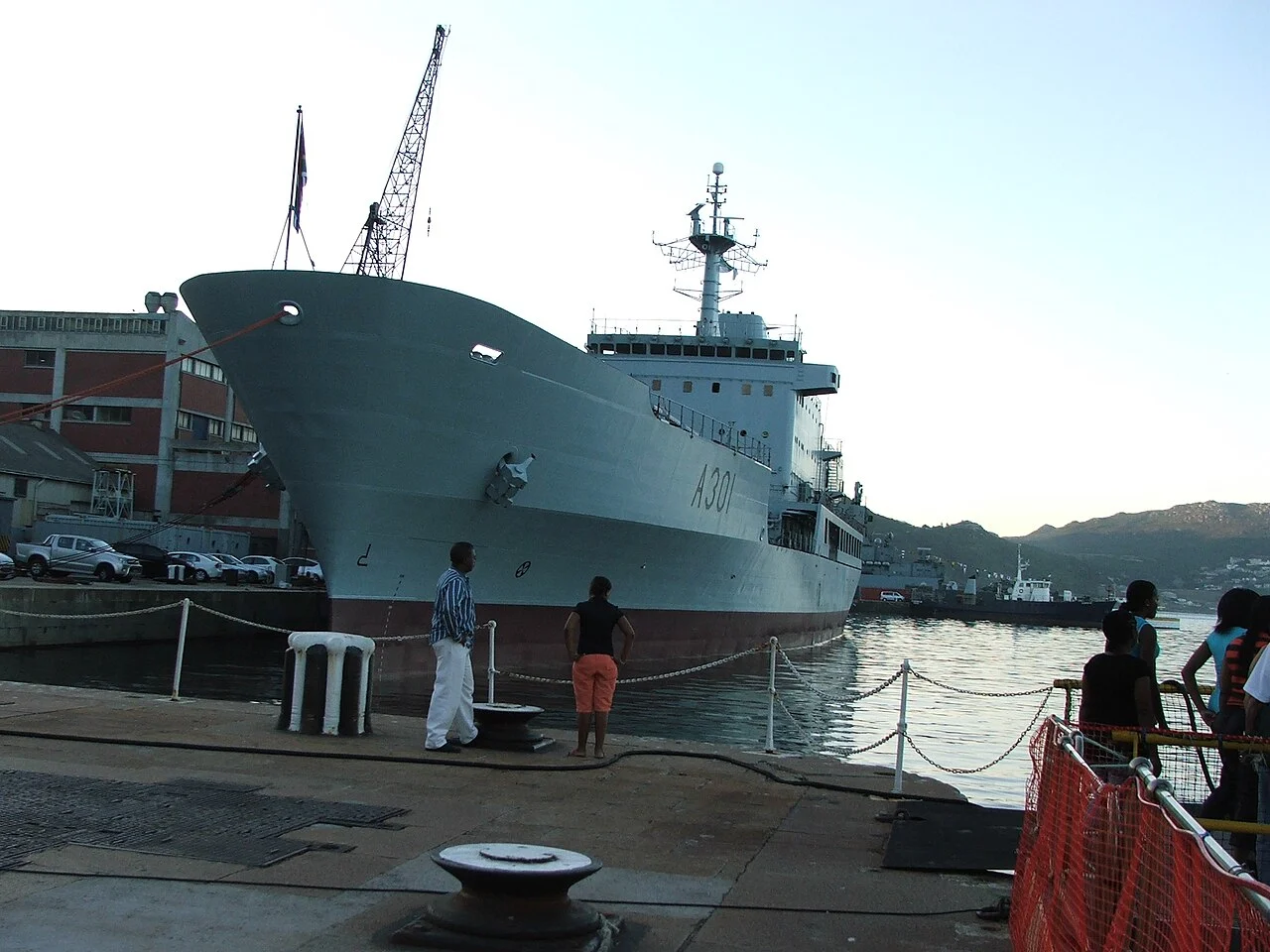
2. SAS Drakensberg (South Africa) — Africa’s largest naval auxiliary
SAS Drakensberg is the South African Navy’s sole fleet replenishment ship (AOR), commissioned in 1987 and still operational as of 2026. Wikipedia and a 2026 SAnews report both give full-load displacement as approximately 12,500 tonnes against a light displacement of around 6,000 tonnes, making it the second-largest hull in African naval service. SAnews confirms the Navy has begun replacing the ageing ship, though no successor has been ordered. Drakensberg sustains South Africa’s frigates and submarines on deployments including Mozambique Channel anti-piracy patrols and joint exercises such as IBSAMAR.
3. Kalaat Béni Abbès-class LPD (Algeria) — North Africa’s largest amphibious ship
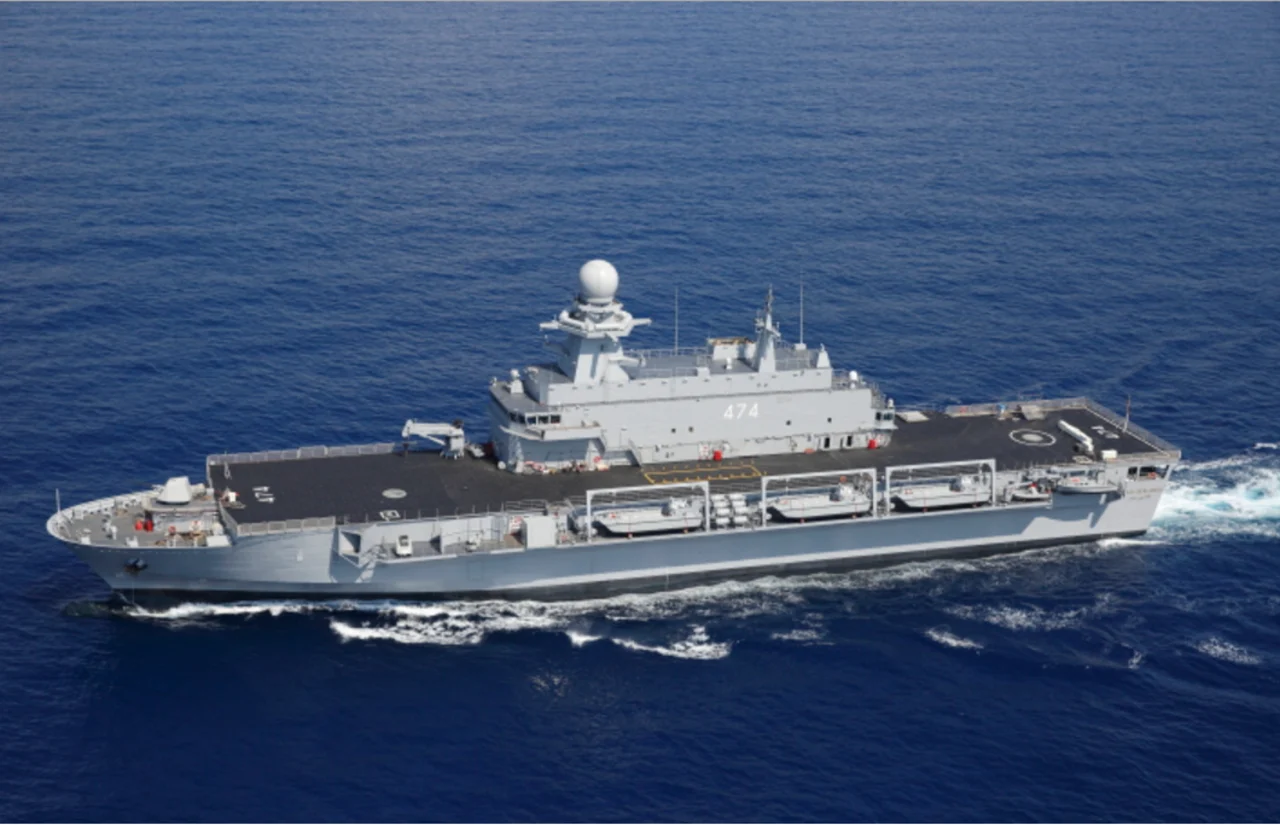
Kalaat Béni Abbès is Algeria’s single Landing Platform Dock, built by Fincantieri as an enlarged San Giorgio-class derivative and commissioned in September 2014. Published figures vary: Wikipedia’s ship and class articles give 8,800 tonnes full load, while a separate Wikipedia navy-fleet table cites 9,000 tonnes; Army Recognition confirms the San Giorgio lineage and the 2011 order without a precise tonnage. The ship is operational, embarking over 400 troops and around 15 armoured vehicles alongside a Sylver launch system for Aster 15 missiles, amphibious lift no other North African navy fields in one hull.
4. FREMM frigate ENS Tahya Misr (Egypt) — Egypt’s first multi-mission FREMM
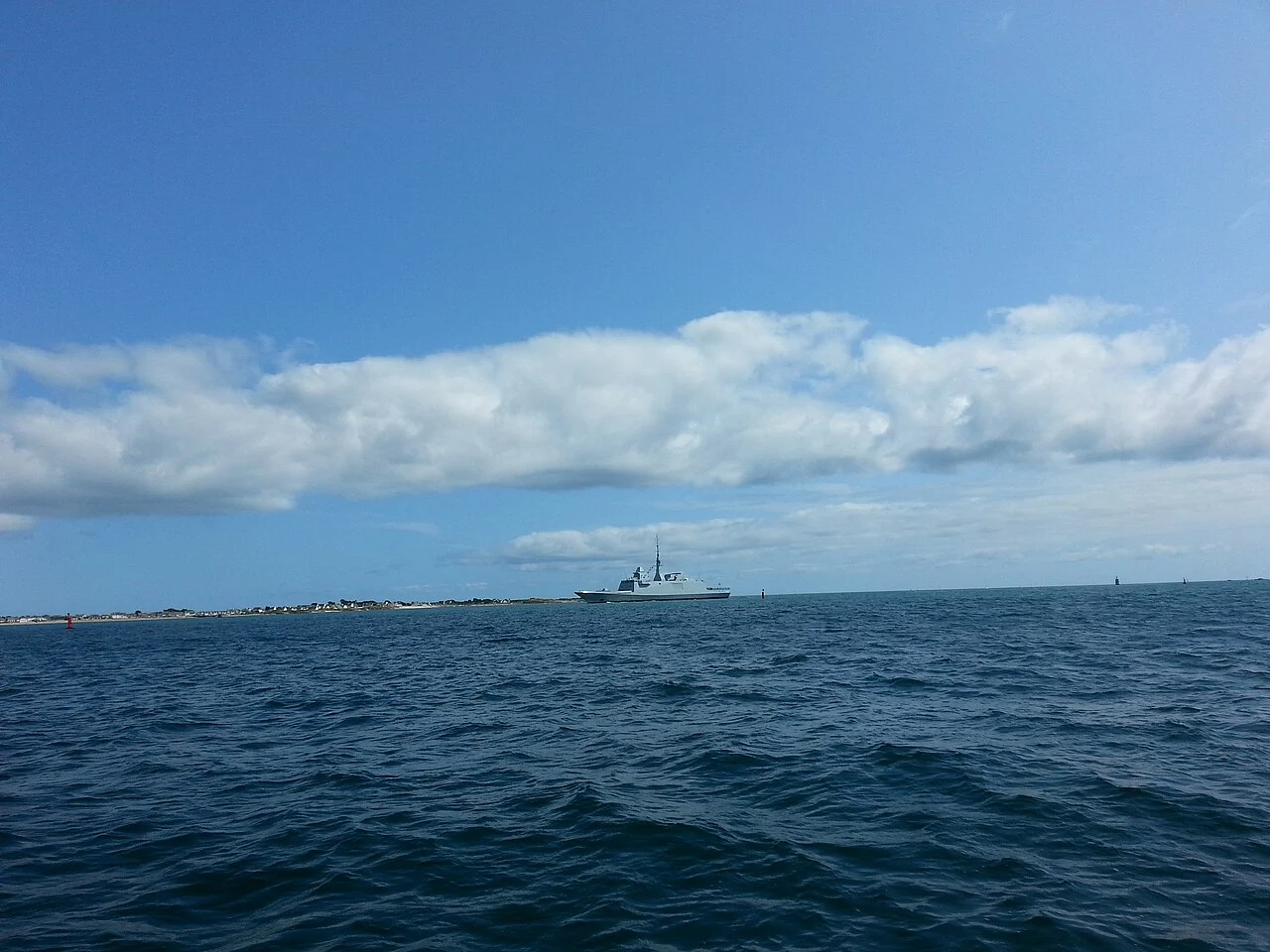
Tahya Misr began as the French Navy’s Aquitaine-class frigate Normandie before Egypt acquired it, with DCNS handing it over in June 2015. Army Recognition’s reproduction of the DCNS datasheet lists 6,000 tonnes; a separate reference cites a standard displacement of 4,500 tonnes against a full load of 6,040 tonnes, the same figure within rounding. The frigate is operational, carrying Exocet and Aster missiles and a hangar for one medium helicopter. It gave Egypt its first multi-role, NATO-standard frigate and anchored a naval relationship since extended to Gowind corvettes and the Mistral-class LHDs above.
5. FREMM frigate Mohammed VI (Morocco) — Morocco’s flagship surface combatant
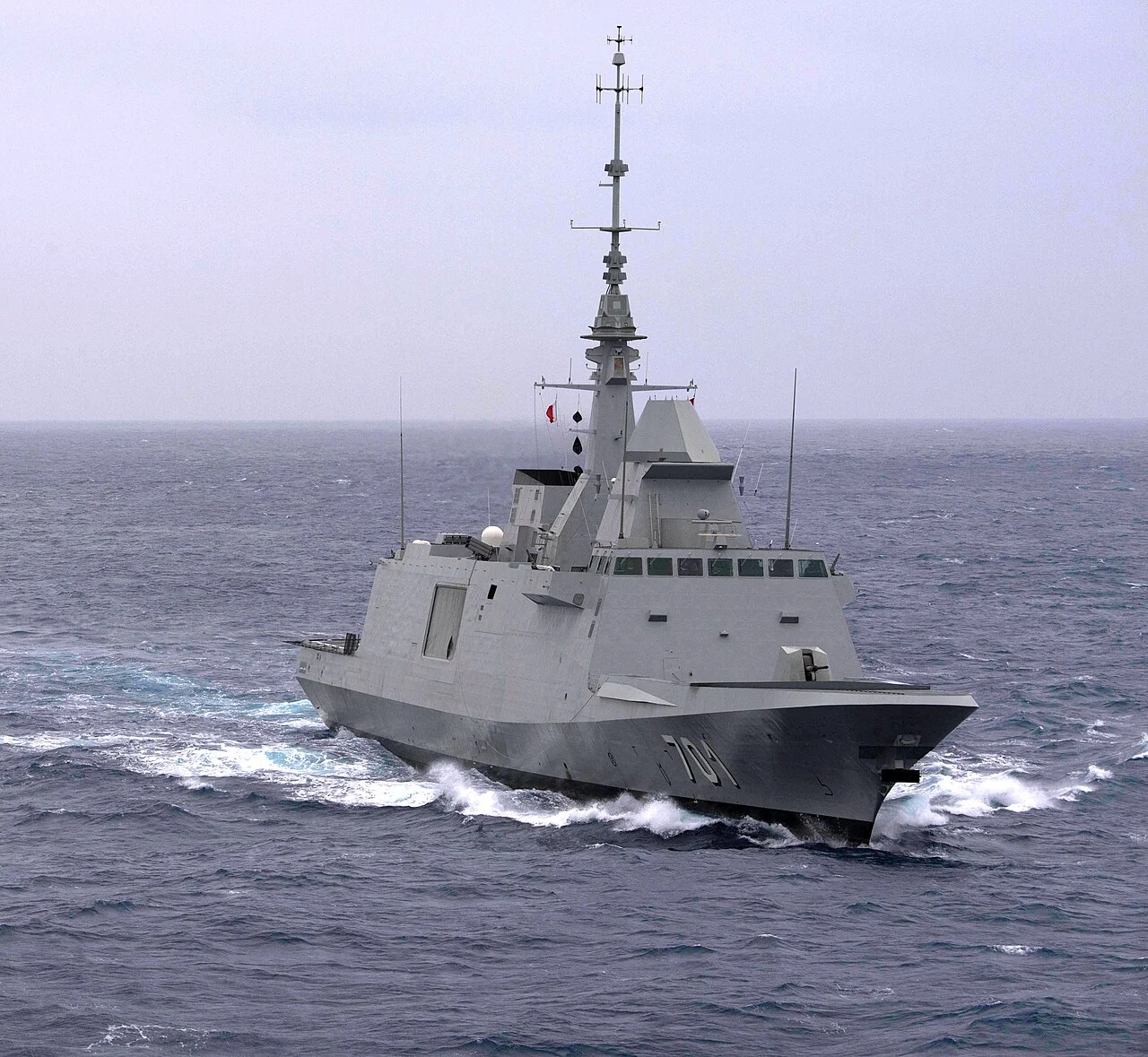
Mohammed VI is Morocco’s sole FREMM unit, built by DCNS at Lorient and delivered in 2014. Wikipedia and Navypedia both converge on a full-load displacement of 6,000 tonnes, with Navypedia separately listing a standard displacement of 5,200 tonnes. The frigate is operational, equipped with Exocet anti-ship missiles, Aster air-defence missiles and MU90 torpedoes, making it Morocco’s most capable combatant and the only Moroccan hull in this ranking’s top five, alongside the smaller Sigma-class frigates further down this list.
6. Valour-class frigates (South Africa) — four stealth frigates built on the MEKO A-200 hull
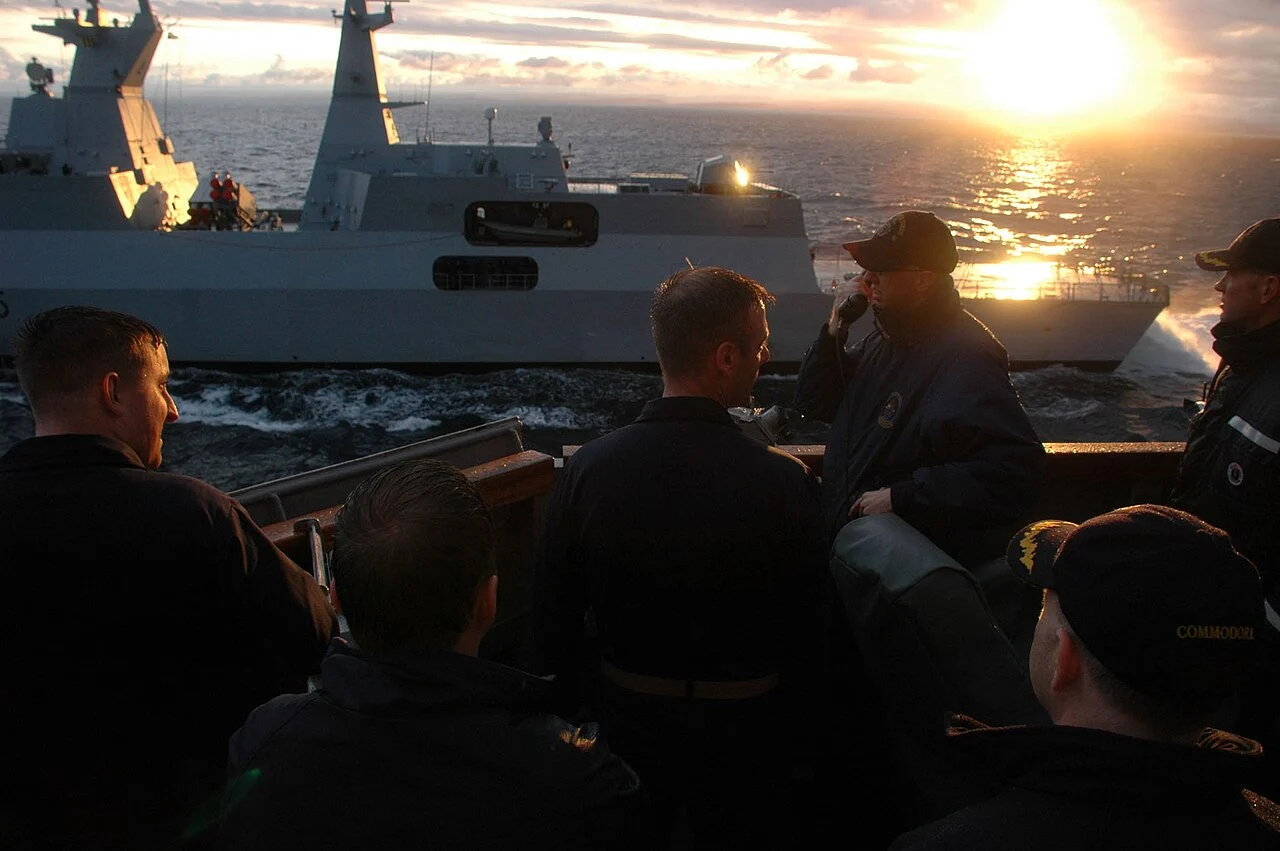
South Africa operates four Valour-class frigates (Amatola, Isandlwana, Spioenkop and Mendi), built on the German MEKO A-200SAN hull by what is now thyssenkrupp Marine Systems and commissioned between 2006 and 2007. Wikipedia and a list of active South African Navy ships give full-load displacement as approximately 3,700 tonnes against a standard displacement of around 3,590 tonnes; thyssenkrupp’s own release confirms the designation and delivery of all four hulls. All four are operational, though readiness reporting has flagged maintenance and crewing shortfalls keeping fewer than all four at sea at once. The class carries Denel’s Umkhonto surface-to-air missiles, Exocet anti-ship missiles and a Super Lynx helicopter.
7. MEKO A-200AN frigates (Algeria) — Algeria’s second MEKO design
Algeria operates two MEKO A-200AN frigates, Erradi and El Moudamir, built with German design input and commissioned from 2016. Published figures vary: Wikipedia gives a full-load displacement of 3,700 tonnes, while Navypedia lists 3,400 tonnes against a standard displacement of 2,500 tonnes. Both ships are operational, equipped with a 76mm gun, anti-ship and air-defence missiles, and a helicopter deck, sitting alongside Algeria’s Russian-supplied frigates in a fleet mixing European and Russian technology more than any other in Africa.
8. NNS Thunder, Hamilton-class cutter (Nigeria) — a US Coast Guard veteran in West African service
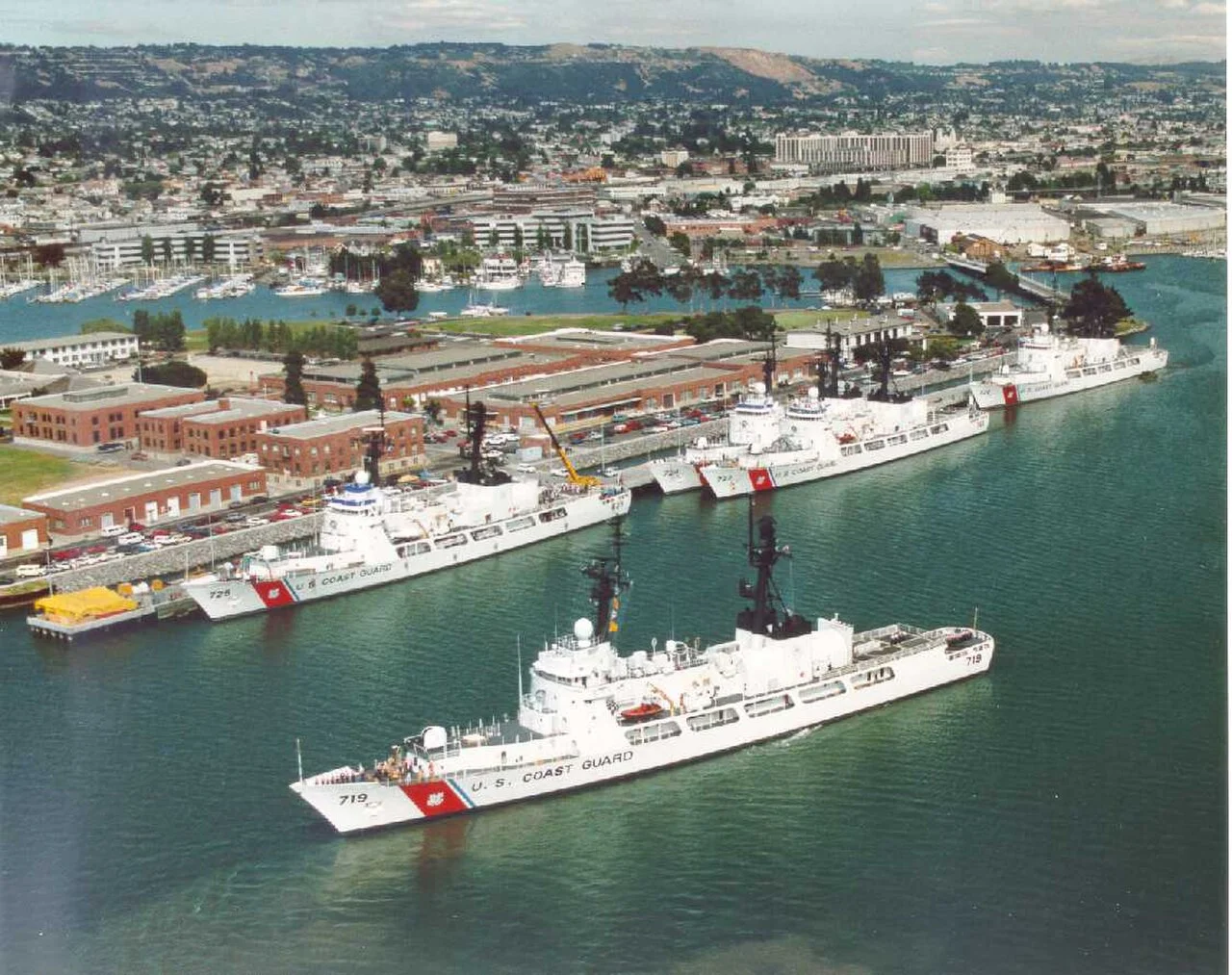
NNS Thunder was originally USCGC Chase (WHEC-718), a Hamilton-class cutter transferred to Nigeria in 2011 under the US Excess Defense Articles programme. Wikipedia’s Hamilton-class specifications give the class displacement as 3,250 long tons, repeated for Thunder on Navypedia, though neither source specifies standard or full load. The ship entered Nigerian Navy service as a long-range patrol and command vessel for the Gulf of Guinea, where Nigeria prioritises endurance over tonnage against piracy and oil theft. Nigeria has since supplemented Thunder with smaller, more numerous OPVs rather than a like-for-like replacement.
9. Gowind 2500-class corvettes “El Fateh” (Egypt) — four corvettes under the 2014 France-Egypt deal
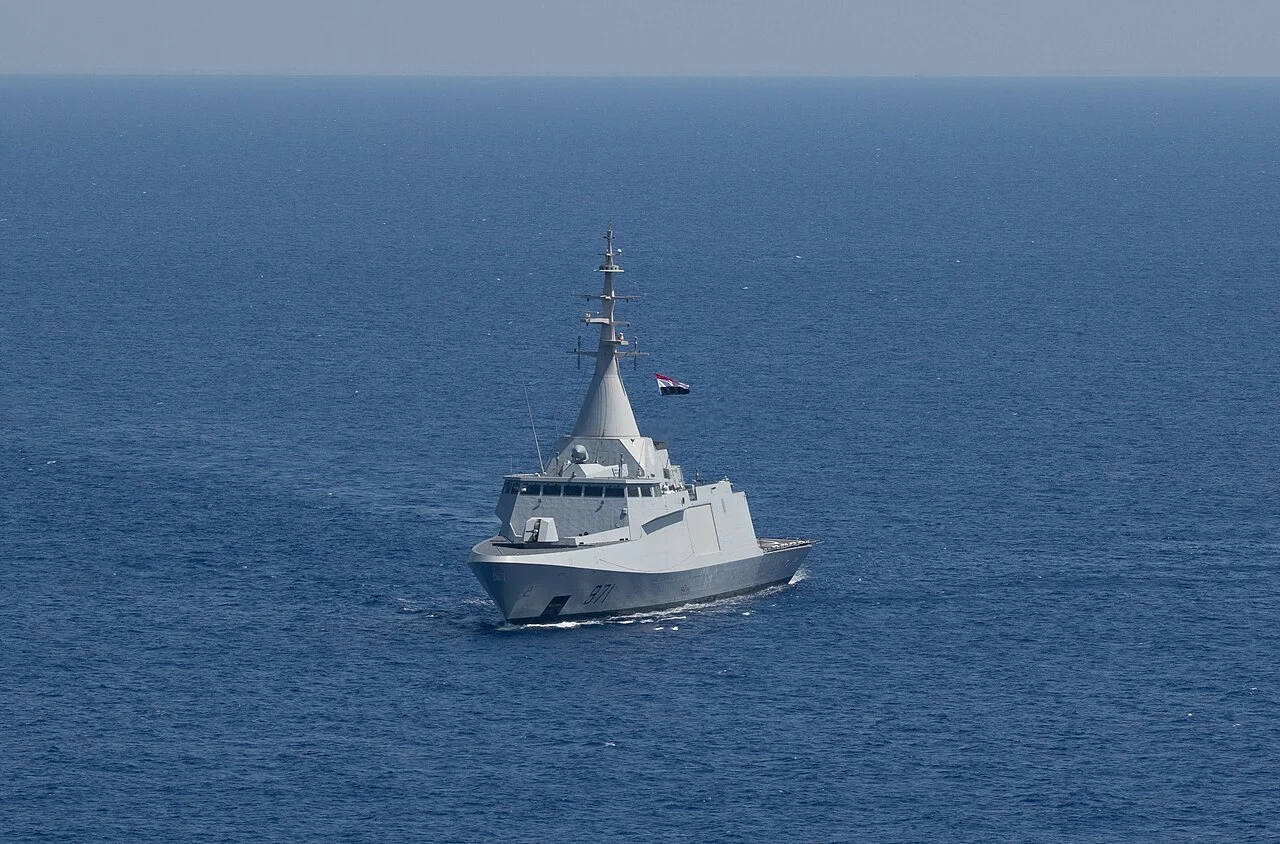
Egypt ordered four Gowind 2500-class corvettes from Naval Group in 2014: El Fateh, built in France and commissioned in 2017, and Port Said, El Moez and Luxor, assembled locally at Alexandria Shipyard under technology transfer. Wikipedia’s El Fateh article lists 2,500 tonnes, while Naval Group’s own datasheet, reproduced by EDR Magazine, gives 2,600 tonnes; the name “Gowind 2,500” reflects the contract specification, not a measured figure. El Fateh and Port Said are confirmed operational; El Moez and Luxor’s commissioning status varies by source and year, so treat it as less certain. The class gives Egypt a multi-mission corvette line built partly on domestic soil.
10. Sigma-class frigate Tarik Ben Ziyad (Morocco) — the smallest hull on this list, still above 2,000 tonnes
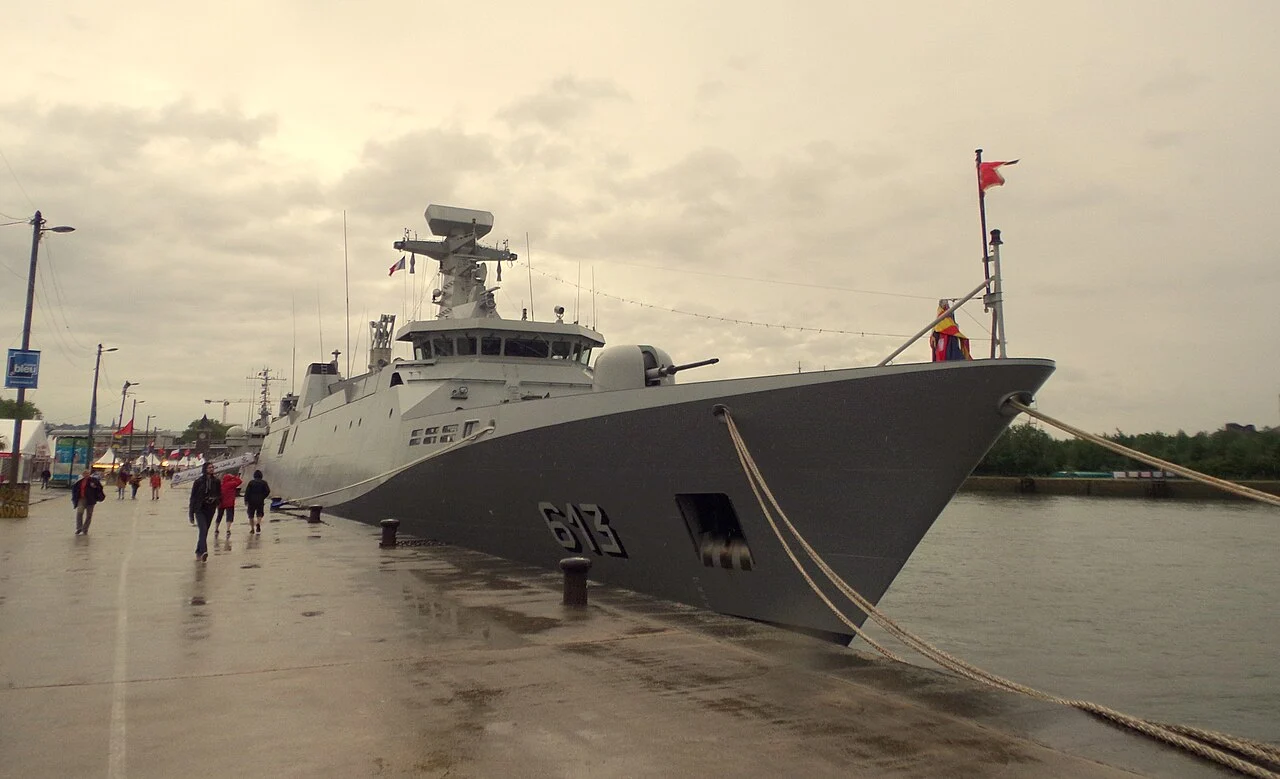
Tarik Ben Ziyad is the first of three Sigma 10513-class frigates Morocco ordered from Damen Schelde in 2008, commissioned in 2011. Sources disagree more than usual on tonnage: Wikipedia gives approximately 2,185 tonnes, Seaforces lists 2,335 tons, and Navypedia separates a standard displacement of 2,000 tonnes from a full-load figure of 2,335 tonnes, used here as the ship’s entry. The ship is operational, built slightly longer than its sister frigates for command and VIP facilities, and carries Exocet missiles and a Panda fire-control system. It closes out the hulls confirmed above 2,000 tonnes full load, alongside FREMM Mohammed VI as the backbone of Morocco’s surface fleet.
Methodology note
| Element | Standard applied |
|---|---|
| Metric | Full-load displacement in metric tonnes: hull weight with full fuel, stores, ammunition, crew and embarked troops, vehicles or aircraft where applicable. |
| Measurement standard | Builder/navy-published full-load figures (Naval Group, Fincantieri, Damen, thyssenkrupp, official fleet lists), cross-checked against Wikipedia, Seaforces and Navypedia. Where sources disagree, both are cited and the higher full-load figure is used for ranking. |
| Sources | See Sources below; every figure is cited where used. |
| Exclusions | Submarines; support craft under 1,500 tonnes; retired vessels; hulls not yet commissioned as of October 2026. |
| Caveats | Gaps between “standard” and “full load” figures, or between outlets, likely reflect differing measurement conventions rather than error; these are flagged in the text. |
| Rank | Ship / class | Country | Full-load displacement | Source / year |
|---|---|---|---|---|
| 1 | Gamal Abdel Nasser-class LHD | Egypt | ~21,300 t | Wikipedia/Seaforces, 2026 |
| 2 | SAS Drakensberg | South Africa | ~12,500 t | Wikipedia/SAnews, 2026 |
| 3 | Kalaat Béni Abbès-class LPD | Algeria | ~8,800 t (published figures vary, 8,800-9,000 t) | Wikipedia, 2026 |
| 4 | FREMM frigate Tahya Misr | Egypt | ~6,000 t | Army Recognition/DCNS, 2015 |
| 5 | FREMM frigate Mohammed VI | Morocco | ~6,000 t | Wikipedia/Navypedia, 2026 |
| 6 | Valour-class frigates | South Africa | ~3,700 t | Wikipedia/thyssenkrupp, 2007 |
| 7 | MEKO A-200AN frigates (Erradi-class) | Algeria | ~3,700 t (published figures vary, 3,400-3,700 t) | Wikipedia, 2026 |
| 8 | NNS Thunder (Hamilton-class) | Nigeria | ~3,250 t | Wikipedia/Navypedia, 2026 |
| 9 | Gowind 2500-class corvettes (“El Fateh” class) | Egypt | ~2,500-2,600 t | Wikipedia/Naval Group via EDR Magazine, 2026 |
| 10 | Sigma 10513 frigate Tarik Ben Ziyad | Morocco | ~2,335 t | Navypedia/Seaforces, 2026 |
Why it matters for Africa
The size gap at the top of this list reflects a gap in ambition and budget. Egypt’s two Mistral-class LHDs and its FREMM and Gowind frigates were acquired as part of a deliberate, French-backed build-up of blue-water capability after 2014, giving Cairo a navy that can project power far beyond its own coastline. Algeria, Morocco and South Africa have made smaller but still sizeable investments in frigate- and LPD-class hulls, while Nigeria’s single large cutter reflects a different logic: endurance for Gulf of Guinea patrol rather than displacement for its own sake.
For most of the continent, the real naval story is not displacement but numbers of smaller patrol vessels, covered in DefenceMENA’s companion piece on African offshore patrol vessels linked below. Sustainment is the binding constraint almost everywhere here: South Africa’s Valour-class frigates have struggled with availability despite a capable hull, and Egypt’s Gowind programme shows uneven commissioning timelines between its France-built and locally built units. Technology transfer, seen in Algeria’s Fincantieri-derived LPD and Egypt’s Alexandria-built corvettes, is the price exporters increasingly pay for African orders.
Sources
- ENS Gamal Abdel Nasser — Wikipedia
- Nasser Mistral-class LHD — Seaforces
- SAS Drakensberg — Wikipedia
- SA Navy starts process of replacing SAS Drakensberg — SAnews
- Kalaat Béni Abbès — Wikipedia
- Fincantieri launches Algerian Navy amphibious ship — Army Recognition
- ENS Tahya Misr — Wikipedia
- DCNS transfers FREMM Tahya Misr to Egyptian Navy — Army Recognition
- Moroccan frigate Mohammed VI — Wikipedia
- Mohammed VI — Navypedia
- Valour-class frigate — Wikipedia
- Fourth MEKO A-200SAN frigate commissioned — thyssenkrupp
- Algerian frigate Erradii — Wikipedia
- Algeria’s first MEKO 200AN frigate commissioned — Quwa
- NNS Thunder — Wikipedia
- Hamilton-class cutter — Wikipedia
- ENS El Fateh — Wikipedia
- Naval Group delivers first Gowind 2500 corvette to Egyptian Navy — EDR Magazine
- Moroccan frigate Tarik Ben Ziyad — Wikipedia
- Sigma-class frigates, Morocco — Naval Technology
Related on DefenceMENA: South African Navy Ships List (2026), Nigerian Navy Ships List (2026), How Strong Is Egypt’s Military in 2026? and Offshore Patrol Vessels and Coastal Security in African Navies.