EU Extends Operation Irini to 2029, Adds Russia Shadow-Fleet Task



The EU Council has extended Operation Irini, its naval mission off Libya, to March 2029 and handed it two new jobs: watching Russia’s sanctions-evading “shadow fleet” and protecting undersea cables and pipelines. The Libya arms-embargo mission it was built for gets no extra ships to do it.
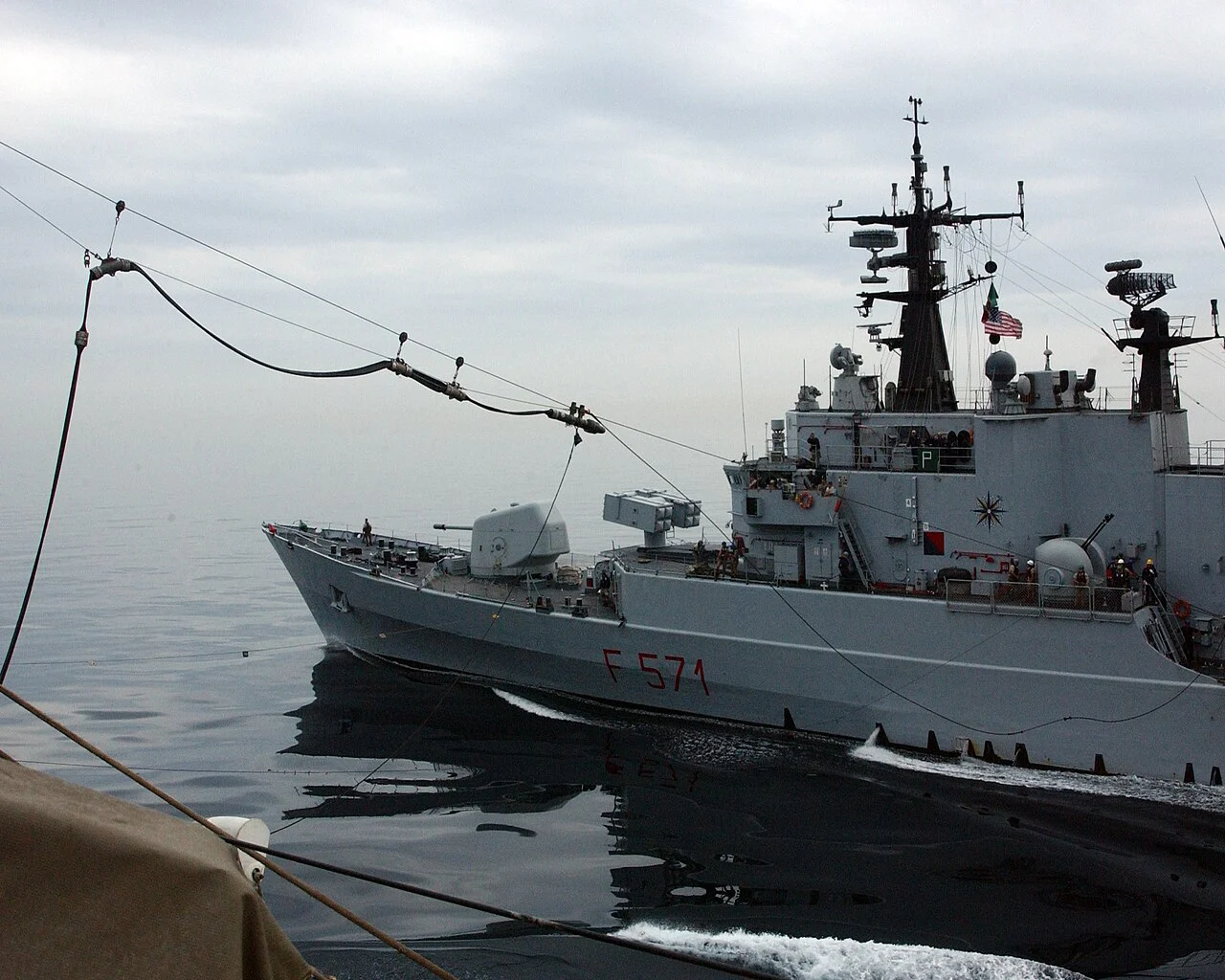
Photo: the Italian Navy frigate ITS Grecale (F 571), which has served with the EU’s Mediterranean naval mission off Libya. Credit: U.S. Navy photo by Joe Burgess, Public domain, via Wikimedia Commons
On 9 October the EU Council adopted Council Decision (CFSP) 2026/2243, extending Operation Irini to 31 March 2029 and widening its mandate for the first time since the mission replaced Operation Sophia in March 2020, Military Africa reported on 2 November. Common costs for the April 2027–March 2029 budget period rise to €16.88 million, up about 3% from the previous €16.35 million. Irini’s original job — enforcing the UN arms embargo on Libya through boardings, aerial patrols and training for Libyan maritime institutions — continues unchanged.
Two new tasks, no new ships
The renewal adds three roles on top of the Libya embargo work: deterring and protecting EU interests at sea, constraining Russia’s “shadow fleet” of sanctioned tankers, and safeguarding undersea infrastructure such as pipelines and communications cables. The shadow-fleet task draws on an IMO resolution and the Law of the Sea, but it grants no new boarding powers — the detentions carried out so far against suspected shadow-fleet vessels have been run nationally by Britain and France, not under the EU flag. The infrastructure task is similarly broad; Libya Security Monitor has noted it could in principle extend to monitoring a submarine communications cable, though no such operation has been announced.
Command stays Italian-led: Rear Admiral Marco Casapieri remains Operation Commander, while the rotating Force Commander post passed from Italy’s Rear Admiral Andrea Bielli to Greece’s Commodore Stavros Polydorou on 1 October in Taranto, ahead of Italy retaking the post when the new budget period opens in April 2027. The Greek frigate HS Navarinon currently flies as flagship, backed by two further Greek vessels and two Italian warships — a force that, as of Irini’s last public tally in October 2023, ran to two naval units, six aircraft and over 600 personnel in total.
Why the legal cover changed
The expansion comes as Irini’s original UN legal basis has lapsed. UN Security Council Resolution 2292, which from 2016 authorised inspections of vessels suspected of violating the Libya arms embargo, had been rolled over on a technical basis under Resolution 2804 since November 2025, but expired on 25 May 2026 with no member state requesting a further renewal. Brussels says Irini will simply continue to operate the embargo task under its own Council decision rather than a UN mandate — a shift that leaves the mission’s authority resting on EU law alone for enforcement actions in international waters off a state, Libya, that has not consented to an open-ended foreign naval mission.
Irini has had real enforcement moments: in July 2022 the Italian frigate ITS Grecale boarded the cargo ship Victory Roro and seized military vehicles, and in October 2022 it stopped the Dutch-flagged Meerdijk, which was later found to be carrying 41 UAE-built BATT UMG armoured vehicles. Those cases remain the exception rather than the rule across five years of patrols.
Why it matters for Africa
Libya is the one African state whose arms flows a European military mission is mandated to police, and that mission’s credibility has long rested on a simple trade-off: a small, fixed number of frigates and aircraft, stretched across a narrow set of jobs. Adding shadow-fleet monitoring and infrastructure protection without adding hulls means the same two or three ships now split their time between tracking sanctioned tankers in the central Mediterranean and watching for embargo violations off Tripoli and Benghazi — the two missions pull assets in different directions on any given patrol. For Libya’s rival administrations and the militias that profit from arms and fuel smuggling, a mission with a wider brief but a flat budget and headcount is, if anything, an easier one to work around. The African Union and Libya’s neighbours, who have pushed for years for tighter embargo enforcement, gain a mission that looks more substantial on paper in Brussels without gaining more ships on the water off their own coastline. It is also a reminder that even as the EU builds up direct peace and security dialogues with African partners such as South Africa, its oldest standing military commitment on the continent remains a Mediterranean naval patrol stretched thinner with each renewal.
Sources
- Military Africa: “EU Extends Operation Irini to 2029, Adds Russian Shadow Fleet Task”
- Operation Irini — official mission website