Egypt Says It Is Ready to Act Under Its Defence Pact With Sudan as Drones From ‘a Neighbouring Country’ Hit Sudan’s Grid




Egypt says it is ready to take “all necessary measures and actions” permitted under international law and its Joint Defence Agreement with Sudan to stop what it calls red lines in Sudan from being crossed. The language appears in a joint statement issued in Cairo on Monday 2 November 2026, after the third round of the “2+2” consultations between the two countries’ foreign and water ministers. The same text condemns drone attacks on Sudan’s power stations and water facilities “launched from a neighboring country” and rejects any “parallel entities” in Sudan.
The statement does not announce a deployment, a new treaty or any specific military step. It restates a position Egypt’s presidency first set out in December 2025, now signed off jointly with Khartoum’s government at a moment when Sudan is accusing Ethiopia of hosting drone launch sites used by the Rapid Support Forces (RSF).
What the joint statement says
The talks were led on the Egyptian side by Foreign Minister Badr Abdelatty and Water Resources and Irrigation Minister Hani Sewilam, and on the Sudanese side by Foreign Minister Mohi El-Din Salem and Agriculture and Irrigation Minister Ismat Qurashi. The 14-point statement, published in Arabic and English, covers security, the Nile and the Red Sea. The defence-relevant points are:
- Red lines and the defence pact (point 4): Egypt reaffirmed “the direct link between Egyptian and Sudanese national securities”, rejected “the establishment or recognition of any parallel entities”, and said it was in “full readiness to take all necessary measures and actions permitted under international law and the Joint Defense Agreement” so that “these red lines are neither undermined nor crossed”.
- Drone strikes on infrastructure (point 11): both governments “condemned the targeting by rebel militias of infrastructure in the Republic of Sudan, especially power stations and water facilities, through launching drones from a neighboring country”, and backed the Sudanese Armed Forces (SAF) in safeguarding national security, “including its water security”. The statement does not name the neighbouring country.
- Red Sea (point 10): the two sides said Red Sea governance belongs “exclusively” to littoral states, rejected maritime access for non-littoral states at the expense of littoral states’ sovereignty, and rejected attempts “to militarize the Red Sea”.
- Nile dam (point 6): they called Ethiopia’s dam on the Blue Nile a “persistent threat” to the two downstream states because of its unilateral management and the absence of a binding legal mechanism.
The red lines were drawn in December 2025
The red-lines formula is not new. Egypt’s presidency issued it on 18 December 2025, during a visit to Cairo by Gen. Abdel Fattah al-Burhan, head of Sudan’s Transitional Sovereign Council. That statement listed Sudan’s unity and territorial integrity, its resources and its state institutions as red lines, rejected secession and parallel entities, and said Egypt could act under international law and the joint defence agreement. Monday’s text quotes that statement and makes it a joint Egyptian-Sudanese position at ministerial level.
The “parallel entities” phrase points at the government set up by the RSF-led Sudan Founding Alliance (Ta’sis), which administers areas under RSF control from Nyala in South Darfur. Cairo recognises only the SAF-backed government.
What the Joint Defence Agreement is
The Joint Defence Agreement dates to 1976, when it was signed by Egypt’s Anwar Sadat and Sudan’s Jaafar Nimeiry. Analyses of the pact, including by the Peace and Security Studies Platform and Sudan Tribune, describe it as treating aggression against one party as aggression against both and providing for consultation and joint defensive measures. Its practical status after decades of political change in Khartoum is a matter of debate among analysts. Cairo refers to it as in force, and the Sudanese government has now signed a text that invokes it.
Egypt and Sudan also signed a separate military cooperation agreement in March 2021 and have held joint air and ground drills, including the “Nile Eagles” series of air exercises. None of the published texts set out what form Egyptian action under the pact would take.
The drone campaign behind point 11
The condemnation of drones “from a neighboring country” follows a week of strikes on Sudan’s grid. Drones hit the Abu Hamad and Al-Dabbah power stations on 1 November, and Sudan’s cabinet ordered a “maximum alert” (our report). Sudan has told the UN Security Council and the African Union that 162 drone attacks were launched from Ethiopian territory, naming sites near Asosa and Bahir Dar (details of Sudan’s complaint). Ethiopia denies the accusation and in turn accuses the SAF of backing rebels in Tigray. The two governments have traded these charges at the UN since October (background).
The other side’s accusations against Egypt
Egypt’s role in Sudan’s war is itself contested. Ta’sis accused Egypt in October of involvement in a drone strike on a Nyala livestock market, alleging the aircraft was launched from the Jebel Uweinat area near the border. The claim has not been independently verified, and Egypt has previously denied taking part in strikes against the RSF. A Reuters investigation in February identified Turkish-made Bayraktar Akinci drones at an airstrip in Egypt’s East Oweinat region, about 60 km from the Sudanese border, as reported by The Sudan Times. The presence of the drones does not on its own show who flew which mission. No public reaction from the RSF or Ta’sis to Monday’s statement had been reported by Tuesday morning.
Why it matters
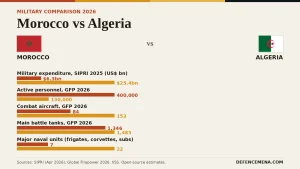
The statement links three files Cairo usually handles separately: the war in Sudan, the dispute with Ethiopia over the Nile dam, and the Red Sea. Egypt and Ethiopia are the two largest militaries in the Nile basin (how they compare), and Ethiopia’s drone fleet has grown fast since 2020 (its UAV inventory). With Sudan now formally blaming a neighbour for the drones hitting its grid, a ministerial reference to a mutual defence pact raises the stakes, even though it commits Egypt to nothing specific. For the state of Sudan’s own forces, see Sudan Military Strength 2026.
What to watch: any reply from Addis Ababa or from Ta’sis, whether Egypt and Sudan announce joint air-defence or counter-drone cooperation, and whether the issue is raised again at the UN Security Council or the African Union.
Sources
- Joint Statement of the third round of the “2+2” consultation mechanism between the ministers of foreign affairs and irrigation of Egypt and Sudan, Cairo, 2 November 2026 (English text as published by Al-Alam Al-Youm).
- Egypt State Information Service (citing MENA), joint declaration on the Eastern Nile basin, 2 November 2026.
- Daily News Egypt, “Egypt, Sudan reject unilateral Ethiopian dam management, reaffirm 1959 Nile water rights”, 2 November 2026.
- Al-Shorouk, Egyptian-Sudanese statement on the joint defence agreement, 2 November 2026.
- Egyptian Presidency, press statement on the visit of the President of Sudan’s Transitional Sovereign Council, 18 December 2025.
- Peace and Security Studies Platform, “The Joint Defense Agreement Between Sudan and Egypt: Activation Scenarios and Impact on the War”; Sudan Tribune, analysis of the 1976 joint defence agreement.
- The Sudan Times, “TASIS accuses Egypt of role in deadly Nyala market strike”, 17 October 2026.