Fast Attack Craft and Missile Boats in African Naval Service



Fast attack craft and missile boats once formed the striking edge of African navies, but the class has shrunk and aged across the continent. This gallery surveys six surviving or recently retired classes in African service, from Egypt’s US-built Ambassador Mk III to South Africa’s decommissioned Warrior-class strike craft, current as of November 2026.
DEFENCE AFRICA | Evergreen gallery | Data as of November 2026
Fast attack craft and missile boats were, for several African navies, the closest thing to a credible anti-ship strike capability during the Cold War and its aftermath. Egypt, Algeria, Nigeria, Tunisia, Kenya and South Africa all fielded dedicated missile-armed fast craft between the 1970s and the 2010s, supplied by the Soviet Union, France, West Germany, the United Kingdom, the United States and, in South Africa’s case, built locally from an Israeli design.
That picture has changed. Several of the classes below have lost their anti-ship missiles in refits, been partly decommissioned, or had their operational status become genuinely unclear in open sources. Only Egypt’s Ambassador Mk III fleet and Algeria’s Nanuchka II corvettes remain confirmed, missile-armed and in regular service. The rest illustrate a broader shift: African navies investing in offshore patrol vessels and frigates rather than renewing the fast-attack-craft class, a pattern this gallery traces class by class.
Key facts
- Egypt operates four Ambassador Mk III-class missile craft, each fitted with Harpoon anti-ship missiles (Wikipedia/Army Recognition, 2015)
- Algeria’s Nanuchka II-class corvettes date to 1980-81 and remain the country’s primary dedicated missile-boat force (Wikipedia, Nanuchka-class corvette)
- Kenya’s two Nyayo-class craft lost their Otomat anti-ship missiles in a 2011 refit at Fincantieri’s Italian yard, reducing them to a patrol role
- South Africa has decommissioned at least three of its original nine Warrior-class strike craft since 2003, most recently SAS Isaac Dyobha in 2022
- Nigeria’s Ekpe- and Siri-class missile boats, delivered between 1979 and 1981, have disputed current operational status in open sources
1. Ambassador Mk III-class (Ezzat-class) — Egypt’s US-built Harpoon strike craft
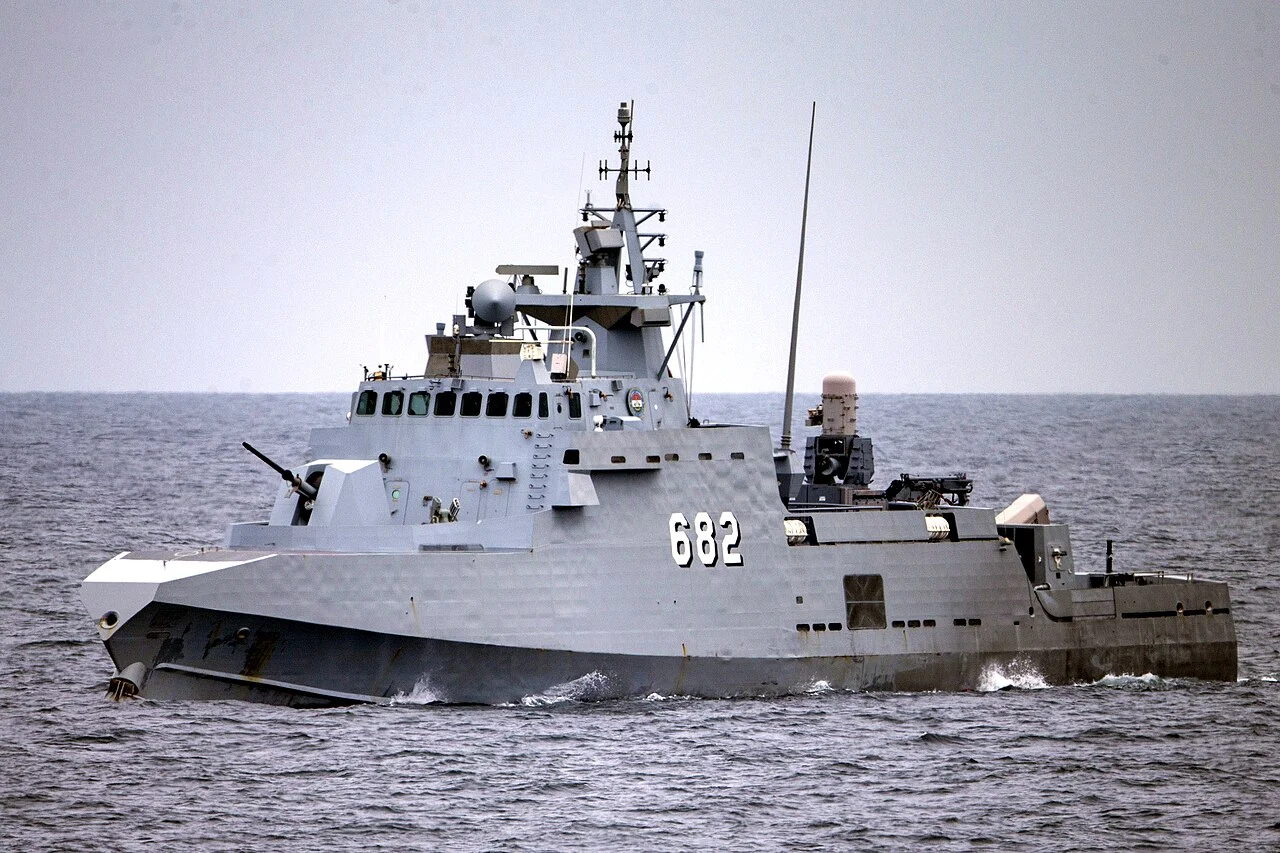
Egypt’s four Ambassador Mk III-class fast missile craft — Soliman Ezzat (682), Fouad Zekry (684), Alaa Gad (686) and Mohamed Fahmy (688) — were built by Halter Marine (now VT Halter Marine) at Pascagoula, Mississippi. The first two entered service in the mid-2000s; the final pair were delivered in 2015, raising Egypt’s fleet from two boats to four, according to Army Recognition’s 2015 report on the handover. The class is operational: Soliman Ezzat was photographed exercising with the US Navy’s USS Fort McHenry in February 2019, and the type continues to appear in US-Egyptian naval cooperation.
Each boat is armed with RGM-84 Harpoon anti-ship missiles and a 76mm OTO Melara main gun, giving Egypt a dedicated littoral strike capability that complements its larger FREMM and Gowind frigates. Within the region, this makes the Ambassador Mk III class the most modern dedicated missile boat still in front-line African service, and the clearest counter-example to the broader pattern of ageing or disarmed fast attack craft covered elsewhere in this gallery.
2. Nanuchka II-class (Project 1234EM) corvettes — Algeria’s Soviet-era missile force
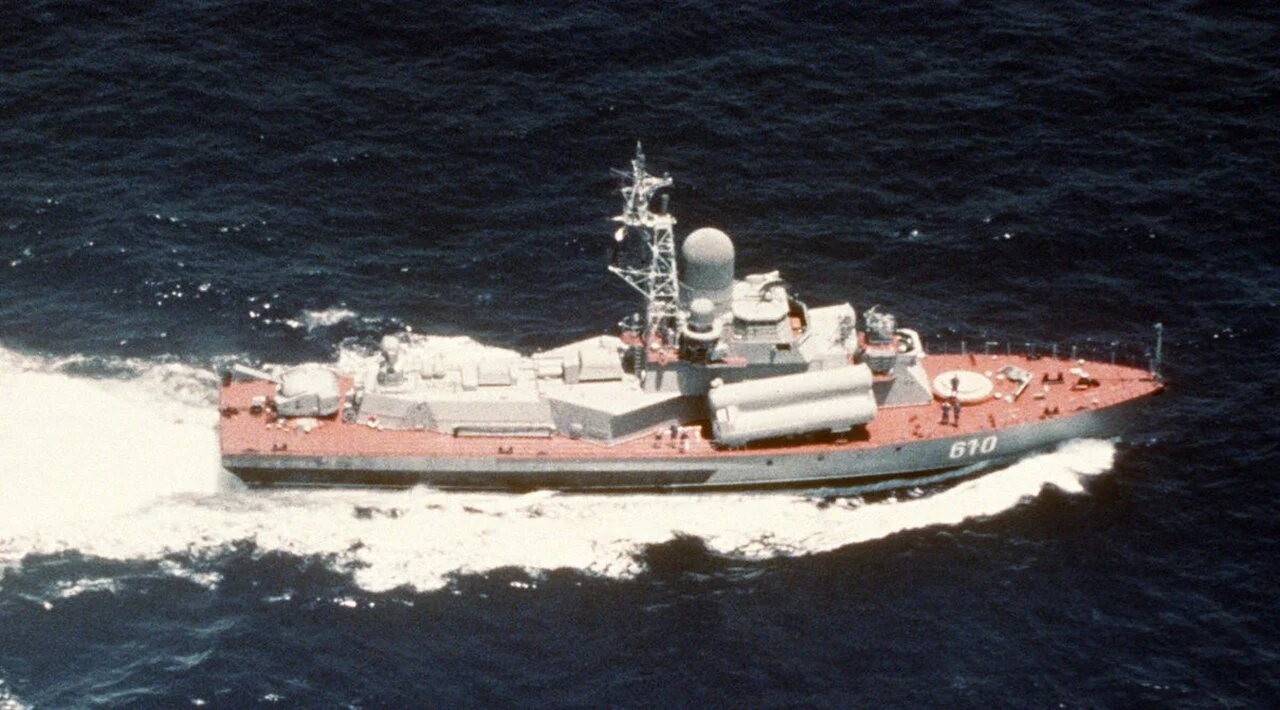
Algeria’s Reis Ali and Salah Rais are Project 1234E/1234EM “Nanuchka II” corvettes, an export variant of a Soviet design, commissioned in 1980-81. Wikipedia’s account of the class lists three ships delivered to Algeria in that period and still carried as in service, though open sources do not agree on the exact current hull count: published figures vary between two and three active units depending on the source and year consulted. The class is sized between a large fast attack craft and a light corvette, which is why Algeria’s navy and most Western references classify it as a missile corvette rather than a pure fast attack craft.
Armament on the export variant centres on the P-15M Termit anti-ship missile, known to NATO as the SS-N-2C Styx, originally carried in two twin launchers, alongside an Osa-M short-range air defence system. The class is operational, though its Soviet-era sensors and missiles are decades old next to Algeria’s newer MEKO-200 and Erdemoglu-class frigates. It remains Algeria’s only dedicated fast missile-boat class, distinct from the larger frigates covered in Africa’s 10 Largest Warships by Full-Load Displacement.
3. Bizerte-class patrol and attack craft — Tunisia’s coastal strike flotilla
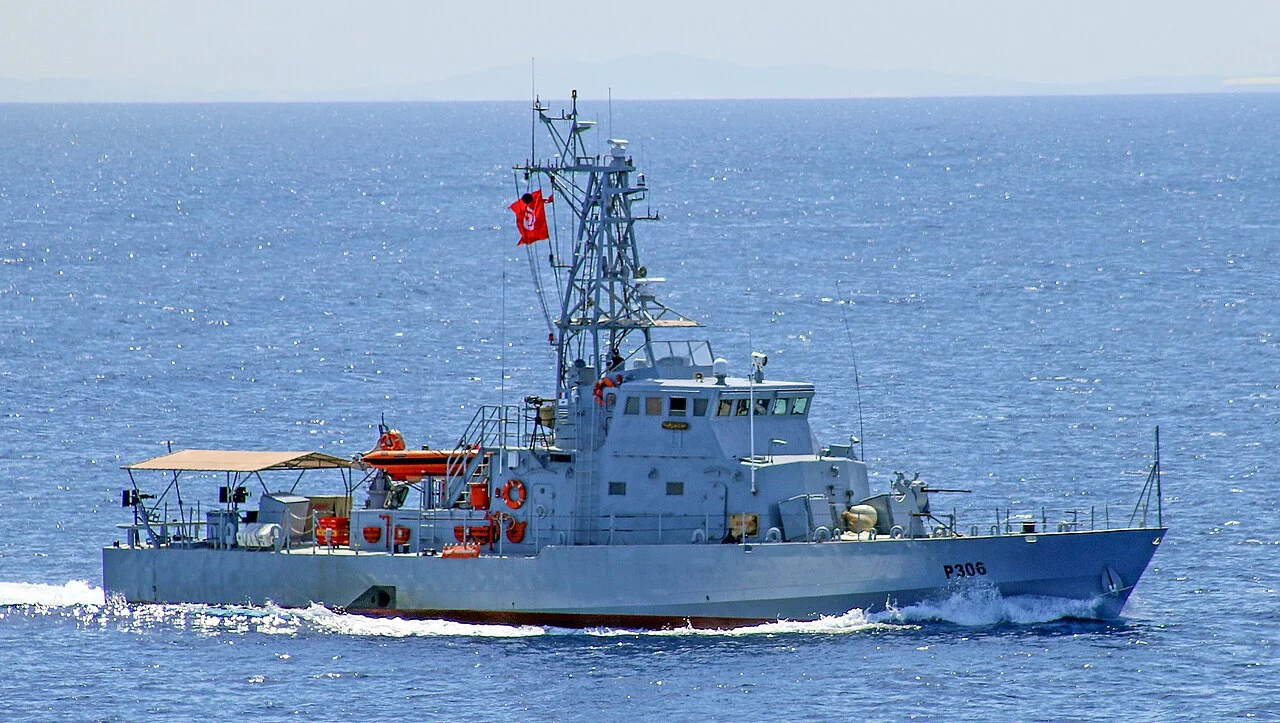
Tunisia’s Bizerte-class boats, including Menzel Bourguiba (P306), are gun-armed patrol and attack craft that remain active: Menzel Bourguiba was photographed operating alongside the US Navy command ship USS Mount Whitney in the Mediterranean in April 2025, confirming a current operational status. Sources disagree on the class’s exact origin: Wikipedia’s Tunisian Navy article describes the Bizerte boats as a Lürssen 58-metre design built in Germany, while Military Periscope’s overview describes a French P48-type design. Published figures vary on this point, and this gallery notes both rather than picking one.
Tunisia separately operates the missile-armed La Galite-class (a modified La Combattante IIIM design built by France’s CMN and commissioned in 1985), armed with MM40 Exocet anti-ship missiles, though open reporting suggests those three boats are aged and in need of refit. Between the two classes, Tunisia still fields the broadest fast-attack-craft mix of any Maghreb navy outside Algeria and Egypt, even though its missile-armed boats are the older of the pair.
4. Ekpe-class and Siri-class fast attack craft — Nigeria’s Cold War-era missile boats
Nigeria built up Africa’s largest missile-boat force in the early 1980s: three German-designed Ekpe-class boats (Ekpe, Damisa and Agu, a Lürssen FPB57-type design) and three French-designed Siri-class boats (Siri, Ayam and Ekun, a Combattante IIIB-type), delivered between 1979 and 1981 alongside the MEKO 360H frigate NNS Aradu. The Ekpe class was refitted with Otomat Mk1 anti-ship missiles in the mid-1990s, according to an IDSA assessment of Nigeria’s naval power, though the same assessment notes those missiles had reached the end of their service life.
Current status is genuinely disputed: Wikipedia’s infobox for NNS Ekpe lists the ship as inactive, while at least one naval inventory lists the Ekpe-class boats as active. This gallery states that status is unconfirmed rather than asserting either figure. What is not disputed is that Nigeria’s current anti-piracy and Gulf of Guinea security effort now rests on newer offshore patrol vessels such as the NNS Kali-class, covered in Nigeria’s Navy Commissions First of Ten SEEPCO-Funded Security Vessels, rather than on the Ekpe- or Siri-class boats. The full current inventory is set out in Nigerian Navy Ships List (2026).
5. Nyayo-class fast attack craft — Kenya’s disarmed missile boats
Kenya’s two Vosper Thornycroft-built Nyayo-class craft, KNS Nyayo and KNS Umoja, entered service in the late 1980s armed with Otomat anti-ship missiles; Umoja was used in 1989 to fire Kenya’s first live Otomat test shot, according to a Deagel naval inventory. The boats remain in Kenyan service today, but in a changed role: a 2011 refit at Fincantieri’s shipyard in Italy removed the Otomat missile system entirely, reducing both vessels to a patrol configuration without an anti-ship strike capability.
That makes the Nyayo class the clearest single example in this gallery of a fast attack craft being deliberately disarmed rather than replaced. Kenya’s navy has not announced a dedicated missile-boat replacement; its newer tonnage, including the OPV KNS Jasiri, has focused on patrol and partnership missions rather than anti-ship strike.
6. Warrior-class (ex-Minister-class) strike craft — South Africa’s retiring missile boats
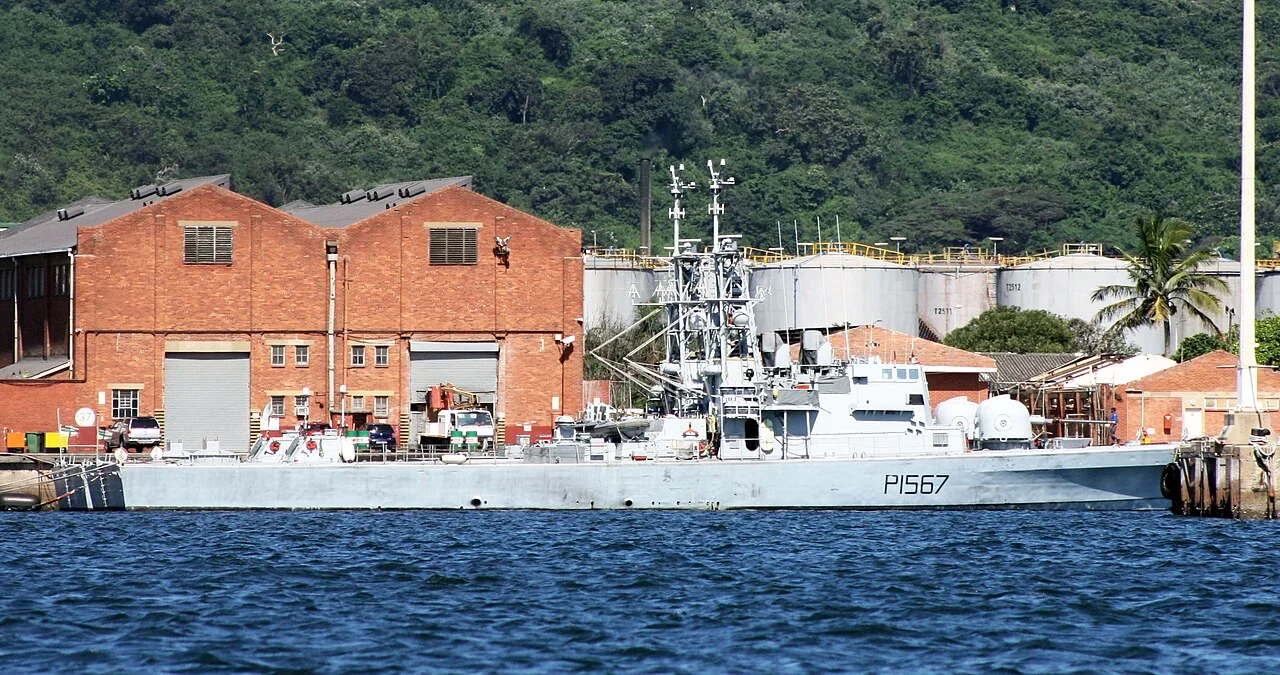
South Africa’s nine Minister-class strike craft, locally built from the late 1970s under licence from Israel’s Reshef design and renamed the Warrior class in 1997, once carried the Skerpioen missile, a South African-produced version of the Gabriel II anti-ship missile. The Skerpioen system was withdrawn in 2007 once the Valour-class frigates entered service with Exocet missiles, according to the South African Navy Museum’s account of the class, leaving the Warrior craft as unarmed patrol hulls.
The class is now being retired in stages rather than replaced as a type. SAS Jan Smuts was decommissioned in 2003 and scrapped the following year; SAS Galeshewe (P1567), shown above, was decommissioned in 2020; SAS Isaac Dyobha (P1565) followed in 2022. At least one hull, SAS Makhanda (P1569), was reported still in limited use as of 2020, but this gallery could not confirm its status beyond that date, so the current number of surviving Warrior-class hulls is not verified. South Africa’s full current fleet, including the frigates that absorbed the strike craft’s missile role, is listed in South African Navy Ships List (2026).
Why it matters for Africa
The fast attack craft and missile boat has largely fallen out of favour as a procurement priority for African navies, even where the platforms themselves survive on paper. Egypt is the exception that proves the pattern: its Ambassador Mk III fleet is modern, missile-armed and regularly exercised precisely because Cairo has kept investing in the type as part of a broader naval modernisation that also includes FREMM and Gowind frigates. Algeria’s Nanuchka II corvettes persist mainly because no replacement class has yet entered service, not because the Soviet-era design remains a procurement priority.
Everywhere else in this gallery, the direction of travel is the same: missiles removed (Kenya), status disputed or presumed non-operational (Nigeria), or hulls retired in stages without a one-for-one replacement (South Africa). The affordability logic is straightforward. A dedicated fast attack craft with an anti-ship missile fit needs regular missile recertification, specialist maintenance and a credible threat to justify the cost; for most African navies, the more pressing missions are counter-piracy, fisheries protection, counter-trafficking and coastal surveillance, all of which an unarmed or lightly armed offshore patrol vessel performs more cheaply and more often. That shift in orientation — tracked across this site in pieces such as Offshore Patrol Vessels and Coastal Security in African Navies — explains why the fast-attack-craft and missile-boat class, once a marker of naval ambition in the 1970s and 1980s, has become one of the smaller and less modernised parts of most African fleets by 2026.
Sources
- Wikipedia — Ambassador MK III missile boat
- Army Recognition — USA delivered the last two Ambassador Mk III fast missile craft (Ezzat class) to Egyptian Navy, 2015
- Wikipedia — Nanuchka-class corvette
- Wikipedia — Tunisian Navy
- Military Periscope — Bizerte (P-301) class overview
- Wikipedia — NNS Ekpe
- IDSA — Nigeria’s Naval Power: Reviving Capacity After Prolonged Decline
- Wikipedia — Kenya Navy
- Wikipedia — Warrior-class strike craft
- South African Navy Museum — The Final Voyage of SAS Galeshewe