Mi-8/17 Helicopter Family Explained



The Mi-8/17 family is the most widely used helicopter type in African military service, built in parallel at two Russian plants under three export names. This explainer traces its eight major production variants, from the 1967 Mi-8T to the digital Mi-171A2, and identifies which versions African air forces currently operate, fly on order, or have retired.
DEFENCE AFRICA | Family explained | Data as of October 2026
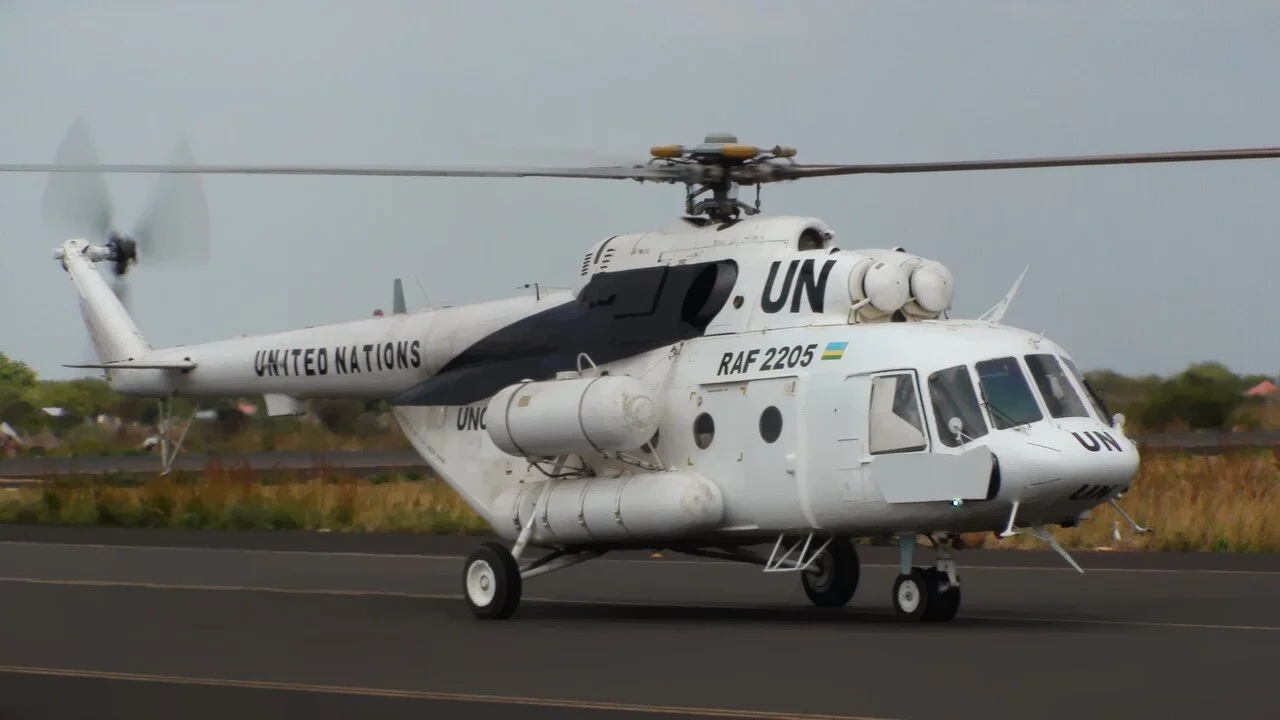
Photo: Rwandan Air Force Mil Mi-17 helicopter at Juba, South Sudan. Credit: Alexandr Podolian, CC BY-SA 4.0, via Wikimedia Commons
No single airframe has done more to move troops, casualties and cargo across African battlefields than the Mil Mi-8 and its descendants. The family began as a single Soviet transport helicopter in the mid-1960s and split into two parallel production lines: the Kazan Helicopters plant, which builds aircraft under the Mi-17 export name, and the Ulan-Ude Aviation Plant, which builds the related Mi-171 and Mi-171Sh. Inside Russia the type is still known simply as the Mi-8. The result is a single rotorcraft family sold worldwide under at least three different names, which creates persistent confusion in open-source reporting about which variant a given air force actually operates.
For African armed forces, the appeal has been consistent for six decades: a rugged airframe that tolerates poor maintenance infrastructure, hot and high-altitude operating conditions, and unprepared landing zones, backed by a continent-wide pool of spares and Russian, Ukrainian and Eastern European overhaul capacity. At least a dozen African air forces currently list a member of the family in their inventory, according to Wikipedia’s operator list citing Flight International’s World Air Forces review; because that underlying count is now more than a decade old, it should be read as a floor on continued operators rather than a precise current figure, and individual deliveries cited below are sourced separately.
This piece sets out the family’s eight major variants in production order, then summarises which of them are confirmed in African service today, with a status label for every acquisition mentioned.
Key facts
- The Mi-8 entered Soviet Air Force service in the late 1960s and remains in production today as the Mi-171A2 (Wikipedia, citing Russian Helicopters documentation).
- Ghana’s air force took delivery of the first four of six Mi-171Sh ordered from Rosoboronexport, commissioned into service in January 2013 (HeliHub, 2013).
- Mali’s air force received Mi-171/Mi-171Sh helicopters from Russia on 30 September 2021; Malian officials and AFP reported four aircraft, while Russia’s FSVTS later told TASS the 2021 delivery covered two Mi-171Sh — published figures vary (The Moscow Times, 2021; Military Africa, 2021).
- Nigeria ordered six Mi-171Sh and six Mi-35M gunships from Rosoboronexport under an August 2014 contract (Shephard Media, 2014; Defense Mirror, 2014).
- Algeria refurbished dozens of its Mi-171Sh fleet under a Russian programme adding the Shturm-V guided-missile system, rather than the South African upgrade kit once proposed for the type (Shephard Media; Army Recognition, 2016).
1. Mi-8T (Hip-C) — the baseline, since the late 1960s
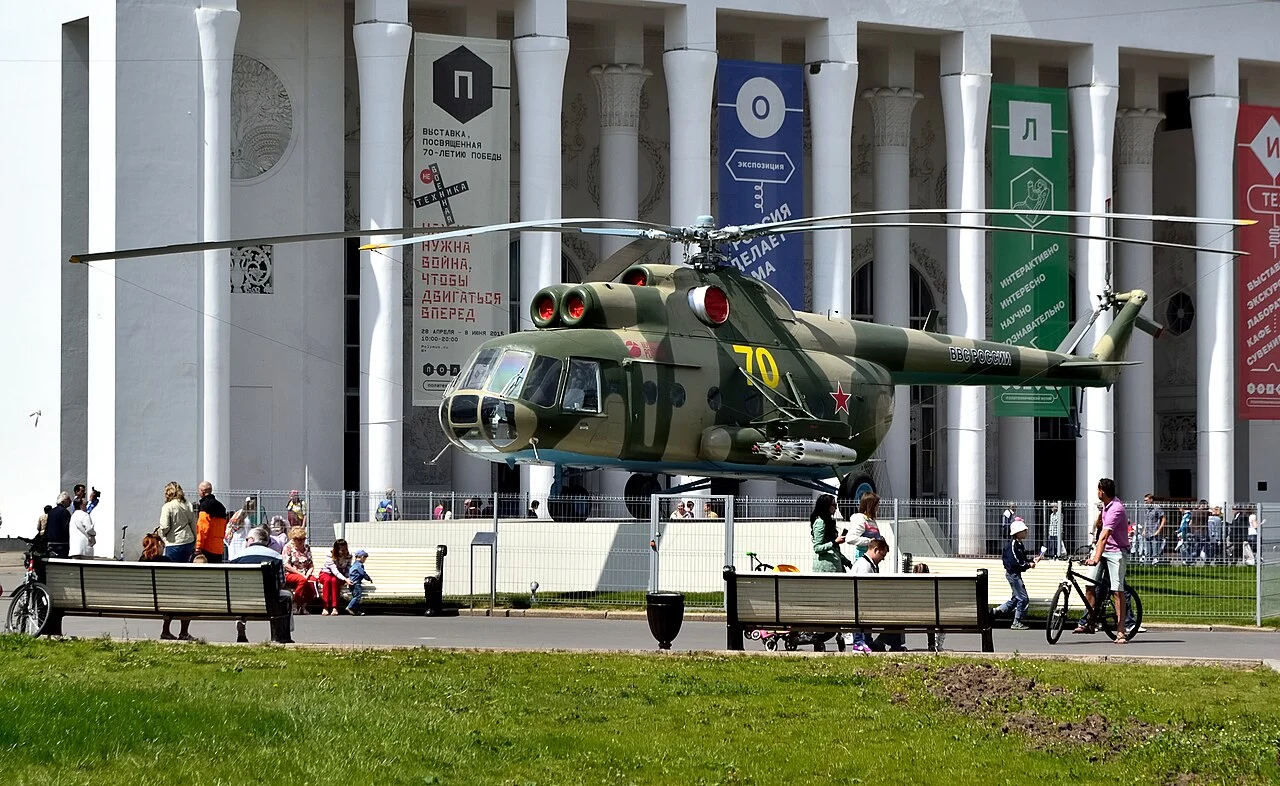
The Mi-8T (NATO reporting name Hip-C) was the original production transport, powered by two Isotov/Klimov TV2-117A turboshaft engines rated at roughly 1,100 kW each and able to lift around 24 troops or a 4,000 kg external load (Wikipedia, citing manufacturer specifications). It introduced the layout that defined the family: a boxy cargo cabin with clamshell rear doors, a five-blade main rotor and, on this earliest line, a right-mounted tail rotor later switched to the left on export-oriented derivatives. Armed sub-variants of the Hip-C, including the Mi-8TV, added a nose-mounted machine gun and six hardpoints for rocket pods or anti-tank missiles. Several African air forces that acquired Soviet-era stock still carry baseline Mi-8T/Mi-8TV airframes on their books, though attrition and a lack of OEM support have thinned these fleets; status in African service: operational where retained, with no confirmed new deliveries since the Soviet era.
2. Mi-8TV / Mi-8TBK — armed Hip derivatives
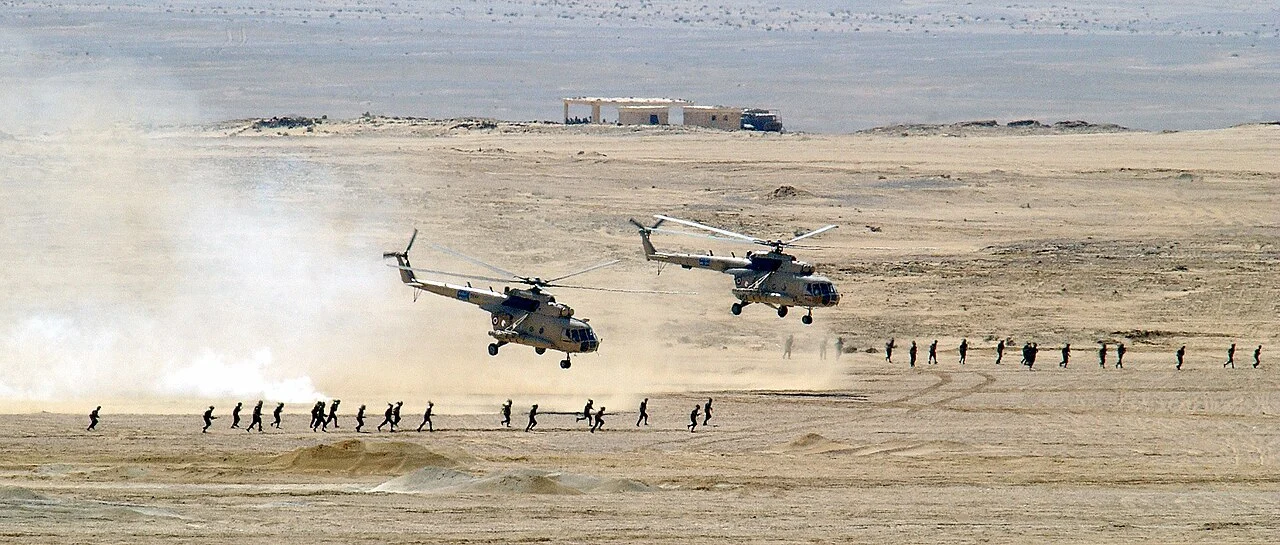
These armed transport derivatives kept the Mi-8T’s airframe and engines but added a gun position and weapons pylons, turning the helicopter into a limited close-support and escort platform alongside its troop-carrying role. Egypt has operated Mi-8 Hip helicopters for decades, using them in large joint exercises such as Bright Star alongside US and other partner forces; the aircraft shown here is dropping Egyptian troops during a Bright Star iteration at Mubarak Military City (Wikimedia Commons, image metadata). The armed Hip variants have been progressively superseded across most operators by the dedicated Mi-24/Mi-35 gunship family for attack missions, leaving the Mi-8TV mainly in secondary escort and utility roles where it survives; status: operational in reduced numbers, no confirmed new production.
3. Mi-17 (Hip-H, Kazan export) — the most widely exported member
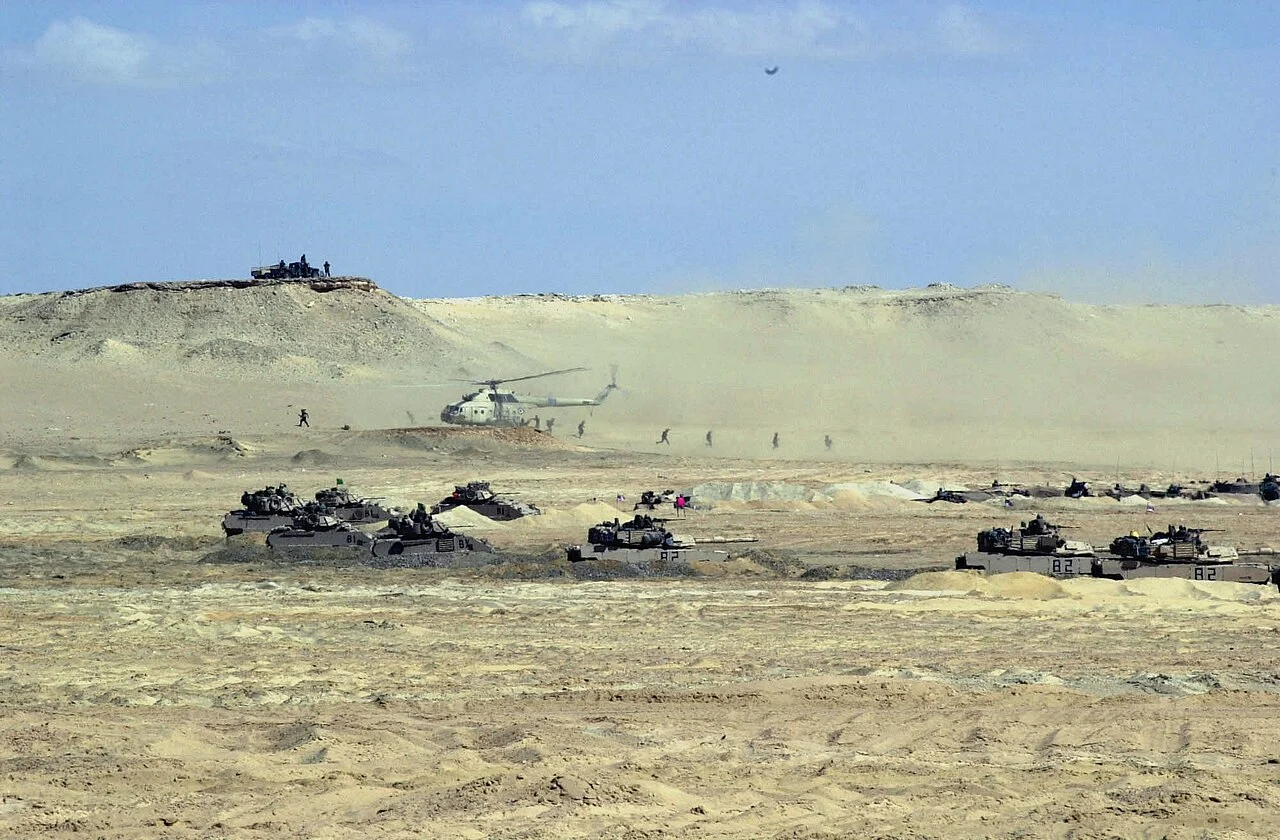
Built at Kazan Helicopters, the Mi-17 is the export-marketed development of the uprated Mi-8MT, fitted with more powerful TV3-117MT engines, dust-protection shields over the engine intakes and a left-mounted tail rotor for improved yaw control, all aimed at hot and high-altitude performance that the original Mi-8T lacked (globalsecurity.org; Wikipedia). It became the family’s best-selling export line, with Wikipedia’s operator list naming customers across Africa, Asia and Latin America. Egypt is among the confirmed African operators, flying Mi-17s in large-scale live-fire exercises with partner forces, as shown above; status: operational across multiple African air forces, with fleet sizes not independently verified for most operators.
4. Mi-171 (Ulan-Ude export/utility) — the parallel production line
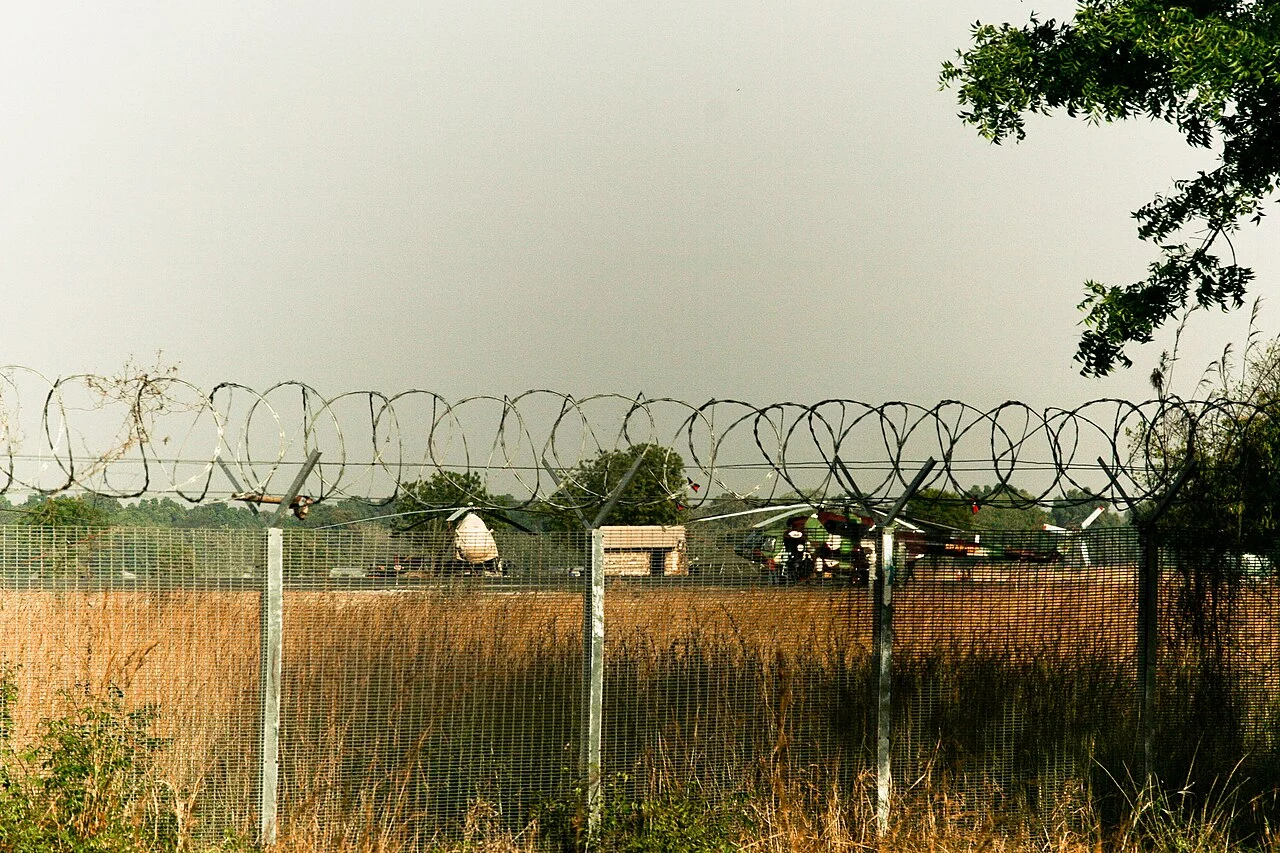
The Mi-171 is the Ulan-Ude Aviation Plant’s equivalent development of the Mi-8AMT, built for civil and utility export markets and serving as the baseline for the armed Mi-171Sh covered below. The two plants produce broadly similar aircraft with differences concentrated in avionics fit and customer-specific equipment rather than airframe design (globalsecurity.org). In Africa, the type’s utility role has often been filled by mixed Mi-17/Mi-171-family fleets whose exact sub-variant is not always specified in public reporting; the Sudan People’s Liberation Army’s air wing — which became the air force of newly independent South Sudan in July 2011 — received Mi-17-family helicopters at Juba before independence, not far from Sudan’s own air force, illustrating how quickly the type reaches new African operators once a transport or peacekeeping need arises; status: operational, exact sub-variant not confirmed for this specific delivery.
5. Mi-171Sh — the armed assault-transport of choice in West Africa
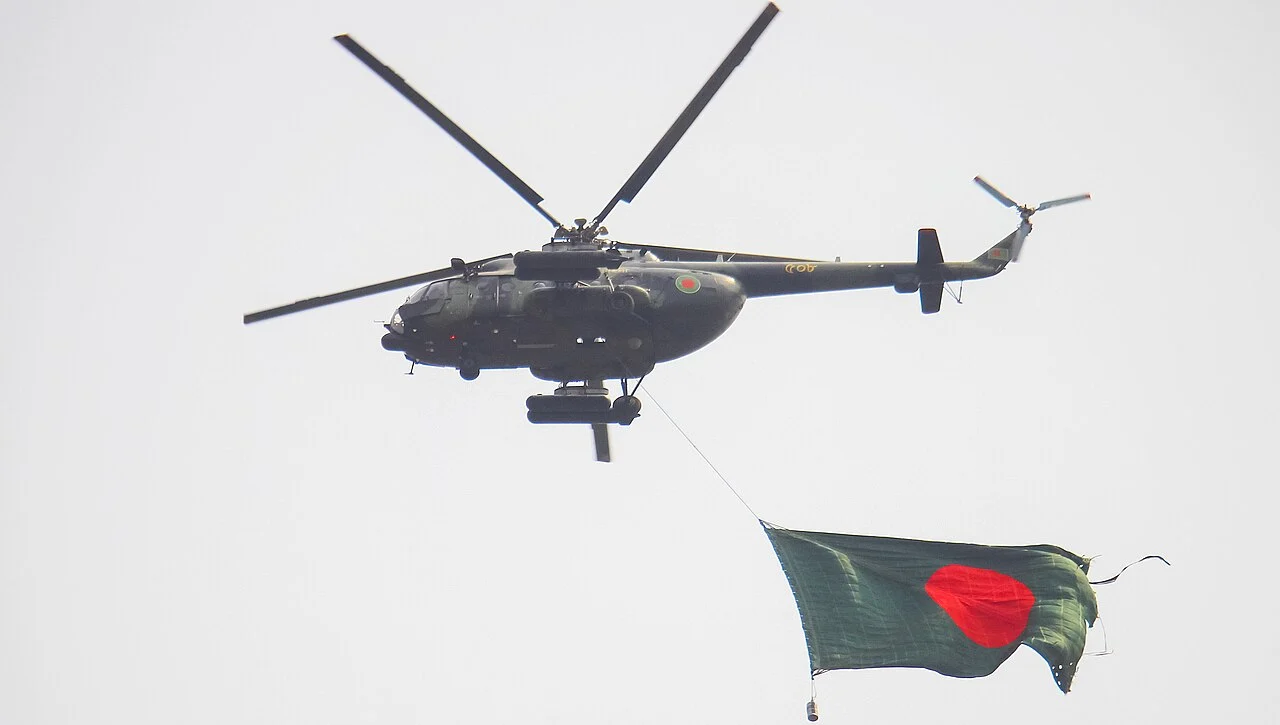
The Mi-171Sh adds forward-firing gun and rocket pods, hardpoints for guided anti-tank missiles, improved cockpit armour and day/night targeting sights to the Mi-171 airframe, turning it into a dedicated combat-transport for counter-insurgency and air-assault missions. It is the single most common current-generation member of the family in African service:
- Ghana — ordered six Mi-171Sh from Rosoboronexport in September 2012 and received the first four in January 2013, commissioned into service that month (HeliHub, 2013); status: delivered/operational, with delivery of the remaining two not confirmed in subsequent reporting.
- Mali — took delivery of Mi-171/Mi-171Sh helicopters on 30 September 2021 under a December 2020 contract, commissioned into service at Bamako’s BA101 in November 2021; the Malian government and AFP reported four aircraft, while Russia’s FSVTS told TASS (as reported by Scramble and other outlets) that only two Mi-171Sh were delivered in 2021 — published figures vary (The Moscow Times, 2021; Military Africa, 2021).
- Burkina Faso — contracted for two Mi-171Sh at the Army-2017 forum in Russia, with Rosoboronexport planning delivery in 2018; subsequent delivery has not been independently confirmed in open-source reporting (africanaerospace.aero, 2017).
- Nigeria — ordered six Mi-171Sh alongside six Mi-35M gunships from Rosoboronexport under an August 2014 contract; Nigeria separately inducted a Mi-171E utility variant into air force service, reported by Jane’s (Shephard Media, 2014; Defense Mirror, 2014; Jane’s).
- Algeria — refurbished dozens of its existing Mi-171Sh fleet under a Russian programme, reportedly adding the Shturm-V guided-missile system in place of a South African upgrade kit once offered for the type; exact fleet numbers vary by source (Shephard Media; Army Recognition, 2016).
Status across these cases ranges from contracted to delivered to operational; none should be read as a completed large-scale re-equipment, since several of the quoted deliveries cover only a handful of aircraft against wider national helicopter fleets that still include other types.
6. Mi-17V-5 — Kazan’s digital-cockpit upgrade
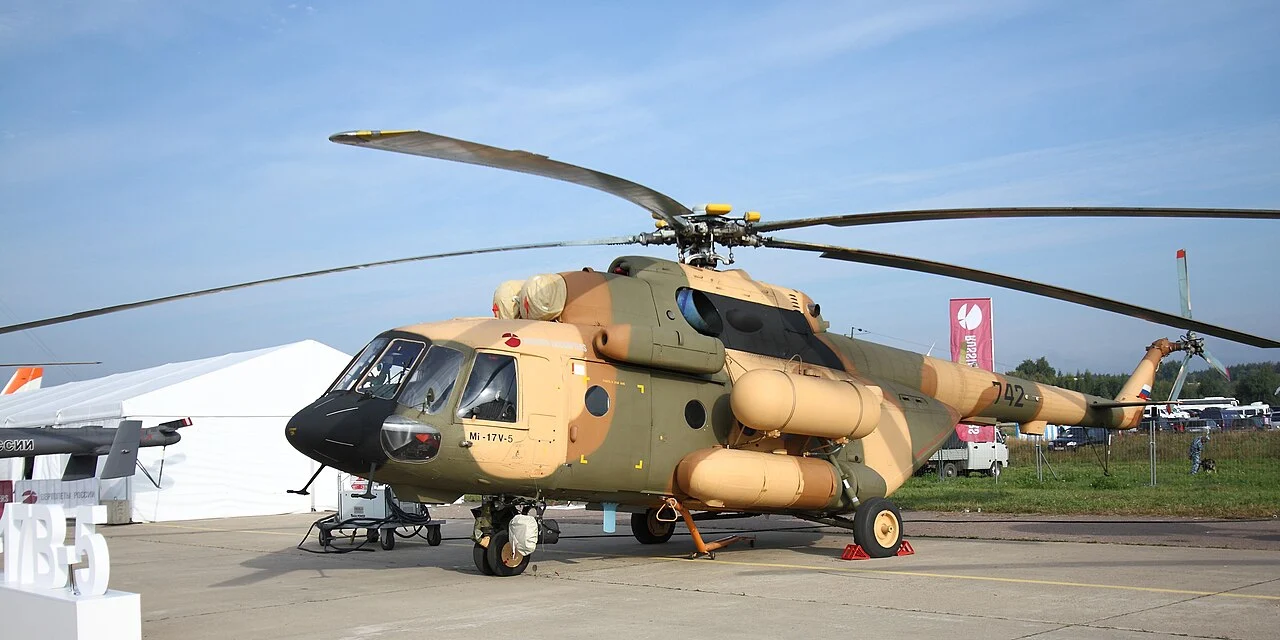
Kazan’s Mi-17V-5 replaces the Mi-17’s clamshell rear cargo doors with a single loading ramp, adds digital avionics and, on some deliveries, uprated VK-2500 engines; industry sources differ on whether it first flew in the mid or late 1990s, so this piece does not state a single introduction year as fact. It has sold widely to India, Iraq and several other air forces worldwide in one line (Wikipedia; globalsecurity.org). No African air force is confirmed in current public reporting to operate the Mi-17V-5 specifically; African buyers covered in this piece have instead taken delivery of the Ulan-Ude-built Mi-171/Mi-171Sh line, and this article does not assume the two are interchangeable in sourcing terms even though they share the same NATO reporting name family; status in Africa: not verified as an operated variant.
7. Mi-8AMTSh “Terminator” — the modernised gunship-transport
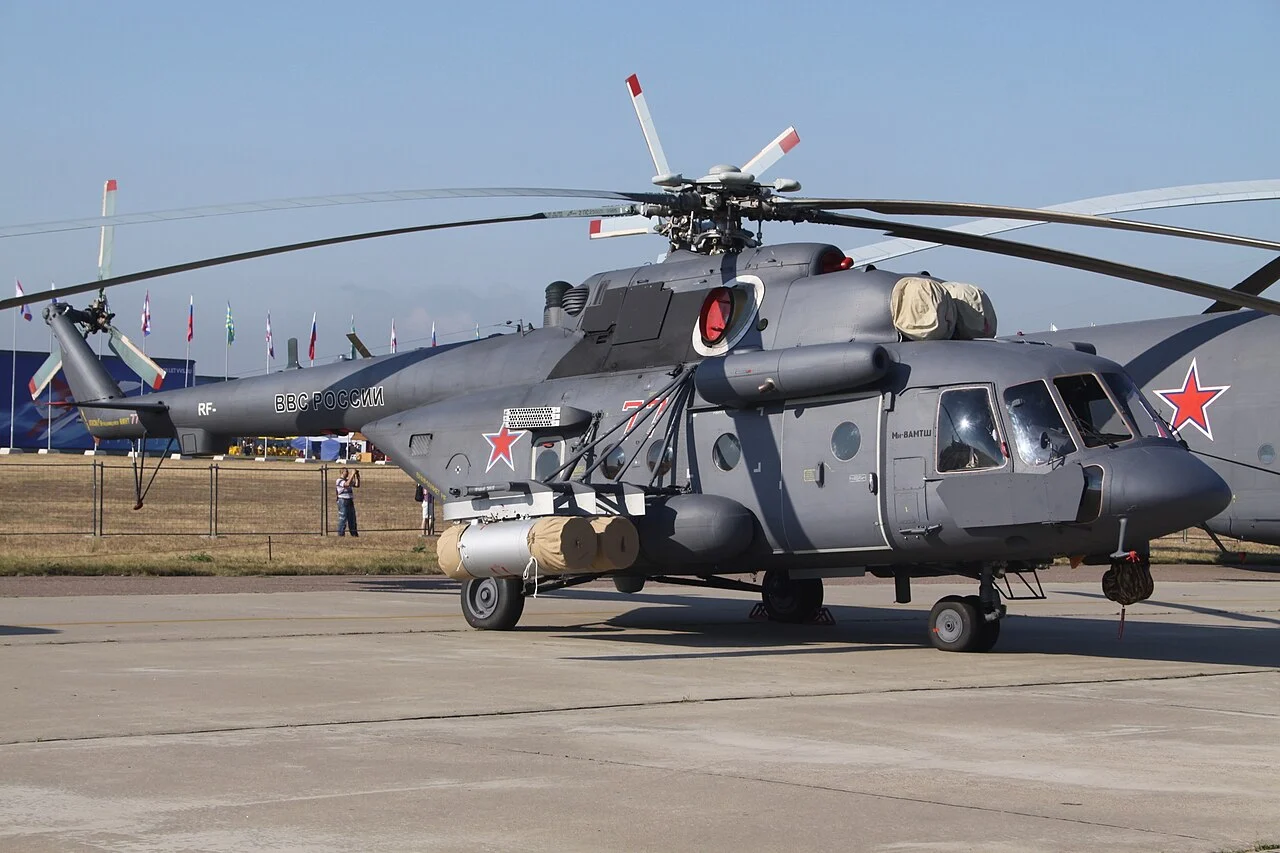
The Mi-8AMTSh is the domestic Russian designation for the same armed gunship-transport design exported as the Mi-171Sh covered above; it adds uprated engines, an improved defensive-aids suite and heavier weapons fit over the baseline Mi-8MT. It serves primarily with Russian and other CIS air forces rather than as a separate export product, which is why African operators acquire the type under its Mi-171Sh export designation rather than as an “Mi-8AMTSh” as such; status: in Russian/CIS service, with its export derivative operational across the African customers listed under variant 5.
8. Mi-171A2 — the newest generation
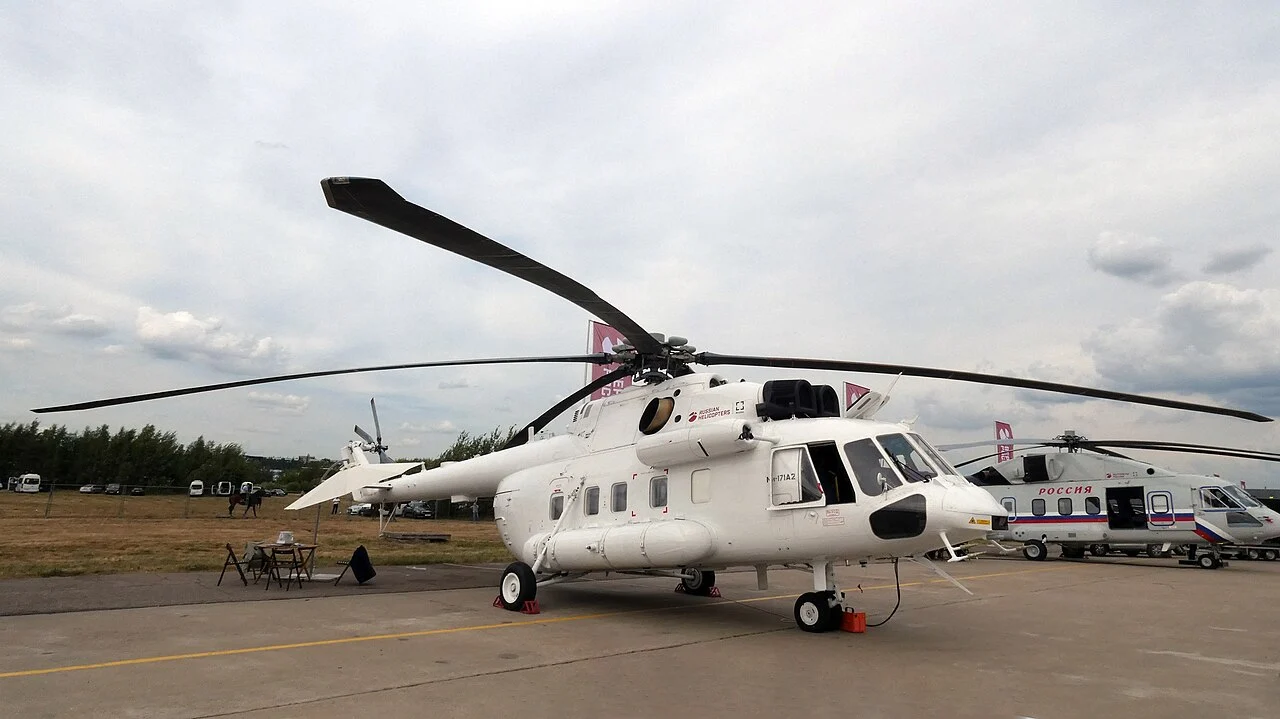
The Mi-171A2 is Russian Helicopters’ current-production flagship development of the family, first displayed publicly in the mid-2010s with a five-blade composite main rotor, a glass cockpit, and VK-2500PS-03 engines with digital (FADEC) control for improved hot-and-high performance over earlier variants (Wikipedia; manufacturer airshow material). No African air force is confirmed in current public reporting to have ordered or received the Mi-171A2; it remains, for African customers, a future option rather than a fielded type. Status in Africa: not verified as an operated or ordered variant.
Which variants are operated in Africa?
Based on the sourced examples above, the Mi-8T and armed Mi-8TV derivatives survive in reduced numbers as legacy Soviet-era stock; the Kazan-built Mi-17 is confirmed in Egyptian service and named across Wikipedia’s wider operator list for the continent; and the Ulan-Ude-built Mi-171/Mi-171Sh line is the most active current-generation variant, with confirmed recent activity in Ghana, Mali, Burkina Faso, Nigeria and Algeria. The Mi-17V-5, Mi-8AMTSh (as a domestic Russian designation) and Mi-171A2 have no confirmed African operator in current open-source reporting.
| Variant | First flight / service entry | Key change | Confirmed African status |
|---|---|---|---|
| Mi-8T (Hip-C) | Late 1960s, Soviet service | Baseline transport design | Operational, legacy stock |
| Mi-8TV / Mi-8TBK | Late 1960s–1970s | Armed derivatives, nose gun and pylons | Operational, reduced numbers (Egypt) |
| Mi-17 (Kazan export) | 1980s export deliveries | Uprated engines, hot/high performance | Operational (Egypt and others) |
| Mi-171 (Ulan-Ude export) | 1980s export production | Parallel-plant civil/utility line | Operational, sub-variant often unconfirmed |
| Mi-171Sh | 1990s | Armed assault-transport fit | Delivered/operational: Ghana, Mali, Nigeria; contracted: Burkina Faso; upgraded fleet: Algeria |
| Mi-17V-5 | Reported mid-to-late 1990s | Rear ramp, digital avionics | Not verified in African service |
| Mi-8AMTSh (“Terminator”) | 2000s, Russian service | Modernised gunship-transport basis for Mi-171Sh export | Russian/CIS service only; export line operational in Africa |
| Mi-171A2 | Mid-2010s | Glass cockpit, composite rotor, FADEC engines | Not verified as ordered or operated in Africa |
Why it matters for Africa
The Mi-8/17 family’s continued relevance in Africa rests on affordability and sustainment rather than cutting-edge performance. Acquisition and operating costs sit well below comparable Western medium-transport helicopters, and decades of continent-wide use have built a base of pilots, mechanics and spares that newer, unfamiliar types cannot match overnight. Regional overhaul capacity reinforces this: Ghana’s air force has had Mi-171Sh airframes overhauled by the Czech firm Lom Praha, illustrating a sustainment ecosystem that spans well beyond Russia itself (defenceWeb tag archive).
The type’s combat record in the Sahel and Horn of Africa — from Mali’s counter-insurgency operations to peacekeeping airlift in South Sudan and Darfur — gives it a continued role in low-intensity conflict that higher-end Western or Chinese platforms are not always funded to replace outright. At the same time, several operators are now layering newer rotary types alongside their Mi-8/17 fleets rather than replacing them wholesale, and attrition from both combat losses and age is a growing constraint on fleet availability across the continent. Technology transfer in this family has historically run through licensed overhaul and local depot-level maintenance rather than local production, a narrower form of industrial participation than seen with some newer African helicopter programmes.
Sources
- Wikipedia — Mil Mi-8
- Wikipedia — Mil Mi-17 (operators)
- HeliHub — “Ghana’s President commissions four new Mi-171SH” (2013)
- Shephard Media — “Nigeria orders Mi-171Sh, Mi-35M” (2014)
- Defense Mirror — “Russia To Supply Mi-171Sh, Mi-35 Helicopters To Nigeria” (2014)
- Jane’s — “Nigerian Air Force inducts Mi-171E helicopter”
- The Moscow Times — “Taking delivery of copters, Mali lauds Russia partnership” (2021)
- Military Africa — “Russia delivers four Mil Mi-17 helicopters to Mali” (2021)
- Shephard Media — “Russia finalises Algerian helicopter deal”
- African Aerospace — “More helicopters for Burkina Faso” (2017)
- defenceWeb — Mi-171Sh coverage archive