Mali Military Strength 2026: Army, Air Force, Budget and Suppliers




Mali’s armed forces are fighting a war on two fronts with a fleet of Russian and Turkish aircraft, a Russian security partner and no published order of battle. This profile sets out how strong the Malian military is in October 2026: how many people serve, what it spends, which aircraft it flies, who supplies it and where the open-source numbers disagree.
Quick answer
Mali publishes no order of battle. Open-source estimates put the active forces at about 21,000 (IISS Military Balance 2023, as reproduced by Store norske leksikon, updated 2024) to about 40,000 (Global Firepower, 2026, unofficial), with a separate paramilitary tier. Military spending was about US$953 million, or 3.87% of GDP (SIPRI, 2025). Combat aviation is mostly Russian- and Turkish-supplied and has taken losses since 2023.
Data as of 27 October 2026. Figures are open-source estimates; see “A note on the numbers”.
| Indicator | Figure | Status, year, source |
|---|---|---|
| Active personnel | About 21,000 to about 40,000; no official headcount | Estimated. IISS 2023 via SNL (21,000); Global Firepower 2026 (40,000) |
| Paramilitary | About 20,000 (national guard 10,000, gendarmerie 6,000, militia 3,000, police 1,000) | Estimated. IISS 2023 via SNL; Global Firepower 2026 lists only 4,800 |
| Military expenditure | US$953 million; 554 billion FCFA; 3.87% of GDP; 14.8% of government spending | Estimated. SIPRI database via World Bank, 2025 |
| Defence ministry allocation, 2026 | 531.2 billion FCFA in the draft finance bill; no final line published | Requested. New Afrique, 8 December 2025, “official data” |
| Defence minister (also head of state) | Gen. Assimi Goïta, who took the defence portfolio on 4 May 2026 | Reuters, 4 May 2026 |
| Chief of the General Staff | Maj. Gen. Élisée Jean Dao, named 6 May 2026 | Africanews, 7 May 2026 |
| Navy | None; Mali is landlocked | Small river craft only, per older IISS data |
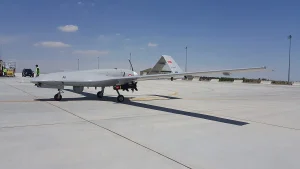
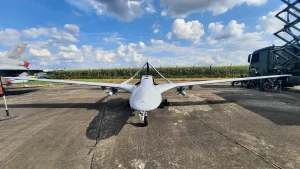
| Armed drones | Bayraktar TB2 (at least 17 serials) and Bayraktar Akinci (deliveries in 2024, 2026) | Delivered; operational numbers not published. Janes via defenceWeb; Military Africa |
| Foreign security partner | Russia’s Africa Corps, about 1,000 to 2,500 personnel by different estimates | Reported. Estimates relayed by secondary outlets; Russia and Mali publish no figure |
| Global Firepower rank | 104th of 145 (PwrIndx 2.2598) | GFP 2026 (unofficial index) |
Current military overview
The Forces armées maliennes (FAMa) have been under military rule since the coups of 2020 and 2021, and the force that exists today is the product of three choices made since then. The first was to end the French and UN presence: Operation Barkhane left in 2022 and the UN mission MINUSMA closed its last camps in 2023. The second was to turn to Russia, first to Wagner and, since June 2025, to the Russian Defence Ministry’s Africa Corps, which took over Wagner’s role. The third was to buy drones, which now carry much of the air campaign. Mali, Burkina Faso and Niger also left ECOWAS and formed the Alliance of Sahel States (AES), which launched a joint force on 20 December 2025.
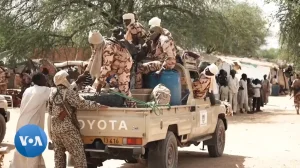
The defining fact about the force in 2026 is how hard it has been tested. On 25 April 2026 the jihadist group Jama’at Nusrat al-Islam wal-Muslimin (JNIM) and the Tuareg-led Azawad Liberation Front (FLA) attacked Kati, Bamako, Gao, Sévaré and Kidal at once, and Defence Minister Gen. Sadio Camara was killed at his residence in Kati, according to the government and Al Jazeera. Kidal passed out of government control until Malian troops, backed by the Africa Corps, re-entered it on 6 October 2026. DefenceMENA’s report on the retaking of Kidal sets out what is confirmed and what is contested.
Defence budget
SIPRI’s series, republished by the World Bank, puts Mali’s military expenditure at 554 billion FCFA in 2025, equal to US$953 million at that year’s average rate of 581.93 FCFA to the dollar, or 3.87% of GDP and 14.8% of government spending. That is roughly three times the 2015 figure in dollars (US$309 million) and just below 2024’s 4.25% of GDP, the high point of the series. For 2026 the draft finance bill gave the Ministry of Defence 531.2 billion FCFA, but a July 2026 supplementary budget added 415.1 billion FCFA of expenditure, described as mainly for security operations, without a published breakdown by ministry. The full year-by-year table and the off-budget items are in DefenceMENA’s Mali defence budget guide.
Active personnel
No Malian source publishes a headcount, and the trackers disagree by a factor of two. The IISS Military Balance 2023, as reproduced by Store norske leksikon in a page updated in November 2024, lists 21,000 active personnel and 20,000 paramilitary, made up of 10,000 national guard, 6,000 gendarmerie, a 3,000-strong militia and 1,000 national police. Global Firepower’s 2026 edition shows 40,000 active and 4,800 paramilitary. The World Bank’s series for armed forces personnel, which is sourced to the IISS, moves from 21,000 in 2019 to 41,000 in 2020, the last year with data, and counts paramilitary forces only when they could support or replace regular troops. Different scope, not different reality, probably explains part of the gap, but none of these figures is official.
A third set of numbers comes from Malian media, which in 2023 relayed a claim, attributed to an unnamed source, that the army had grown from 22,000 to about 65,000. DefenceMENA could not open the page and treats the claim as unverified. The government’s own 2025–2026 action plan, presented to the Transitional National Council on 16 May 2025, targeted 15,000 military and 9,000 internal-security recruits; a 13 July 2026 government briefing reported 15,183 recruits for the Police and Civil Protection and did not give a military total. The Africa Corps, whose size is estimated at between about 1,000 and 2,500 depending on the outlet (the lower figures attributed to the Institute for the Study of War, the middle to the Financial Times, both as relayed by secondary outlets), is a Russian force and is not counted in any of these figures.
Army
The army is the core of the force, but Mali publishes no list of its units. Global Firepower’s 2026 edition lists no main battle tanks, and the recent armoured deliveries documented in the press are wheeled vehicles from China. Janes reported on 5 September 2025 that a convoy filmed in Bamako on 3 September included six CS/VP14 mine-resistant vehicles and about five further Norinco 6×6 vehicles, among them two with 105 mm gun turrets; the report rests on video clips and has not been confirmed by the Malian authorities (Reported, unconfirmed). This profile does not attempt a full inventory of army weapons.
Command changed in the spring. Gen. Assimi Goïta took the defence portfolio himself on 4 May 2026, with the former chief of staff, Gen. Oumar Diarra, as minister delegate. On 6 May 2026 Maj. Gen. Élisée Jean Dao, a national guard officer promoted from brigadier general, became Chief of the General Staff. The rank structure is covered in DefenceMENA’s guide to Mali army ranks.
Air force
The Armée de l’air is small and depends on aircraft bought since 2017 from Russia, Türkiye, Brazil and Spain. The public record shows two Su-25 attack jets delivered in 2022 and 2023, both reported lost; 12 to 13 L-39C light attack jets; three Super Tucanos after a 2020 crash; Mi-24, Mi-35M and Mi-171 helicopters, with attack helicopters lost in 2023, 2024 and 2026; and at least 17 Bayraktar TB2 drones by serial number. Bayraktar Akinci drones arrived in November 2024 and again on 30 January and 30 July 2026, in quantities Mali does not state. The itemised table, with status labels, is in the Mali Air Force aircraft guide. DefenceMENA’s earlier reports on why Mali expanded its drone fleet and the July 2026 Akinci handover at Sévaré give the timeline.
Navy
Mali has no coast and no navy in the conventional sense. Older IISS-based listings carry a river patrol component of a few dozen personnel and two small patrol craft; no recent source describes it, and DefenceMENA has no verified current figure.
Gendarmerie, national guard and police
The gendarmerie and the national guard are the main paramilitary forces, with the IISS 2023 figures above as the only public estimate. Both operate alongside the army in the interior. A joint briefing on 13 July 2026 by the minister delegate for defence and the Security and Civil Protection minister, Maj. Gen. Daoud Aly Mohammedine, counted new infrastructure for the police, gendarmerie, national guard and civil protection together, so the command lines of the paramilitary tier are not described here beyond what has been published.
Suppliers and foreign forces
| Supplier | What is documented | Status |
|---|---|---|
| Russia | Mi-35M and Mi-24P gunships, Mi-171Sh helicopters (four, delivered 30 September 2021), Su-25 and L-39 jets, ground radars | Delivered; current serviceability not published |
| Russia (Africa Corps) | Security partner replacing Wagner since June 2025; reported by Military Africa (19 May 2026) to operate its own aviation grouping from Bamako | Reported (unconfirmed numbers) |
| Türkiye | Bayraktar TB2 (from December 2022) and Bayraktar Akinci (from November 2024), both Baykar | Delivered; fleet size not published |
| China | Norinco armoured vehicles (Janes, September 2025) | Reported (unconfirmed by Bamako) |
| Brazil | Four Embraer A-29 Super Tucanos, delivered 2018 | Delivered; three reported remaining |
| Spain/Airbus | Two C295 transports (first in December 2016) | Delivered |
Turkish industry will be prominent at the second Bamako defence exhibition, BAMEX 2026, scheduled for 9–13 November 2026 with more than 20 Turkish companies expected, according to DefenceMENA’s preview. No Malian procurement statements or contracts have been announced for it. On the Russian side, a July 2026 report by the French site Avions Légendaires said Moscow had refused a request, made on behalf of the AES joint force, for Mi-35M combat helicopters; the site cited no named official, and DefenceMENA treats it as unverified.
What changed in the last 12 months
| Date | Development | Source and status |
|---|---|---|
| 20 December 2025 | AES joint force launched in Bamako, about 5,000 troops from three armies, command in Niamey, Burkina Faso’s Brig. Gen. Daouda Traoré as commander | AllAfrica, 30 December 2025; regional outlets only, no wire service found |
| 30 January 2026 | Handover of Akinci drones at Sévaré, at least two aircraft | Military Africa; official ceremony |
| 25–26 April 2026 | JNIM and FLA coordinated attacks; defence minister killed; Kidal seized | Al Jazeera, 26 April 2026 |
| 27 April 2026 | Africa Corps withdraws from Kidal | Reuters, 27 April 2026, as cited by DefenceMENA |
| 4–6 May 2026 | Goïta takes defence portfolio; Dao named Chief of the General Staff | Reuters; Africanews |
| 3 July 2026 | Supplementary budget raises 2026 spending by 415.1 billion FCFA, mainly for security | Sikafinance, 4 July 2026 |
| 4–19 July 2026 | Battle of Anefis; ambush near Tabrichat; Kouakourou camp overrun; one Mi-24 reported shot down on 19 July | ACLED, 20 July 2026 (JNIM claims and releases) |
| 30 July 2026 | New Akinci batch handed over at Sévaré; quantity not stated | Military Africa; official statement |
| 6 October 2026 | Malian troops re-enter Kidal with Africa Corps support; FLA says it withdrew | Al Jazeera, 6 October 2026 (AFP, Reuters) |
Internal security context
The army is fighting two different opponents. JNIM, al-Qaeda’s regional affiliate, operates across central and southern Mali and has, according to RFI and Africanews reporting, pressed a fuel blockade of southern Mali since September 2025 and announced a blockade of Bamako’s access roads in late April 2026. The FLA, a Tuareg-led separatist coalition, is concentrated in the north. Both are named here as armed groups in a conflict and DefenceMENA takes no side in it. Casualty and battlefield claims from all parties are treated as claims unless a wire service or an investigator confirms them. The wider picture is in DefenceMENA’s reports on the Human Rights Watch findings on drone strikes, JNIM and ISSP clashes on the tri-border and on the Wagner record in Mali.
How strong is Mali’s military?
How many soldiers does Mali have?
There is no official figure. Estimates range from about 21,000 active personnel (IISS 2023 via SNL) to about 40,000 (Global Firepower 2026), plus paramilitary forces. Russian Africa Corps personnel are separate.
Is Mali’s military stronger than its neighbours’?
By spending, Mali (US$953 million in 2025) is ahead of Burkina Faso (US$892 million), Côte d’Ivoire (US$759 million), Senegal (US$567 million) and Niger (US$489 million), and far behind Nigeria (US$2.1 billion) and Algeria (US$25.4 billion), according to SIPRI figures republished by the World Bank. Spending is a measure of resources, not of capability.
What aircraft does Mali’s air force fly?
Russian and Turkish drones and helicopters, Czech-designed L-39 jets, Brazilian Super Tucanos and Spanish C295 transports. Several of these types have suffered losses since 2022. The aircraft guide has the full table.
Does Mali have a navy?
No. Mali is landlocked; only small river patrol craft have been listed in older IISS data.
How Mali compares in Africa
Within West Africa, Mali spends more than its AES partners in dollars and a larger share of GDP than most coastal neighbours, but far less than Nigeria. DefenceMENA’s ranking of the strongest militaries in West Africa and its continental ranking set the trackers’ composite scores side by side. For fleets, see Africa’s largest air forces ranked; for money, African defence budgets ranked; and for the Turkish drone customers in the region, military drones in the Sahel and which African countries operate the Bayraktar TB2.
A note on the numbers
Mali does not publish an order of battle, a defence white paper or a national security strategy, so every personnel and equipment figure here is an estimate. Personnel: the 21,000 and 40,000 figures come from different trackers with different scope and cannot be reconciled; the IISS 2023 numbers are reproduced second-hand because the Military Balance entry itself was not opened, and the Maliweb claim of 65,000 could not be read. Spending: SIPRI marks its Mali series as an estimate, and the FCFA values for 2024 and 2025 match the Ministry of Defence allocations reported from the finance laws, so costs met outside that line (the Africa Corps, reportedly at least US$10 million a month according to ADF, without a named source) are not included. Aircraft: the lists in this profile are compiled from Military Africa, defenceWeb, Janes and trackers that disagree; one Akinci was reported lost on 31 March–1 April 2025 near Tinzaouaten, with Algeria saying its air defences engaged it and Mali saying it crashed on its own territory, so the number in service is not known. Casualty claims on both sides are attributed and unverified. No security-sensitive detail on bases or deployments has been included. Global Firepower is used only as an unofficial composite index.
Sources
- World Bank (SIPRI and IISS series), military expenditure and armed forces personnel, Mali and neighbours, accessed 27 October 2026
- Store norske leksikon, Malis forsvar (citing IISS Military Balance 2023), accessed 27 October 2026
- Global Firepower (unofficial index), 2026 Mali Military Strength, accessed 27 October 2026
- Al Jazeera, Mali’s defence minister killed amid coordinated attacks, 26 April 2026, accessed 27 October 2026
- Al Jazeera, Tuareg rebels withdraw from strategic town of Kidal, 6 October 2026, accessed 27 October 2026
- Reuters via The Star, Mali leader Goita assumes role of defence minister, 4 May 2026, accessed 27 October 2026
- Africanews, Mali’s junta leader appoints new army chief of staff, 7 May 2026, accessed 27 October 2026
- ACLED, Is the Malian military losing against JNIM?, 20 July 2026, accessed 27 October 2026
- Sikafinance, Mali: le budget 2026 porté à 3 993,31 milliards FCFA, 4 July 2026, accessed 27 October 2026
- New Afrique, Loi de finances 2026: le budget de la Défense en baisse, 8 December 2025, accessed 27 October 2026
- La Nouvelle Tribune, Mali: l’armée revendique une montée en puissance, 14 July 2026, accessed 27 October 2026
- Janes, Mali receives new consignment of Chinese armour, 5 September 2025, accessed 27 October 2026
- defenceWeb, Mali receives more Bayraktar TB2 UAVs, 19 January 2024, accessed 27 October 2026
- Military Africa, Russia establishes a combined aviation grouping in Mali, 19 May 2026, accessed 27 October 2026
- Africa Defense Forum, Mercenaries in Mali come with high cost, few results, 26 May 2026, accessed 27 October 2026