How Strong Is Ethiopia’s Military in 2026?




Ethiopia fields Africa’s fifth-strongest military by Global Firepower’s composite ranking and its most unusual one: a landlocked, Russian-armed Air Force flying a Sukhoi backbone, a 2019-reconstituted Navy with no coastline, and a drone fleet that mixes Turkish, Chinese, Iranian and now Russian airframes. This profile sets out what the Ethiopian National Defense Force (ENDF) actually operates in 2026, what is only on order, and where the open-source numbers genuinely disagree.
The short answer to the question in the headline: Ethiopia is large by any personnel count, but almost every other number is contested. Global Firepower’s 2026 index places it 47th of 145 countries worldwide and fifth in Africa, built heavily on a personnel base it lists at 503,000 active troops — a figure that is widely reproduced but almost certainly reflects the force’s wartime peak during the 2020–22 Tigray war rather than its strength today, since Addis Ababa has run a formal demobilisation programme ever since. The underlying equipment picture is similarly split between what individual deliveries actually support (roughly 260 T-72 tanks, a Su-27-led fighter fleet, a handful of confirmed Turkish and Chinese drone types) and much larger aggregator totals that no single source corroborates. Every line below carries a status label: Operational, Delivered, On contract, Ordered, Reported or Estimated. An aggregator ranking is not an inventory count, and a reported contract is not a delivered system.
| Indicator | Figure | Year / source |
|---|---|---|
| Active personnel | Global Firepower lists 503,000; no independently verified current total exists, and the figure likely reflects the 2020–22 Tigray-war peak rather than today’s strength amid ongoing demobilisation | Global Firepower 2026 (Reported/Estimated) |
| Reserves / demobilisation | Global Firepower lists 138,000 reserve (same caveat); separately, the National Rehabilitation Commission reports over 56,000 ex-combatants demobilised by June 2025 against a national target of up to roughly 372,000 beneficiaries | Global Firepower 2026; AllAfrica/Defense Express, 2025 (Reported) |
| Conscription | No federal compulsory conscription confirmed; a Defense Forces Act amendment introduced voluntary national service for students. A June 2026 Tigray regional council decree mandating compulsory regional service is separate from federal law, contested, and criticised by Human Rights Watch | AllAfrica, Human Rights Watch, 2026 |
| Military expenditure | No single confirmed current-year USD figure; multiple outlets report a roughly 25% real-terms decline since the November 2022 Pretoria peace deal; Global Firepower’s auxiliary estimate is US$3.72 billion | SIPRI Apr 2026 fact sheet (no Ethiopia line); Global Firepower 2026 (Estimated) |
| Foreign military aid | No confirmed foreign military financing programme identified in open sources at this scale | — |
| SIPRI importer rank / suppliers | SIPRI’s public fact sheets report only regional totals, with no Ethiopia-specific line; historically (2001–20) Russia supplied about 50% and Ukraine about 33% of imports. Current open-source deal tracking shows Russia, China, Türkiye, the UAE and Iran as active suppliers | SIPRI; DefenceMENA aggregation of deal reporting, 2026 |
| Combat aircraft | Roughly 24–26 Su-27/Su-30 fighters by individual-type sourcing; aggregator totals disagree (Global Firepower: 104 aircraft of all types; GlobalMilitary.net: 99, including 34 combat types) | Open-source directories, 2026 (Estimated) |
| Main battle tanks | About 260 T-72/T-72UA1, individually sourced; an unknown number of older T-54/T-55 of unconfirmed status; aggregator figures above 1,500 are not corroborated by any delivery record and are not used here | Defense-Update/DefenceTalk; Oryx Spioenkop (Estimated) |
| Submarines / major surface ships | None. Ethiopia is landlocked; the Navy re-established in 2019 operates no submarines, frigates or blue-water vessels | Operational (n/a – landlocked) |
Current military overview
The Ethiopian National Defense Force is rebuilding from the 2020–22 Tigray war, the deadliest conflict of its kind in Africa this century, under the November 2022 Pretoria peace agreement. Three forces shape its current posture. First, a wartime-scale standing force is being demobilised under a programme run by the National Rehabilitation Commission, which is the single most consequential change under way — more consequential than any weapons purchase. Second, a modernisation drive is adding Russian Su-30 and reportedly Su-35 fighters, Chinese self-propelled artillery and Emirati armoured vehicles on top of a largely Soviet-era and 1990s Russian legacy fleet. Third, Prime Minister Abiy Ahmed has made Red Sea access a declared strategic priority, reviving a decades-old debate about Ethiopia’s landlocked status that last produced disputed memoranda with Somaliland and, more recently, reported but unconfirmed talk of port arrangements with Egypt-aligned Eritrea and others. The East Africa desk tracks how this compares with Kenya, Sudan and the wider Horn.
Defence budget: what the numbers do and do not show
Ethiopia does not publish a confirmed, single-methodology defence budget figure, and SIPRI’s public fact sheets do not break out an Ethiopia line at all, only regional totals. What is consistently reported is direction, not amount: multiple outlets describe a roughly 25% real-terms decline in defence spending since the Pretoria deal ended the Tigray war, as the government redirected resources toward reconstruction. Global Firepower’s auxiliary estimate of US$3.72 billion is a directional figure from a different methodology, not an official Ethiopian or SIPRI number, and is nearly double the equivalent Global Firepower estimate for neighbouring Kenya — consistent with Ethiopia’s much larger standing force but not independently verifiable. No foreign military financing programme on the scale seen elsewhere in Africa has been identified in open sources. Any single “Ethiopia defence budget” figure currently in circulation should be treated as an estimate rather than an official line.
Active personnel
Ethiopia’s personnel numbers are harder to pin down than almost any other African force DefenceMENA has profiled. Global Firepower’s widely reproduced figures of 503,000 active and 138,000 reserve personnel almost certainly reflect the force’s wartime peak during the 2020–22 Tigray war rather than its current strength. Since the Pretoria agreement, the National Rehabilitation Commission has run a formal demobilisation and reintegration programme, reporting more than 56,000 ex-combatants demobilised by June 2025 against a national target of up to roughly 372,000 beneficiaries — a wider caseload that includes former Tigray Defense Forces fighters, not a straightforward reduction of the standing ENDF, but a clear signal of active drawdown. No independently verified current total exists, and Global Firepower’s figure should be read as a ceiling rather than today’s number. On conscription, no federal compulsory system has been confirmed; a Defense Forces Act amendment introduced voluntary national service for students completing their education. A June 2026 decree by the Tigray regional council — an entity reinstated outside the Pretoria framework — mandating compulsory regional military service with harsh penalties for refusal has drawn criticism from Human Rights Watch and the Ethiopian Human Rights Council; it is a regional, contested measure, separate from federal law, and is not counted as part of the ENDF’s standing recruitment system here.
Army
The Ethiopian Army’s equipment is a layered inheritance: Cold War Soviet armour that never fully left service, an upgraded Ukrainian-sourced T-72 fleet bought to replace it, and a 2020s wave of Chinese heavy artillery, rocket systems and Emirati armoured trucks bought for counter-insurgency and border operations rather than a conventional front. DefenceMENA’s dedicated file on the Ethiopian Army’s weapons and equipment carries the full system-by-system breakdown and supplier shares; the table below summarises it.
| System | Origin | Quantity | Status | Source |
|---|---|---|---|---|
| T-72 / T-72UA1 main battle tank | Ukraine (upgrade) / historic USSR | About 260: roughly 60 ex-Yemen surplus bought 2003, plus 200+ Ukrainian-upgraded examples ordered 2011 and delivered from November 2013 | Operational | Defense-Update/DefenceTalk; Oryx Spioenkop |
| T-54 / T-55 | USSR (legacy) | Unknown number; operational status not confirmed by any open source | Estimated / unconfirmed | Oryx Spioenkop |
| Calidus MCAV-20 4×4 armoured vehicle | UAE (Calidus) | Hundreds delivered across 3+ shipments, July 2024 – March 2026 | Delivered | Military Africa, Army Recognition |
| WZ-551 / Type-92A APC | China (Norinco) | Several dozen estimated; some converted to self-propelled D-30 gun carriers since 2016 | Operational (Estimated) | Military Africa, Jane’s |
| BMP-1; BTR-60 | USSR (legacy) | Low-confidence estimates | Operational (Estimated) | Open-source trackers |
| Gaia Thunder / Ze’ev light armoured vehicles | Reported (unconfirmed origin) | Reported ~75 each; unverified | Reported, unconfirmed | Military Africa |
| SH-15 / PCL-181 155mm self-propelled howitzer | China (Norinco) | At least 32, delivered January 2023 | Delivered | Military Africa, Army Recognition |
| D-30 122mm towed howitzer | USSR (legacy) | Undisclosed; some mounted on WZ-551 chassis | Operational (Estimated) | Open-source trackers |
| BM-21 Grad 122mm MLRS | USSR (legacy) | Undisclosed | Operational (Estimated) | Open-source trackers |
| PHL-03 300mm MLRS; A-200 guided rocket artillery; M-20 SRBM | China | Reported “half a dozen” each; each single-outlet reported | Reported, unconfirmed | Military Africa |
| Pantsir-S1 air-defence system | Russia (KBP) | About 4 launch vehicles plus about 100 57E6 missiles, ordered 2018, delivery reported complete November 2019 | Delivered | Defence Blog, Army Recognition |
Large aggregator indexes claim a total main battle tank fleet above 1,500; that figure is not corroborated by any individually sourced delivery and is not used as a headline number here. On the production side, the Gafat Armament Engineering Complex at Bishoftu (small arms, since the 1980s, with historic Soviet and North Korean assistance) and the Homicho Ammunition Engineering Complex at Ambo give Ethiopia officially claimed near self-sufficiency in small-arms and artillery-ammunition production as of 2025–26, though no confirmed domestic production of armoured vehicles exists — the Calidus MCAV-20 and SH-15 are imports, not licensed local builds.
Air Force
The Ethiopian Air Force turned 90 in January 2026 with a public pledge from Prime Minister Abiy Ahmed to double its combat fleet and reach “fifth-generation” capability by 2030, an ambitious target for a force whose frontline fighters remain largely the same Su-27s bought in the mid-1990s. DefenceMENA’s dedicated Ethiopian Air Force aircraft inventory carries the full type-by-type breakdown; the table below summarises it.
| System | Origin | Quantity | Status | Source |
|---|---|---|---|---|
| Su-27P/SK; Su-27UB | Russia / USSR | 18 Su-27P/SK + 6 Su-27UB, bought mid-1990s; some reporting rounds the total to about 20 | Operational (mixed sourcing) | Military Africa, CAST.ru |
| Su-30K | Russia (ex-Indian AF refurbishment) | 2, delivered January 2024, tail numbers 2401/2402 | Operational | Army Recognition, Overt Defense |
| Su-35 | Russia | 6 reportedly under contract per an October 2025 leaked Rostec document; an aircraft described by several outlets as the type’s Ethiopian debut appeared at the January 2026 Black Lion air show, but neither delivered quantity nor operational status is confirmed by Addis Ababa or Moscow | Reported, unconfirmed | Rostec leak reporting; aeroresource.co.uk |
| MiG-23BN/UB | USSR (legacy) | About 10, mostly reported inoperable | Reserve / largely non-operational | Open-source trackers |
| MiG-21bis/R/UM | USSR (legacy) | Unknown number stored | Non-operational (Estimated) | Open-source trackers |
| Su-25/Su-25UB | USSR/Russia | Small number | Operational (Estimated) | Open-source trackers |
| Yak-130 trainer/light attack | Russia | 6+ confirmed (tail 2301–2306) against a contract reported up to 10; four flew in the January 2026 airshow display | Delivered / On contract | aeroresource.co.uk, Scramble.nl |
| L-39 trainer; Grob G120TP; SF.260; Tecnam P2006T | Czechia; Germany; Italy; Italy | Grob G120TP: 4+; others undisclosed | Operational | Military Africa |
| C-130B/E Hercules | USA | Undisclosed small number | Operational (Estimated) | Open-source trackers |
| An-12; An-32 | Antonov (Ukraine/USSR) | About 4 An-12; 1–2 An-32 | Operational (Estimated) | Open-source trackers |
| DHC-5 Buffalo | Canada | 1 confirmed | Operational | Open-source trackers |
| DHC-6 Twin Otter | Canada | Undisclosed | Stored | Open-source trackers |
| Mi-24 / Mi-35 attack helicopter | Russia/USSR | 12–18 reported | Operational (Reported) | DefenceMENA Mi-24/Mi-35 combat record |
| Mi-17 / Mi-171Sh / Mi-8 | Russia | Undisclosed | Operational (Estimated) | Open-source trackers |
| AW139; AW119Ke | Italy (Leonardo) | AW119Ke: 2 | Operational | Open-source trackers |
Aggregator totals for the fleet disagree sharply: Global Firepower’s 2026 assessment credits the force with 104 aircraft of all types, while the independent GlobalMilitary.net index counts 99, including 34 combat aircraft. Ethiopia publishes no official aircraft return, so neither figure should be read as authoritative. What is confirmed is the direction of travel — Russia remains the dominant fighter supplier from the 1990s Su-27 purchase through the 2024 Su-30K delivery to the reported, unconfirmed Su-35 contract, while the “fifth-generation by 2030” target announced at the Black Lion show sits well ahead of anything in the current or contracted fleet.
Navy
Ethiopia has been landlocked since Eritrea’s 1993 independence and lost all remaining port access after the late-1990s border war; its historic Red Sea fleet was disbanded. A Navy was formally re-established under a 2019 proclamation, headquartered inland at Bahir Dar in the Amhara region, with a mission centred on protecting the Grand Ethiopian Renaissance Dam and Ethiopian-flagged merchant shipping rather than any blue-water role — it operates no submarines, frigates, corvettes or other major surface combatants. Prime Minister Abiy Ahmed renewed his push for direct Red Sea access in October 2026, citing the cost of routing trade through Djibouti, whose port fees to Ethiopia have been estimated at between roughly US$1 billion and US$2 billion a year by different outlets. A reported January 2026 memorandum with Somaliland described by some outlets as offering a coastal naval-base site rests on single-outlet reporting and is disputed by Somalia; a separate claimed Egypt-Eritrea maritime arrangement reported in May 2026 is unverified elsewhere. Both should be treated as reported, not confirmed, developments rather than settled facts about Ethiopia’s naval posture.
UAV and drone fleet
Ethiopia operates at least five confirmed unmanned aircraft types from four different supplier countries, making it one of the continent’s most diversified drone operators, though published fleet sizes are scarce for all but one type.
| System | Origin | Quantity | Status | Source |
|---|---|---|---|---|
| Bayraktar TB2 | Türkiye (Baykar) | At least 4 confirmed via a 2023 Ethiopian Broadcasting Corporation documentary; armed with Roketsan MAM-L smart micro munitions and ASELSAN sensors; operational since about 2021 | Operational | Jane’s, 10 May 2023 |
| Bayraktar Akıncı | Türkiye (Baykar) | Undisclosed quantity; seen flying at the January 2026 Black Lion air show | Operational | aeroresource.co.uk |
| Wing Loong I / II | China (CAIG) | Undisclosed; unarmed ISR role confirmed, armed status disputed | Operational (ISR); armed role reported, unconfirmed | Horn Review, dronewars.net |
| Mohajer-6 | Iran (Qods Aviation) | Undisclosed; used during the Tigray war | Operational (Reported) | dronewars.net |
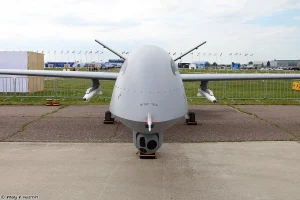
| Kronshtadt Orion | Russia | At least 1; Ethiopia reported as the type’s first export customer | Delivered, January 2026 | AllAfrica/Defense Express |
The Bayraktar TB2 and Akıncı are the best-documented and most operationally significant of the fleet: TB2 strikes were central to the Tigray war from 2021, and Baykar’s drones remain the dominant armed element of Ethiopia’s unmanned inventory, with no confirmed Turkish share of the manned fighter or helicopter fleet. The January 2026 Kronshtadt Orion delivery is notable mainly as a first for Russian drone exports to Africa rather than for its scale. Ethiopia’s mix of Turkish, Chinese, Iranian and Russian drones is one of the clearer African examples of dual- and multi-sourcing that Envanter Media examined in its piece on why some African air forces buy both Turkish and Chinese systems.
Air defence
Ethiopia’s confirmed ground-based air defence is comparatively thin next to North African or Nigerian inventories, and no official current inventory is published. The one well-documented modern system is the Pantsir-S1 short-range gun-missile system, bought from Russia in 2018 with delivery of roughly four launch vehicles and about 100 57E6 missiles reported complete by November 2019. Beyond that, open sources describe only legacy Soviet-era point-defence systems from the Derg era whose current operational status is not published with any confidence, and MANPADS of undisclosed type and number. No medium- or long-range layered system comparable to those fielded by Egypt or Algeria has been confirmed in Ethiopian service.
| System | Tier | Origin | Quantity | Status | Source |
|---|---|---|---|---|---|
| Pantsir-S1 | Short range / point defence | Russia (KBP) | About 4 launch vehicles, about 100 missiles | Delivered, complete by Nov 2019 | Defence Blog, Army Recognition |
| Legacy Soviet-era point-defence systems and anti-aircraft artillery | Point defence | USSR (Derg-era) | Undisclosed | Status unconfirmed | Open-source trackers |
| MANPADS | Point defence | Undisclosed | Undisclosed | Reported | Open-source trackers |
Missiles and artillery
Ethiopia has no confirmed land-attack cruise missile or long-range ballistic missile in service. Its heaviest confirmed strike assets are tube and rocket artillery: the Chinese SH-15/PCL-181 155mm self-propelled howitzer delivered in January 2023, a legacy D-30 towed and BM-21 Grad rocket artillery force from the Soviet era, and reported but single-outlet Chinese PHL-03 300mm MLRS, A-200 guided rocket artillery and M-20 short-range ballistic missiles in small numbers. As a landlocked state, Ethiopia has no anti-ship missile inventory and no naval strike capability.
Defence industry
Ethiopia’s domestic defence industry is limited to small arms and ammunition. The Gafat Armament Engineering Complex at Bishoftu has produced AK-47 rifles and PK machine guns since the 1980s with historic Soviet and North Korean assistance, while the Homicho Ammunition Engineering Complex at Ambo produces ammunition. Officials report near self-sufficiency in small-arms and artillery-ammunition production as of 2025–26. There is no confirmed domestic production of armoured vehicles, artillery systems, naval vessels or aircraft; the Calidus MCAV-20 (UAE) and SH-15 (China) are straightforward imports rather than licensed local builds, and Ethiopia does not appear among SIPRI’s list of significant arms exporters.
Main defence suppliers
SIPRI’s public fact sheets do not break out a country-level figure for Ethiopia at all, reporting only regional totals, which makes a precise current supplier-share table impossible to publish with SIPRI data alone. SIPRI’s own historical data for 2001–20 put Russia at about 50% and Ukraine at about 33% of Ethiopian arms imports, and its 2017–21 Yearbook described Ethiopia, alongside Angola, Nigeria and Mali, as having a diversified supplier base. The current picture, built from open-source deal tracking rather than a SIPRI Trend Indicator Value pull, shows five active suppliers.
| Supplier | Main items | Status |
|---|---|---|
| Russia | Pantsir-S1 (2019), Su-30K (2024), reported Su-35 contract (2025, undelivered) | Historic dominant supplier, still active |
| China | SH-15 howitzers (2023), WZ-551 APCs, Wing Loong drones | Growing |
| Türkiye | Bayraktar TB2 (operational since ~2021), Bayraktar Akıncı | Established, dominant in armed drones |
| UAE | Calidus MCAV-20 armoured vehicles (2024–26) | Growing |
| Iran | Mohajer-6 drone | Established, single confirmed type |
Recent procurement, 2025–2026
| Date | Event | Value | Status |
|---|---|---|---|
| October 2025 | Leaked Rostec document reports a 6-aircraft Su-35 contract | Undisclosed | Reported, unconfirmed |
| 23–27 January 2026 | Black Lion air show, Hara Meda air base: Ethiopian Air Force 90th-anniversary event; Abiy Ahmed pledges to double Air Force capacity and reach fifth-generation capability by 2030; Su-35 makes a reported debut appearance; 4 Yak-130s fly in the display; 38 African air force commanders attend the Future African Air Forces Forum | Undisclosed | Announced / Reported |
| January 2026 | Kronshtadt Orion drone reported delivered; Ethiopia described as the type’s first export customer | Undisclosed | Delivered (reported) |
| January 2026 | Reported Ethiopia-Somaliland memorandum describing a coastal naval-base site; disputed by Somalia | n/a | Reported, unconfirmed |
| Through June 2025 | National Rehabilitation Commission reports 56,000+ ex-combatants demobilised against a target of up to ~372,000 | n/a | Ongoing programme |
| July 2024 – March 2026 | Calidus MCAV-20 armoured vehicle deliveries continue in tranches | Undisclosed | Delivered (ongoing) |
| May 2026 | Reported Egypt-Eritrea maritime arrangement claim (unverified elsewhere) | n/a | Reported, unconfirmed |
| June 2026 | Tigray regional council decree mandates compulsory regional military service; criticised by Human Rights Watch and the Ethiopian Human Rights Council | n/a | Disputed / contested |
| October 2026 | Abiy Ahmed renews public push for direct Red Sea port access, citing Djibouti transit-fee costs | n/a | Policy statement |
Turkish systems in Ethiopia
Türkiye’s footprint in Ethiopian defence is narrow but consequential: it supplies the two confirmed unmanned combat aircraft types that did the bulk of the actual strike work in the 2020–22 Tigray war, and nothing else. There is no confirmed Turkish share of Ethiopia’s manned fighter, helicopter, armour or artillery inventories.
| System | Company | Scope | Status | Source |
|---|---|---|---|---|
| Bayraktar TB2 armed drone | Baykar | At least 4 confirmed, armed with Roketsan MAM-L munitions and ASELSAN sensors | Operational since ~2021 | Jane’s |
| Bayraktar Akıncı heavy combat drone | Baykar | Undisclosed quantity | Operational | aeroresource.co.uk |
What does Türkiye actually offer Addis Ababa that its other suppliers do not? The evidence supports one clear point and one real limit. Availability and proven use: the TB2 was operational and conducting strikes years before any Russian, Chinese or Iranian type in Ethiopian service achieved comparable combat relevance, and it remains central to how the Tigray war is remembered militarily. The limit is scope — Baykar’s drones are Ethiopia’s only confirmed Turkish systems, Ankara supplies no fighter, tank or artillery piece, and Ethiopia buys its manned combat aircraft, artillery and armoured vehicles from Russia, China and the UAE instead. This is not a case of Turkish systems being “better” than the alternatives; it is a narrow niche — armed ISR drones — where Türkiye established an early lead that Chinese, Iranian and now Russian drone suppliers are each trying to contest with their own types, without yet displacing the Baykar fleet. The Turkish Defence in Africa desk follows how that pattern plays out elsewhere on the continent.
What is changing?
Four shifts stand out from the past year. Demobilisation, not procurement, is the biggest story: the National Rehabilitation Commission’s drawdown is steadily eroding the wartime-peak personnel figures still quoted by most trackers, and that process has further to run through 2026–28. The Air Force is making its most explicit modernisation pledge yet — doubling capacity and reaching “fifth-generation” capability by 2030 — against a fleet still led by 1990s Su-27s, with the Su-35’s unconfirmed delivery status the key thing to watch. The drone fleet keeps diversifying, adding a Russian Kronshtadt Orion to an already Turkish-Chinese-Iranian mix. And Red Sea access has returned as a declared top-level priority under Abiy Ahmed, reopening a geopolitically sensitive debate with Somaliland, Eritrea, Djibouti and Egypt that is more about diplomacy and economics than hardware, but which shapes why Ethiopia re-established a Navy with no coastline to patrol.
How Ethiopia compares in Africa
By Global Firepower’s composite ranking Ethiopia sits fifth in Africa and 47th worldwide, ahead of regional neighbour Kenya (84th) by a wide margin on paper, largely on the strength of personnel numbers that are themselves in question. Its confirmed combat-aircraft and tank counts are respectable by East African standards but well short of Egypt, Algeria or Morocco’s confirmed, individually sourced totals in the tens to low hundreds of modern aircraft and over a thousand tanks. Where Ethiopia stands out is drone diversity: five confirmed unmanned types from four different supplier countries is among the broadest mix on the continent, a direct legacy of fighting a large internal war with whatever was available fastest. DefenceMENA’s Kenya vs Ethiopia comparison sets out the two East African forces side by side in more detail.
A note on the numbers
Ethiopia publishes no official personnel total, aircraft return or equipment inventory, and SIPRI’s own public fact sheets do not break out a country-level figure for it at all. That leaves this profile more dependent than most on aggregator indexes (Global Firepower, GlobalMilitary.net) that disagree with each other by wide margins, and on individual-type reporting from specialist outlets that is sometimes single-sourced. Where this profile gives a number without qualification, it is because at least two independent outlets or an official statement support it; where sources conflict or a figure rests on a single outlet, that is stated explicitly rather than smoothed into a single headline number. Ordered is not delivered, and delivered is not operational: the Su-35 and several reported Chinese rocket-artillery types illustrate that gap directly.
Sources
- Global Firepower, 2026 ranking
- SIPRI, Arms Transfers Database and April 2026 fact sheet
- Military Africa, Ethiopian Army and Air Force equipment reporting
- Aeroresource, Black Lion Air Show 2026 report
- Jane’s, Ethiopian UAV reporting (May 2023)
- AllAfrica / Defense Express, Kronshtadt Orion and demobilisation reporting
- Human Rights Watch, Tigray conscription decree reporting (2026)
- Oryx Spioenkop, Tigray war equipment documentation
- Army Recognition, Su-30K and Pantsir-S1 reporting
- GlobalSecurity.org, Ethiopian defence industry background