JNIM vs Islamic State in the Sahel: What Is Confirmed About the Tri-Border Clashes



Rival Sahel branches of al-Qaeda and the Islamic State have been fighting on an unprecedented scale in the Mali–Burkina Faso–Niger tri-border zone, with the Islamic State Sahel Province (ISSP) claiming more than 400 JNIM fighters killed in a single set of clashes — a figure AFP says it cannot verify. Reporting by AFP via Le Temps and Africanews on 16 October 2026 places the latest fighting around Burkina Faso’s Oudalan province and the Malian district of Tessit. Analysts describe the rivalry as the most intense direct confrontation globally between an al-Qaeda branch and an Islamic State affiliate, but casualty claims remain group propaganda until independently confirmed.
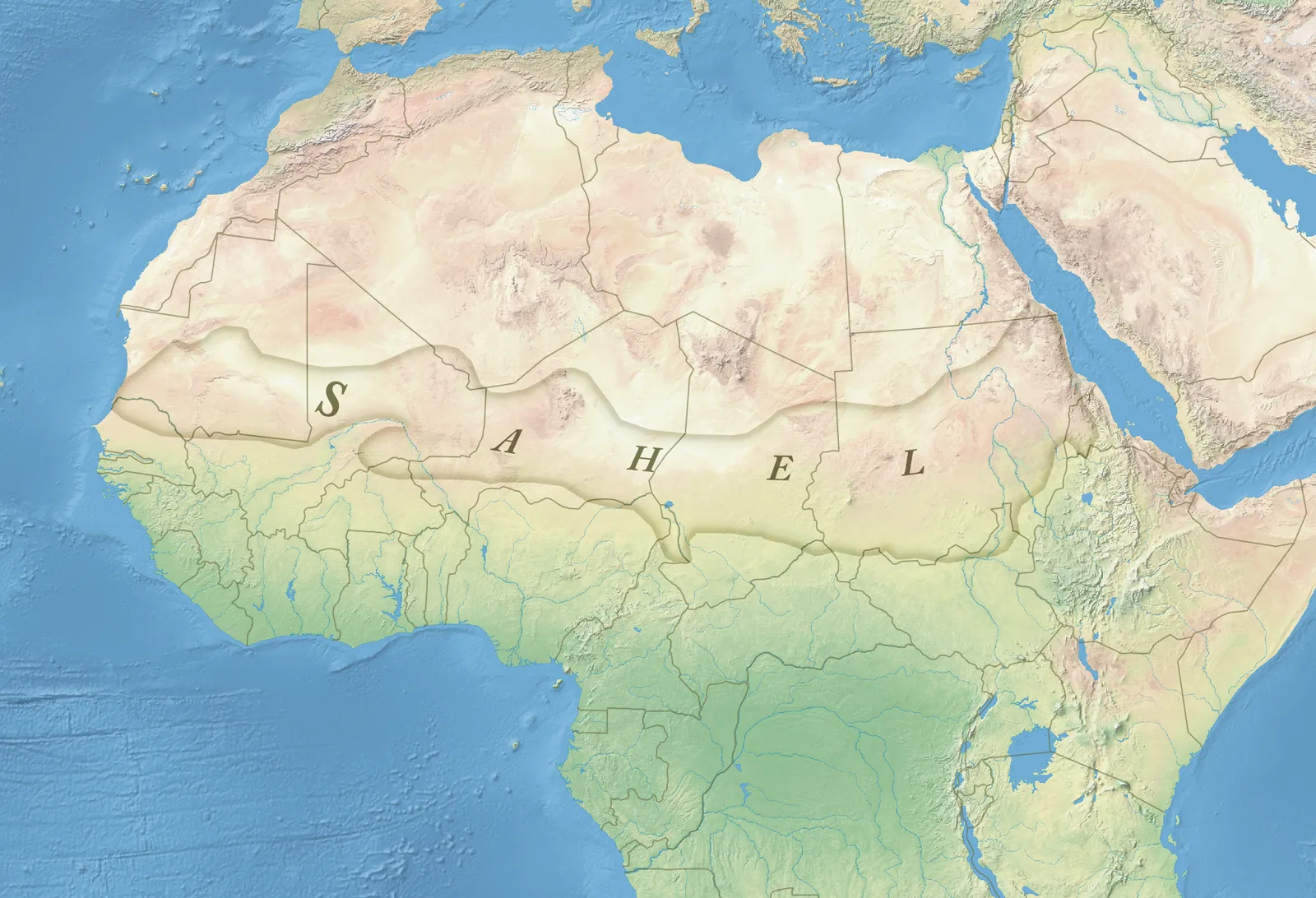
Featured image: Map of the Sahel region of Africa. Map: Munion, via Wikimedia Commons (CC BY-SA 3.0). Illustrative.
What ISSP claimed — and what is not confirmed
- Claim: On Monday 13 October 2026 (as dated in AFP reporting published 16 October), ISSP said it had killed more than 400 fighters from Jama’at Nusrat al-Islam wal-Muslimin (JNIM), including “several leaders”, during clashes the previous Friday in northern Burkina Faso’s Oudalan province, on the borders with Mali and Niger (AFP / Le Temps / Africanews).
- Verification: AFP said it could not verify the toll independently. Treat the figure as an ISSP claim, not an established death count.
- Analyst view: Héni Nsaibia of ACLED told AFP that if the claimed toll were confirmed, it would be the deadliest battle recorded between the two groups. Confirmation has not been published.
- Earlier claim: ISSP previously claimed more than 200 JNIM killed in early September 2026 in northern Burkina Faso, plus about 30 captured and executed — also unverified by AFP.
Where the fighting is
According to Wamaps, a collective of West African journalists cited by AFP, the latest round of JNIM–ISSP fighting broke out on 9 October 2026 in the tri-border area between the Malian district of Tessit (west of Ménaka) and the towns of Arbinda and Tin-Akoff in northern Burkina Faso.
Wassim Nasr, an associate researcher at the Soufan Center cited by AFP, describes the rivals as competing for “the same potential living space and the same recruitment pools” in a race to control borders between Mali, Burkina Faso and Niger. Long focused on Mali and Burkina Faso, the fighting has in recent months spread into western Niger and even north-western Nigeria, according to Nsaibia.
How large is this rivalry?
- Since 2019: Nsaibia told AFP the two groups fought more than 320 battles from 2019 to September 2026, leaving around 2,200 dead — an ACLED-linked estimate of cumulative battle deaths, not a single-event toll.
- UN experts (August 2026 report to the Security Council): Described the clashes as “the most intense direct confrontation on a global scale” between an al-Qaeda branch and an organisation affiliated with Daesh / Islamic State (AFP).
- Force estimates (same UN experts report, via AFP): JNIM about 7,000–8,000 fighters; ISSP about 2,000. Despite ISSP’s claimed losses inflicted on JNIM, UN experts still call JNIM the main terrorist threat in the Sahel.
Hasret Kargin, a Sahel researcher quoted by AFP, said reports indicate JNIM has moved substantial reinforcements into the area and predicted fierce counter-attacks in the coming days. That forecast is analysis, not a confirmed battle outcome.
Ideological rivalry, briefly
AFP’s reporting summarises competing approaches: JNIM tends to build local roots and focus attacks on state forces (while still committing abuses against civilians), whereas ISSP takes a harder, more transnational line and targets those who refuse its authority. UN experts also noted limited defections from JNIM to ISSP; in July, JNIM claimed it had killed one of its own commanders who had defected to ISSP.
From its Malian stronghold around Ménaka, ISSP has extended influence toward Niger’s Tahoua, Dosso and Maradi regions and the Nigerian border, which Nasr’s Soufan Center study links to easier transfers with Islamic State West Africa Province (ISWAP) in the Lake Chad basin. That is a reported facilitation risk, not proof of a specific joint operation in this clash cycle.
What to watch
- Independent casualty assessments from ACLED, UN reporting or local authorities that either corroborate or contradict the “400+” ISSP claim.
- Whether JNIM’s reported reinforcements produce a documented counter-offensive in Oudalan / Tessit.
- Spillover indicators in western Niger and north-western Nigeria — separate from Nigeria’s concurrent Lakurawa and Lake Chad operations.
Sources
- Le Temps (with AFP): Bloody clashes in the Sahel between rival branches of Al-Qaeda and the Islamic State (16 October 2026)
- Africanews (with AFP): Rival JNIM and Islamic State jihadists clash in intensifying Sahel turf war (16 October 2026)
- PressAfrik: Sahel — violents combats entre JNIM et EIS à la frontière Mali-Burkina (October 2026)
Evidence note: The “more than 400” killed figure is an ISSP claim only; AFP states it could not verify it. Cumulative 2019–2026 battle and death counts and the UN force estimates are attributed to Héni Nsaibia / ACLED and UN experts as reported by AFP. Location detail for the 9 October outbreak is attributed to Wamaps via AFP. Updated as of 16 October 2026, 13:15 GMT.