US Approves $832 Million Javelin Missile Sale to Egypt

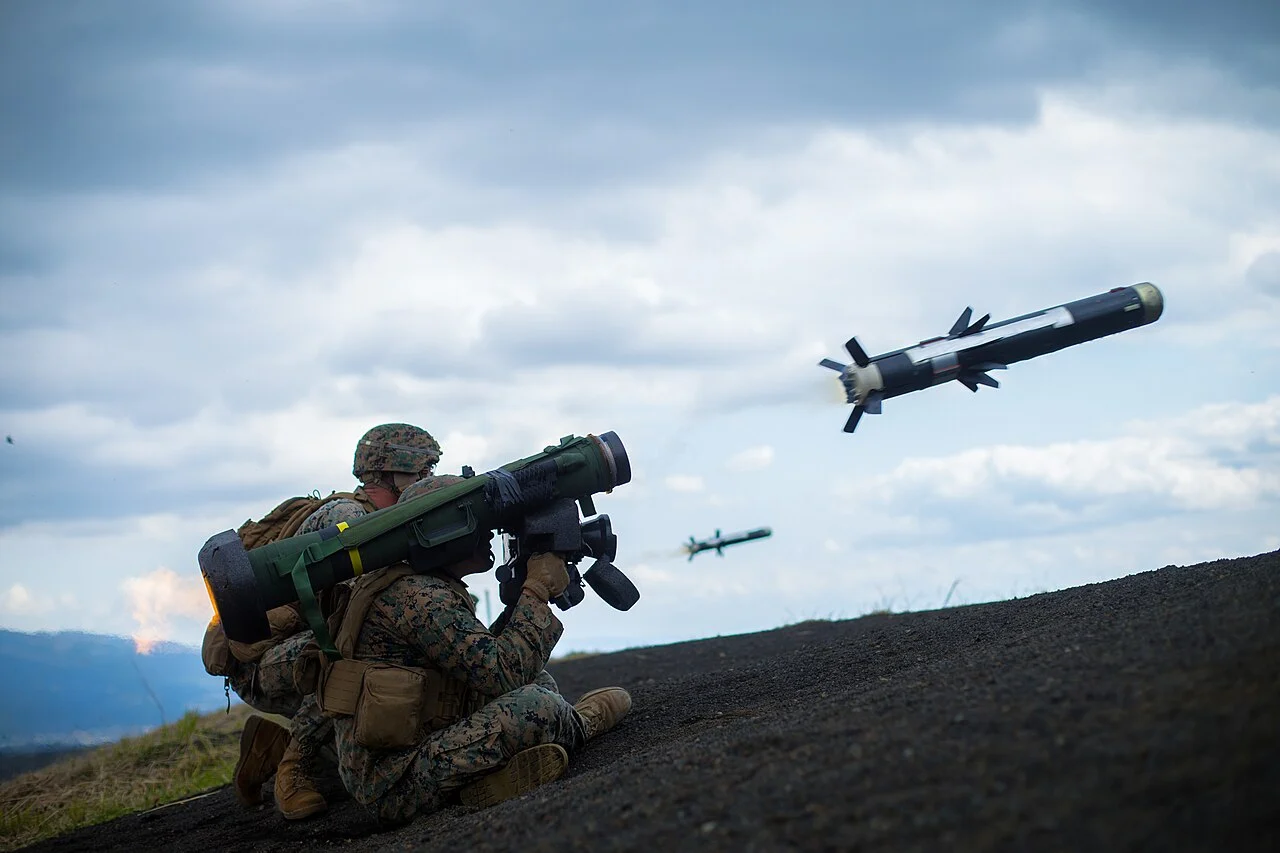


The US State Department has cleared a possible $832 million sale of FGM-148F Javelin anti-tank missiles to Egypt, giving the Egyptian Army its first access to the American-made weapon after decades of relying on older European and Soviet-era systems.
Photo: A US Marine fires an FGM-148 Javelin anti-tank missile during a training exercise. Credit: Lance Cpl. Jonathan Willcox, Public domain, via Wikimedia Commons
The Defense Security Cooperation Agency notified the US Congress on 2 October 2026 of the proposed Foreign Military Sale, covering up to 2,020 Javelin missiles, 200 Lightweight Command Launch Units, trainers, simulation rounds, spare parts and technical support, Army Recognition reported. Of the missile total, 20 rounds are earmarked for test-fire acceptance in the United States, leaving roughly 2,000 for delivery to Egyptian units.
As with every DSCA notification, the figure is a ceiling rather than a signed contract. Final quantities, pricing and delivery schedules still depend on negotiations between Cairo and the US government and the missile’s manufacturer, a joint venture between Lockheed Martin and RTX (formerly Raytheon). Congress has 15 days to object before the sale can proceed to contract.
Egypt’s first Javelin, after a long anti-tank lineage
Egypt has never previously operated the Javelin in its own order of battle, despite decades as one of the largest recipients of US military aid in the Middle East and North Africa and fielding, by most measures, the strongest military in Africa. Its anti-armor arsenal today is a patchwork of older-generation systems: more than 500 BGM-71D TOW II missiles, over 345 Milan II rounds, more than 260 Swingfire missiles, and additional stocks of Soviet-derived Malyutka and Konkurs missiles alongside more recent Metis-M, Skif, Akeron MP, Raybolt and Chinese HJ-8/AHRAM and HJ-73 rounds, according to Army Recognition’s rundown of Egyptian holdings.
The only prior Egyptian exposure to the Javelin was indirect: US troops fired the missile during the bilateral Bright Star exercise in 2018, with no Egyptian crews involved. A Javelin buy would replace or supplement much of that older inventory with a fire-and-forget, top-attack missile already combat-proven in Ukraine, Iraq and Syria, and would put Egypt in company with Jordan, Lithuania and Morocco, which secured its own 612-missile Javelin package in 2024.
The timing is notable. The Javelin approval came one day after Washington waived human-rights-related restrictions on $320 million in Foreign Military Financing for Egypt, part of a broader warming in the bilateral defence relationship this year.
Can US industry deliver 2,000 more missiles?
The Egyptian request lands as the Javelin production line is already stretched by Ukraine-driven demand. Annual output has risen from roughly 2,100 to 2,400 missiles a year, with the Lockheed Martin-RTX joint venture targeting 3,960 by the end of 2026. The supply chain runs through nearly 100 part-level suppliers and 25 major subcontractors, and some capacity expansions take eight to ten months to complete, meaning Cairo’s full order is unlikely to arrive as a single shipment.
Standing up an Egyptian Javelin capability would also require a meaningful training effort: estimates based on comparable programmes suggest 400 to 800 personnel, before counting instructors, maintainers and munitions handlers.
Why it matters for Africa
As Egypt’s armed forces continue a years-long modernisation drive, its procurement choices tend to ripple across the continent’s arms market. A Javelin buy would mark a rare case of Cairo turning to a premium US system over the cheaper Russian, Chinese and European anti-tank missiles that dominate African inventories, and it strengthens the US defence-industrial foothold in North Africa at a moment when Gulf, Turkish and Chinese suppliers have been gaining ground with Egypt’s neighbours. It also gives Egypt a man-portable, fire-and-forget option better suited to the kind of counter-insurgency and border operations the Egyptian Army runs in Sinai and along the Libyan frontier, where older wire-guided systems like Milan and TOW require a gunner to stay exposed until the missile hits.
For the wider region, the sale is also a data point on US industrial capacity: with Javelin lines already committed to Ukraine and other NATO buyers, how quickly Washington can satisfy a African customer of Egypt’s size will be watched by other prospective buyers on the continent.
Sources
- Army Recognition: “US approves first Javelin missile sale to Egypt to modernize its anti-tank forces”
- Militarnyi: “USA Approves Sale of 2,000+ Javelin Missiles to Egypt”
- Military Africa: “Egypt set to buy 2,020 Javelin missiles in $832M deal”