Cameroon Orders Metal Shark 38 Defiant Patrol Boat

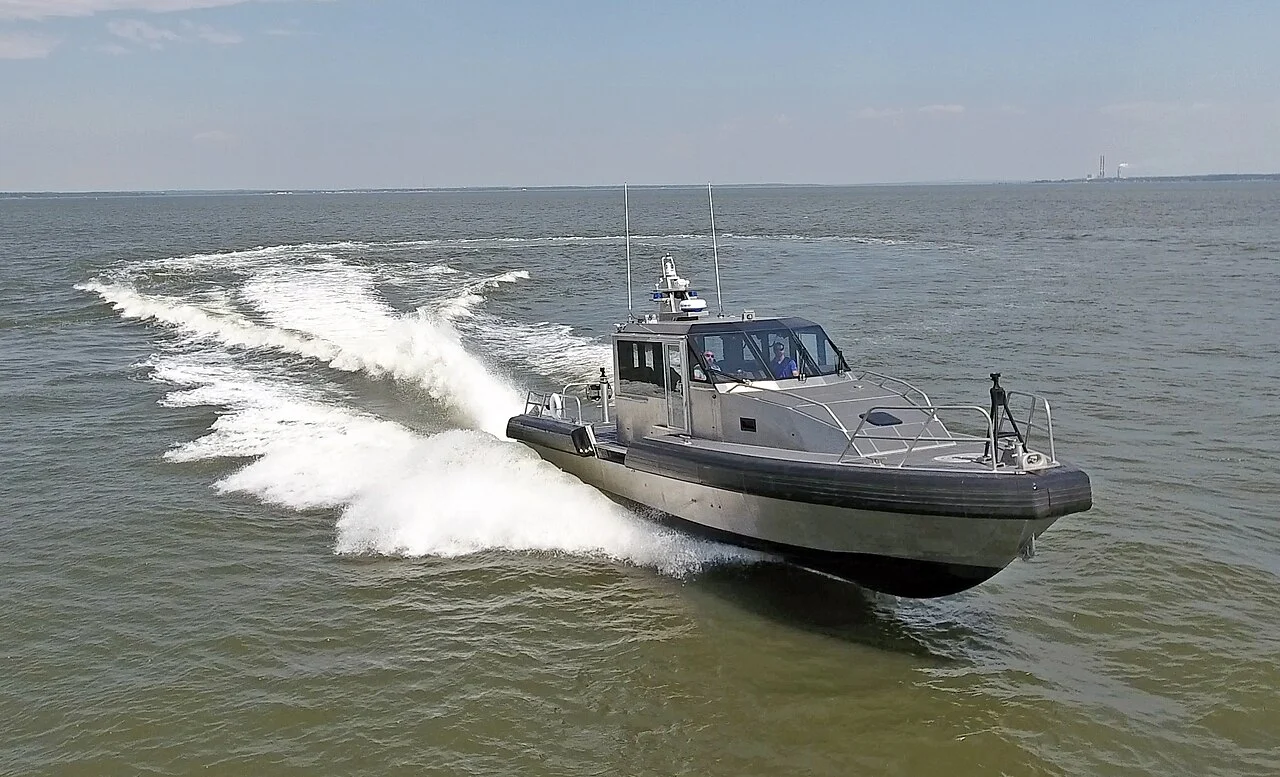


Cameroon has ordered a Metal Shark 38 Defiant patrol boat through the US Foreign Military Sales system, adding a small but modern vessel to a navy already stretched across anti-piracy and oil-security duties in the Gulf of Guinea.
Photo: a Metal Shark Defiant-class patrol boat, the builder family supplying Cameroon’s new vessel. Credit: Metal Shark Boats, CC BY-SA 4.0, via Wikimedia Commons
Louisiana-based boatbuilder Metal Shark has won a US Coast Guard Foreign Military Sales contract to build a patrol boat for Cameroon’s maritime forces, the company announced on 12 October. defenceWeb reported on 2 November that the deal covers an 11.5-metre Metal Shark 38 Defiant, a transport trailer, a spare-parts package and operator training, to be built at the company’s Jeanerette, Louisiana facility. Federal contract tracker GovTribe puts the value at roughly $1.2 million.
A new customer for a familiar builder
Henry Irizarry, Metal Shark’s senior vice president of international business development, described Cameroon as a new market for the company. That is notable mainly because Metal Shark is already deeply embedded in West and Central African coastal security: the company says it has delivered more than 2,000 vessels worldwide, including to Benin, Djibouti, Senegal, Kenya, Cabo Verde and Morocco, several of them through the same FMS channel used for the Cameroon order.
The Defiant 38 is a welded-aluminium platform built for coastal patrol, maritime interdiction, port security and search and rescue. Buyers can specify inboard diesels or outboard engines, with top speeds up to 50 knots depending on configuration, and choose between an open bow or a forward cuddy cabin. CEO Chris Allard framed the sale around a wider point: that maritime security is gaining strategic weight worldwide, not just in the Gulf of Guinea.
What Cameroon already has
Cameroon’s navy is comparatively well equipped among Central African forces, built up specifically to protect offshore oil installations and push back against piracy and armed robbery at sea. It operates roughly 40 coastal, inshore and river patrol craft, backed by several larger combat patrol vessels, and has leaned on international partners — the United States, France and others — to keep that fleet current. A single 11.5-metre Defiant will not change the order of battle, but it fits a pattern of steady, incremental additions rather than one big-ticket purchase.
That approach contrasts with neighbours further up the coast: Nigeria and Ghana have both pursued larger offshore patrol vessels and dedicated maritime security forums, including Ghana’s new continental maritime security forum, while Cameroon has concentrated on smaller, faster craft suited to riverine and nearshore work around the Bakassi Peninsula and the approaches to Douala and Kribi.
Why it matters for Africa
The Gulf of Guinea remains the world’s most piracy-affected maritime zone outside Southeast Asia, and Cameroon sits at its northern edge, exposed to both seaborne crime and the smuggling networks that cross from the Niger Delta. A small FMS-funded patrol boat will not solve that problem on its own, but it keeps Cameroon inside the US security-assistance pipeline that has also supplied boats to Benin, Senegal and Cabo Verde, reinforcing a regional patchwork of US-built hulls that can train and operate together. It also lands weeks after Cameroon was pressed to clean up its open shipping registry, which flag-of-convenience operators — including vessels tied to Russia’s sanctions-evading “shadow fleet” — have exploited; a credible coastal navy is part of the case Yaoundé needs to make that it can police its own waters. More broadly, the order fits a continent-wide pattern DefenceMENA has tracked in which patrol vessels fit Gulf of Guinea navies facing piracy, illegal fishing and oil theft.
Sources