Manned turboprops fitted with electro-optical and signals sensors have become the workhorse intelligence, surveillance and reconnaissance platform for African air forces fighting insurgencies and monitoring coastlines. This gallery covers six ISR aircraft types in African service or on order, their sensors, and the operators flying them as of September 2026.
DEFENCE AFRICA | Technology explainer gallery | Data as of September 2026
Fast jets and large unmanned aircraft dominate headlines, but the aircraft doing most of the day-to-day watching over African borders, coastlines and militant-held territory are converted light transports and turboprops. Fitted with an electro-optical/infrared (EO/IR) turret, a full-motion video downlink and sometimes a maritime search radar, these aircraft can loiter for four to eight hours at a fraction of the operating cost of a fighter or a medium-altitude drone.
The technology itself is straightforward. A gimballed EO/IR ball under the fuselage or wing provides day and night video; a tactical data link streams that video to a ground control station in real time; and, in some configurations, a signals-intelligence (SIGINT) suite intercepts radio traffic from the ground. Programmes funded through United States security cooperation channels — foreign military financing, Section 333 authority for building partner capacity, and Foreign Military Sales (FMS) — have supplied much of this fleet across the Sahel and the Gulf of Guinea, while some countries have bought or upgraded their own maritime patrol variants independently.
The result is a patchwork rather than a single standard fleet: light single-engine turboprops in the Sahel built around counter-insurgency, twin-engine multi-mission aircraft on the coasts built around counter-piracy and illegal fishing, and a handful of legacy transports converted decades ago that are now reaching the end of their service lives without a funded replacement.
Key facts
- Djibouti’s Air Force operates Cessna 208 Caravan ISR aircraft with US Air Force advisory support from the 818th Mobility Support Advisory Squadron, most recently in July 2026 (DVIDS, 2026).
- Nigeria’s two Beechcraft King Air 360ER aircraft, delivered in 2023 and 2024, carry a Selex Seaspray 7500E AESA radar and an L3 WESCAM EO/IR turret (The Defense Post, 2023-2024).
- Kenya’s US Foreign Military Sales case for 12 AT-802L Longsword ISR/light-strike aircraft, worth up to $418 million, was approved by the DSCA in January 2017 and has still not converted into a signed production contract (defenceWeb, 2017-2018).
- South Africa’s C-47TP Turbo Dakota maritime patrol fleet has been grounded since 2022, removing the South African Air Force’s airborne maritime surveillance capability (defenceWeb, Military Africa, 2024).
- Niger, Ghana and Nigeria fly the Diamond DA42 MPP Guardian, a diesel-engined light twin used for coastal and border surveillance (defenceWeb, 2019-2021).
1. ATR 42-500MP Surveyor — operational maritime patroller
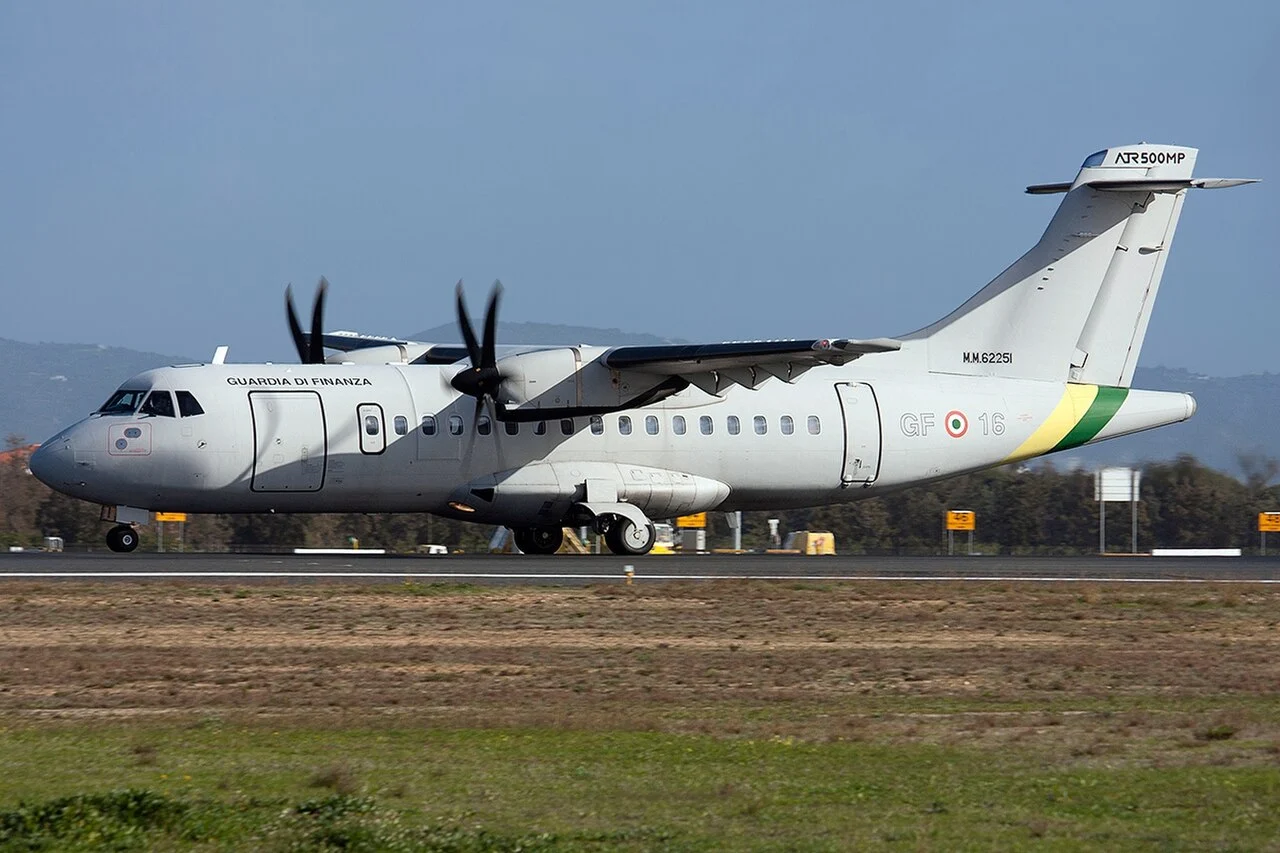
The ATR 42-500MP Surveyor is a twin-turboprop regional airliner converted into a maritime patrol and ISR platform, fitted with a Leonardo (formerly Galileo Avionica) tactical observation system that combines search radar with an EOST-45 electro-optic and infrared tracking sensor. Nigeria ordered two examples in 2007 for around $73 million including training and logistics; the first entered service with the Nigerian Air Force’s 81 Air Maritime Group in December 2009 and both remain operational, tasked with maritime surveillance, search and rescue and support to counter-insurgency operations in the northeast (Airforce Technology, 2009; Military Africa, 2025). The aircraft periodically returns to Germany for depot-level maintenance, most recently in 2025, underlining the sustainment burden of operating a small, ageing fleet with no local overhaul capacity. It flies alongside Nigeria’s broader maritime ISR group, which also includes Cessna Citation business jets and the King Air and DA42 aircraft covered below.
2. Beechcraft King Air 360ER — radar-equipped ISR twin
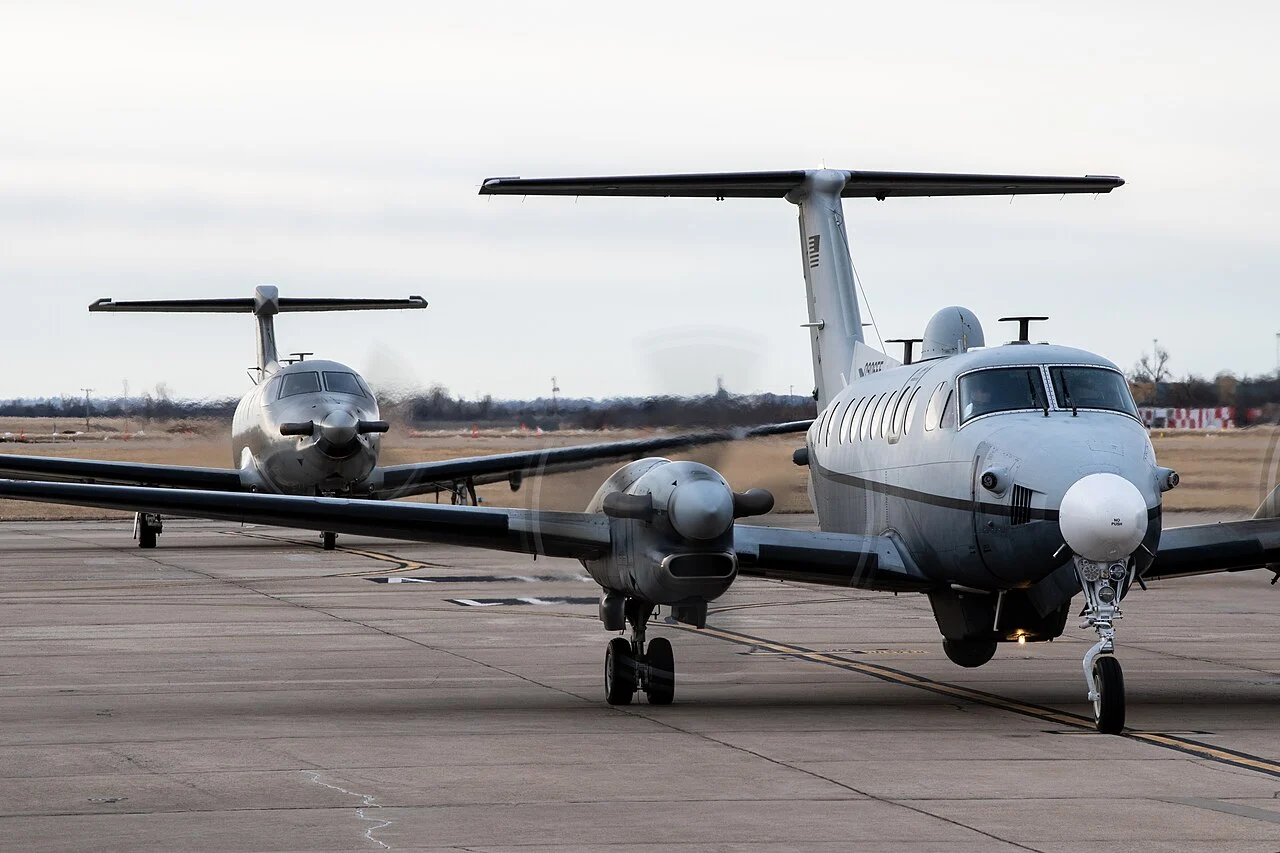
The King Air 360ER (the extended-range version of the King Air 350) is Textron Aviation’s baseline turboprop for special-mission ISR conversions worldwide, and the type behind the US Air Force’s own MC-12W Liberty fleet shown above. The Nigerian Air Force selected the 360ER for its ISR requirement and took delivery of its first aircraft in November 2023 and a second, final aircraft in May 2024; both are operational after mission-system integration. Reported sensors include a Selex Seaspray 7500E active electronically scanned array (AESA) radar for maritime search and an L3 WESCAM AN/AAQ-35 EO/IR turret, giving the aircraft a genuine day/night, all-weather surveillance capability that the older ATR 42 lacks (The Defense Post, 2023; The Defense Post, 2024). Nigeria’s King Air pair is tasked across both the Gulf of Guinea and the northeast counter-insurgency fight, extending the coverage built up by the ATR 42MP and the Nigerian Air Force’s wider aircraft inventory.
3. Cessna 208B Grand Caravan ISR — the region’s most widely flown ISR platform
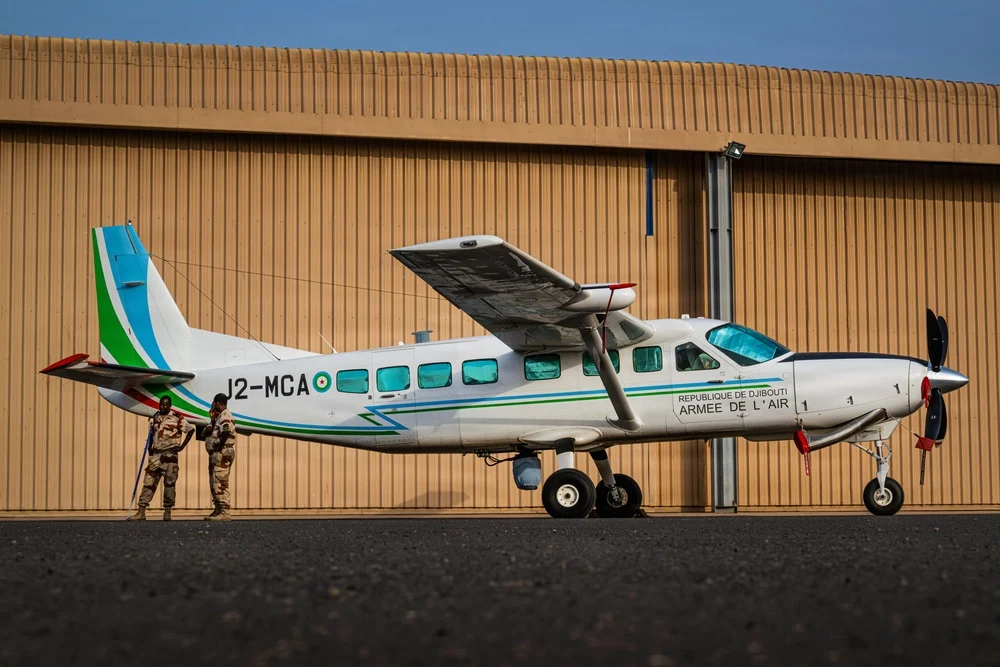
No ISR type is more widespread in African service than the single-engine Cessna 208B Caravan and its stretched Grand Caravan EX derivative, delivered through US security assistance programmes with an EO/IR turret (commonly an L-3 Wescam MX-15), a tactical radio and a video data link. Chad and Cameroon each received two ISR-configured Caravans in May 2018 to support the fight against Boko Haram, and both are operational (DefenceWeb, 2018). Kenya received a donated, ISR-modified Cessna 208B in 2016 and continues to operate it. Tunisia took delivery of the first two of four Textron Grand Caravan EX aircraft in July 2024 under a $54 million ISR package fitted by ATI Engineering Services, with an official handover in September 2024; all four are now operational (Military Africa, 2024; Janes, 2024). Djibouti’s Air Force flies a similar Caravan ISR aircraft, most recently receiving refresher advisory support from the US Air Force’s 818th Mobility Support Advisory Squadron in July 2026 to sustain its ISR mission set from the vicinity of Camp Lemonnier (DVIDS, 2026). Published figures vary on exactly how many African air forces have received the type since the mid-2010s; DefenceWeb has separately reported that Cameroon, Chad, Kenya, Mali, Mauritania, Niger, Nigeria, Rwanda and Uganda have all benefited from related US-funded Caravan programmes, though not every aircraft delivered under those programmes was ISR-configured.
4. Diamond DA42 MPP Guardian — light diesel-twin surveillance aircraft
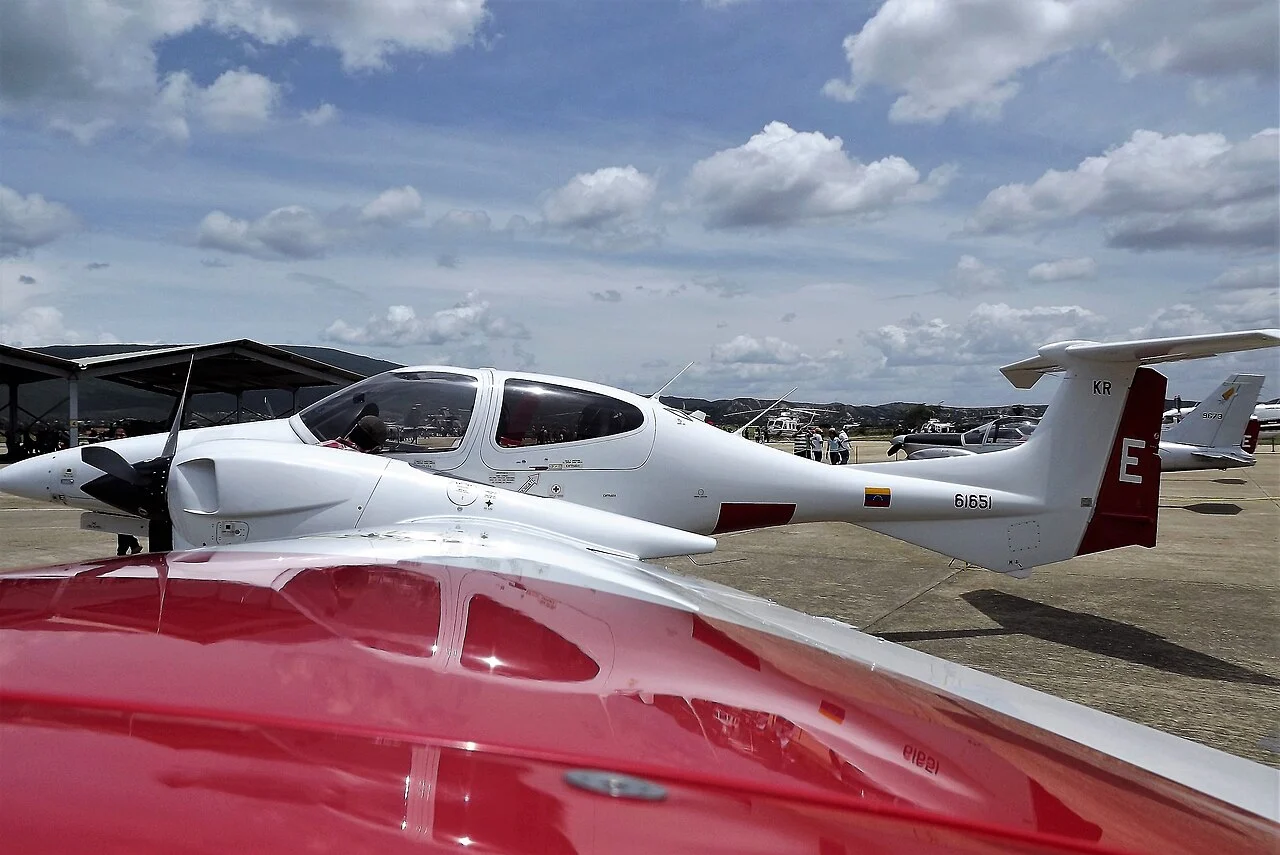
Diamond Aircraft’s DA42 MPP (Multi-Purpose Platform) Guardian adapts the Austrian manufacturer’s diesel-engined light twin into a low-cost surveillance aircraft, with sensor pods in the belly, spine or nose that can carry a forward-looking infrared camera, a large-format digital aerial camera or a laser scanner, cruising at up to 328 km/h on Jet A1 fuel (Diamond Aircraft; DefenceWeb, 2019). Niger has flown two DA42s in the ISR role since 2009 and announced plans to upgrade their sensor fit; Nigeria’s Presidential Ministerial Committee on Maritime Security (PICOMMS) separately operates the type to monitor oil and gas installations and combat sea robbery and illegal bunkering; and Ghana’s air force took delivery of two DA42 MPPs for surveillance plus a third for pilot training, ordered the previous year (DefenceWeb, 2019; DefenceWeb, 2021). All three fleets are operational. The type’s low acquisition and fuel cost has made it attractive to air forces that cannot sustain a larger ISR turboprop.
5. Air Tractor AT-802L Longsword — light-strike ISR platform, selected but not yet delivered
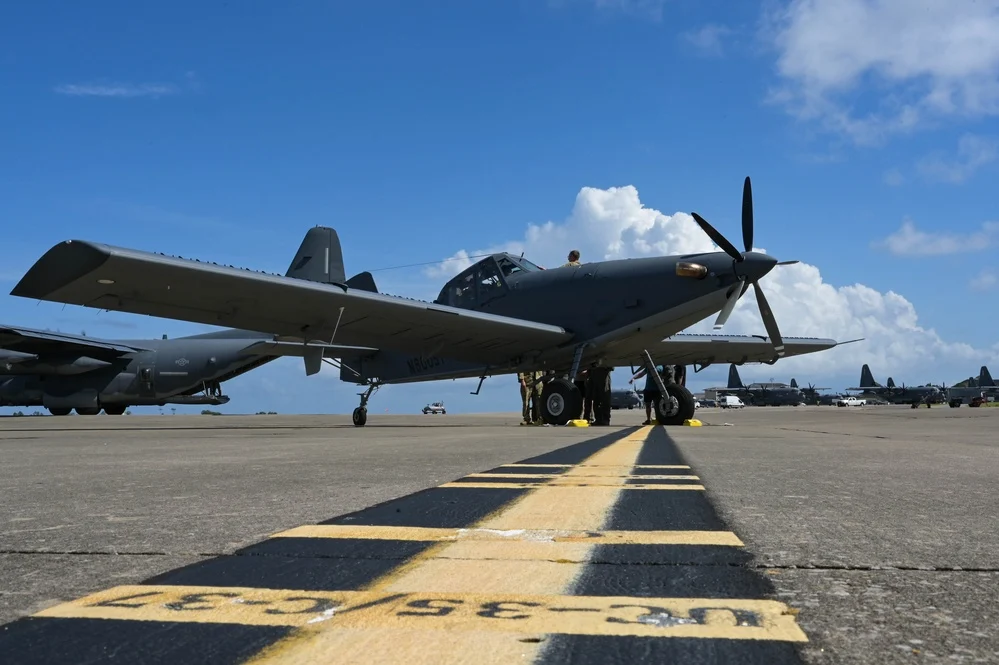
The AT-802L Longsword pairs an agricultural-aircraft airframe with an ISR and light-attack mission system built by L3 Technologies (now L3Harris), including an L3 WESCAM MX-15D EO/IR gimbal, a Thales Scorpion helmet-mounted display and full-motion-video architecture, giving five hours of on-station endurance at a 400-nautical-mile radius (Airforce Technology; Shephard Media). Kenya’s pursuit of the type has a long and unresolved history: the US Defense Security Cooperation Agency notified Congress of a possible $418 million sale of 12 AT-802L and two AT-504 trainer aircraft in January 2017, but Kenya missed successive US government deadlines in 2017 to sign a binding transaction agreement, and government-accountability reviews found no further extension had been confirmed. Public reporting shows no signed production contract since, so the acquisition is best described as reportedly under negotiation rather than ordered (defenceWeb, 2017-2018; Shephard Media, 2017). If finalised, the Longsword would give the Kenya Defence Forces an ISR and light-strike aircraft cheaper to operate than a fast jet for counter-insurgency work against al-Shabaab in the north and northeast.
6. Douglas C-47TP Turbo Dakota — a legacy capability now grounded
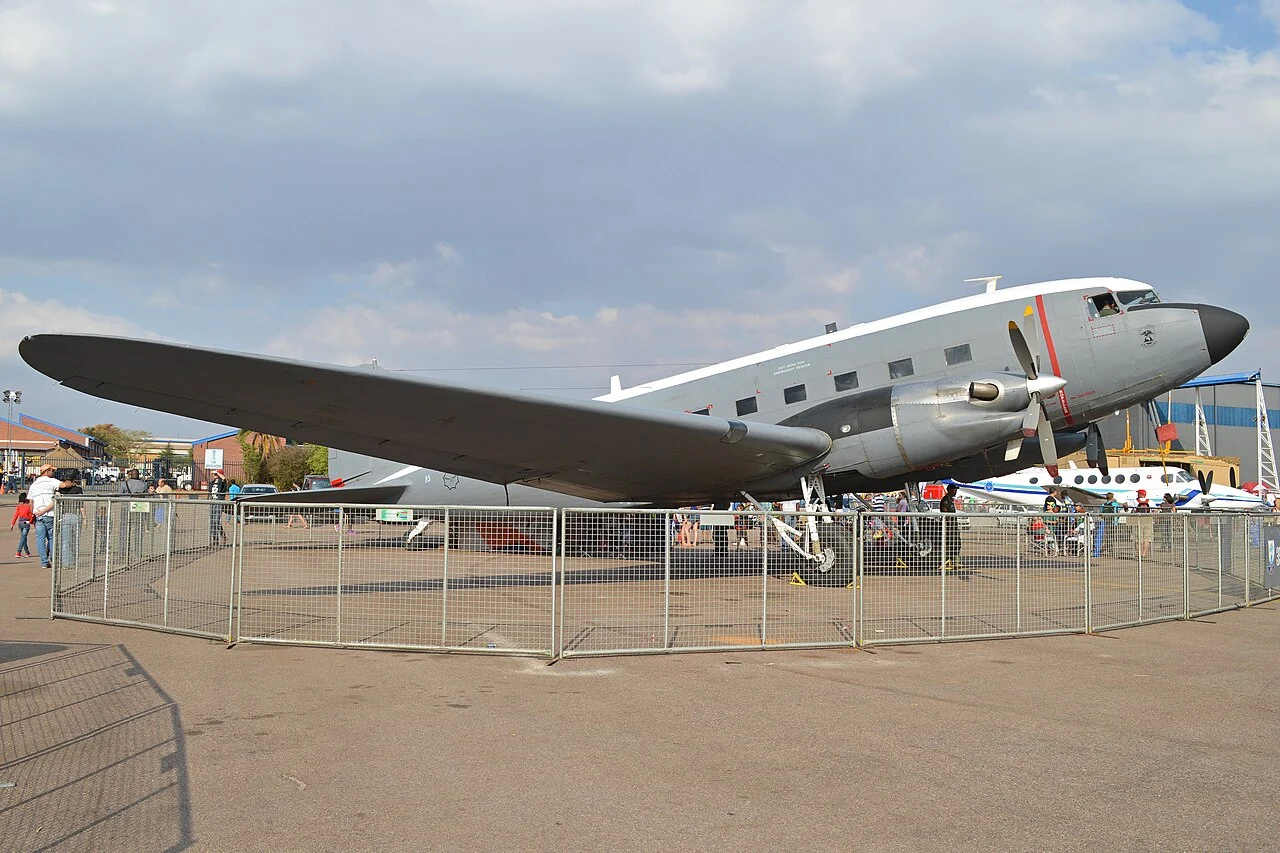
The C-47TP Turbo Dakota is a Pratt & Whitney PT6A turboprop conversion of the World War Two-era Douglas C-47, fitted by the South African Air Force’s 35 Squadron with a maritime search radar for fisheries protection and exclusive economic zone surveillance. The type has not flown since 2022; Armscor told parliament in September 2024 that the fleet, grounded chiefly over time-expired engine fire-extinguisher bottles and the absence of a qualified maintenance provider, was unlikely to fly again (DefenceWeb, 2024; Military Africa, 2024). The airframes are therefore being replaced in practice, though no funded successor programme has been confirmed publicly, leaving South Africa without a dedicated airborne maritime surveillance capability at a time when illegal, unreported and unregulated fishing remains a stated concern for the South African Navy and Air Force.
| Aircraft | Primary role | Key sensor | Operator(s) | Status |
|---|---|---|---|---|
| ATR 42-500MP Surveyor | Maritime patrol / ISR | Search radar + EOST-45 EO/IR | Nigeria | Operational |
| King Air 360ER | ISR / maritime surveillance | Seaspray 7500E AESA radar + WESCAM EO/IR | Nigeria | Operational |
| Cessna 208B/Grand Caravan EX (ISR) | Counter-insurgency ISR | MX-15 EO/IR turret | Chad, Cameroon, Kenya, Tunisia, Djibouti | Operational |
| Diamond DA42 MPP Guardian | Border / coastal surveillance | FLIR / digital aerial camera pods | Niger, Ghana, Nigeria | Operational |
| AT-802L Longsword | ISR / light strike | MX-15D EO/IR gimbal | Kenya | Reportedly under negotiation |
| C-47TP Turbo Dakota | Maritime patrol | Search radar | South Africa | Being replaced (grounded) |
Why it matters for Africa
ISR aircraft give African air forces a persistent, relatively cheap way to watch territory that fighters and transports cannot cover economically and that satellites cannot watch continuously. For counter-insurgency campaigns in the Sahel and the Lake Chad basin, an EO/IR-equipped Caravan or DA42 can track militant movement and cue ground forces at a fraction of the fuel burn of a jet. For coastal states, the same sensor packages fitted to a King Air or an ATR 42 support fisheries protection, anti-piracy patrols and monitoring of oil and gas infrastructure, filling a gap that has become more visible as legacy platforms such as South Africa’s C-47TP reach the end of their service lives without replacement.
The fleet also illustrates the sustainment questions that run through African airpower more broadly. Most of these aircraft arrived through US security cooperation channels rather than direct commercial purchase, lowering upfront cost but tying availability to donor maintenance and training support, as Nigeria’s depot returns of its ATR 42 to Germany and continuing US advisory visits to Djibouti’s Caravan fleet both show. Kenya’s decade-long, unresolved pursuit of the AT-802L Longsword underlines how even an approved FMS case can stall well short of delivery. As African governments weigh ISR investment against fighters and drones, the aircraft above remain the cheapest way to generate flying hours over borders and coastal waters.
Sources
- Nigeria Receives First ATR-42MP Maritime Patrol Aircraft from Alenia – Airforce Technology
- Second Nigerian ATR-42 ISR aircraft returns from maintenance in Germany – Military Africa
- Nigeria Boosts Intel-Gathering With Beechcraft 360ER Aircraft Delivery – The Defense Post
- Nigeria Receives Second Beechcraft 360ER Aircraft From Textron – The Defense Post
- Chad officially receives Cessna 208 ISR aircraft – defenceWeb
- Cameroon officially receives Cessna 208s – defenceWeb
- Tunisia bolsters ISR capabilities with new C-208B Grand Caravan EX Aircraft – Military Africa
- Silverbacks conduct final mission, enhance Djiboutian ISR capabilities – DVIDS
- DA 42 gaining popularity in Africa as a surveillance aircraft – defenceWeb
- Niger to upgrade its DA 42 surveillance aircraft – defenceWeb
- Paris Air Show: Kenya close to ‘Longsword’ contract – Shephard Media
- Kenya fails to commit to acquisition of 12 Air Tractors from US – defenceWeb
- South African military loses maritime patrol capabilities as C-47 retires – Military Africa
- Although grounded, the SAAF’s C47-TPs may live to fly again – defenceWeb