French Weapons Systems Still in African Military Service

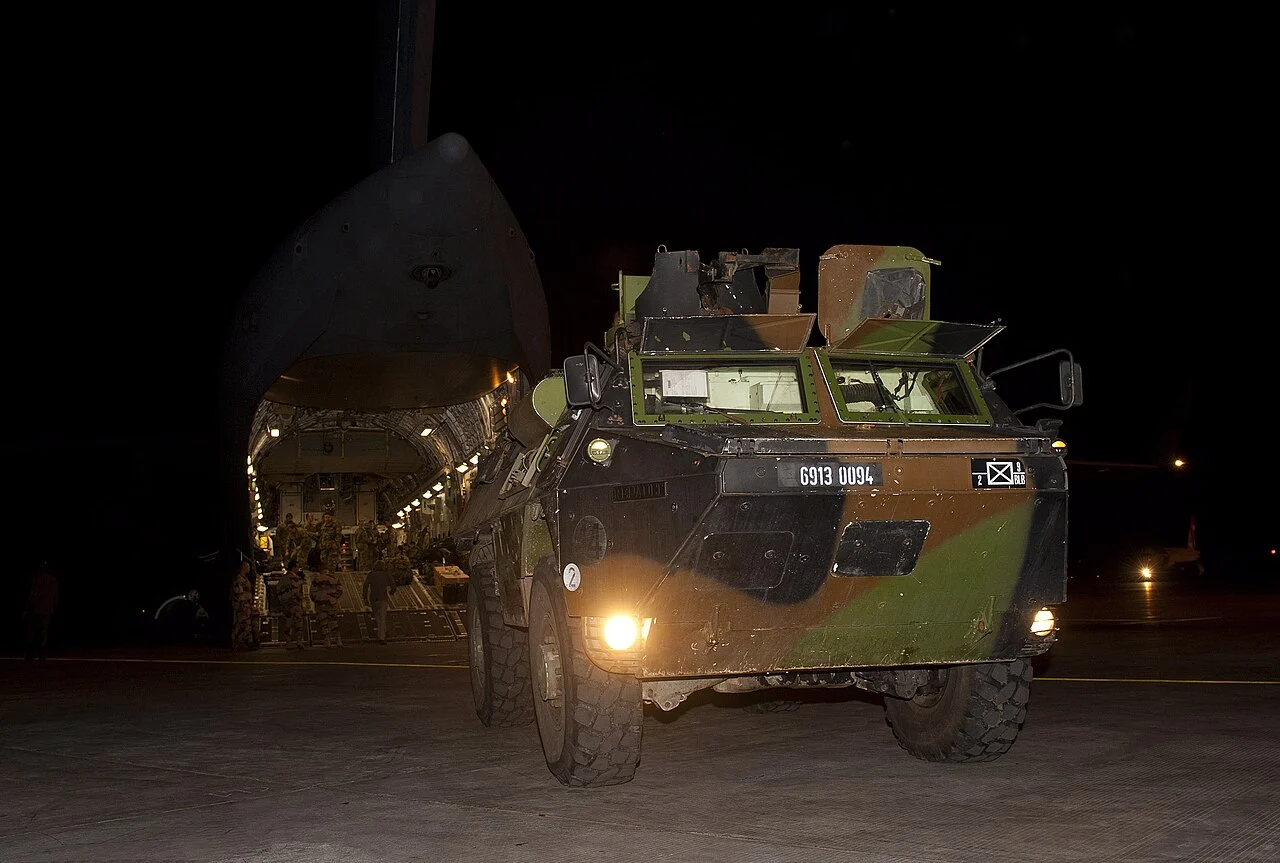


From Chad’s Sahel patrols to Morocco’s air-defence batteries, French-built aircraft, armoured vehicles and missiles remain in service across the continent even as Ankara, Beijing and Moscow compete for the same contracts. This gallery covers seven systems still flown or fielded by African forces, drawn from official statements, delivery reports and SIPRI’s Arms Transfers Database, data as of November 2026.
DEFENCE AFRICA | Supplier gallery | Data as of November 2026
France supplied 11 percent of major arms imports to sub-Saharan Africa in 2019-23, the third-largest share after Russia and China, according to SIPRI’s Arms Transfers Database as reported by the Comboni Missionaries’ news service; DefenceMENA’s France desk tracks the country’s wider defence relationships across the continent. In West Africa specifically, SIPRI’s 2020-24 figures put France second behind China, at 14 percent of subregional arms imports. Those shares have held up even as sub-Saharan Africa’s total major-arms imports fell by 42 percent between 2010-14 and 2020-24, a contraction driven partly by the loss of French security partnerships in the Sahel.
Much of the French inventory still in African service dates from Cold War-era cooperation agreements and former-colony supply lines: Alpha Jet trainers delivered to Nigeria and Cameroon in the 1980s, ERC-90 Sagaie armoured cars that have patrolled Chad and Côte d’Ivoire for decades, and VAB personnel carriers assembled for francophone West Africa. Alongside that legacy fleet, France and MBDA have continued signing newer contracts, from VL MICA air-defence batteries for Morocco to anti-tank missiles for South Africa, even as Turkish drones and Chinese armour take a growing share of fresh orders.
Key facts
- France held an 11 percent share of major arms imports to sub-Saharan Africa in 2019-23, SIPRI’s Arms Transfers Database shows.
- France delivered nine ERC-90 Sagaie armoured cars to Chad in January 2021, according to Defensa.com and Military Africa.
- Benin’s armed forces received 15 VAB 4×4 armoured vehicles from France in February 2023, Military Africa reported.
- Morocco financed its VL MICA air-defence order with a €192.1 million export loan signed in 2020 and received its first batteries in 2022, per Military Africa.
- Nigeria’s air force was still returning depot-overhauled Alpha Jets to combat status against Boko Haram and bandit groups as of 2025, Military Africa reported.
1. Dassault/Dornier Alpha Jet — flying COIN missions three decades after delivery
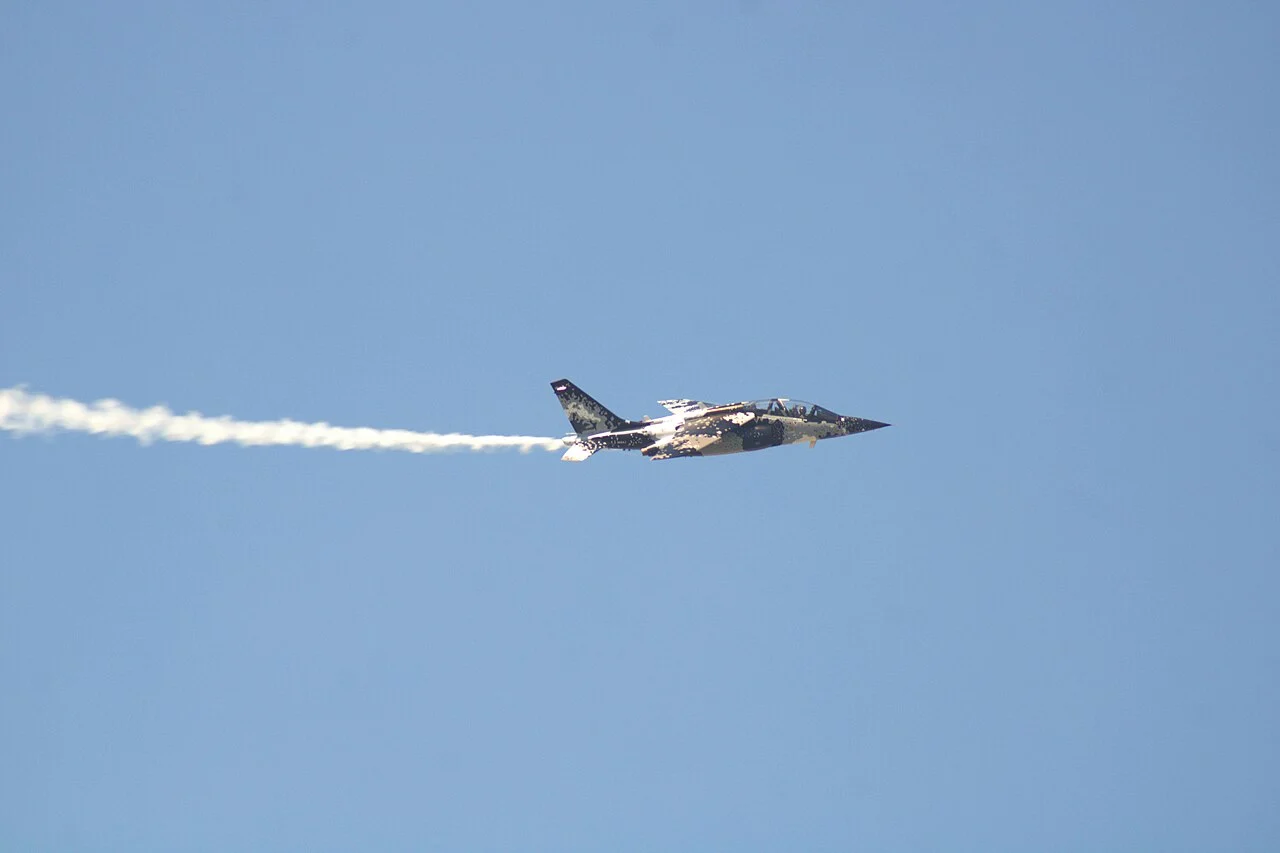
The Franco-German Alpha Jet is a twin-engine light attack and advanced trainer aircraft built by Dassault and Dornier from the 1970s. Nigeria, operational, is the type’s most active African user: the Nigerian Air Force has rebuilt its fleet through depot-level maintenance and, according to a 2025 report by Military Africa, had taken delivery of at least four of twelve ex-French Air Force Alpha Jets by that year, flying strike missions from Yola and Maiduguri against Boko Haram, the Islamic State West Africa Province and armed-bandit groups. Cameroon, operational, and Togo, operational, also retain Alpha Jet fleets from original 1980s deliveries, though published fleet sizes vary by source, from single digits to roughly a dozen airframes, and neither air force has disclosed a current serviceable count. The aircraft’s survival this far into the 21st century reflects both the airframe’s simplicity for African maintenance crews and the absence, until recently, of an affordable Western-aligned replacement; Nigeria has since added Leonardo M-346FA jets without retiring its Alpha Jets. See DefenceMENA’s Nigeria military strength profile for the air force’s full order of battle.
2. Panhard ERC-90 Sagaie — France’s go-to armoured car for the Sahel
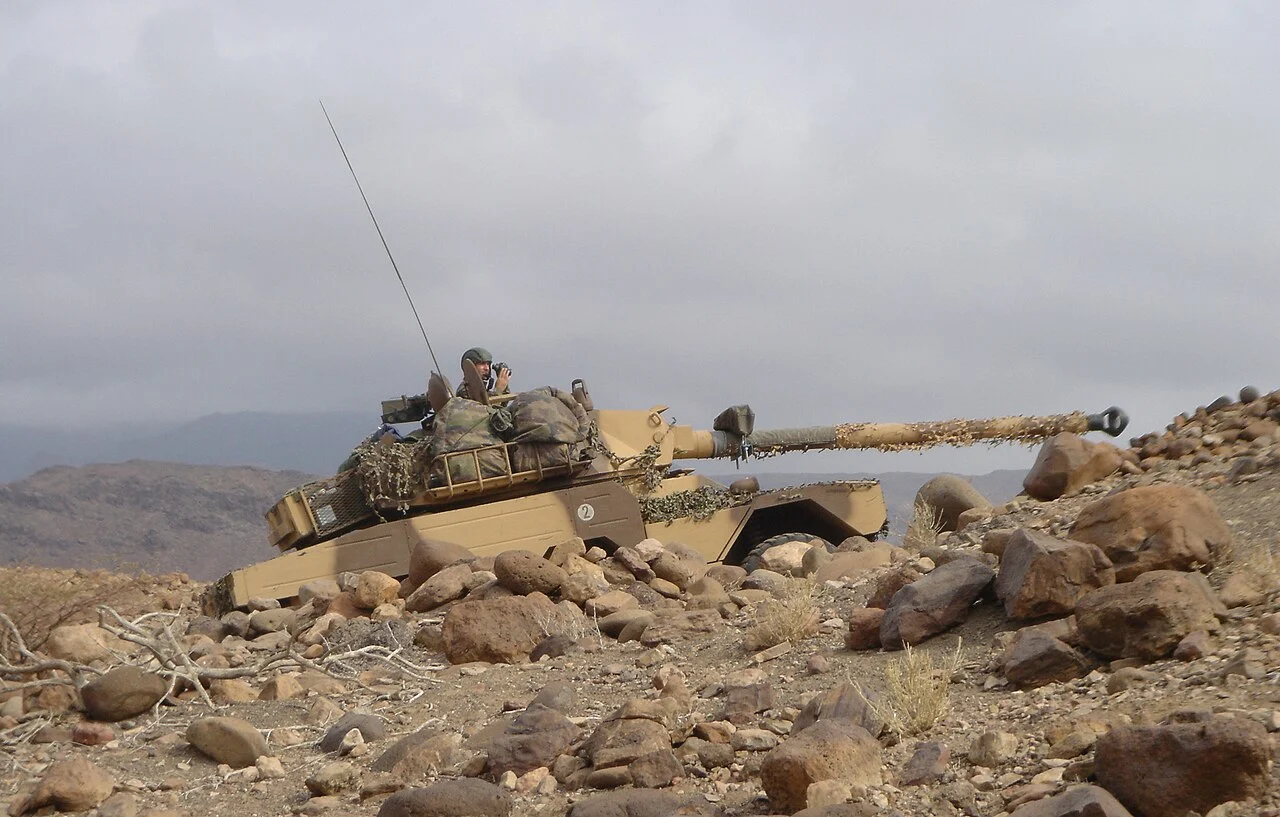
The ERC-90 Sagaie is a 6×6 wheeled armoured car armed with a 90mm gun, built by Panhard from the late 1970s for colonial and expeditionary reconnaissance roles. Chad, delivered, received nine ERC-90 Sagaies from France in January 2021 as part of a reinforcement package tied to French counterterrorism support in the Sahel, according to Defensa.com and Military Africa; the French army had already been operating ERC-90s inside Chad under Operation Barkhane; see DefenceMENA’s Chad desk for the country’s wider French-supplied inventory. Côte d’Ivoire and Gabon, both operational, have fielded smaller ERC-90 fleets since the 1980s and 1990s, originally supplied alongside French defence-cooperation agreements; current serviceable numbers are not independently verified and published figures vary across open-source equipment lists; see DefenceMENA’s Ivorian army weapons and equipment list for Côte d’Ivoire’s broader arsenal. France itself has drawn down its own ERC-90 fleet since 2022 in favour of the wheeled EBRC Jaguar, which has pushed some surplus vehicles toward export and donation channels rather than new-build sales. For African operators facing budget constraints, the type’s low per-unit cost and simple turret system remain its main draw over newer, pricier wheeled fire-support vehicles.
3. Arquus VAB — Cold War carrier still moving troops from Bamako to Cotonou
The Véhicule de l’Avant Blindé, built originally by Renault Trucks Defense and now by Arquus, is a 4×4 wheeled armoured personnel carrier that has equipped the French army and its African partners since the late 1970s. Benin, delivered, received 15 VAB 4×4 vehicles directly from France in February 2023, Military Africa reported, as part of French military support for Beninese forces confronting jihadist incursions from the Sahel. Morocco, reportedly under negotiation, has discussed acquiring the newer VAB Mk3 6×6 variant from Arquus since at least 2020 as part of a wider armoured-vehicle modernisation effort; Moroccan defence media reported in 2026 that the army’s official magazine confirmed an intent to acquire the type, but no contracted quantity or delivery date has been published, according to Defensa.com. Other VAB users across francophone Africa, including Gabon, Chad and the Central African Republic, inherited vehicles from earlier French deliveries whose current serviceable status is not independently confirmed. The VAB’s continued relevance owes less to its armour, which is light by modern standards, than to its low operating cost and the depth of a sustainment pipeline France has run in West Africa for over forty years.
4. AMX-10RC — Morocco’s long-serving wheeled tank destroyer
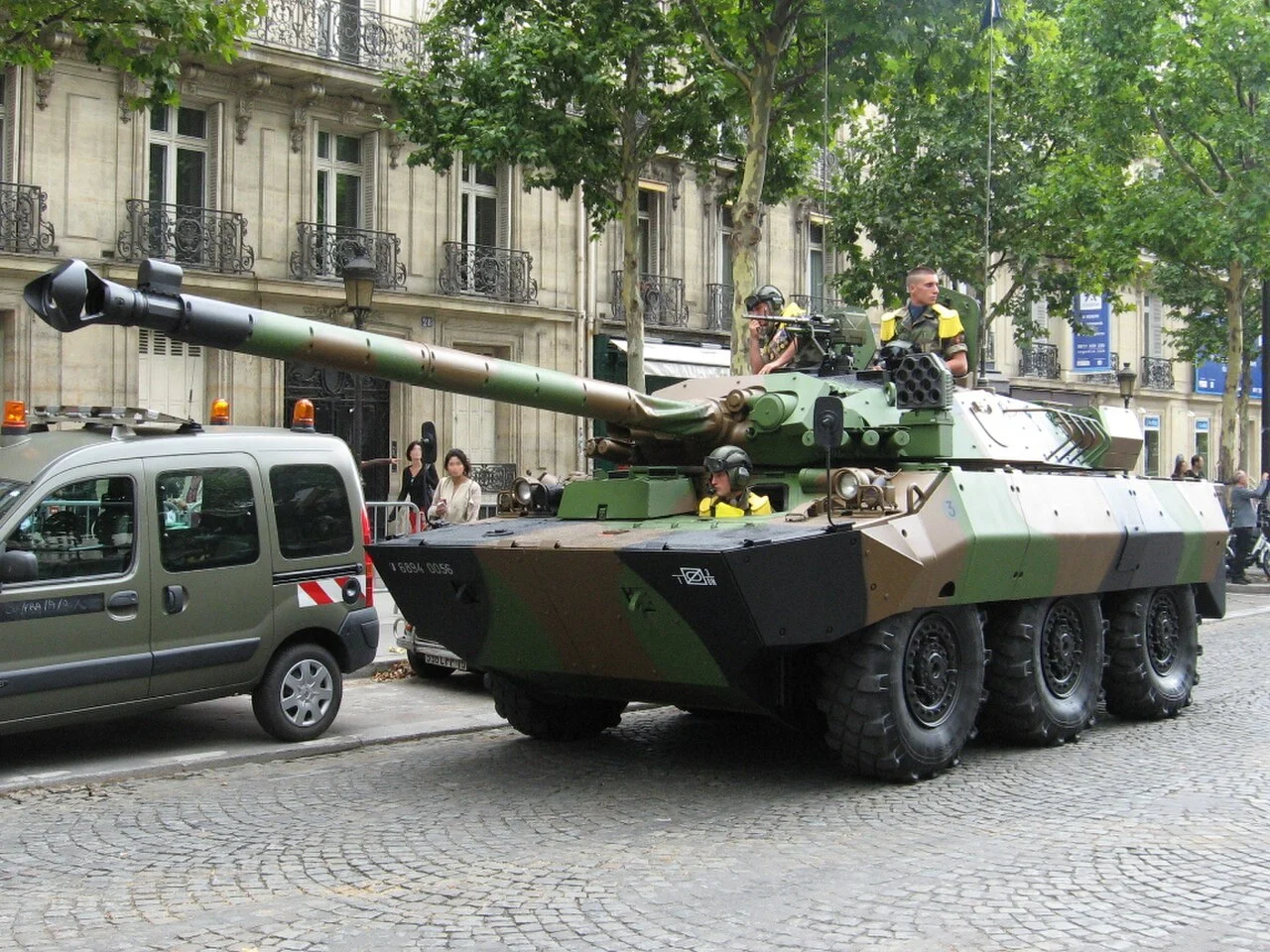
The AMX-10RC is a 6×6 wheeled reconnaissance and fire-support vehicle mounting a 105mm rifled gun, developed by the French state arsenal that later became part of Nexter. Morocco, operational, is Africa’s principal operator: the Royal Armed Forces ordered 108 vehicles in 1978, with deliveries beginning in 1981 for training before entering operational use, according to Army-Guide.com’s equipment database. The vehicle gives Morocco a wheeled, road-mobile direct-fire capability that complements its tracked main battle tank fleet in Western Sahara and along the Algerian border, where terrain and distances favour wheeled over tracked mobility for rapid reinforcement. France retired most of its own AMX-10RC fleet in favour of the newer EBRC Jaguar, which has made Morocco one of the type’s largest remaining operators worldwide alongside Qatar. No recent modernisation or life-extension programme for Morocco’s fleet has been publicly disclosed.
5. MBDA VL MICA — Morocco’s layer against drones and aircraft
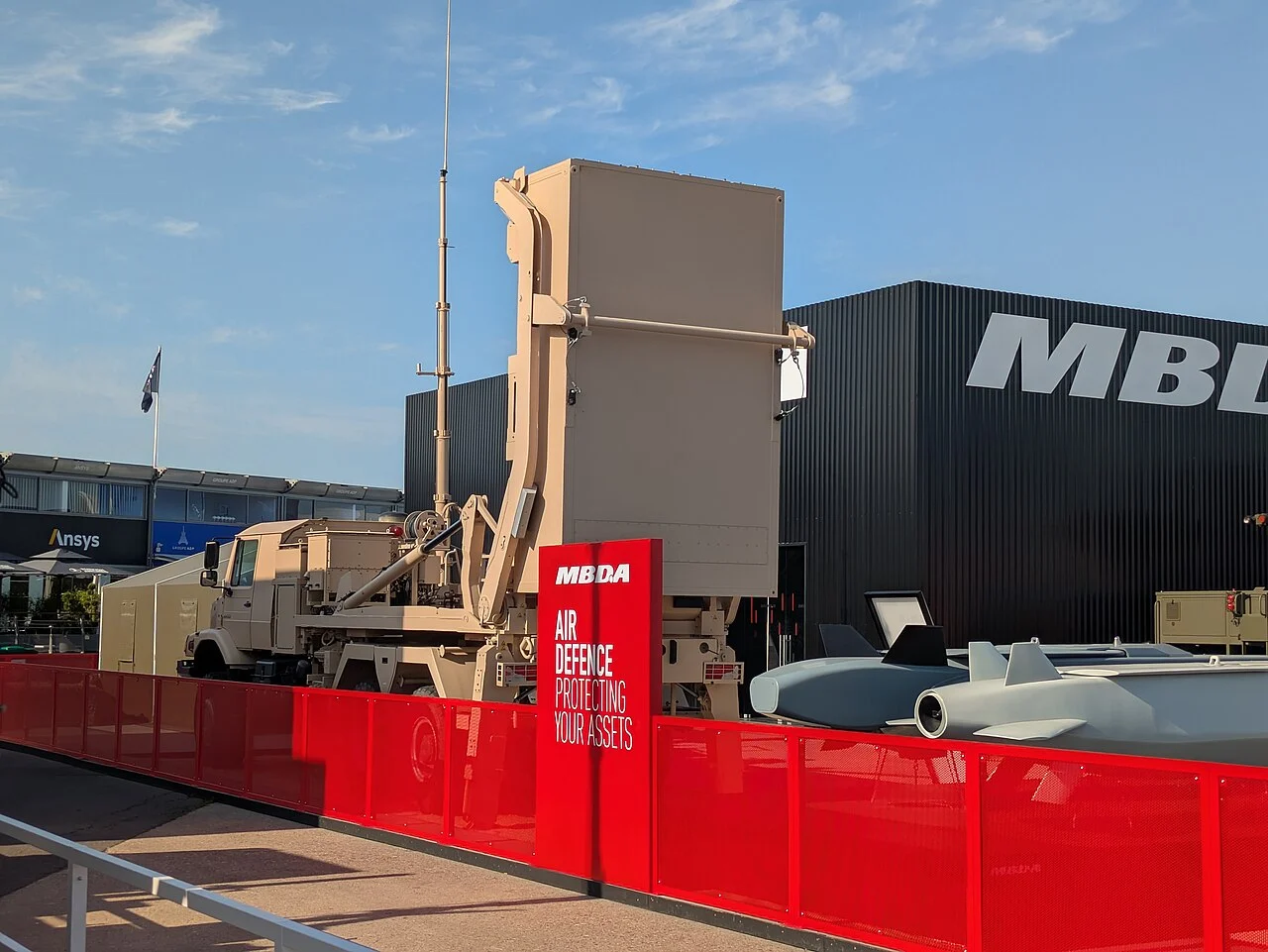
VL MICA is a short-range, ground-based air defence system built by MBDA, using vertically launched versions of the MICA air-to-air missile to intercept aircraft, helicopters, drones and some missiles out to roughly 20 kilometres. Morocco, delivered, financed its order with a €192.1 million export loan from BNP Paribas signed in 2020 and received its first two VL MICA batteries from France in 2022, Military Africa and Atalayar reported; a 2022 Moroccan defence report said the country could acquire four additional batteries, though delivery of those units has not been confirmed in subsequent reporting. The system sits alongside Morocco’s Chinese-supplied Sky Dragon and FD-2000B batteries in a deliberately mixed-supplier air-defence architecture, giving Rabat layered coverage against the drone and loitering-munition threats that have grown along its Western Sahara front. VL MICA’s mobility, mounted on a wheeled transporter-erector-launcher, lets Moroccan units reposition batteries faster than fixed-site systems, a consideration that has gained weight as both Algeria and Polisario-aligned forces field more long-range strike drones.
6. MBDA Milan — South Africa’s anti-armour mainstay since the 2000s
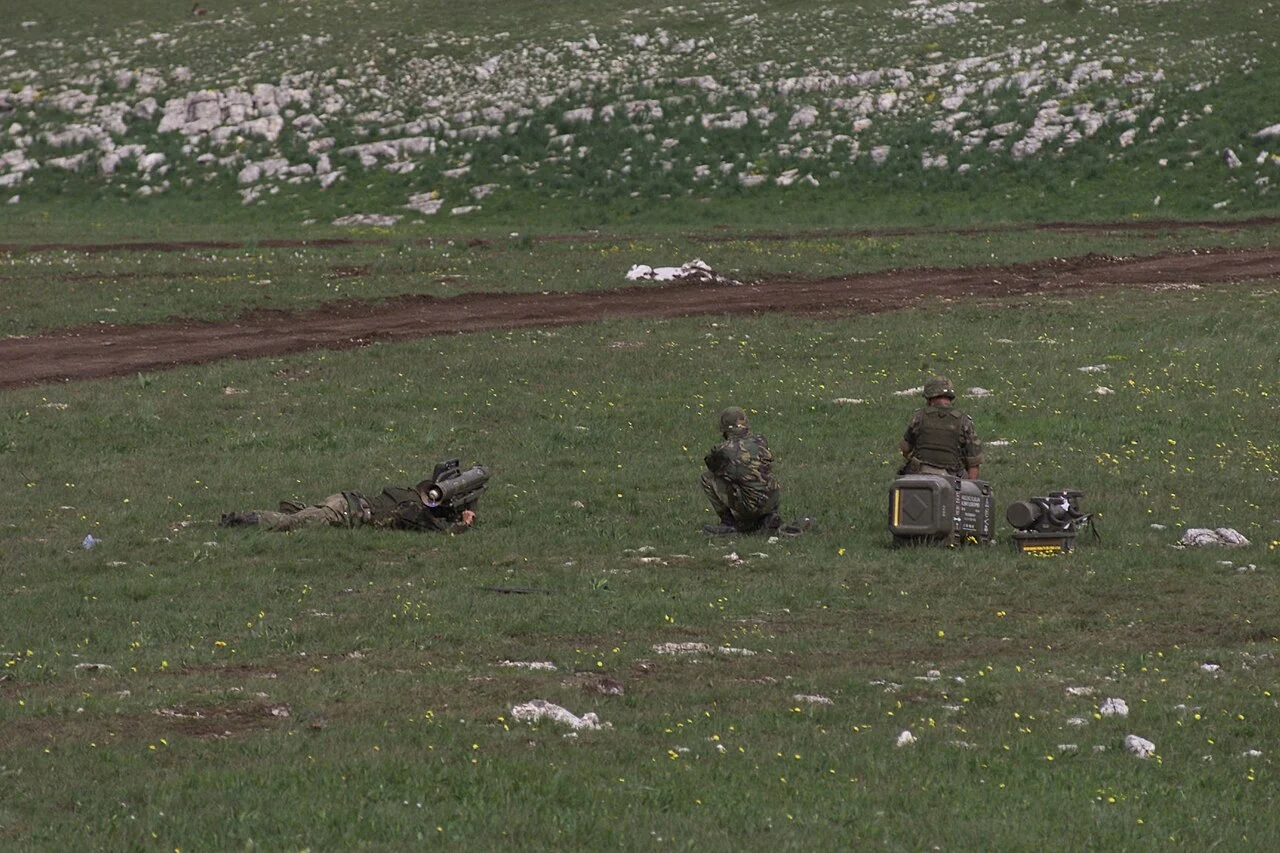
Milan is a wire-guided, man-portable anti-tank missile originally developed jointly by France’s Aerospatiale (now part of MBDA) and Germany, with the firing post upgraded over time to the ADT standard. South Africa, operational, ordered Milan ADT firing posts, simulators and Milan 3 missiles from MBDA under a contract worth just over €18 million (R167.4 million) signed on 20 December 2006, codenamed Project Kingfisher, according to DefenceTalk; a follow-on contract worth €10.7 million for additional firing posts and simulators followed on 11 March 2009, ITWeb reported. The South African National Defence Force uses Milan as its primary infantry anti-armour weapon, deployed with mechanised and motorised infantry units rather than a dedicated armour-heavy force, reflecting South Africa’s doctrine of mobile, dismounted anti-tank defence over large tank formations. No South African order for a newer-generation French or other Western anti-tank missile has been publicly confirmed as of this report, leaving Milan ADT as the mainstay system.
7. MBDA Mistral — Botswana’s VBL-mounted air-defence missile
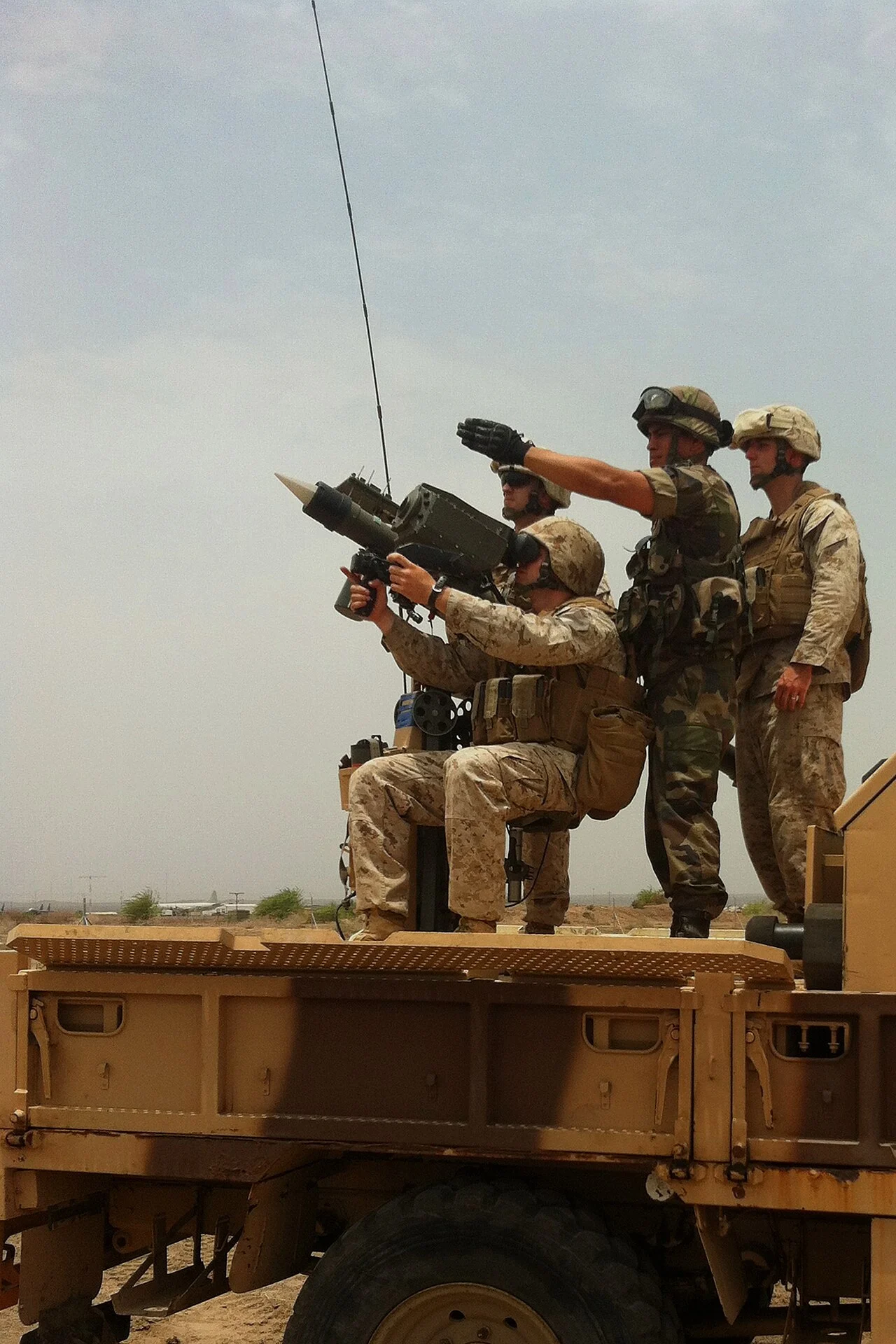
Mistral is an infrared-homing, man-portable air defence missile built by MBDA, fired either from a shoulder launcher or from vehicle-mounted twin launchers such as the ALBI post. Botswana, reportedly operational, ordered Mistral missiles, a Unimog-mounted command post and a Panhard VBL fitted with what Military Africa described as “most likely” a Mistral launcher assembly, as part of a 2016 order that also included VL MICA; the equipment was photographed arriving in Botswana via Namibia in 2020, though no official French or Botswanan export confirmation has been published, and the Mistral identification rests on equipment photographs rather than a confirmed government statement. Senegal, reportedly under negotiation, has been reported by the Senegalese outlet Senego, citing French newspaper Les Echos, to be modernising its ground-based air defence with Mistral missiles, though the report gives no variant, quantity or contract value. Both cases illustrate a recurring problem for open-source tracking of African MANPADS holdings: France and MBDA rarely confirm export details themselves, leaving equipment-spotting and secondary press reports as the main public record.
| System | Category | Key African operator(s) | Status | Source, year |
|---|---|---|---|---|
| Alpha Jet | Light attack/trainer aircraft | Nigeria, Cameroon, Togo | Operational | Military Africa, 2025 |
| ERC-90 Sagaie | Wheeled armoured car | Chad, Côte d’Ivoire, Gabon | Delivered/Operational | Defensa.com, Military Africa, 2021 |
| VAB | Armoured personnel carrier | Benin, Morocco | Delivered (Benin); Reportedly under negotiation (Morocco) | Military Africa, 2023; Defensa.com, 2026 |
| AMX-10RC | Wheeled reconnaissance/fire support | Morocco | Operational | Army-Guide.com |
| VL MICA | Short-range air defence | Morocco | Delivered | Military Africa, 2022 |
| Milan ADT | Anti-tank guided missile | South Africa | Operational | DefenceTalk; ITWeb, 2006/2009 |
| Mistral | MANPADS/vehicle-mounted air defence | Botswana, Senegal | Reportedly operational/under negotiation | Military Africa, 2020 |
Why it matters for Africa
France’s remaining footprint in African arsenals is less a story of new sales than of sustainment: most systems here trace back to Cold War-era or early-2000s contracts, and only VL MICA and the proposed VAB Mk3 deal represent newer French equipment entering African service in the past decade. That reflects both affordability, since legacy French platforms are cheaper to keep running than to replace, and the erosion of French political influence in the Sahel, where juntas in Mali, Burkina Faso and Niger have pushed out French forces and some of the sustainment relationships that kept older kit flying. Where France has still won business, in Morocco’s air-defence layering and Benin’s VAB transfer, the deals have been tied to counterterrorism cooperation or to a buyer’s deliberate strategy of diversifying suppliers. For militaries still operating Alpha Jets, ERC-90s or AMX-10RCs, the practical question is less who built the equipment than who can keep parts flowing, a role Turkish, Chinese and Gulf suppliers increasingly contest even for platforms France once supplied without competition.
Sources
- Comboni Missionaries, citing SIPRI Arms Transfers Database, 2025
- Comboni Missionaries, citing SIPRI, 2024
- Military Africa: Nigeria operationalises additional Alpha Jets, 2025
- defenceWeb: Alpha Jet coverage archive
- Defensa.com: France hands nine ERC-90 Sagaie to Chad’s army, 2021
- Military Africa: France reinforces Chad with ERC-90 light tanks, 2021
- Military Africa: Beninese armed forces receive 15 VAB 4×4 vehicles from France, 2023
- Defensa.com: Moroccan army to field VAB Mk3 6×6 armoured vehicles, 2026
- Army-Guide.com: AMX-10RC equipment profile
- Military Africa: Morocco receives VL MICA missiles from France, 2022
- Atalayar: Morocco reinforces its army with the VL MICA anti-aircraft system, 2022
- Bladi.net: Morocco receives VL MICA missile system
- DefenceTalk: South Africa orders MBDA’s Milan ADT anti-tank weapon system, 2006
- ITWeb: Army’s missile buy benefits Fulcrum, 2009
- Military Africa: Landlocked Botswana receives several military hardware, 2020
- Senego: Senegal modernises its air-defence weapons with Mistral missiles