Why Zambia Bought the Bell 412: Deal, Cost and Status



Zambia is building up its Bell 412 fleet because its air force has flown a patchwork of ageing and mixed-origin helicopters — Vietnam-War-era Bell 205s, Soviet-supplied Mi-171s and Chinese Harbin Y-12s and Z-9s — and the United States has offered a steady supply of a proven, Bell-family utility helicopter type Zambia already operates, first as a grant and then as a follow-on sale. The Zambia Air Force (ZAF) added three secondhand Agusta-Bell 412SPs around 2021, received four new-build Bell 412EPs under an $80 million US grant announced in September 2023, and in January 2025 the US State Department approved a further Foreign Military Sale (FMS) of Bell 412EPs worth an estimated $100 million. No contract for that second sale has been confirmed as of November 2026, and no public source has disclosed how many additional aircraft it covers.
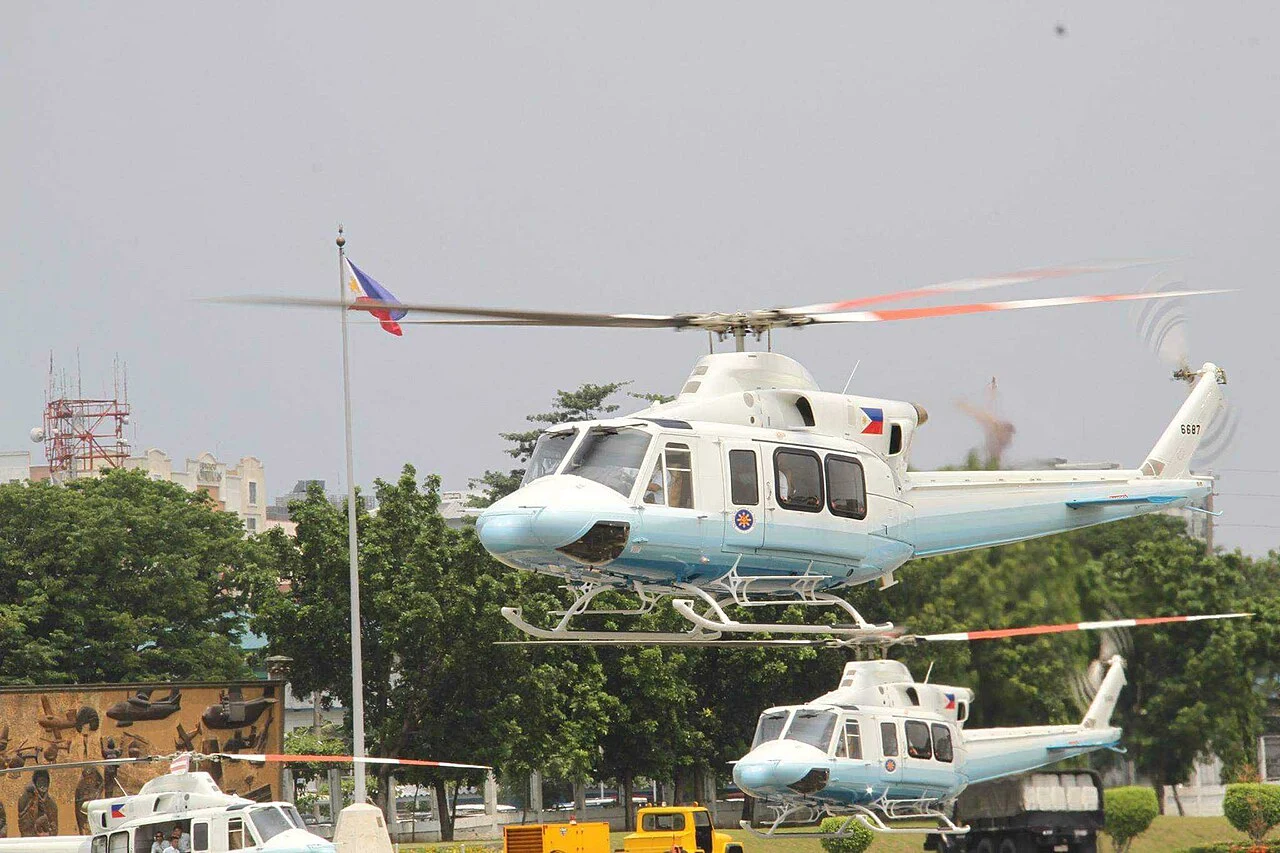
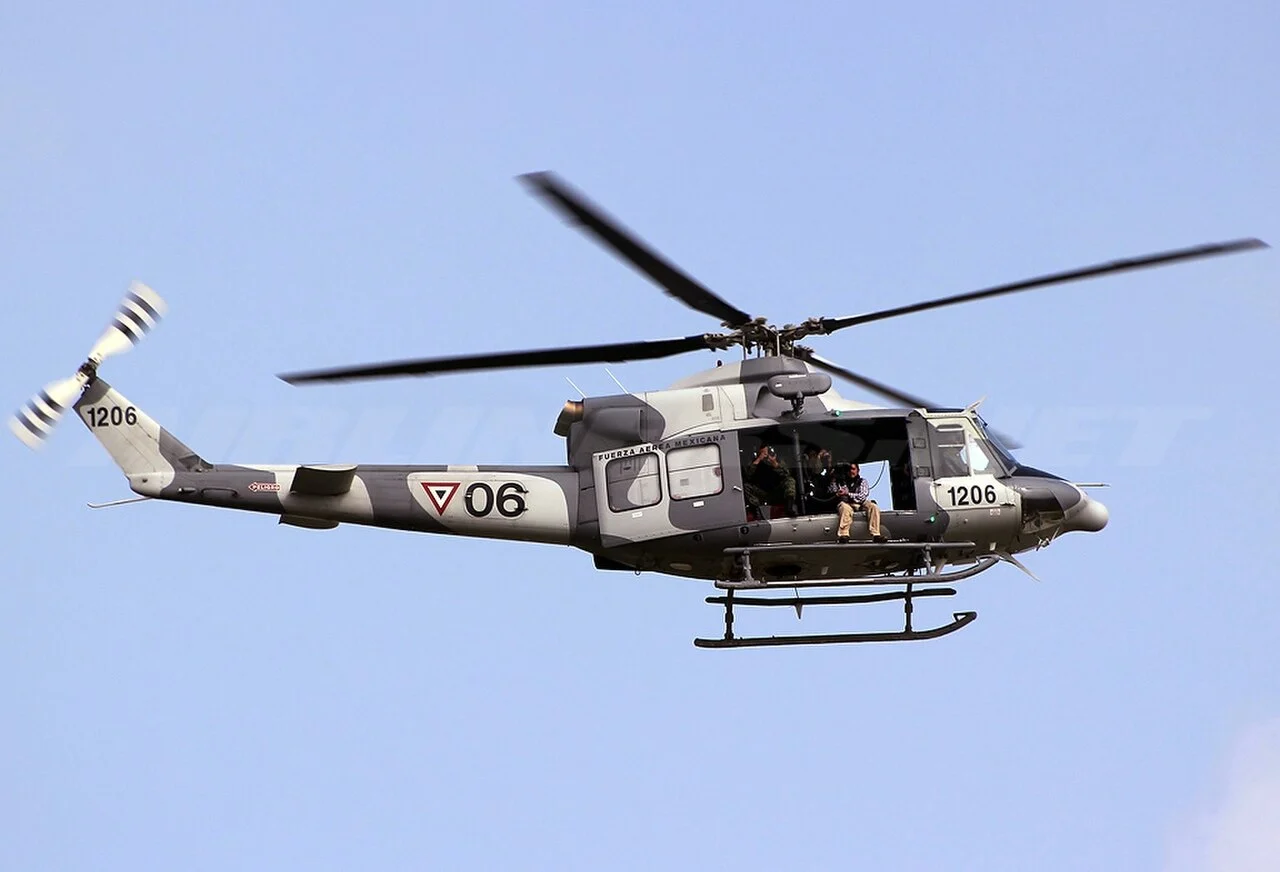
Photo: Bell 412EP medium-lift helicopters of the Philippine Air Force — not Zambia’s aircraft, shown to illustrate the type. Credit: Philippine Air Force, via Wikimedia Commons (public domain).
This explainer follows one question: why did this African customer choose this system? The answer below comes from US government notifications, African and US defence-trade reporting, and named sources. Where the record is silent or disputed, this article says so rather than filling the gap with a plausible motive.
| Item | What the record shows | Status |
|---|---|---|
| Customer | Zambia Air Force (ZAF) | Confirmed |
| System | Bell 412 family medium-lift utility helicopter (412SP and 412EP variants); manufacturer Bell Textron, Fort Worth, Texas / Mirabel, Quebec | Confirmed |
| Route | Mixed: secondhand commercial purchase (2021), US Foreign Military Financing grant (2023), US Foreign Military Sale notification (2025) | Three separate transactions |
| 2023 grant value | $80 million, for 4 aircraft plus three years of parts, service and training | Delivered |
| 2025 FMS ceiling | Estimated $100 million; quantity undisclosed | Approved by US State Dept/DSCA; contract not confirmed |
| Fleet size reported before 2025 notification | Eight Bell 412s (3 from 2021 purchase + ~4-5 from the 2023 grant, by trade-press count) | Reported, not an official ZAF figure |
| Base | Zambia Air Force Base, Lusaka (induction ceremonies held there) | Operational |
| Local production | None documented | — |
What capability did Zambia need?
No DSCA notification, US Embassy statement or Zambian government document sets out a single triggering event the way Nigeria’s Boko Haram campaign or Morocco’s air-defence build-up do. Instead, the stated rationale is broad and consistent across both US transactions: the helicopters are for “regional security and peacekeeping, disaster response, and humanitarian assistance,” according to the Defense Security Cooperation Agency’s description of the 2025 sale, cited by Shephard Media. The agency added that the sale would help “improve Zambia’s capability to conduct peacekeeping and regional security, disaster response, and humanitarian aid missions” and would not alter the basic military balance in the region.
At the induction of the first two 2023-grant aircraft in March 2024, ZAF Commander Lt Gen Oscar Msitu Nyoni framed the helicopters around the force’s ability “to better support the domestic needs of Zambia, regional security, and United Nations peacekeeping missions abroad,” per Africa Defense Forum (an AFRICOM-run publication). Zambia does contribute a C-27J Spartan transport aircraft and a protection regiment to the SADC Mission in Mozambique (SAMIM), which supports the counter-insurgency effort in Cabo Delgado — a documented peacekeeping commitment — but no source names the Bell 412 as part of that specific deployment. The capability gap here is best read as fleet-wide and multi-mission (utility lift, medevac, disaster response, VIP and troop transport) rather than a single combat requirement.
What did the Air Force operate before?
Zambia’s rotary fleet before this build-up was, and largely remains, a mix of Cold War-era Western aircraft and later Soviet and Chinese deliveries. Per Zambian Air Force equipment listings and Africa Defense Forum, the force has flown around a dozen Agusta-Bell 205s dating to deliveries that began forming its first helicopter squadron in the late 1960s, plus a handful of Bell 206s and 212s; five Mil Mi-171Sh/Mi-171E transport helicopters delivered from Russia between 2015 and 2017; and seven Harbin Y-12 utility aircraft and seven Harbin Z-9 helicopters from China. None of these counts is official; they come from aggregator sites and trade reporting and should be read as approximate.
That spread is itself part of the story: a force sourcing utility and transport aircraft from the US, Russia, China and Italy over six decades carries a correspondingly fragmented logistics and training burden. The Bell 412 additions sit on top of three secondhand Agusta-Bell 412SPs Zambia is reported to have acquired around 2021 with South Africa’s Safomar Aviation Group coordinating the acquisition, according to Military Africa. No country-level Zambia military-strength inventory exists yet on this site; this article does not attempt to substitute for one.
Procurement timeline
| Stage | Date | What happened | Source |
|---|---|---|---|
| Earlier acquisition | c. 2021 | Zambia acquires three secondhand Agusta-Bell 412SPs, reportedly coordinated by South Africa’s Safomar Aviation Group | Military Africa |
| Grant announcement | 14 Sep 2023 | US announces an $80 million (about 1.6 billion Kwacha) grant to fund four Bell 412EPs, with three years of service, parts and training | AFRICOM; Africa Defense Forum; Zambia Monitor |
| Grant acceptance / statement | Sep 2023 | ZAF Commander Lt Gen Oscar Nyoni says the helicopters will support domestic, regional and UN peacekeeping roles | Africa Defense Forum |
| First delivery / induction | 13 Mar 2024 | Defence Minister Ambrose Lufuma presides over the induction of the first two Bell 412EPs at Lusaka; two Enstrom 480B trainers inducted separately on 25 Mar 2024 | Military Africa; Aviation Week |
| Remaining grant deliveries | Unknown | Delivery date for the second pair of the four grant-funded 412EPs not found in public reporting | Unknown |
| Follow-on sale notified | 13 Jan 2025 | US DSCA notifies Congress of a possible FMS of additional Bell 412EPs to Zambia, estimated at $100 million | DSCA; The Defense Post; Shephard Media; Jane’s |
| Fleet expansion reporting | Aug 2025 | Africa Defense Forum reports Zambia could acquire “between 10 and 38” additional used Bell 412s depending on model year and condition, at an estimated $100 million | Africa Defense Forum |
| Contract signature | Not found | No public confirmation that Zambia and Bell Textron have signed a contract under the 2025 FMS notification | Unknown |
| Additional order beyond this | — | None found | Unknown |
Two things stand out. First, this is not one purchase but three separate transactions — a commercial secondhand buy, a US grant, and a pending US sale — that together built a single, growing Bell 412 sub-fleet. Second, the step from DSCA approval to signed contract, which took roughly 16 months for Nigeria’s A-29 Super Tucano, has not yet been confirmed as complete for Zambia almost two years after the January 2025 notification; a DSCA notification is a ceiling for a possible sale, not proof a contract exists.
What was purchased?
The 2023 grant funded four Bell 412EP medium-lift helicopters plus three years of contractor field support, spare parts and aircrew training, according to AFRICOM and Africa Defense Forum reporting. The 2025 FMS notification, per The Defense Post and Shephard Media, covers Bell 412EP helicopters together with radio communication and navigation systems, parts, ground and test equipment, in-country field service support, quality inspections and flight verifications, logistics and maintenance support, and proficiency training for future aircrews. Jane’s reporting adds qualification and transition training for pilots and maintainers. No weapons, sensor packages or armament are listed in any notification; the Bell 412 enters ZAF service as an unarmed utility and transport type, unlike combat-oriented FMS cases such as Nigeria’s A-29 or AH-1Z.
What did it cost?
| Figure | What it is | Source |
|---|---|---|
| $80 million | US grant announced September 2023, covering 4 new Bell 412EPs plus 3 years of service, parts and training | AFRICOM; Africa Defense Forum |
| $100 million | Estimated ceiling of the January 2025 possible FMS; not a contract value and not a per-aircraft price | DSCA; Shephard Media; The Defense Post |
| $2.6m–$9.6m per aircraft | Africa Defense Forum’s own range for secondhand Bell 412s by model year (1994 to 2016 builds), used only to illustrate how wide used-helicopter pricing is — not an official Zambia unit price | Africa Defense Forum |
| Funding split | DSCA describes the 2025 case as funded by a mix of Foreign Military Financing and Zambian national funds; no percentage split published | DSCA; Shephard Media |
| Secondhand 2021 purchase price | Not disclosed in any source found | Unknown |
These figures should not be combined into a single programme cost or divided to produce a per-aircraft price: the $80 million grant bundles three years of support into the price of four airframes, the $100 million FMS figure is a ceiling for an unspecified quantity, and the per-aircraft range Africa Defense Forum cites is a general used-helicopter price band, not a quoted Zambian contract price. No figure in the public record states what Zambia itself is paying, as opposed to what Washington has approved or granted.
Why was the system selected?
| Factor | Evidence | Strength |
|---|---|---|
| Fleet commonality with existing Bell 412s and Bell 205s | ZAF already operated Bell 205s and three Agusta-Bell 412SPs before the 2023 grant | Reported, secondary source; not stated by DSCA as a selection factor |
| Low direct cost to Zambia (2023 batch) | $80 million structured as a US grant, not a loan or a Zambian-funded purchase | Official, US-sourced |
| Multi-mission utility role | DSCA and ZAF statements both cite peacekeeping, disaster response and humanitarian missions, not a single combat need | Official (US) and reported (ZAF command) framing |
| Bundled training and support | Both the 2023 grant and the 2025 case include contractor field support, parts and aircrew/maintainer training | Documented in notifications |
| Access to a used-helicopter market | Africa Defense Forum frames the 2025 case partly as access to secondhand US military surplus Bell 412s at a range of price points | Reported, single source |
| Price versus other types | No published comparison with Russian, Chinese or European medium-lift helicopters | Unknown |
| Local production or technology transfer | None documented | Not a factor on the record |
| Financing | Grant for the 2023 batch; mixed FMF/national funds for the 2025 case | Official, partial detail |
No Zambian evaluation report, tender notice or ministerial statement explains a side-by-side choice of the Bell 412 over another type. The pattern instead reads as continuity: Zambia already had Bell 412s and Bell 205s in service, and the US offered to extend that sub-fleet first as aid, then as a sale, with support bundled in both times.
Were alternatives considered?
| Category | Type | Evidence |
|---|---|---|
| Confirmed competitor | None found | No public tender or head-to-head evaluation for either the 2023 grant or the 2025 FMS case has been located |
| Reported alternative | Expansion of the existing Mi-171 (Russian) or Harbin Z-9 (Chinese) fleets instead | Both types remain in ZAF service; no source shows Zambia weighed buying more of either as an alternative to the Bell 412 |
| Theoretical same-class alternatives | Other medium utility helicopters bought elsewhere in Africa in the same period, e.g. the Airbus H175M/ACH175 package Ghana ordered in January 2026 | Different buyer, different supplier; no evidence Zambia evaluated it |
| Parallel acquisition, not a rejected option | Two Enstrom 480B trainers, inducted alongside the first Bell 412EPs in March 2024 | Confirmed; a separate training type, not a competing utility helicopter |
As with several other FMS-driven African procurements, it would be wrong to describe Zambia as having “chosen the Bell 412 over” a named rival. The record shows a US grant offer that Zambia accepted, followed by a US-approved sale opportunity, with no public evidence a competing bid or type was weighed against either one.
Training and support
The 2023 grant included three years of parts, service and training, per AFRICOM and Africa Defense Forum; the 2025 FMS notification adds qualification and transition training for pilots and maintainers, in-country field service representatives, quality inspections and flight verifications, and logistics and maintenance support, per The Defense Post, Shephard Media and Jane’s. Separately, the 2021 secondhand purchase of three Agusta-Bell 412SPs is reported to have been coordinated by Safomar Aviation Group, a South African aviation services company, though no source details what training or maintenance arrangement accompanied that transaction. No figures for the number of Zambian personnel trained under either US transaction were found in public reporting, unlike the specific pilot/maintainer counts documented for Nigeria’s A-29 programme.
Delivery and operational service
| Claim | Who made it | Grade |
|---|---|---|
| First two 2023-grant Bell 412EPs inducted 13 March 2024 at Lusaka | Defence Minister Ambrose Lufuma, via Military Africa and Aviation Week | Official statement, independently reported |
| Zambia operated eight Bell 412s by January 2025 | Shephard Media / Jane’s trade reporting | Independent trade press estimate, not an official ZAF count |
| Bell 412EPs described as supporting “military operations and disaster response” | Military Africa, paraphrasing ZAF command | Reported, general mission description |
| Zambia could expand to 10-38 Bell 412s | Africa Defense Forum analysis of used-helicopter pricing | Analyst estimate, not a stated Zambian or US plan |
| Delivery date for the remaining two 2023-grant aircraft | Not found | Unknown |
Beyond the March 2024 induction ceremony, no incident reports, combat deployments or named operational missions for Zambia’s Bell 412s were found in the sources reviewed for this article. That is consistent with the type’s declared utility and humanitarian role, not an unarmed training or VIP aircraft sitting idle; it simply means no public record documents a specific mission the Bell 412 has flown.
Industrial cooperation
None is documented. The Bell 412 is built by Bell Textron in Fort Worth, Texas, with final assembly historically at Bell’s Mirabel, Quebec plant; both US transactions describe contractor field support and training delivered to Zambia, not Zambian production or overhaul capacity. Safomar Aviation Group’s role in the 2021 secondhand purchase is reported as that of a broker or acquisition coordinator, not a manufacturer or maintenance-repair-overhaul (MRO) provider for Zambia. No source describes any Zambian facility assembling, licence-producing or performing deep maintenance on the Bell 412; any claim that Zambia manufactures or overhauls the type domestically goes beyond the record.
Was it a good fit? Documented trade-offs
| Dimension | Evidence in favour | Trade-off or open question |
|---|---|---|
| Mission | Twin-engine utility design suits the declared transport, medevac, disaster-response and peacekeeping-support roles | No armed or ISR variant involved; does not address any combat capability gap |
| Environment | DSCA and Africa Defense Forum both cite long-distance operations “in complex weather”, relevant to a landlocked country with seasonal flooding | No public data on Zambian-specific performance or utilisation rates |
| Fleet commonality | Builds on Bell 412SPs and Bell 205s already in ZAF service, easing pilot conversion | The wider fleet (Mi-171, Y-12, Z-9) remains mixed; no sign of consolidation around one type |
| Training and maintenance | Both US transactions bundle contractor field support and aircrew/maintainer training | Grant-funded support is time-limited (three years); long-term Zambian sustainment funding is not public |
| Financing and political terms | First batch came as a grant, not a loan; second batch uses FMF support plus Zambian funds | Full cost to the Zambian treasury of the 2025 case, and whether a contract has been signed, is not public as of November 2026 |
How it compares with same-class alternatives
A specification comparison would overstate what the record supports, because Zambia did not publish one and the types below occupy different places in its fleet. What can be said: the Mi-171, already in ZAF service from 2015-2017, is a larger, heavier Russian-built transport helicopter from a different supplier relationship; the Harbin Z-9, also already in service, is a lighter Chinese-built utility type; and the Airbus H175M/ACH175 package Ghana ordered in January 2026 shows a different West African air force choosing a European manufacturer for a broadly similar medium-utility role, with no disclosed price or delivery date at the time of that order. Zambia’s decision to keep adding Bell 412s, rather than expanding its Mi-171 or Z-9 holdings or looking to a European or Chinese type for this increment, tracks its existing Bell relationship and the US grant-then-sale mechanism more than any demonstrated capability advantage over those alternatives.
Africa-wide consequence
No source reviewed for this article claims Zambia’s Bell 412 build-up has influenced another African air force’s helicopter choice, and this article does not assert one. What the case does illustrate, documented on the US side, is a grant-then-FMS sequencing — Washington funding an initial batch as aid, then offering a larger follow-on sale once the type is established in service — that the DSCA and AFRICOM have also used elsewhere in US security-cooperation messaging about Africa. Whether that sequencing is a deliberate continental strategy or a coincidence of Zambia’s own budget cycle is not established in the public record.
What happened next
As of November 2026, the January 2025 FMS notification remains the most recent confirmed step: no source locates a signed Bell Textron contract, a specified quantity, or a delivery schedule for the follow-on batch. Zambia has not announced any additional helicopter type beyond the two Enstrom 480B trainers inducted alongside the first Bell 412EPs in March 2024. For the wider African picture on rotary fleets, see our ranking of the most common military helicopters in Africa, and for a similarly US-grant-and-FMS-driven case, our earlier piece on why Nigeria bought the Super Tucano.
FAQ
Why did Zambia buy the Bell 412?
To replace and extend a worn, mixed-origin utility helicopter fleet, for peacekeeping, disaster-response and humanitarian missions, using a type Zambia already partly operated — first as a US grant in 2023, then as a proposed US sale notified in January 2025.
How many Bell 412s does Zambia have?
Trade reporting put the fleet at around eight by January 2025 (three secondhand 412SPs from around 2021 plus the four 412EPs from the 2023 US grant). No official ZAF figure has been published, and the quantity covered by the pending 2025 sale is undisclosed.
How much did Zambia pay for the Bell 412s?
The 2023 batch came as an $80 million US grant, not a Zambian payment. The 2025 case has an estimated $100 million ceiling, funded by a mix of US Foreign Military Financing and Zambian national funds; no contract value or per-aircraft price has been disclosed.
Has Zambia signed a contract for the new helicopters?
No public source confirms a signed contract under the January 2025 FMS notification as of November 2026. A DSCA notification approves a possible sale; it is not proof a contract exists.
Did Zambia consider other helicopters instead of the Bell 412?
No public tender, evaluation or named competitor has been found for either the 2023 grant or the 2025 FMS case. Zambia’s Mi-171 and Harbin Z-9 fleets remain in service in parallel, not as rejected alternatives.
Does Zambia build or maintain the Bell 412 locally?
No. The helicopters are built by Bell Textron in the United States and Canada; both US transactions describe contractor-delivered field support and training, not Zambian production or overhaul capacity.
Related reading
- Most common military helicopters in Africa, ranked (operator ranking)
- Why Nigeria bought the Super Tucano (another US FMS/grant-driven procurement)
- Why DRC bought the CH-4 drone (series sibling)
- Military equipment database
Sources
- AFRICOM, United States announces donation of helicopters to Zambia Air Force (14 September 2023)
- Africa Defense Forum, $80 million grant to fund helicopters for Zambia’s crisis response (October 2023)
- Military Africa, Zambian Air Force inducts new Enstrom 480B and Bell 412 helicopters (28 March 2024)
- Africa Defense Forum, Zambia Air Force adds helicopters for disaster response, peacekeeping (April 2024)
- Aviation Week, Zambia and Morocco gain new helicopters (25 March 2024)
- The Defense Post, US greenlights sale of Bell Textron 412 military helicopters to Zambia (14 January 2025)
- Shephard Media, Pentagon approves $100 million Bell 412 sale to Zambia (14 January 2025)
- Jane’s, US approves further Bell 412EP helicopters to Zambia (January 2025)
- Africa Defense Forum, Zambia plans to expand air fleet (4 August 2025)
- Zambian Air Force equipment inventory (aggregated, cross-checked against trade reporting)