African air forces fly a mix of Soviet-era Hind and Hip helicopters, a locally designed and built attack helicopter, and newly delivered Western Apache and Gazelle types. This gallery profiles eight helicopter platforms in African military service, naming every confirmed operator and its acquisition status, with figures current to October 2026.
DEFENCE AFRICA | Evergreen gallery | Data as of October 2026
Rotary-wing aircraft do work in Africa that fixed-wing types cannot. Where road networks are thin or absent, helicopters move troops and casualties, patrol borders, and strike mobile insurgent groups in terrain that would take fixed-wing aircraft hours to re-attack. That operational need has shaped a continental helicopter fleet still dominated by low-cost, Russian-designed types acquired through decades of Soviet and post-Soviet arms transfers, alongside a smaller number of Western and domestically produced platforms.
The mix varies by region and budget. Sahelian and Horn of Africa states facing insurgencies have leaned on second-hand Mi-24/Mi-35 Hind gunships and Mi-17/Mi-171 Hip transports, cheap to acquire and simple to maintain compared with Western equivalents. Algeria, with a larger budget and a long-standing Russian supply relationship, operates several helicopter families in parallel. South Africa remains the only African country to field a helicopter it designed and built itself, the Denel Rooivalk, alongside a locally modified Puma derivative, the Oryx. Morocco, Egypt and Kenya have brought Western-built Apache and light scout helicopters into service through Foreign Military Sales channels. This gallery covers platforms with at least one confirmed current operator and verifiable sourcing, excluding types reported only in single, unverified sightings.
Key facts
- Algeria is the only African state operating three distinct Russian-made helicopter families in parallel: Mi-171Sh, Mi-24/35 and Mi-28NE (sources below, by entry).
- South Africa is the only African country operating a domestically designed attack helicopter, the Denel Rooivalk (Army Technology).
- Morocco’s Apache fleet had reached 12 AH-64E Guardians delivered as of 2 May 2026, out of a Foreign Military Sales order for 24 aircraft with an option for 12 more (Hespress, 2 May 2026).
- Egypt’s roughly 45 AH-64D Apaches are the subject of a USD 2.3 billion remanufacture programme to AH-64E standard, approved in 2020 (Military Africa).
- Kenya received the first six of 12 approved MD 530F Cayuse Warrior helicopters in January 2020 (Military Times).
- South African Air Force readiness reporting to Parliament in 2022 put only 4 of 11 Rooivalks and 17 of 39 Oryx helicopters as serviceable (SAAF, 16 February 2022).
1. Mil Mi-24/Mi-35 Hind — the continent’s most common gunship
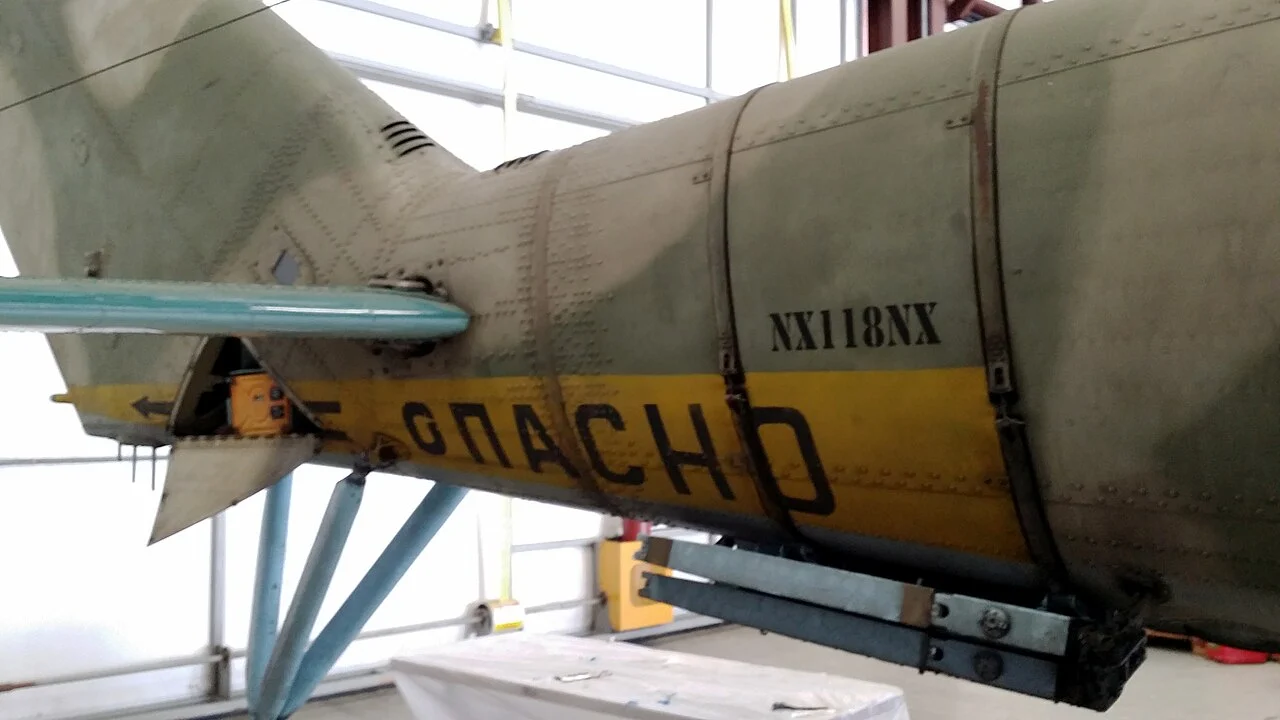
The Mi-24 and its export Mi-35 variant are the most widely distributed attack helicopters in African service, reaching the continent through Soviet-era transfers and later second-hand Russian and Belarusian sales. Nigeria operates a mixed fleet of roughly 15 Mi-35P and Mi-35M aircraft received in batches between 2000 and 2014 from Russia, Belarus and Ukraine, used against Boko Haram and ISWAP in the northeast (Military Africa, 2022; List of equipment of the Nigerian Air Force, Wikipedia). Mali has received Mi-24P and Mi-35M airframes from Russia for its counter-insurgency campaign, and Uganda’s People’s Defence Force Air Wing operates and locally overhauls Mi-24s. Status: operational across all named operators.
Manufacturer-published figures (Rostvertol, via Military Africa, 2022) put the Mi-35’s maximum speed at around 310 km/h with a combat radius of roughly 160 km, armed with a 23mm or 12.7mm gun and rocket pods or anti-tank missiles. Its relevance rests less on performance than on the pool of Russian-trained pilots and technicians across more than a dozen air forces, which keeps sustainment costs below Western equivalents.
2. Mil Mi-17/Mi-171 Hip — the transport backbone
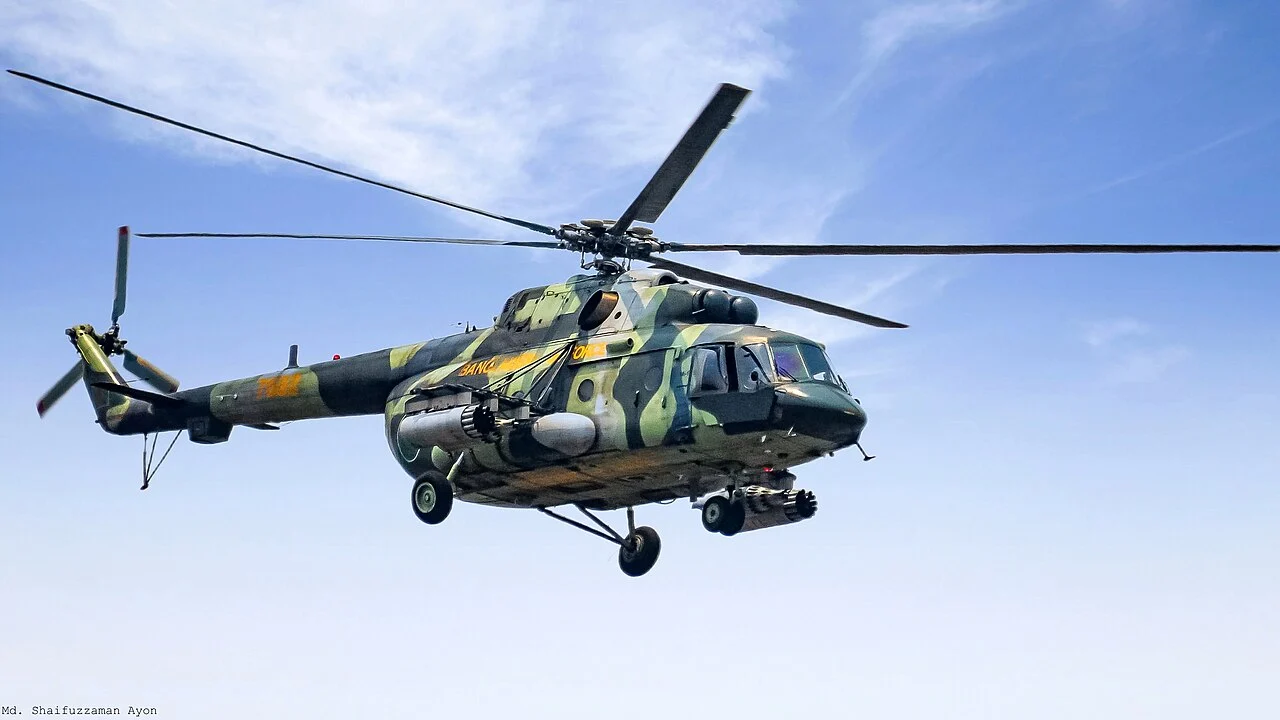
Algeria ordered 42 Mi-171Sh helicopters from Rosoboronexport in 2002 for a reported USD 180 million, delivered between 2002 and 2004, with a later overhaul and night-vision upgrade run with Russia’s SPARK (Army Recognition, 2016). Angola took delivery of a second batch of four Mi-171Sh helicopters in March 2016, following an earlier batch of four in 2015, built at the Ulan-Ude Aviation Plant (Shephard Media). Ethiopia and Sudan also operate Mi-17-family helicopters, acquired through separate Soviet-era and Russian contracts. Status: delivered, though Algeria’s original batch has reportedly been reduced by losses over two decades of use.
The Mi-171Sh carries up to 26 troops or roughly 4,000 kg of external cargo, making it the standard medium transport for African air arms that also fly Hind gunships, since the two types share a common logistics and training base.
3. Mil Mi-28NE Havoc “Night Hunter” — Algeria’s dedicated attack helicopter
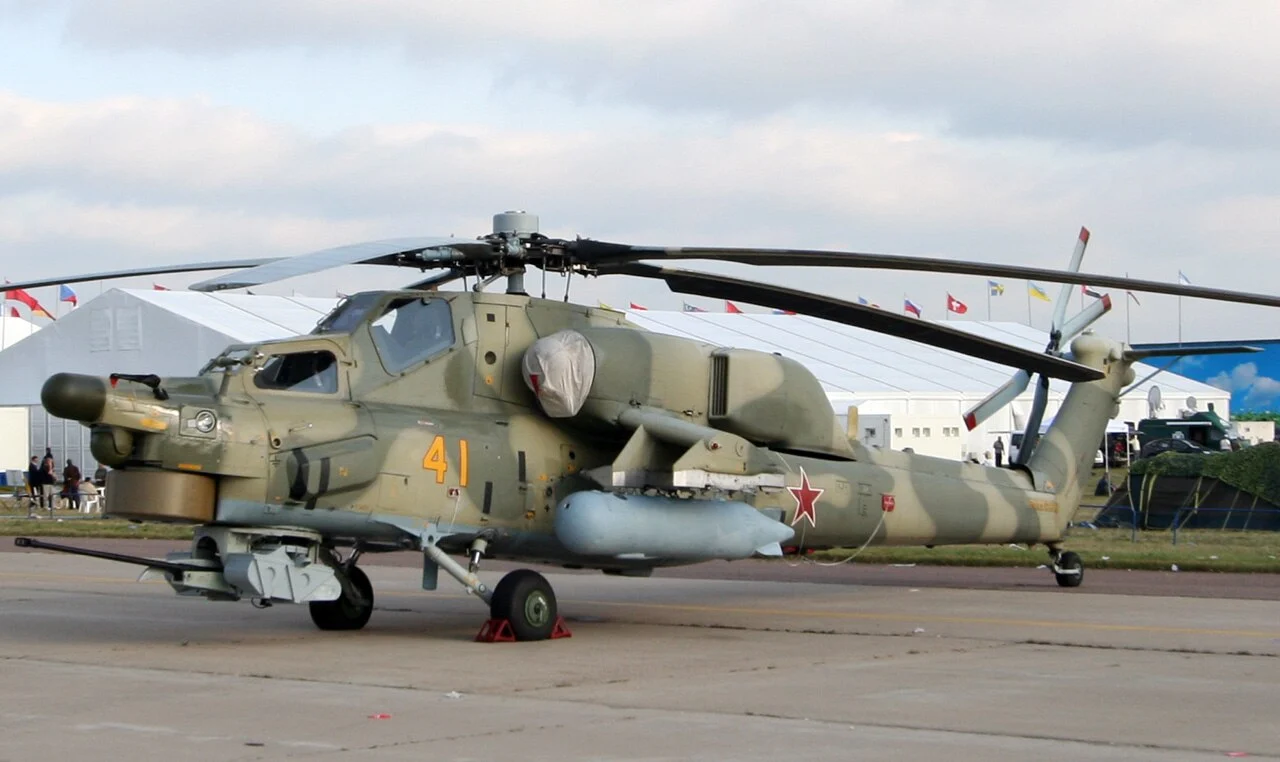
Algeria signed a contract with Russia in 2013 for 42 Mi-28NE Havoc attack helicopters, with first deliveries following the same decade (Quwa, Daily News). Unlike the dual-role Mi-24/35, the Mi-28NE is a dedicated tandem-seat attack helicopter with no troop-carrying capability, armed with a 30mm cannon, anti-tank guided missiles and rocket pods. Algerian Mi-28NEs were reported flying patrols near the Moroccan border as recently as 2026 (Defensa.com, 2026). Status: delivered, though the exact number currently airworthy varies between open sources.
The type gives Algeria a purpose-built anti-armour platform distinct from its Hind and Hip fleets.
4. Denel AH-2 Rooivalk — Africa’s only home-built attack helicopter

Developed by Denel (then Atlas Aviation) from the late 1980s after the arms embargo cut South Africa off from Western helicopters, the Rooivalk is the only attack helicopter designed and manufactured in Africa (Army Technology). Only 12 production aircraft were built, with 11 on the South African Air Force’s books; a parliamentary briefing reported by SAAF in February 2022 put serviceable numbers at just 4 of those 11, citing underfunded maintenance contracts and a liquidity crisis at Denel (SAAF, 16 February 2022). The type deployed operationally with the UN mission in the Democratic Republic of the Congo. Status: operational, though at reduced serviceability.
The Rooivalk carries a 20mm cannon, 70mm rocket pods and Mokopa anti-tank missiles. Its diminished service underlines both the achievement of indigenous African helicopter design and the sustainment burden on a single-operator type with no export customers.
5. Atlas/Denel Oryx — South Africa’s modernised Puma
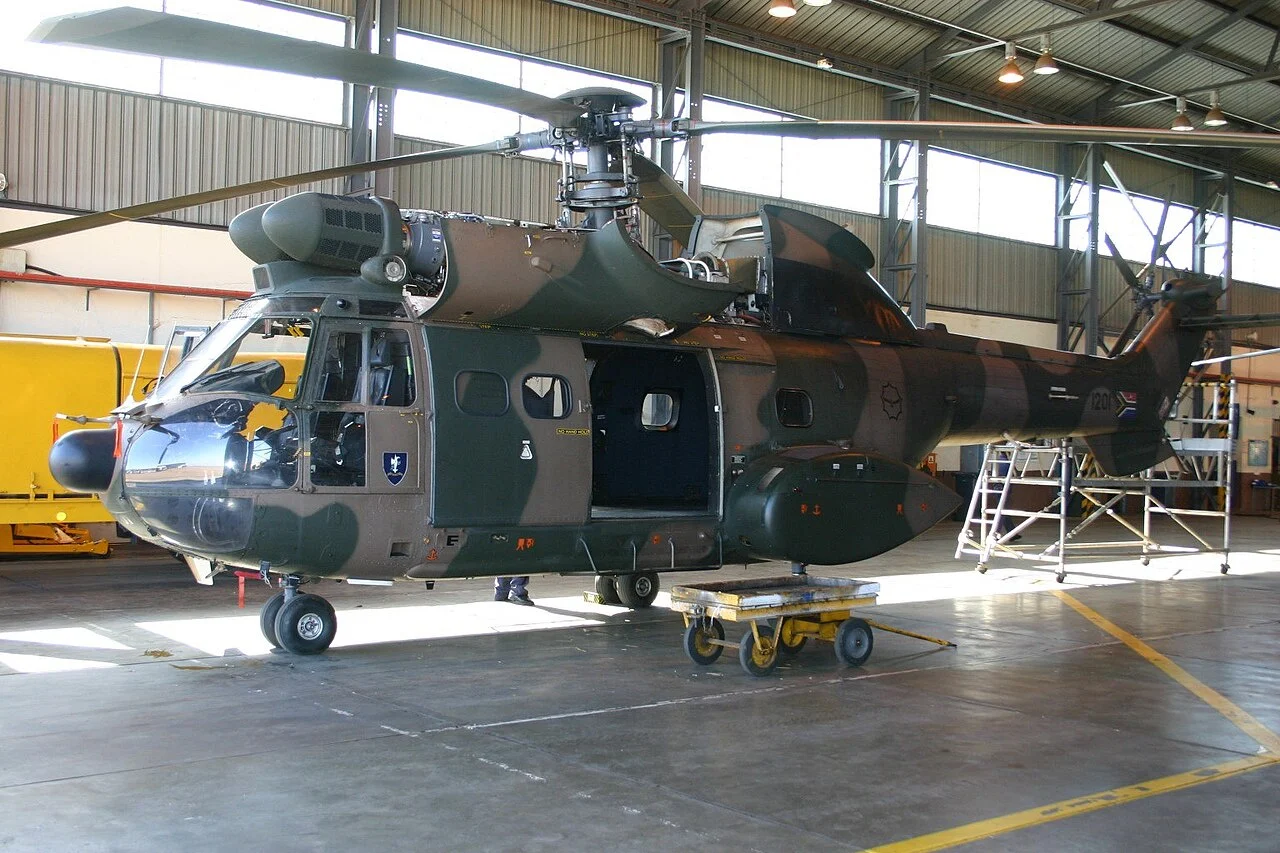
Built from the 1980s as a locally upgraded derivative of the Aérospatiale SA 330 Puma, under the same arms embargo that produced the Rooivalk, the Oryx remains South Africa’s principal medium transport helicopter (Atlas Oryx, Wikipedia). Fifty were originally delivered; the February 2022 parliamentary briefing recorded 39 still on strength, of which 17 were serviceable (SAAF, 16 February 2022). The type has flown troop transport, medevac and VIP missions on South Africa’s peacekeeping deployments. Status: operational, though figures on exact numbers vary by source and year as attrition continues.
The Oryx shows a distinct strand of African sustainment: rather than buying new, South Africa’s aerospace industry has kept an ageing imported design flying through local remanufacture, at the cost of a shrinking fleet.
6. Boeing AH-64 Apache — Egypt’s veteran fleet, Morocco’s new arrivals
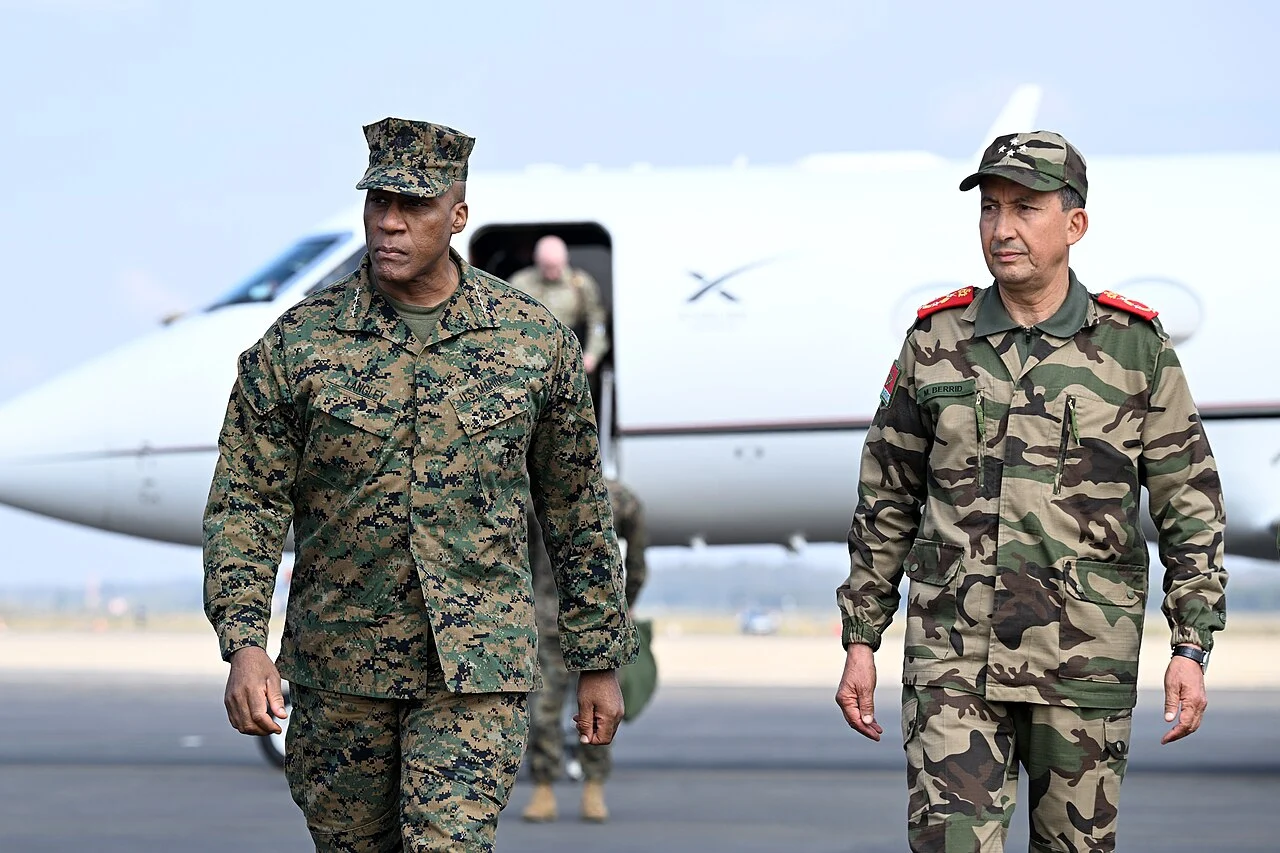
Egypt has operated the AH-64D Apache Longbow since 2003, building a fleet of roughly 45 aircraft; in May 2020 the US State Department cleared Egypt to remanufacture 43 of them to AH-64E Guardian standard for an estimated USD 2.3 billion (Military Africa). Morocco is a newer operator: under a Foreign Military Sales case for 24 AH-64E Guardians, with an option for 12 more, the Royal Moroccan Air Force had received 12 helicopters as of 2 May 2026, based at Khouribga Air Base (Hespress, 2 May 2026). Status: Egypt’s AH-64D fleet is operational and under upgrade; Morocco’s AH-64E order is delivered in part.
The Apache gives both air forces a common, Western-standard anti-armour capability built around the Longbow radar (on upgraded aircraft) and Hellfire missiles, tying sustainment to the US industrial base. Our earlier look at why Morocco bought the Apache covers the acquisition in more detail.
7. MD Helicopters MD 530F Cayuse Warrior — Kenya’s light attack scout
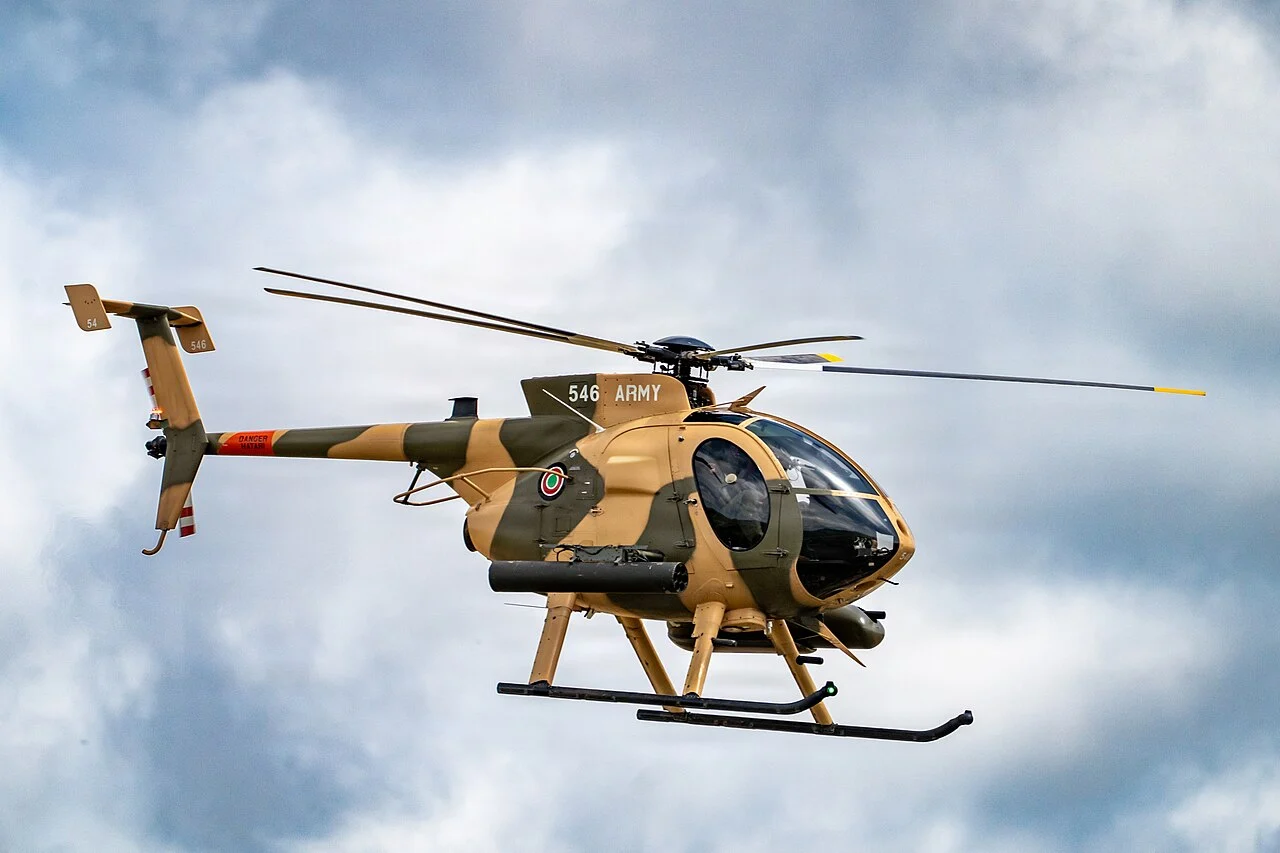
The US State Department approved the sale of 12 MD 530F Cayuse Warrior light attack and reconnaissance helicopters to Kenya in 2017, following the January 2020 al-Shabaab attack on Manda Bay and earlier security needs along the Somali border. The first six aircraft were handed over to the Kenya Army’s Joint Helicopter Command at Embakasi Barracks on 23 January 2020 (Military Times, 25 January 2020; Army Recognition). Kenya Army MD 530Fs have since flown in multinational exercises including Justified Accord. Status: delivered for the first six aircraft; the remaining six have not been independently confirmed as delivered in sources reviewed for this piece.
Lightly armed with .50-calibre guns or rocket pods, the MD 530F gives Kenya an affordable armed scout for the fast-moving counter-terrorism operations the Manda Bay attack exposed as a gap. See our Algeria military strength profile for comparison with a much larger, Russian-equipped air arm.
8. Aérospatiale/Airbus SA 342 Gazelle — the French-designed scout still flying
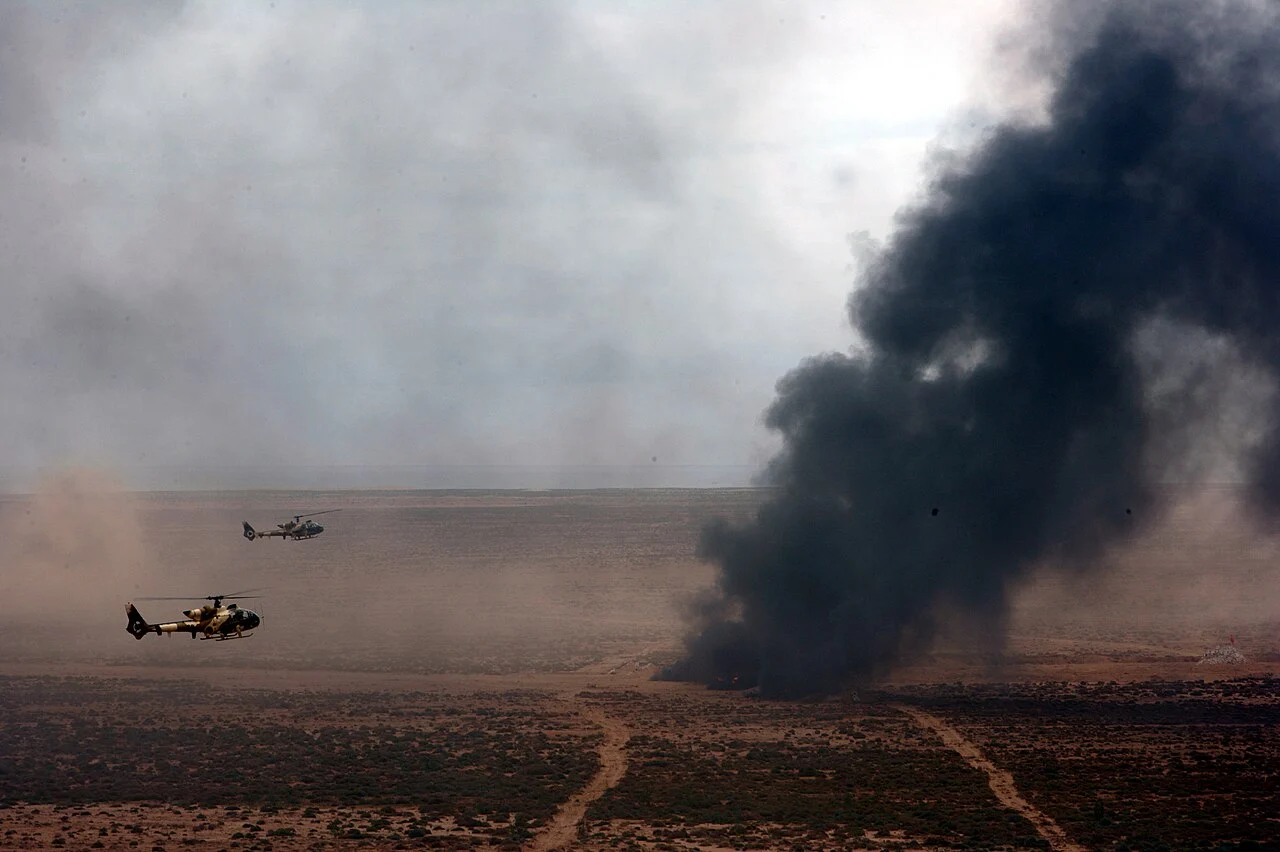
Morocco has operated the French-designed SA 342 Gazelle for decades, including during the US-Moroccan African Lion exercises, where Gazelles have flown scout and light attack roles alongside heavier US and Moroccan equipment (U.S. Africa Command imagery, African Lion 2010). More recently, at least two Gazelles fitted with Middle Eastern-style dust filters and desert camouflage were observed at Kigali Air Base in March 2022, understood to have been transferred from Qatar to Rwanda as part of expanding bilateral defence ties; neither government has formally confirmed the transfer (Military Africa, 2022). Status: operational for both Morocco and Rwanda, though the Qatar-to-Rwanda transfer itself has not been officially confirmed by either government.
Small, cheap to run and armable with HOT anti-tank missiles or 20mm cannon pods, the Gazelle remains a useful light scout for air forces that cannot justify a dedicated attack helicopter, and its presence in African inventories more than 50 years after its first flight shows how long simple, rugged airframes stay in front-line use.
| Helicopter | Confirmed African operators | Role | Status |
|---|---|---|---|
| Mil Mi-24/Mi-35 Hind | Nigeria, Mali, Uganda, and more than a dozen other air forces | Attack/gunship | Operational |
| Mil Mi-17/Mi-171 Hip | Algeria, Angola, Ethiopia, Sudan | Medium transport | Delivered/operational |
| Mil Mi-28NE Havoc | Algeria | Dedicated attack | Delivered |
| Denel AH-2 Rooivalk | South Africa | Attack | Operational (reduced serviceability) |
| Atlas/Denel Oryx | South Africa | Medium transport | Operational |
| Boeing AH-64D/E Apache | Egypt, Morocco | Attack | Operational (Egypt)/delivered in part (Morocco) |
| MD 530F Cayuse Warrior | Kenya | Light attack/scout | Delivered (first 6 of 12) |
| Aérospatiale/Airbus SA 342 Gazelle | Morocco, Rwanda | Scout/light attack | Operational |
Why it matters for Africa
Helicopter fleets mark how an African air force balances cost, sustainment and capability. Hind and Hip types remain dominant not because they are the most capable platforms available, but because decades of Soviet and Russian transfers left behind trained pilots and spares pipelines that are cheaper to keep running than to replace. South Africa’s Rooivalk and Oryx show both the promise and the limits of indigenous African helicopter production: combat-tested capability, undermined by the sustainment burden of low-volume, single-customer types with no export revenue to spread the cost.
The newer Apache, MD 530F and transferred Gazelle acquisitions in Morocco, Egypt and Kenya point to a parallel trend: states with closer US or Gulf defence relationships gaining Western-standard attack and scout helicopters, usually in smaller numbers than their Russian-equipped neighbours but with tighter integration into coalition and counter-terrorism operations. For air forces facing insurgency and border-security missions, the choice between legacy Russian types and smaller Western fleets turns less on raw performance than on which sustainment relationship a country can afford to commit to over the following decade.
Sources
- Military Africa — Spotlight on the Rugged Mi-35 Hind Helicopter Gunship (2022)
- List of equipment of the Nigerian Air Force — Wikipedia
- Army Recognition — Algeria’s Mi-171 Helicopters Upgrade Programme (2016)
- Shephard Media — Four Mi-171Shs Delivered to Angola
- Quwa — Algeria Receives First Mi-28NE Night Hunter Attack Helicopters
- Defensa.com — Algerian Mi-28NE Patrols Near the Moroccan Border (2026)
- SAAF — Less Than a Quarter of SAAF Aircraft Serviceable (16 February 2022)
- South African Air Force — Oryx Aircraft Page
- Atlas Oryx — Wikipedia
- Army Technology — Rooivalk Attack Helicopter
- Military Africa — Egypt AH-64E Apache Upgrade
- Hespress English — Morocco Receives Second Batch of Apache Helicopters (2 May 2026)
- Military Times — US Delivers Attack Helicopters to Kenya Following Attack on Manda Bay (25 January 2020)
- Army Recognition — MD Helicopters Delivered MD 530F Cayuse Warrior Helicopters to Kenya
- Military Africa — Gazelle Helicopters Seen in Rwanda
- DefenceMENA — What Does Morocco’s Military Arsenal Look Like in 2026?
- DefenceMENA — Egypt Military Strength