Nigeria’s AH-1Z Viper Programme: From DSCA Notice to First Deliveries

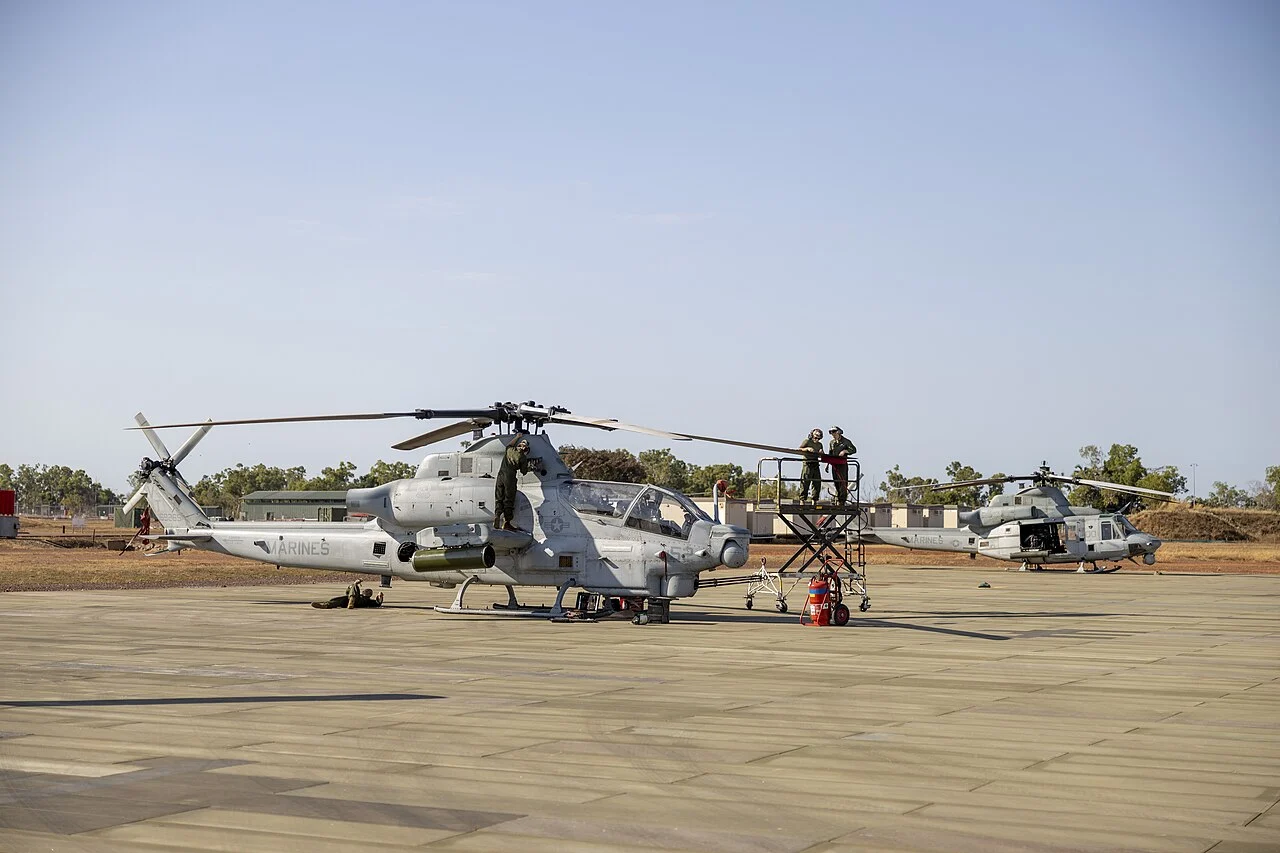


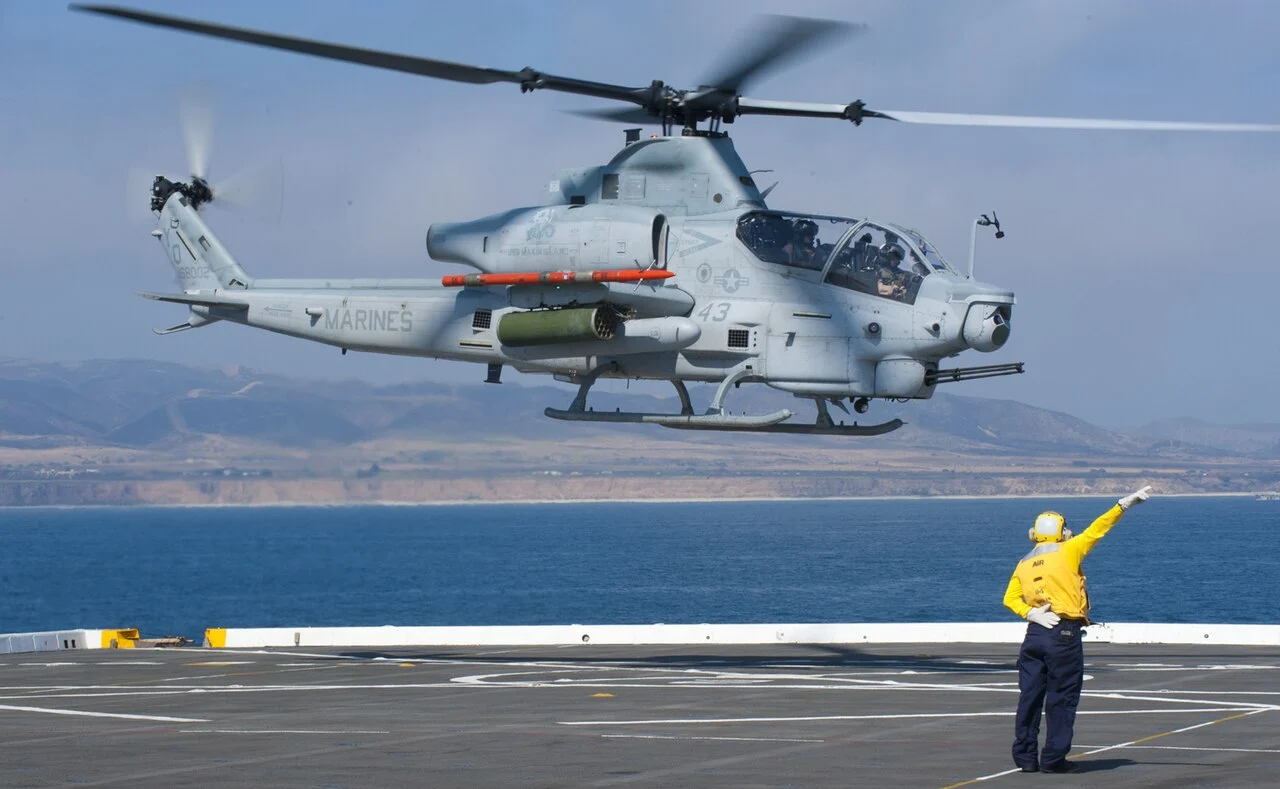
Nigeria is buying 12 Bell AH-1Z Viper attack helicopters under a US Foreign Military Sale case first notified in April 2022. This tracker follows the programme from State Department approval through the March 2024 production contract to the September 2026 start of manufacturing, using official US government notices and specialist defence reporting current to October 2026.
DEFENCE AFRICA | Programme tracker | Data as of October 2026
The Nigerian Air Force has spent the past decade fighting Boko Haram and the Islamic State West Africa Province (ISWAP) largely with ageing Russian-supplied Mi-24V and Mi-35P/Mi-35M Hind gunships and a partial fleet of Turkish T129 ATAK helicopters, of which only four of six ordered had been delivered as of DefenceMENA’s most recent tracking. The AH-1Z Viper order adds a third attack-helicopter type to that mix, this time sourced from the United States through a government-to-government Foreign Military Sale (FMS) rather than a direct commercial contract.
The case moves slowly by design: FMS sales pass through congressional notification, a firm production contract, manufacturing and then delivery, each stage logged separately by the US Defense Security Cooperation Agency (DSCA), the Department of Defense and the manufacturer, Bell Textron. This tracker lays out what has happened at each stage, what is confirmed against what is only reported, and what remains outstanding. It follows DefenceMENA’s earlier reporting that Bell began building Nigeria’s first Viper in September 2026, and sits alongside Nigeria’s biggest defence deals, ranked by confirmed value, and the country’s wider inventory in DefenceMENA’s Nigeria military-strength profile.
Key facts
- 12 AH-1Z Viper helicopters ordered, the first FMS case of its kind for Nigeria (DSCA notification, 14 April 2022)
- Original package ceiling: approximately $997 million, covering airframes, 28 T700-GE-401C engines, 2,000 Advanced Precision Kill Weapon System (APKWS) guidance kits and training (DSCA via The Defense Post, 2022)
- Firm production contract: $455 million, awarded to Bell Textron by US Naval Air Systems Command, 12 March 2024 (Seapower Magazine, Defense Post)
- Production formally began 16 September 2026 at Bell’s Amarillo, Texas plant; zero of 12 airframes delivered as of October 2026
- Published delivery estimates vary: “by July 2028” (Dallas Innovates, 2024) versus “early 2029” (Nigerian Air Force spokesperson, cited by The Defense Post, September 2026)
Programme timeline
| Date | Event | Status | Source, year |
|---|---|---|---|
| 14 April 2022 | DSCA notifies US Congress of a potential $997 million FMS sale: 12 AH-1Z Vipers, 28 T700-GE-401C engines, 2,000 APKWS kits, M197 20mm cannons, night-vision and electronic warfare equipment; no Hellfire missiles included | reportedly under negotiation | The Defense Post, Overt Defense, 2022 |
| August 2023 | Nigeria makes its first down payment against the case, according to the US State Department | contracted | The Defense Post, 2024 |
| 12 March 2024 | US Naval Air Systems Command awards Bell Textron a $455 million firm-fixed-price, undefinitized contract covering the 12 airframes plus engineering, programme management and logistics support | contracted | Seapower Magazine; The Defense Post, 2024 |
| 28 August 2026 (reported) | Bell Textron awarded a contract reported at roughly $18 million for an AH-1Z flight training device for the Nigerian Air Force, with completion expected by January 2029 | contracted | The Defense Post, 2026 |
| 16 September 2026 | Bell holds a ceremony at its Amarillo, Texas assembly plant marking the start of production, with delegates signing the airframe of the first Nigerian AH-1Z; Nigerian Air Force spokesperson Air Commodore Ehimen Ejodame confirms the milestone | ordered (in production) | The Defense Post, 2026 |
| Not yet occurred | First and subsequent deliveries to the Nigerian Air Force. Published figures vary: completion “by July 2028” per one 2024 contract-based estimate, or “early 2029” per the Nigerian Air Force’s own September 2026 statement | awaiting delivery | Dallas Innovates, 2024; The Defense Post, 2026 |
Delivered versus pending
As of October 2026, none of the 12 AH-1Z Vipers ordered by Nigeria has been delivered. The programme is at the manufacturing stage: Bell has started cutting and assembling the airframe structure for the first aircraft at its Amarillo Assembly Center, the same production line that builds Vipers for the US Marine Corps, Bahrain and the Czech Republic. All 12 helicopters, the associated T700 engines and the APKWS guidance kits remain pending delivery. A separate, smaller contract for a flight training device is running in parallel and is not expected to be complete until January 2029, which will shape when Nigerian pilots and groundcrew can train on the type before or alongside the first airframe handovers.
Industrial participation and offsets
This is a government-to-government FMS case, not a commercial export contract, and none of the public DSCA or contract notices describe any Nigerian industrial participation, co-production or technology-transfer element. All airframe assembly, engine installation and systems integration takes place at Bell’s Amarillo plant in Texas. The one non-hardware component of the original package is roughly $25 million set aside for institutional and technical assistance to the Armed Forces of Nigeria, which DSCA described as support for targeting processes compliant with international humanitarian law, delivered as training rather than equipment or local manufacturing work. No Nigerian firm has been named as a subcontractor or maintenance partner in public reporting on the case.
Alternatives considered
No public DSCA notice or contract record describes a formal competitive evaluation; the AH-1Z was pursued as a sole-source FMS case rather than a tendered procurement, so the entries below describe realistic regional alternatives rather than options Nigeria is known to have formally compared.
- Mi-24V/Mi-35P and Mi-35M (Russia, existing fleet): Nigeria already operates Mi-24/Mi-35 Hind gunships and could, in principle, have ordered additional Mi-35Ms, the newer variant Mali and others in the region have bought new. Western sanctions on Russia’s defence sector since 2022 complicate financing and spare-parts supply for any new order, a constraint that does not apply to a US FMS case — see DefenceMENA’s tracking of Mi-24 and Mi-35 combat use in Africa.
- T129 ATAK (Türkiye, existing partial fleet): Nigeria ordered six T129s and has received four, according to DefenceMENA’s tracking of Nigeria’s T129 ATAK fleet. Expanding that order was a lower-cost option in principle, though the outstanding two airframes from the original contract had themselves not been delivered as of DefenceMENA’s most recent check.
- Denel Rooivalk Mk1.1 (South Africa): Denel has pitched an upgraded Rooivalk to African air forces, including marketing aimed at Nigeria’s requirement, but no Nigerian order has been confirmed.
- CAIC Z-10ME (China): China has marketed the export-configured Z-10ME attack helicopter to African and Middle Eastern customers; Nigeria has not placed a confirmed order for the type.
Why it matters for Africa
For more DefenceMENA coverage of the country, see the Nigeria desk. The AH-1Z case illustrates the trade-offs African air forces face when diversifying attack-helicopter fleets away from legacy Soviet- and Russian-built types. The Viper brings a US logistics and training pipeline, APKWS precision-guided rockets and a sensor suite shared with other Marine Corps aircraft, but at a per-unit cost well above Mi-35 or T129 options and with a sole-source FMS process that moves on Washington’s timeline rather than Abuja’s. The roughly seven years separating DSCA notification from the earliest realistic delivery date reflects the pace of FMS cases generally, not a programme-specific delay unique to Nigeria. For a force fighting an active insurgency, that lag means current operations continue to depend on Mi-24/35 and T129 availability for several more years regardless of how the AH-1Z programme proceeds. The case also shows the limits of FMS as a channel for defence-industrial development: unlike some European or Turkish deals in the region, it carries no disclosed local-assembly or technology-transfer component, leaving sustainment and any future growth tied to Bell and the US government rather than to Nigerian industry.
Sources
- The Defense Post, “Nigeria Could Buy AH-1Z Viper Attack Helicopters From the US,” 18 April 2022
- Overt Defense, “The US Approves the Sale of 12 AH-1Z Attack Helicopters to Nigeria,” 19 April 2022
- Aviacionline, “US Authorizes Sale of AH-1Z Viper to Nigeria but Without Hellfire Missiles,” 2022
- The Defense Post, “US Confirms $1 Billion Viper Attack Helicopter Sale to Nigeria,” 1 February 2024
- Seapower Magazine, “Navy Awards Bell Textron Contract for 12 AH-1Z Helicopters for Nigeria,” 2024
- The Defense Post, “Bell Textron Wins $455M AH-1Z Viper Helicopter Contract for Nigeria,” 13 March 2024
- Dallas Innovates, “Fort Worth-Based Bell Wins $455M Navy Contract for 12 Viper Helicopters for Nigeria,” 2024
- The Defense Post, “US, Nigeria Deepen Counter-Terrorism Cooperation,” 28 August 2026
- The Defense Post, “Bell Begins Building Nigeria’s First AH-1Z Vipers,” 18 September 2026