Nigeria’s Biggest Defence Deals, Ranked by Confirmed Value



Ranked by the publicly confirmed value of signed defence contracts, not by sale notifications or financing ceilings, these are the six largest Nigerian defence procurement deals with a disclosed and sourced price tag. Figures are as reported by official agencies, suppliers or named trade press, with the year of disclosure given for each.
DEFENCE AFRICA | Biggest defence deals | Data as of October 2026
Nigeria has been Sub-Saharan Africa’s largest single arms importer for most of the past decade, driven by a long counter-insurgency campaign against Boko Haram and Islamic State West Africa Province in the North-East and a growing banditry problem in the North-West and North-Central zones. The Stockholm International Peace Research Institute (SIPRI) recorded Nigeria as the largest recipient in Sub-Saharan Africa in 2021-25, taking around 16 percent of the subregion’s arms imports, ahead of Senegal and Mali.
For the wider picture of how these platforms fit into Nigeria’s overall force structure, see our Nigeria military strength profile. That import volume has not always translated into large, clearly priced contracts: Nigerian procurement runs through US Foreign Military Sales, direct commercial contracts with European and Asian suppliers, and bilateral government-to-government deals with Russia, China, Pakistan and Turkey, several of which have never had a price publicly confirmed. This piece separates deals with a disclosed, sourced contract value from the longer list of Nigerian arms purchases whose cost is estimated, disputed or unknown.
How we ranked
Entries are ranked by the value of a signed or implemented contract — a Foreign Military Sales case that has moved to a definitized contract award, a supplier’s own disclosed contract figure, or a government-confirmed purchase price — not by a Defense Security Cooperation Agency (DSCA) notification ceiling, a letter of intent or a press estimate. DSCA ceilings are the maximum possible value of a proposed sale before Congress and are routinely far above what is finally contracted; where Nigeria has a large DSCA notification without a confirmed contract figure, it appears in the “Reported but unconfirmed” section below rather than in the ranking. Data is current to October 2026. Deals whose value could not be confirmed from an official source, a supplier statement or at least two independent reports are excluded from the ranked list.
Key facts
- Nigeria took roughly 16 percent of Sub-Saharan Africa’s arms imports in 2021-25, the largest share of any country in the subregion (SIPRI, 2026).
- The largest confirmed single contract on this list is the Leonardo M-346FA and AW109 Trekker package, reported at approximately €1.2 billion ($1.4 billion) (The Defense Post, December 2025; BusinessDay, 2024).
- The Bell AH-1Z Viper helicopter programme has a $997 million DSCA notification ceiling, but the actual Bell production contract is $455 million (Air Force Technology, 2024; DSCA, 2022).
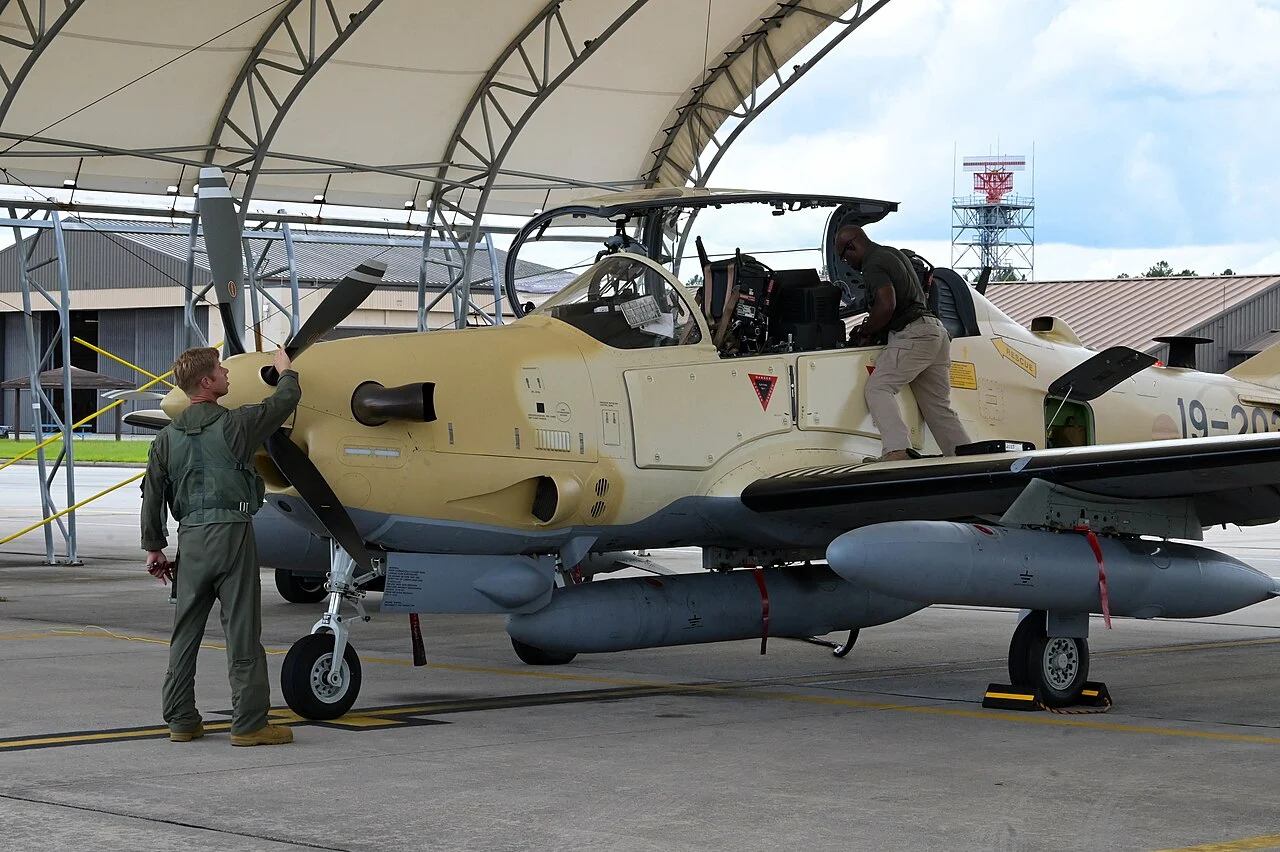
- Nigeria’s A-29 Super Tucano fleet, delivered under a $593 million FMS package, has flown over 10,000 hours in combat against Boko Haram and ISWAP since 2021 (Nigerian Air Force, via defencemena.com).
1. Leonardo M-346FA and AW109 Trekker package — contracted, deliveries underway
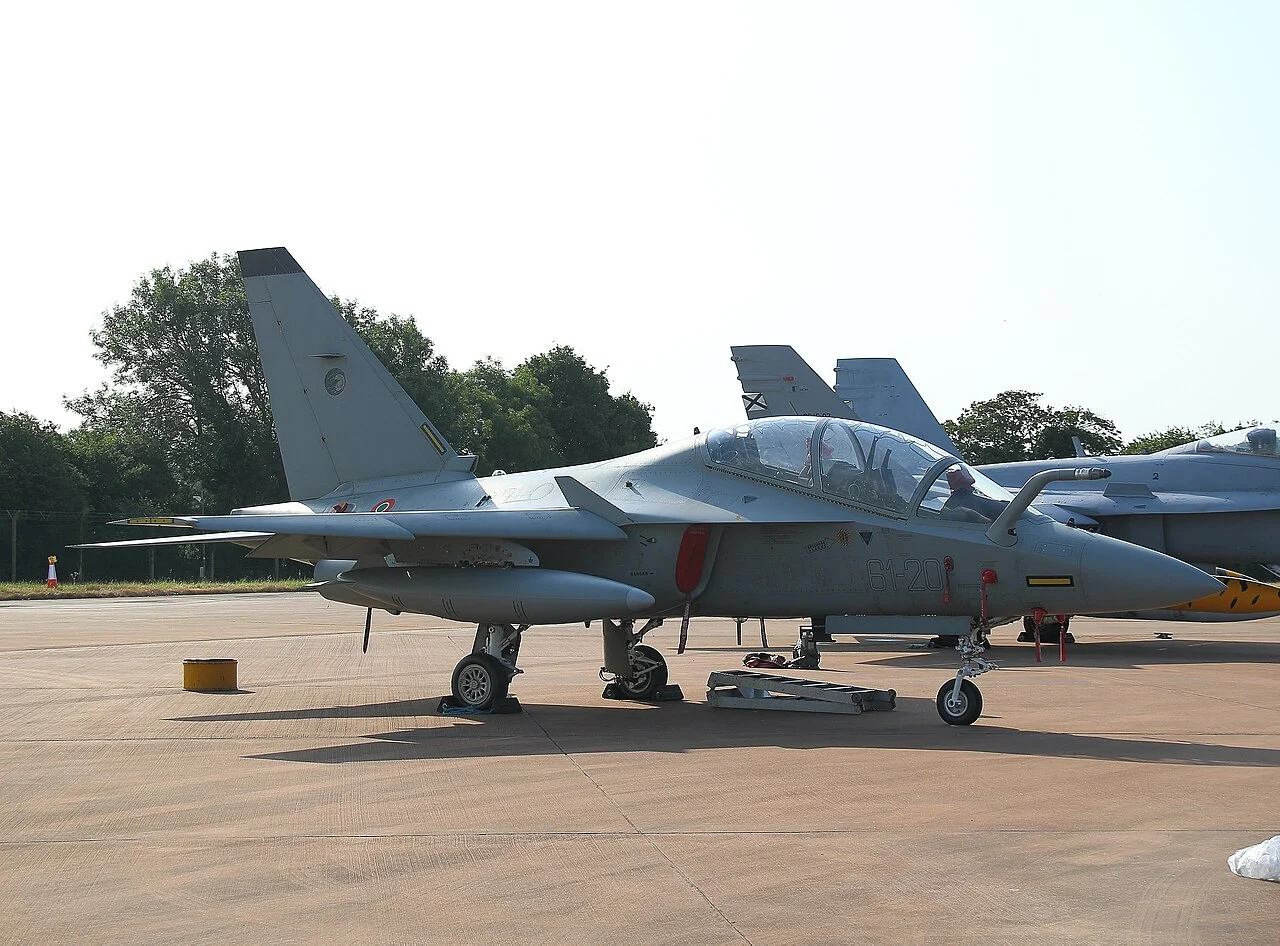
Buyer: Nigerian Air Force. Supplier: Leonardo (Italy). System: M-346FA fighter-attack jet and AW109 Trekker light helicopter. Contract value: approximately €1.2 billion (about $1.4 billion), reported by The Defense Post in December 2025 and by BusinessDay Nigeria in 2024. Quantity: 24 M-346FA jets per Nigerian Air Force statements, in four batches of six; Italian financing documentation instead describes six firm aircraft plus options. The AW109 Trekker count is reported as 10 helicopters. Published figures vary and both versions are given here since neither side has issued one reconciled figure. Contract year: reported signed in 2023, publicly confirmed by Leonardo in April 2024. Delivery status: contracted. Nigeria’s Federal Executive Council approved financing of about $618 million in October 2024 for an initial tranche of six jets and ammunition (Daily Trust, 2024); the first M-346FA passed factory acceptance in Italy in July 2026.
What the package includes: fighter-attack jets to replace the Alpha Jet in the close air support and lead-in fighter training role, AW109 Trekker light helicopters, a 25-year logistics support arrangement, and pilot and maintainer training delivered by Leonardo in Italy.
Why it matters: this is the largest confirmed single contract value in recent Nigerian procurement and gives the Nigerian Air Force a dedicated lead-in trainer ahead of its JF-17 Thunder fleet, closing a gap left by the ageing Alpha Jet fleet that has carried much of Nigeria’s counter-insurgency strike burden since the 1980s. For more on the programme’s timeline and disputed figures, see Why Did Nigeria Buy the M-346FA?
2. Bell AH-1Z Viper attack helicopters — contracted, deliveries projected 2028-2029

Buyer: Nigerian Air Force. Supplier: Bell Textron, via the US Naval Air Systems Command (NAVAIR). System: AH-1Z Viper attack helicopter. Contract value: $455 million firm-fixed-price production contract awarded by NAVAIR in March 2024 (Air Force Technology, 2024) — separate from, and far smaller than, the $997 million DSCA notification ceiling approved in April 2022, which covered the helicopters plus 28 engines, 2,000 APKWS guidance sections, training and support; DSCA stated that figure was a maximum, not an expected final cost. Quantity: 12 helicopters. Contract year: 2024 production contract, 2022 DSCA notification. Delivery status: contracted. The US State Department confirmed Nigeria’s first down payment in August 2023; deliveries are projected for 2028-2029.
What the package includes: 12 AH-1Z airframes, engines, Advanced Precision Kill Weapon System (APKWS) guidance kits, and associated training and sustainment support from Bell and NAVAIR.
Why it matters: the AH-1Z gives Nigeria a far more capable networked attack helicopter than its existing Mi-24/Mi-35 Hind fleet, with modern targeting sensors and precision-guided rockets suited to the dispersed, lightly-defended targets typical of counter-insurgency and counter-banditry operations.
3. A-29 Super Tucano light attack aircraft — delivered, in combat use since 2021
Buyer: Nigerian Air Force. Supplier: Sierra Nevada Corporation and Embraer, via US Foreign Military Sales. System: A-29 Super Tucano light attack turboprop. Contract value: DSCA notified Congress on 2 August 2017 of a possible sale with an estimated total case value of $593 million, covering 12 aircraft, weapons, training, spares and support (DefenceTalk, GovConWire, 2017). The production contract awarded to Sierra Nevada in November 2018 was valued at $329 million ($345 million not-to-exceed) for the aircraft themselves, within that wider package. Quantity: 12 aircraft. Contract year: 2017 notification, 2018 production contract. Delivery status: delivered; all 12 had arrived by 2021 and the fleet has flown continuously since.
What the package includes: 12 A-29 airframes built by Embraer and modified by Sierra Nevada, .50-calibre machine guns, precision munitions, pilot and maintenance training, spares, and new base infrastructure at Kainji.
Why it matters: the Super Tucano became the backbone of Nigeria’s close air support against Boko Haram and ISWAP; the Nigerian Air Force has said the fleet logged more than 10,000 flight hours by August 2024 without a reported combat loss, though strike-result claims come from the military and are not independently verified. See Nigeria Super Tucano: What Five Years of Combat Use Have Shown for the detailed combat record.
4. JF-17 Thunder multirole fighters — delivered 2021
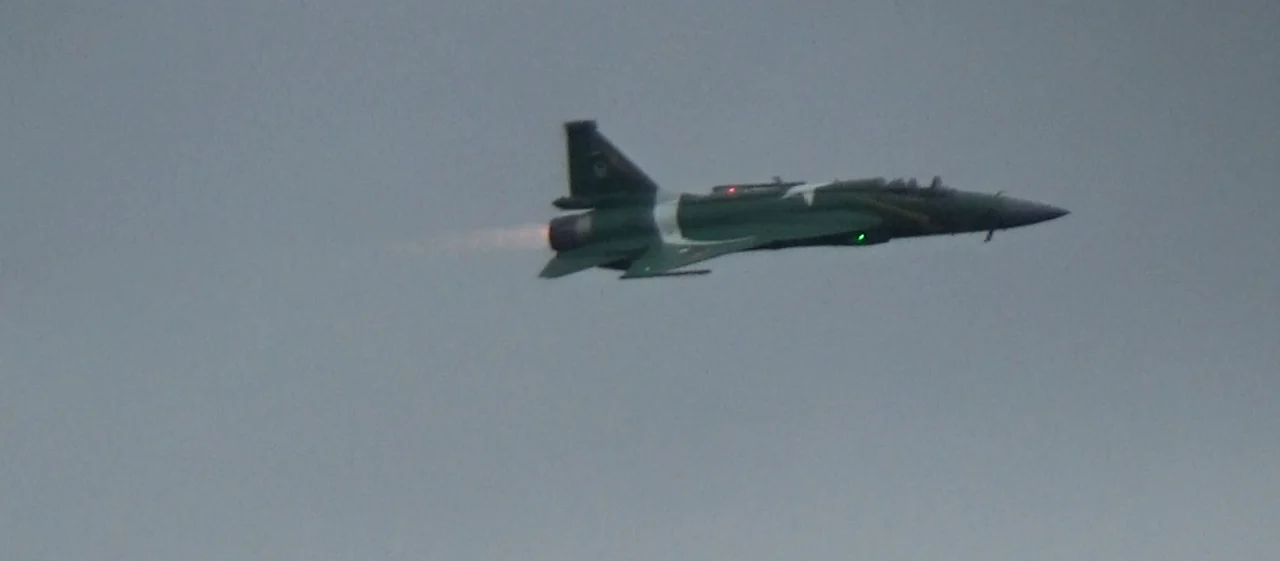
Buyer: Nigerian Air Force. Supplier: Pakistan Aeronautical Complex (PAC) Kamra, under a government-to-government agreement. System: JF-17 Thunder Block II multirole fighter (Chengdu Aircraft Corporation design, built and sold by PAC). Contract value: $184.3 million, approved by Pakistan’s Economic Coordination Committee in October 2018 (Gulf News, 2018), following an earlier 2016 government-to-government agreement. Quantity: 3 aircraft (serials NAF-720, 721, 722). Contract year: 2016 agreement, 2018 formal approval. Delivery status: delivered, handed over at Makurdi Air Base in March 2021 and formally inducted on 21 May 2021; Nigeria had not ordered a fourth as of late 2025.
What the package includes: 3 JF-17 Thunder Block II airframes, air-to-air and air-to-ground munitions, and pilot training delivered through the long-standing Pakistan-Nigeria defence relationship.
Why it matters: Nigeria became the JF-17’s first African operator, giving it an affordable multirole jet paid for largely in cash during a period when several Western suppliers were reluctant to sell fast jets to Nigeria over human-rights concerns tied to the Boko Haram campaign. Full background is in Why Nigeria Bought the JF-17 Thunder: Deal, Cost and Results.
5. VT-4 main battle tank, ST-1 tank destroyer and SH-5 howitzer package — delivered 2020

Buyer: Nigerian Army. Supplier: China North Industries Corporation (NORINCO). System: VT-4 main battle tank, ST-1 wheeled tank destroyer, SH-5 self-propelled howitzer. Contract value: reported at $152 million, signed in 2019 (UK Defence Journal). Quantity: 17 vehicles delivered, from a Nigerian Army plan reported at up to 35 tanks and supporting vehicles; the full order’s final size is unconfirmed. Contract year: 2019. Delivery status: delivered; the first batch arrived at Apapa port on 8 April 2020.
What the package includes: VT-4 main battle tanks, ST-1 wheeled tank destroyers armed with a 105mm gun, and SH-5 truck-mounted self-propelled howitzers, delivered as a combined armour and fire-support package.
Why it matters: the VT-4 gave the Nigerian Army its first genuinely modern third-generation main battle tank, with better protection and fire control than its ageing Vickers Mk 3 and T-72 fleets, aimed primarily at conventional deterrence rather than the counter-insurgency fight in the North-East.
6. Beechcraft King Air 360 ISR aircraft — delivered 2023
Buyer: Nigerian Air Force. Supplier: Textron Aviation. System: Beechcraft King Air 360 intelligence, surveillance and reconnaissance (ISR) aircraft. Contract value: approximately N10.86 billion (about $24.8 million), covering spares and ground support equipment (Military Africa, 2023). Quantity: 2 aircraft, acquired as attrition replacements for two earlier King Air B350s lost in crashes. Contract year: procurement reported from around 2022. Delivery status: delivered; the Nigerian Air Force confirmed the second and final aircraft in November 2023 (The Defense Post, 2023).
What the package includes: two King Air 360 airframes fitted for ISR, plus spares and ground support equipment. No rights-clean photograph of this specific variant was found, so no entry image appears here.
Why it matters: the King Air 360 restores a persistent airborne ISR capability that the Nigerian Air Force lost when its earlier King Air B350s crashed, supporting target identification for the Super Tucano and AH-1Z fleets above.
Reported but unconfirmed
These Nigerian procurement items are real and well-documented in their existence, but their value is either a DSCA ceiling rather than a signed contract, or a press estimate that no government or supplier has confirmed. They are listed for completeness and explicitly excluded from the ranking above.
- Precision munitions package (MK-82 bombs, Paveway II kits, APKWS II rockets): DSCA notified Congress of a possible $346 million sale in August 2025 — a ceiling pending a signed agreement, not a contract value (The Defense Post; africanews, 2025).
- T129 ATAK attack helicopters: TAI confirmed in July 2022 that Nigeria would receive six T129 ATAKs, with the first two delivered to Makurdi in November 2023. Neither government has disclosed the contract value; the only figure in circulation is a press estimate near $45 million per helicopter, implying about $270 million for six, unconfirmed (Overt Defense, 2022).
- Mi-35M and Mi-171Sh helicopters: Russia and Nigeria signed deals for 12 Mi-35M attack helicopters (2015, reaffirmed at the 2019 Sochi summit) and six Mi-171Sh transports. No value has been published by Rosoboronexport or Nigeria.
- P18N offshore patrol vessels: two 1,800-tonne OPVs ordered from China’s CSOC around 2012; a figure near $42 million per vessel circulates in secondary sources but is not officially confirmed.
| Rank | Deal | Contract value | Source / year |
|---|---|---|---|
| 1 | M-346FA + AW109 Trekker package (Leonardo) | ~€1.2bn (~$1.4bn) | The Defense Post, BusinessDay, 2024-25 |
| 2 | AH-1Z Viper (Bell) | $455m | Air Force Technology, 2024 |
| 3 | A-29 Super Tucano (Sierra Nevada/Embraer) | $329m ($345m NTE) | DSCA/GovConWire, 2018 |
| 4 | JF-17 Thunder (PAC Kamra) | $184.3m | Gulf News, 2018 |
| 5 | VT-4/ST-1/SH-5 package (NORINCO) | $152m | UK Defence Journal, 2019 |
| 6 | King Air 360 ISR aircraft (Textron) | ~$24.8m | Military Africa, 2023 |
Why it matters for Africa
Nigeria’s procurement pattern illustrates a wider African affordability problem: the country with the continent’s largest defence budget still buys most of its hardware through financing arrangements and phased batch deliveries rather than cash purchases, since confirmed contract values here rarely exceed $1.5 billion even for multi-year fighter and helicopter programmes. The spread of suppliers — Italy, the United States, Pakistan and China all appear in the top six — reflects a long-standing practice of diversifying sources to avoid dependence on any single exporter and to secure financing terms a single Western supplier would not offer. Technology transfer remains limited; only the VT-4 package and the long JF-17 relationship involve sustained industrial cooperation, and most sustainment still depends on the original supplier rather than assembly or maintenance capacity built up inside Nigeria.
Sources
- SIPRI Arms Transfers Database
- DefenceTalk — US clears $593m A-29 Super Tucano sale to Nigeria
- GovConWire — State Dept OKs potential $593m Super Tucano sale to Nigeria
- Gulf News — Pakistan to sell three JF-17s to Nigeria for $184.3m
- Air Force Technology — Bell Textron to provide 12 attack helicopters to Nigeria in $455m deal
- Shephard Media — Nigeria takes delivery of first batch of Chinese VT-4s
- UK Defence Journal — China delivers tanks and artillery to Nigeria
- BusinessDay — Nigeria to acquire 24 Italian M-346 fighter jets in $1.2bn defence deal
- Daily Trust — FEC approves $618m loan for fighter jets from Italy
- The Defense Post — Nigeria’s jet and helicopter deal with Italy
- Military Africa — Nigerian Air Force enhances ISR capabilities with Beechcraft King Air 360ER
- The Defense Post — Nigeria Beechcraft aircraft delivery
- The Defense Post — US approves Nigeria ammunition, bombs and rockets sale
- Overt Defense — Turkish Aerospace Industries to supply six T129 ATAK helicopters to Nigeria