Ethiopia Invokes Self-Defence Against Eritrea at the UN: What Both Letters Say



Ethiopia has formally told the UN Security Council that it is acting in self-defence against Eritrea. In a letter sent to Council members on 8–9 October 2026, Foreign Minister Gedion Timothewos invoked Article 51 of the UN Charter and accused Eritrea of sending infantry and mechanised units into the Tigray region. Eritrea answered on 10 October with its own letter, calling Ethiopia’s position a “declaration of war” and asking the Council to take deterrent measures under Chapter VII. Neither government has published evidence for its claims, and the troop movements both describe have not been independently verified. Here is what each letter says, what changed on the ground around Adigrat, and what remains unknown.
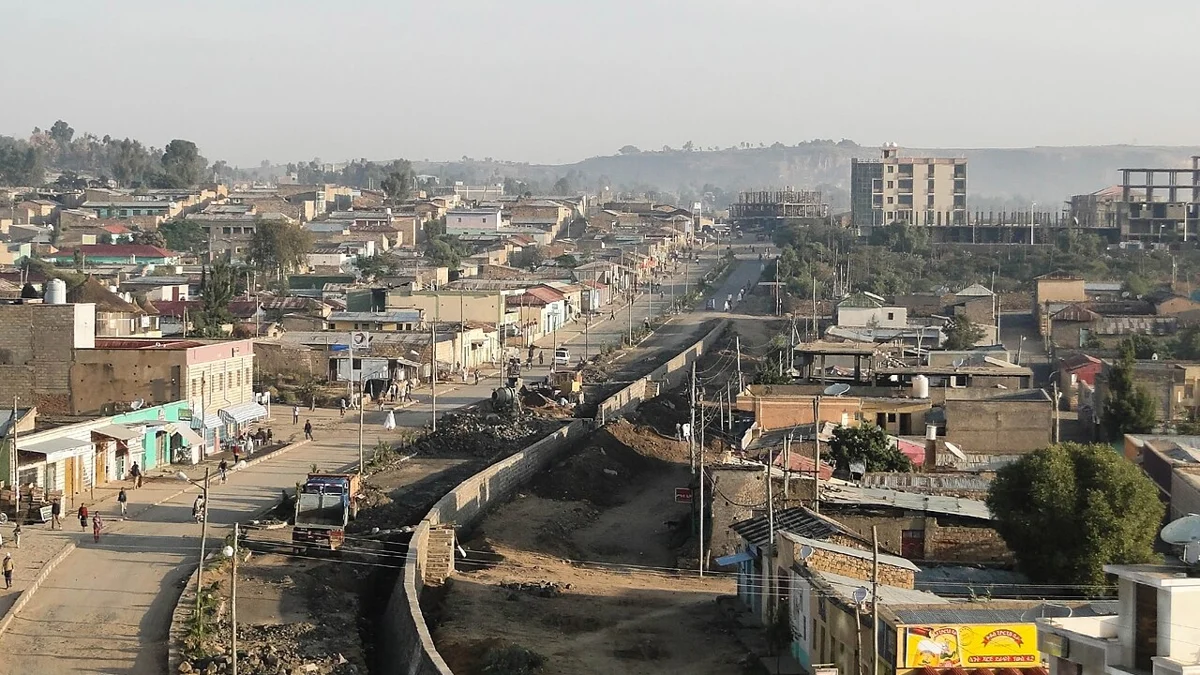
Photo: Adigrat in Ethiopia’s Tigray region, about 30 km from the Eritrean border, in 2012 (file photo). Credit: Bernard Gagnon, CC BY-SA 4.0, via Wikimedia Commons
What Ethiopia’s letter says
The Associated Press, which obtained the letter, reported that Gedion invoked Ethiopia’s right to self-defence under Article 51 and said Ethiopia was “taking measures” against Eritrea. He did not say what those measures were. The letter accuses Eritrea of deploying infantry and mechanised units in recent weeks and of “supporting, financing, arming and directing” insurgent groups inside Ethiopia. According to AP, it does not name the areas Ethiopia says are occupied and does not include supporting evidence.
AFP, which also saw the letter, quoted Gedion as calling Eritrea’s conduct “a blatant act of aggression that engages Ethiopia’s inherent right to self-defence”. Reuters reported that the letter said Eritrean troops had advanced up to 60 km inside Tigray and that their presence left Addis Ababa with “no option but to defend itself”. Anadolu Agency gives the letter’s date as 8 October. AP and AFP reported it on 9 October.
Article 51 says UN members keep the right to defend themselves if an armed attack occurs, and that any measures they take must be “immediately reported to the Security Council”. A letter like this is the formal way to make that report. It does not need Council approval, and it does not on its own amount to a declaration of war.
What Eritrea’s reply says
Eritrean Foreign Minister Osman Saleh wrote to the Council on Saturday 10 October, according to a letter seen by Reuters. He said the incursion claims were part of an Ethiopian plan to justify a war of aggression. “Eritrea requests the UN Security Council to forcefully condemn Ethiopia’s deplorable declaration of war against Eritrea … and take the requisite deterrent measures against it in accordance with Chapter VII of the UN Charter,” he wrote.
Chapter VII is the part of the Charter that lets the Council impose binding measures, from sanctions up to the use of force. Osman did not say which measures Eritrea wants. AP reported that the letter also accuses Ethiopia of seeking to take sovereign access to the Red Sea by force. A day earlier, Information Minister Yemane Gebremeskel said Eritrea had shown restraint. He argued that Ethiopia’s 2023 statement that it would acquire sovereign access to the sea amounted to declaring a war of aggression. Asmara denies that its troops have crossed into Ethiopia.
Adigrat changes hands
On Saturday 10 October, Ethiopian government forces and allied militia entered Adigrat, Tigray’s second-largest city, about 30 km south of the Eritrean border. Three residents told Reuters they had seen the army and an allied militia in the city that morning, and one described soldiers patrolling with military vehicles. Reuters verified a video showing members of a pro-government militia walking through the streets. AP footage showed Ethiopian military vehicles and troops arriving as some residents celebrated, one of them waving an Ethiopian flag.
Ermiyas Ababu, a commander of the government-allied Tigray Peace Force (TPF), said Ethiopian forces and their allies had “retaken” the city. AP noted that its footage did not establish who held Adigrat before, or whether Eritrean troops had fought there. Reuters described the entry as coming days after Eritrean troops were pushed back from the city. Ermiyas also said government and allied forces took Idaga Hamus, south of Adigrat, early on 9 October, and Abiy-Adi in the Tembien area the day before. Residents confirmed the Idaga Hamus takeover to AP.
The conflict monitor ACLED said Eritrean troops crossed at Zalambessa on 7 October and came under drone attack as they moved towards Idaga Hamus. It attributed the strikes to Ethiopia’s military and said the Eritrean forces then withdrew from positions near Adigrat. Residents reported explosions near the city from 7 to 9 October. Neither AP nor Reuters could independently verify the Eritrean troop movements or the drone strikes. Residents described severe shortages. Banks were closed, food was running out and sick people lacked treatment, they told AP.
Earlier reporting on Eritrean troops in Adigrat and the fall of Mekelle is in our running piece, Ethiopia’s Army Takes Mekelle as Air Strikes Spread Across Tigray.
How the two neighbours got here
Ethiopia and Eritrea fought a border war in 1998–2000 that killed tens of thousands of people. They made peace in 2018, a deal that earned Prime Minister Abiy Ahmed the Nobel Peace Prize, and Eritrean troops then fought alongside Ethiopia’s federal army against the Tigray People’s Liberation Front (TPLF) in 2020–2022. Relations soured towards the end of that war. Abiy’s repeated statements that landlocked Ethiopia needs access to the sea are read in Asmara as a threat to the port of Assab. Abiy says sea access will be pursued peacefully.
The current crisis began when a seven-group alliance including the TPLF and the Amhara Fano movement launched an offensive on 23 September. Ethiopia accuses Eritrea of backing that alliance, and Eritrea denies it. On 1 October Ethiopia closed its embassy in Asmara and expelled 10 Eritrean diplomats, and Eritrea responded by cutting diplomatic ties. The same day, the African Union Commission urged Ethiopia, Eritrea and Egypt to exercise maximum restraint. Egypt’s place in the dispute is covered in our reports on the El Alamein declaration and Ethiopia’s response to it.
On 9 October UN Secretary-General António Guterres, through his spokesperson, called on all parties to cease hostilities and said he was “further concerned by reports of the presence of Eritrean forces in Ethiopia”. He reminded states in the region of their obligation to refrain from the threat or use of force and offered his good offices. It is not yet clear whether the Security Council will act on either letter.
The military picture
The reported strikes on Eritrean columns fit the way Ethiopia has fought since 2020. Its ability to hit targets deep in the north rests largely on the armed drone fleet it built during the last war, which includes Turkish, Chinese and Iranian types. None of the official statements this month names the aircraft used. DefenceMENA’s review of drones in the Ethiopia war and the Ethiopian Army equipment list set out what is documented.
The crisis is also pulling on Ethiopia’s commitments elsewhere. Bloomberg reported in early October, citing unnamed sources, that Ethiopia was preparing to withdraw more than 3,000 troops from Somalia to redeploy them at home. Neither Ethiopia nor the African Union has confirmed this, The EastAfrican noted. About 2,500 Ethiopian soldiers serve in the AU mission in Somalia, AUSSOM, and more are there under bilateral arrangements, mostly in South West State. Further west, Sudan’s army has repeatedly accused Ethiopia of letting drones cross into Blue Nile state, which Addis Ababa denies; see our Blue Nile explainer.
What is confirmed and what is not
- Confirmed: Ethiopia sent a letter to the Security Council invoking self-defence under Article 51 against Eritrea (AP, AFP, Reuters, Anadolu). Eritrea replied on 10 October calling it a “declaration of war” and asking for Chapter VII measures (Reuters, AP).
- Confirmed: Ethiopian government forces and allied militia were in Adigrat on 10 October (Reuters-verified video, three residents, AP footage).
- Asserted by Ethiopia, denied by Eritrea: that Eritrean infantry and mechanised units advanced up to 60 km into Tigray and that Eritrea is arming the rebel alliance.
- Reported by a monitor, not independently verified: ACLED’s account of Eritrean troops crossing at Zalambessa on 7 October, Ethiopian drone strikes on them, and their withdrawal from near Adigrat.
- Reported, unconfirmed: a planned withdrawal of more than 3,000 Ethiopian troops from Somalia (Bloomberg, unnamed sources).
- Not known: what “measures” Ethiopia is taking, whether any Eritrean units remain in Tigray, their size, and whether the Security Council will meet on the dispute.
Sources
- AP: Ethiopia accuses Eritrea of troop incursion in UN self-defense letter (10 October 2026)
- Reuters (via Hiiraan Online): Eritrea asks UN to intervene in standoff with Ethiopia (10 October 2026)
- AFP (via The Standard): Ethiopia accuses Eritrea of ‘blatant act of aggression’ in letter to UN (9 October 2026)
- Anadolu Agency: Ethiopia tells UN Security Council it has no choice but to defend itself against Eritrea (9 October 2026)
- United Nations: Statement attributable to the Spokesperson for the Secretary-General on Ethiopia (9 October 2026)
- African Union Commission: Statement on the escalating tensions between Ethiopia, Eritrea and Egypt (1 October 2026)
- Al Jazeera: Eritrea severs diplomatic ties with Ethiopia in tit-for-tat move (1 October 2026)
- The EastAfrican: Ethiopia troop pullout plan puts Somalia security under new strain (3 October 2026)
- United Nations Charter, Chapter VII (Articles 39–51)
Evidence note: Access to northern Tigray is limited and both governments’ claims about troop movements are unverified. This page will be updated at the same URL as official statements or independent evidence emerge.