Nigeria is positioning its state arms manufacturer, the Defence Industries Corporation of Nigeria (DICON), as a partner for foreign original equipment manufacturers rather than just a buyer, ahead of the country’s first Africa International Defence Exhibition (Afridex 2026) later this month.
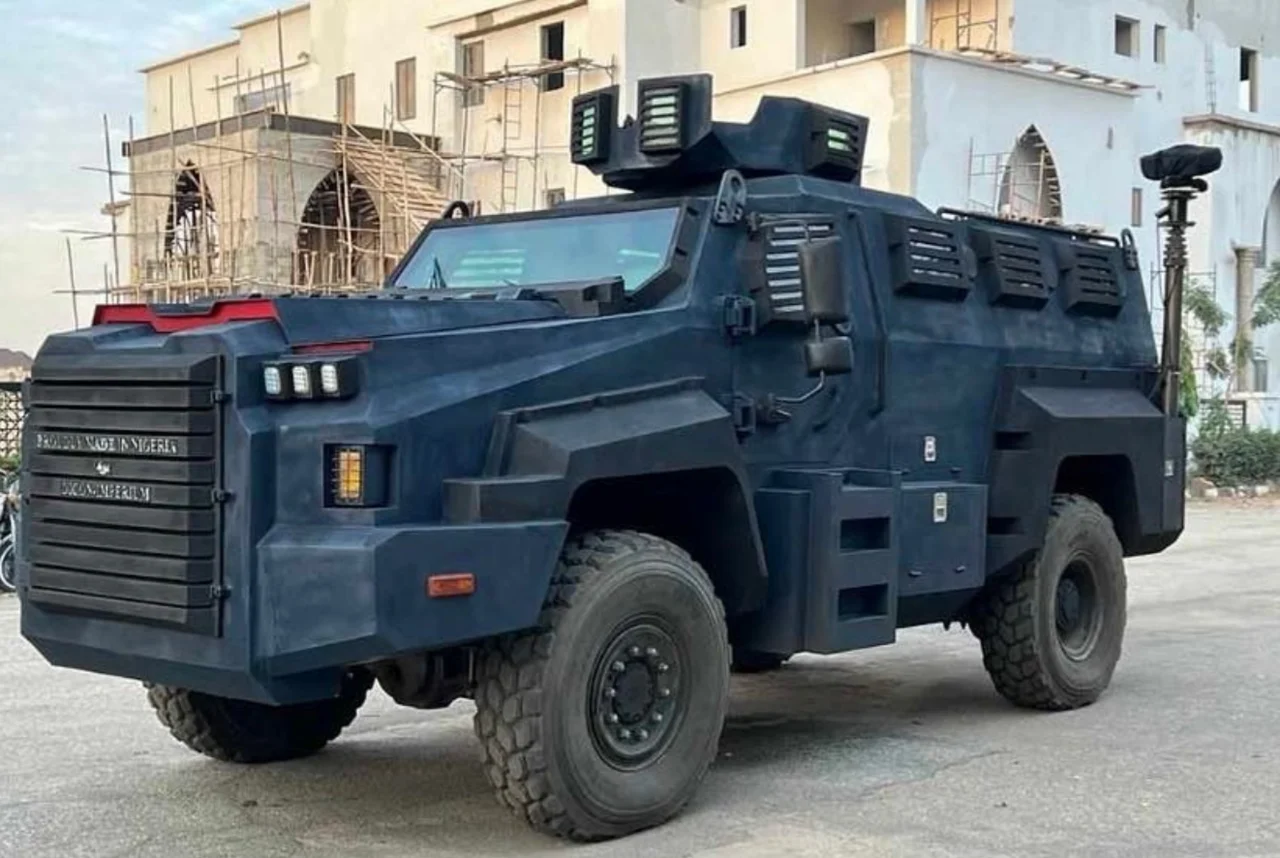
Photo: The DICON-built Ezegwu MRAP, part of Nigeria’s push to expand domestic defence manufacturing. Credit: Nafextreme, CC BY 4.0, via Wikimedia Commons
DICON Director General Major General Babatunde Ibrahim Alaya said the state manufacturer is actively courting investors and technology partners in the run-up to Afridex 2026, which runs from 26-29 October at Eko Atlantic in Lagos. “The message to investors and international partners attending Afridex is that Nigeria is open for business in the defence and security sector,” Alaya said, according to defenceWeb. “DICON is inviting stakeholders and investors who are ready to partner with us to bring manufacturing to Nigeria.”
A legal opening for joint ventures
The push follows a change in Nigeria’s legal framework. Defence Minister General Christopher Musa (retired) said President Bola Tinubu has approved legislation that allows DICON to enter formal partnerships with original equipment manufacturers (OEMs) — a departure from the agency’s traditional role as a closed state production line. Musa described Afridex as “a significant opportunity” for DICON to showcase its capabilities to a global audience, according to the same report.
Until now, Nigeria’s defence-industrial ambitions have largely run through bilateral agreements rather than a dedicated domestic manufacturing law. The new framework is intended to let DICON offer equity stakes, technology-transfer arrangements and co-production deals to interested foreign firms, mirroring the model South Africa’s Denel and Rheinmetall have used for decades through their Rheinmetall Denel Munition joint venture, and the route Nigeria has already opened with Turkish industry.
What DICON already builds
DICON’s pitch to investors rests on products already in service rather than paper designs. The agency manufactures the Ezugwu mine-resistant ambush-protected (MRAP) vehicle and the lighter Vanquisher armoured personnel carrier, both fielded by Nigerian security forces in counter-insurgency operations in the northeast and the Niger Delta. The Naval Dockyard, Nigeria’s state shipyard, has also expanded output of patrol boats for the Nigerian Navy, part of a broader push to reduce reliance on imported hulls for coastal and riverine security.
These programmes sit alongside Nigeria’s wider defence-industrial outreach. In September, Nigerian officials and Turkish manufacturers met in Abuja to discuss moving beyond straightforward arms sales toward joint production arrangements, building on years of Nigerian purchases of Bayraktar TB2 drones and other Turkish systems. DICON’s new OEM partnership authority gives that outreach a formal legal channel, and Afridex 2026 — Nigeria’s first time hosting a major continental defence exhibition — is designed as the venue where such deals get signed rather than merely discussed.
Why it matters for Africa
Nigeria’s move reflects a pattern spreading across the continent: African governments increasingly want foreign defence contracts to come bundled with local manufacturing, maintenance or technology transfer, rather than finished equipment shipped in from abroad. South Africa’s Denel and Rheinmetall Denel Munition, Chad’s new state arms manufacturer and Burkina Faso’s locally-assembled armoured vehicles all point the same direction. For a country of Nigeria’s size and defence budget, a credible legal mechanism for OEM joint ventures — backed by an existing production base in armoured vehicles and patrol boats — could make it one of the more attractive manufacturing partners in West Africa, provided the promised deals materialise beyond the exhibition hall. Afridex 2026 will be an early test of whether foreign manufacturers are willing to commit capital and technology, not just sales contracts, to Nigerian soil.
For context on what Nigeria’s armed forces currently operate, see DefenceMENA’s Nigeria Military Strength profile and coverage of Nigeria and Türkiye’s move toward joint production. DICON’s MRAPs also feature in DefenceMENA’s roundup of African-made armoured vehicles.