Unmanned Ground Vehicles for African Armies: Which Ones Are in Service?



African militaries are starting to field ground robots for two distinct jobs: keeping a soldier off the trigger line of a roadside bomb, and keeping a gunner off an exposed turret. Egypt’s state-owned Arab Organization for Industrialization is building an armed, Turkish-designed unmanned ground vehicle with Havelsan inside Egypt; Nigeria’s Defence Industries Corporation is backing a private start-up’s mine-detection robot; and Libya’s interior ministry has run a US-made bomb-disposal robot since at least 2020. None of this is yet a fielded, army-wide capability anywhere on the continent, and the evidence for each programme is uneven.
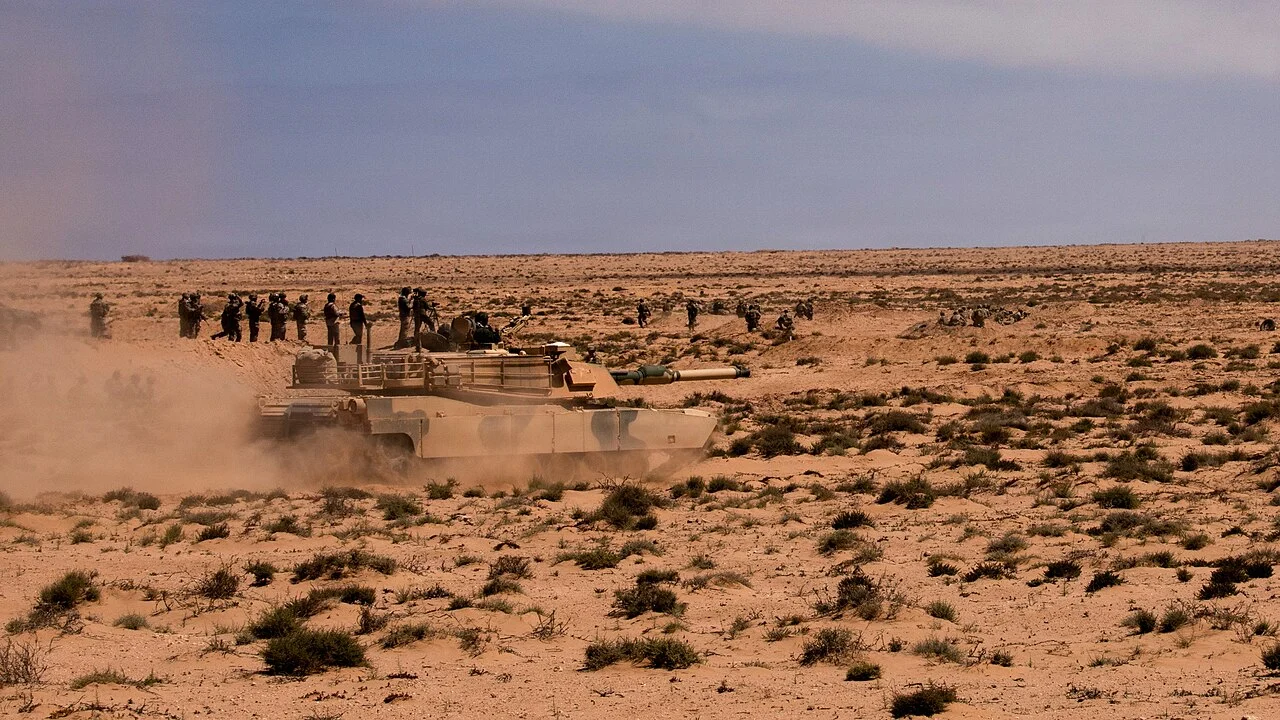
Photo: U.S. and Royal Moroccan Armed Forces soldiers run a combined-arms breach lane integrating unmanned ground vehicles during the African Lion 26 exercise, Cap Draa, Tan-Tan, Morocco, May 2026. Credit: U.S. Army / DVIDS, public domain.
Direct answer
No African army yet operates a serially fielded combat or logistics UGV. What exists is evaluation, indigenous development and one confirmed EOD deployment: the AOI/Havelsan Aqrab and Anubis (Egypt, developed jointly with Türkiye’s Havelsan, unveiled at EDEX 2025, not yet fielded), the Terra Industries Duma (Nigeria, a privately built mine- and IED-detection platform backed by Nigeria’s Defence Industries Corporation, demonstrated in Abuja in 2026), and the Safariland Digital Vanguard (USA, in EOD use with Libya’s Ministry of Interior since at least 2020). Thinner data points include a 2016 sale of ECA Group COBRA MK2 UGVs to an unnamed African interior ministry and a 2019 Mali field trial of Estonia’s Milrem THeMIS, run by Estonian troops, not an African force. No single system “wins”: Egypt has the only armed, locally produced platform; Nigeria the only African-owned development programme; Libya the only multi-year operational EOD use.
| Requirement | Ground robots to keep troops and EOD technicians off the immediate blast or fire zone, for combat-support, reconnaissance and explosive-ordnance-disposal missions |
| Systems covered | AOI/Havelsan Aqrab and Anubis (Egypt/Türkiye), Terra Industries Duma (Nigeria), Safariland Digital Vanguard (USA, in Libyan service) |
| Also noted | ECA Group COBRA MK2 (France, 2016 African interior-ministry sale, unconfirmed buyer), Milrem THeMIS (Estonia, 2019 Mali trial by Estonian troops) |
| Confirmed African operators | Libya (Ministry of Interior EOD); Egypt and Nigeria at development/evaluation stage, not yet fielded to units |
| Price data | No public unit prices for any system in this article |
The African requirement
Two separate problems push African security forces toward ground robots. The first is explosive ordnance: years of conflict in Libya, the Sahel and the Lake Chad Basin have left minefields, abandoned ordnance and roadside bombs that EOD teams must otherwise approach on foot. The second is force protection in low-density counter-insurgency operations, where a small army wants reconnaissance, fire support or a static armed position without putting a soldier behind an exposed weapon. Neither problem is answered by the MRAPs or counter-UAS systems DefenceMENA has already covered: a mine-protected vehicle still carries a crew inside the blast radius, and a counter-drone system does not clear a buried charge or hold a position with a remote-controlled gun.
Operating environment
- Legacy and active minefields and IEDs. Libya’s post-2011 and post-2019 conflicts left extensive unexploded ordnance around Tripoli; Sahel and Lake Chad Basin insurgencies add roadside bombs continuously. EOD teams working these threats are the clearest, most mature use case for ground robots in Africa.
- Desert heat and dust. Havelsan says the Aqrab was “designed for Egypt’s desert conditions,” but no source reviewed publishes independent hot-weather test data for any system below. That is a manufacturer position, not verified here.
- Thin command-and-control and bandwidth. Remote-controlled UGVs depend on a reliable control link; no source describes how any of these systems perform where radio or cellular coverage is poor, common across the Sahel and Libya’s interior.
- Foreign forces trial UGVs on African soil without owning them. U.S. paratroopers ran a combined-arms breach lane integrating UGVs during the African Lion 26 exercise at Cap Draa, Tan-Tan, Morocco, in May 2026, and Estonian troops deployed a THeMIS in Mali in 2019 under Operation Barkhane. Both show UGVs proven in African desert and Sahel conditions years before any African army has fielded one.
What capabilities matter?
The same criteria are applied to every system: mission class (combat-support/armed, EOD/counter-IED, or dual-role), configuration, control method, sensor or weapon payload, documented African user, evidence of local production or technology transfer, and public price data. Because the systems below serve different missions, this article does not force a single ranking; it states what each is for and lets the table show where a given requirement is met.
Comparison table
| System | Origin | Mission class | Configuration | Payload / armament (reported) | Control | Documented African status | Local production / ToT evidence |
|---|---|---|---|---|---|---|---|
| AOI/Havelsan Aqrab | Egypt / Türkiye (joint) | Combat-support, armed reconnaissance | 6×6 wheeled | Remote weapon station (type not confirmed in sources reviewed) | Remote-controlled, with Havelsan autonomy software | Unveiled EDEX 2025 (Cairo); end-user field demonstrations planned; not yet fielded to a unit | Produced in Egypt at AOI’s Kader Factory under a March 2025 Havelsan–Kader cooperation agreement |
| AOI Anubis | Egypt (AOI, linked to same Havelsan–Kader programme) | Combat-support / scout, modular | Small wheeled UGV | Remote turret, 7.62mm or 12.7mm MG or automatic grenade launcher; reconfigurable for ATGMs or as a small-drone carrier | Remote-controlled | Unveiled by AOI, 20 November 2025; not yet fielded to a unit | Developed by AOI’s Kader Factory; reported (not independently confirmed) to draw on Havelsan engineering |
| Terra Industries Duma | Nigeria | Mine/IED detection; weaponised variant also reported | ~350 kg tracked/wheeled platform (reported) | Detection sensors; machine guns and rocket launchers reported on a weaponised variant, human-operated | Remote-controlled, company-developed ArtemisOS autonomy stack | Public demonstration in Abuja, April 2026, with Nigeria’s Defence Industries Corporation (DICON); no confirmed government contract or unit fielding | Built in Nigeria by a Nigerian start-up; DICON collaboration confirmed by a named official, no joint-production agreement confirmed |
| Safariland Digital Vanguard | United States | EOD / counter-IED | Tracked EOD robot | No offensive payload; manipulator arm for ordnance handling (standard for class) | Remote-controlled | Operated by Libya’s (GNA) Ministry of Interior EOD team in Ain Zarah, Tripoli; documented by official photographs released 1 June 2020 and reported by Janes | None found; US-sourced equipment |
| ECA Group COBRA MK2 | France | EOD / reconnaissance | Small tracked/wheeled UGV, multiple variants | No offensive payload; day/night cameras (MK2 I) or waterjet-disrupter mount (MK2 E) | Remote-controlled | Sold to an unnamed African interior ministry, announced September 2016; country, quantity and current status not confirmed in sources reviewed | None found |
The Aqrab and Anubis rows are least settled: reporting is inconsistent on how the two relate to each other and to Havelsan’s Turkish-service Barkan and Kapgan families, and no source confirms Aqrab’s weapon type. The COBRA MK2 figure is a single 2016 report with no country named, included for completeness rather than current evidence.
Egypt and Türkiye: the Aqrab and Anubis programme
In March 2025, Türkiye’s Havelsan and the Arab Organization for Industrialization’s Kader Factory for Developed Industries signed a cooperation agreement to jointly produce unmanned ground vehicles inside Egypt (Military Africa). At EDEX 2025 in Cairo (1–4 December 2025), the partnership produced the Aqrab, a 6×6 UGV carrying a remote-controlled weapon system, which Havelsan said was designed for Egypt’s desert conditions (Anadolu Agency). Havelsan’s Sevket Unal, vice president of international business development and marketing, said: “We see Egypt as a gateway to Africa,” adding that products developed there would also be offered to countries in the region. President Abdel Fattah al-Sisi inspected the vehicle at the fair. Field demonstrations for end users were planned after the show; no delivery or fielding to an Egyptian unit is confirmed.
Separately, on 20 November 2025, AOI Chairman Lt. Gen. Mokhtar Abdel Latif inspected a range of indigenous AOI systems centred on the Anubis, a small, remote-controlled wheeled UGV for “versatile combat support roles,” built by AOI’s Kader Factory (Military Africa). Its remote turret can mount 7.62mm or 12.7mm machine guns or an automatic grenade launcher, and the chassis is reported as reconfigurable for anti-tank guided missiles or small aerial drones. The article links Anubis to the same Havelsan–Kader agreement and suggests, without independent confirmation, that it may draw on Havelsan’s engineering like the Barkan and Kapgan UGVs already in Turkish service. Status: unveiled, in evaluation; not confirmed delivered to any operational unit.
Turkish option: how Aqrab and Anubis fit Havelsan’s wider UGV family
Türkiye’s domestic UGV programme is relevant here because it is the direct source of the Egyptian platforms. Havelsan’s medium-class Barkan entered Turkish Armed Forces service after field testing, with Barkan I and II now in the inventory and a Barkan 3 unveiled with an AI-enabled command system; its heavier Kapgan, developed from Barkan’s experience, has completed weapon-firing tests. Both are confirmed in Turkish, not African, service. Aqrab and Anubis are the only Havelsan-linked UGVs with a documented African partner and a stated export intent toward the wider region. Verified: a signed co-production agreement, a joint platform built and shown inside Egypt, and an on-record company statement that Egypt is intended as a regional export base. Not verified: any confirmed sale, delivery or unit fielding to an Egyptian or other African force, the weapon fitted to Aqrab, or any price or delivery-speed advantage over non-Turkish systems. FNSS’s own heavy-class Shadow Rider, built on the M113 chassis with a 25mm turret in its Combat variant, remains in Turkish evaluation only, with no African user found.
Nigeria: Terra Industries Duma
Terra Industries, a Nigerian defence start-up formerly known as Terrahaptix, unveiled its Duma platform at a demonstration in Abuja reported around April 2026. Multiple outlets describe it as a roughly 350 kg platform built to detect landmines, roadside bombs and other explosive threats before troops enter an area, running the company’s own ArtemisOS autonomy software (Legit.ng). DICON’s head, Major General Babatunde Alaya, publicly linked the collaboration to high troop casualties from IEDs, the clearest named-official endorsement found for any system here. Separate March 2026 reporting describes a weaponised Duma variant with machine guns and rocket launchers, fired only under human remote operation. No source confirms a signed government contract or fielding to a unit; this is development and demonstration, not yet procurement. It follows an older, apparently stalled Nigerian Air Force Institute of Technology UGV project from the 2010s aimed at the same role.
Libya: Safariland Digital Vanguard in EOD service
The clearest multi-year operational use of a ground robot by an African security force is Libya’s. Photographs released by the then Government of National Accord’s Ministry of Interior on 1 June 2020 showed a Safariland Digital Vanguard tracked EOD robot with an explosive-ordnance-disposal team in Ain Zarah, south of Tripoli (Janes). Its role is standard for the class: approaching and manipulating suspect ordnance so technicians do not have to, in a city with extensive unexploded ordnance from the 2011 and 2019–2020 conflicts. No contract value, delivery date or current unit count is confirmed, and no newer reporting on Libyan EOD robot holdings was found. Status: in service, evidence otherwise thin.
Other systems noted: COBRA MK2 and THeMIS
Two further data points recur in reporting on African ground robots but do not meet the same evidence bar as the systems above. France’s ECA Group announced the sale of “several” COBRA MK2 UGVs to an unnamed African interior ministry in September 2016; buyer, quantity and later status were not found in nine years of subsequent coverage (Shephard Media). Estonia’s Milrem Robotics deployed a THeMIS UGV to Mali in April 2019, operated by Estonian troops under Operation Barkhane over about 1,200 km. Both are noted as context, not African procurement.
African operators at a glance
- Egypt: AOI/Havelsan Aqrab and Anubis, built at AOI’s Kader Factory; unveiled EDEX 2025; not yet fielded. See DefenceMENA’s Egypt military comparison.
- Nigeria: Terra Industries Duma, demonstrated in Abuja with DICON involvement. See DefenceMENA’s Nigerian Army weapons list and HAVELSAN–DICON MoU analysis.
- Libya: Safariland Digital Vanguard, operated by the Ministry of Interior’s EOD team in Tripoli since at least 2020.
- Morocco: Reported Arabic-language press interest in UGV capability; no system or contract named.
- Mali: Hosted a 2019 Milrem THeMIS trial, operated by Estonia’s Defence Forces, not the Malian army.
- Unnamed African state: Reported 2016 buyer of ECA Group COBRA MK2 units; country not confirmed.
Procurement and price evidence
No public unit price exists for any system here. Aqrab and Anubis are co-production arrangements rather than arms-length sales, so a conventional “price” may not apply until a military customer orders; none has been reported. Terra Industries has not disclosed a government contract value, and DICON’s involvement is described as collaboration, not a priced procurement. The 2016 COBRA MK2 sale and the Digital Vanguard’s Libyan presence are both reported without contract figures, so no claim that one system is cheaper than another is supportable.
Delivery speed
None of the systems has a documented delivery timeline to an African unit. Aqrab and Anubis moved from a March 2025 agreement to a public unveiling in under nine months, but “end-user field demonstrations” were still a next step at EDEX 2025, not a completed delivery. Duma’s public Abuja demonstration (April 2026) carries no announced delivery schedule. The Digital Vanguard’s Libyan deployment predates 2020 with no dated acquisition event found. No “fastest supplier” comparison is possible from this evidence.
Training, maintenance and local production
Egypt is the only country here with confirmed local production: AOI’s Kader Factory builds Aqrab and Anubis inside Egypt under the Havelsan agreement, with Havelsan contributing autonomy and command-and-control software. Nigeria’s case is development rather than production-under-licence: Terra Industries designs and builds Duma domestically, with DICON as a collaborating government body but no confirmed joint-venture or technology-transfer agreement. No source documents training pipelines, spares or maintenance arrangements for any of these systems in African service; for the Digital Vanguard and the historical COBRA MK2 sale, support arrangements are not public at all.
Which requirement fits which option?
| If the priority is | Options with documented relevance | Evidence gap |
|---|---|---|
| Proven, ongoing EOD use by an African force | Safariland Digital Vanguard (Libya) | Unit count, contract value, current status |
| Armed, locally produced platform with regional export intent | AOI/Havelsan Aqrab and Anubis (Egypt) | Confirmed weapon fit; any fielding or sale |
| Fully African-owned development with government backing | Terra Industries Duma (Nigeria) | Government contract; fielding to a unit |
| Historical reference point only, not current evidence | ECA Group COBRA MK2 | Buyer country, quantity, current status |
| Operating-environment data for the Sahel, not an African purchase | Milrem THeMIS (Mali trial, Estonian-operated) | No African ownership; dated 2019 |
See DefenceMENA’s military equipment database and our analysis of which African countries manufacture their own weapons for the wider local-production picture these UGV programmes sit inside.
FAQ
Which African countries operate unmanned ground vehicles?
Libya’s Ministry of Interior has operated a Safariland Digital Vanguard EOD robot since at least 2020. Egypt and Nigeria have armed or detection-focused UGVs at the development and demonstration stage, not yet fielded. No African army is confirmed to have a serially fielded combat UGV.
Is there a Turkish unmanned ground vehicle used in Africa?
Türkiye’s Havelsan co-develops the Aqrab and Anubis UGVs with Egypt’s AOI inside Egypt under a March 2025 agreement, with Havelsan stating an intent to export the platforms across the region. Neither is confirmed delivered or fielded yet.
What is Nigeria’s Terra Industries Duma?
Duma is a roughly 350 kg platform built by Nigerian start-up Terra Industries to detect landmines and IEDs, with a weaponised variant also reported. DICON has publicly backed the collaboration, but no government contract or fielding is confirmed.
How much do these ground robots cost?
No public unit prices exist for any system here. The Egyptian and Nigerian programmes are development or co-production arrangements rather than priced sales, and historical African EOD robot purchases were reported without contract values.
Sources
- Military Africa: Havelsan partners with Egypt’s Kader on UGV project
- Military Africa: AOI unveils Anubis and indigenous systems
- Anadolu Agency: Türkiye-Egypt defense cooperation produces Aqrab UGV
- Janes: Robots assist Libyan EOD teams
- Legit.ng: Nigerian defence startup unveils autonomous military systems
- Shephard Media: ECA sells COBRA MK2 UGVs for operations in Africa
- Army Technology: Milrem Robotics THeMIS UGV mission in Mali
- DVIDS via Wikimedia Commons: African Lion 26 counterattack lane with robotic systems
Specifications and programme status are as reported by the sources named and vary between outlets. Confirm current status directly with AOI, Havelsan, Terra Industries or the relevant ministry before any procurement decision.
Related: DefenceMENA compares the counter-UAS systems African armies are fielding, contracting or trialling against the drone threat facing many of the same forces in Counter-Drone Systems for African Armies.
Related: DefenceMENA’s analysis of Nigeria’s HAVELSAN software cooperation gives further context on Türkiye’s wider defence-industrial push into Africa in HAVELSAN–DICON MoU: What Nigeria’s ‘$2.5 Billion’ Defence Software Deal Means.