The Most Common Military Helicopters in African Armed Forces, Ranked by Number of Operators



Ranked by the number of African air forces that fly each helicopter family, this list compares the eight types with the broadest, best-documented footprint across the continent’s armed forces, from Soviet-era workhorses to the French and American types that followed decolonisation. Data as of November 2026.
DEFENCE AFRICA | Evergreen ranked list | Data as of November 2026
No single helicopter dominates African military aviation the way the F-16 dominates African fast-jet inventories. Instead, the continent’s air forces and armies fly a patchwork of types bought in waves: Soviet and Russian helicopters delivered from the 1970s onward and still being replenished today, French-origin types left over from colonial-era air forces and kept flying through French and European support, and more recent Chinese and American deliveries aimed at counter-insurgency and border security.
That patchwork matters for sustainment. A helicopter with dozens of operators across the continent benefits from a deeper regional pool of spares, trained mechanics and secondhand airframes than one flown by a single air force. This list ranks the eight helicopter families with the most African operators that could be verified against at least two independent sources, rather than every type ever delivered to the continent.
How we ranked
The ranking criterion is the number of African countries whose air force, army aviation or other armed service has operated a given helicopter family, current or recent, as reported by regional defence trackers. The primary count for each entry comes from Military Africa‘s operator surveys, cross-checked against African Aerospace, manufacturer and government statements, and other reporting cited in the text. Figures for several types vary between sources that count current operators only and those that include recently retired or lapsed fleets; where that is the case, the entry says so. Families whose African operator lists could not be confirmed against at least two sources, including the AgustaWestland AW109 and the MD 500/530, were excluded rather than guessed at. The data honestly supports eight entries rather than ten: beyond this list, operator counts for other types become too thinly sourced to rank with confidence.
Key facts
- The Mil Mi-8/Mi-17 family is in service with at least 28 African air forces, per African Aerospace and Military Africa.
- The Mi-24/Mi-35 Hind is fielded by not fewer than 25 African armed forces, according to Military Africa.
- The Aérospatiale/Airbus Gazelle remains in service or recent service with 17 African air forces, per Military Africa.
- South Africa’s Atlas Oryx is a locally remanufactured derivative of the same SA 330 Puma family flown elsewhere on the continent.
- Several of the oldest types on this list, including the UH-1 and the Alouette III, are being retired or replaced as African air forces recapitalise.
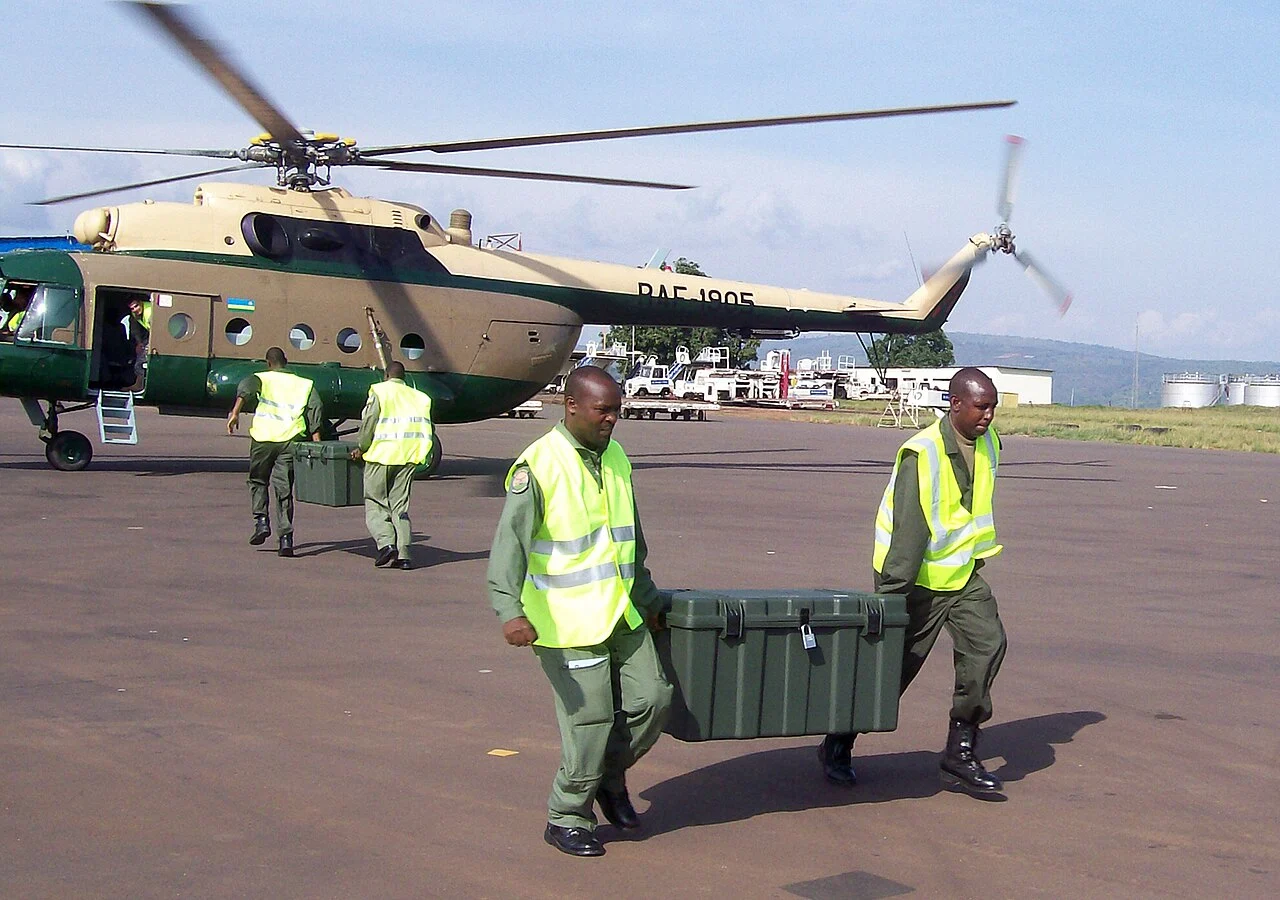
1. Mil Mi-8/Mi-17 family — Africa’s most widely flown helicopter
No helicopter family comes close to the Mi-8/Mi-17’s reach across African air forces. According to African Aerospace, the type is operated by at least 28 of the continent’s air forces, a count echoed by Military Africa’s own operator surveys. Current and recent African operators cited by these trackers include Algeria, Angola, Burkina Faso, Chad, both Congos, Djibouti, Egypt, Equatorial Guinea, Eritrea, Ethiopia, Ghana, Guinea, Kenya, Mali, Mozambique, Niger, Nigeria, Rwanda, Sudan, Tanzania, Togo and Uganda, operational status (active) in most cases. Russian Helicopters has said the region’s total fleet of Russian-made rotorcraft, dominated by Mi-8/17 variants, exceeds several hundred airframes.
The baseline Mi-17, per Russian Helicopters’ published figures, carries up to 4,000 kg internally or 4,500 kg on a sling, cruises at roughly 240 km/h and has a standard range of about 580 km, extendable with auxiliary tanks. Its popularity in Africa rests less on any one specification than on cost, the size of the secondhand and spares market, and decades of local maintenance experience. Rwanda, Kenya and several Sahelian air forces have taken newer Mi-171Sh and Mi-17V-5 deliveries in the past decade, while Mali lost an Mi-8 to insurgent fire in 2024, illustrating the type’s continued frontline exposure.
2. Mil Mi-24/Mi-35 Hind — the region’s default attack helicopter
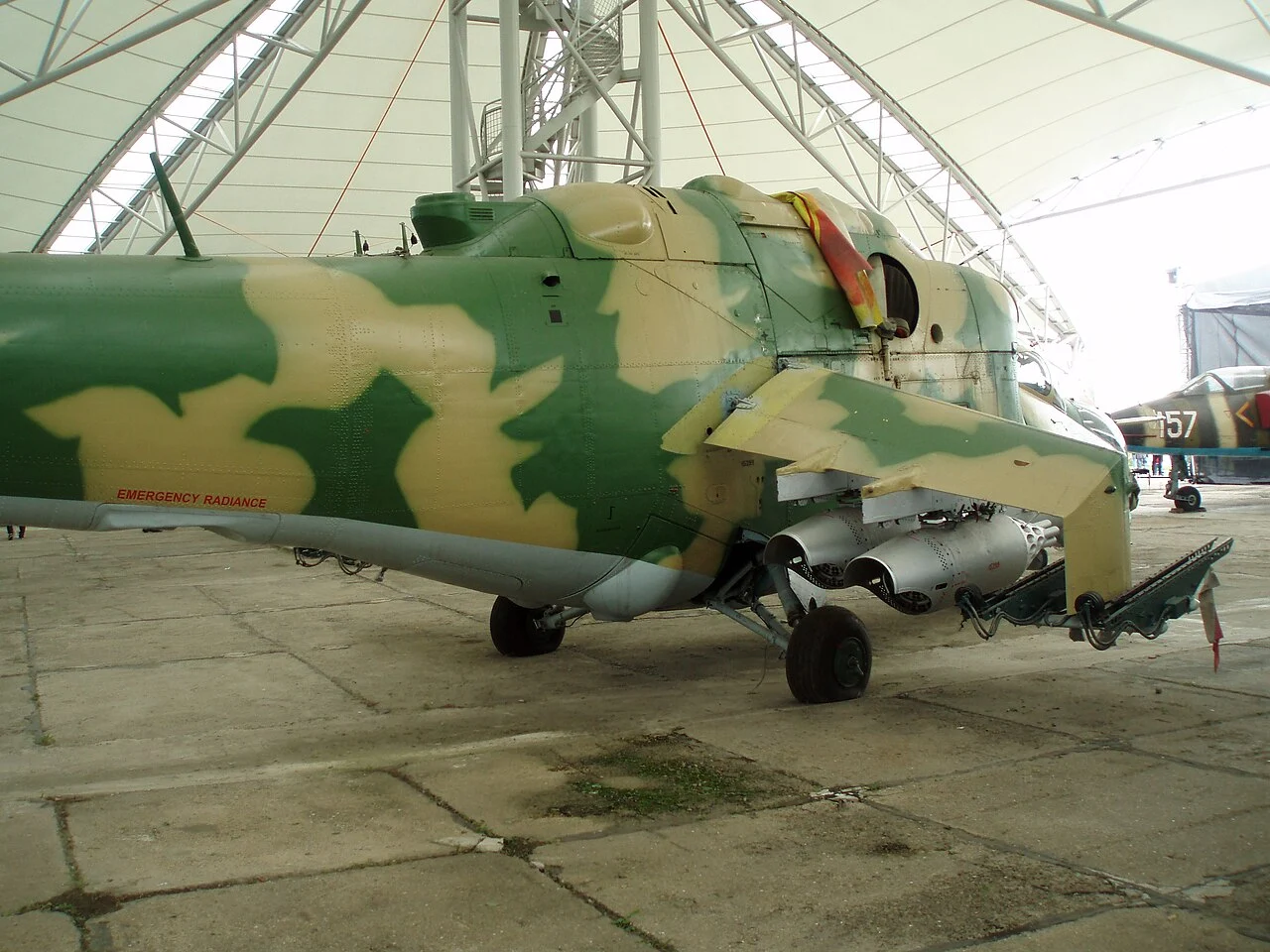
Military Africa’s operator survey puts the Hind at “not less than twenty-five” African armed forces, naming Algeria, Angola, Burkina Faso, Burundi, Chad, both Congos, Côte d’Ivoire, Egypt, Ethiopia, Libya, Mali, Nigeria, Senegal, Sudan, Togo, Uganda and Zimbabwe among current or recent operators, with Russian Helicopters’ leadership putting the continent’s total Mi-24/35 fleet above 250 airframes. Status varies sharply by country: Algeria, Angola, Egypt and Nigeria field the type as active frontline equipment, while several West and Central African fleets have been reduced by attrition in counter-insurgency operations.
Per Russian Helicopters, the modernised Mi-35M cruises at up to 280 km/h, mounts a 23 mm cannon and can carry anti-tank and unguided rockets on four hardpoints. Nigeria operates roughly 15-20 Mi-24/35-series aircraft against Boko Haram and ISWAP in the northeast, according to Military Africa, making it one of the type’s heaviest African users alongside Algeria and Angola. The Hind’s continued relevance in Africa owes to simple maintenance relative to Western attack helicopters and to decades of Soviet and Russian training pipelines across the continent.
3. Aérospatiale/Airbus Gazelle (SA 341/SA 342) — the Francophone standard
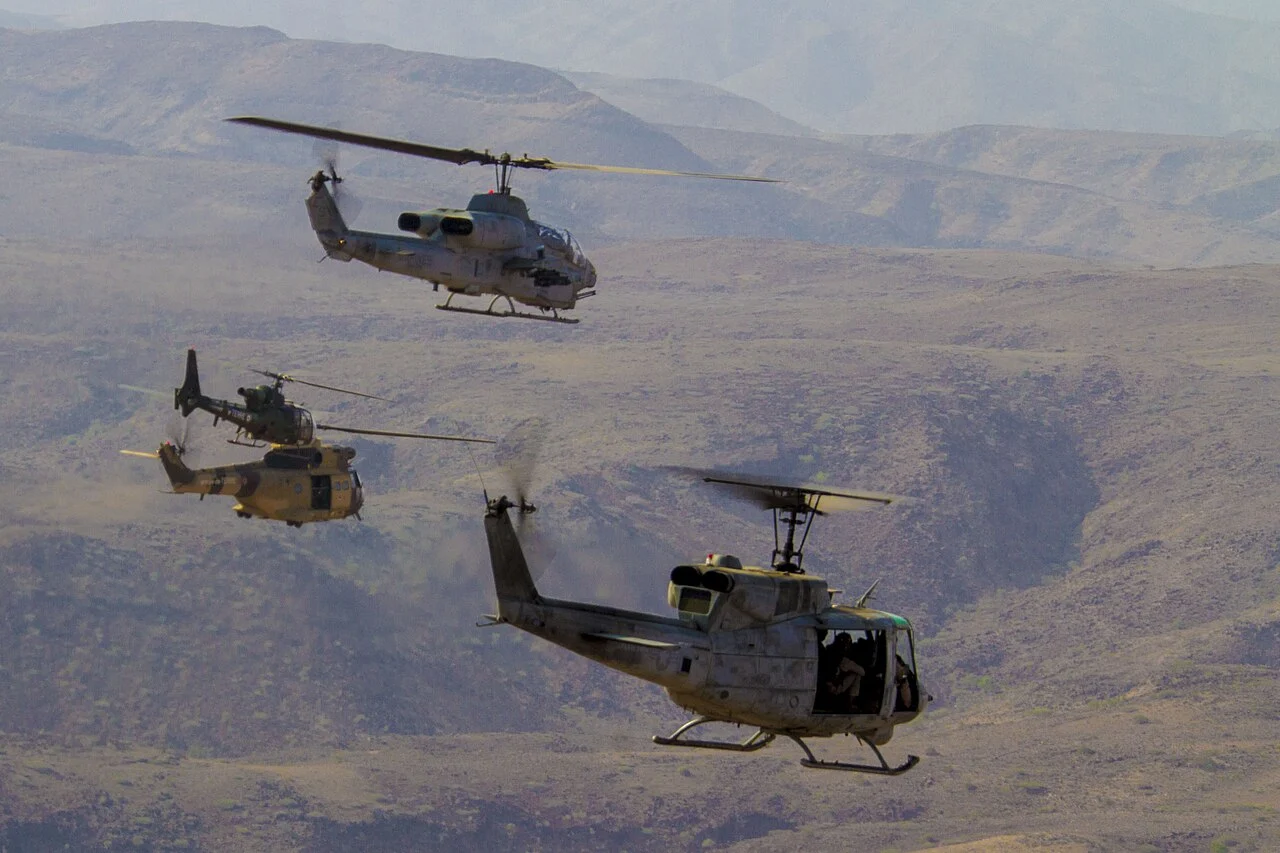
According to Military Africa, the light Gazelle remains in service or recent service with 17 African air forces: Algeria, Botswana, Burkina Faso, Chad, Djibouti, Egypt, Gabon, Côte d’Ivoire, Kenya, Libya, Morocco, Niger, Rwanda, Senegal, Sudan, Tunisia and Zimbabwe. France’s own ALAT has flown Gazelles on African deployments, including reconnaissance and anti-tank missions in the Chad-Libya conflict and in Mali during Operation Barkhane, where one was shot down in 2019.
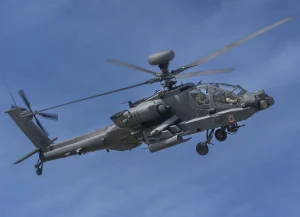
Airbus Helicopters’ published figures for the SA 342 variant list a maximum speed near 310 km/h and a range around 710 km, modest payload (around 700 kg of disposable load) that suits reconnaissance, liaison and light anti-armour roles rather than heavy lift. Several Francophone air forces are now transitioning away from the type as French industrial support for the airframe thins and newer light helicopters, including Airbus H125 and H145 variants, enter African service; Morocco’s own Gazelle fleet has been progressively supplemented by AH-64E Apaches, a transition this site has covered separately.
4. Aérospatiale/Airbus Puma family (SA 330 Puma, AS 332 Super Puma, Atlas Oryx)
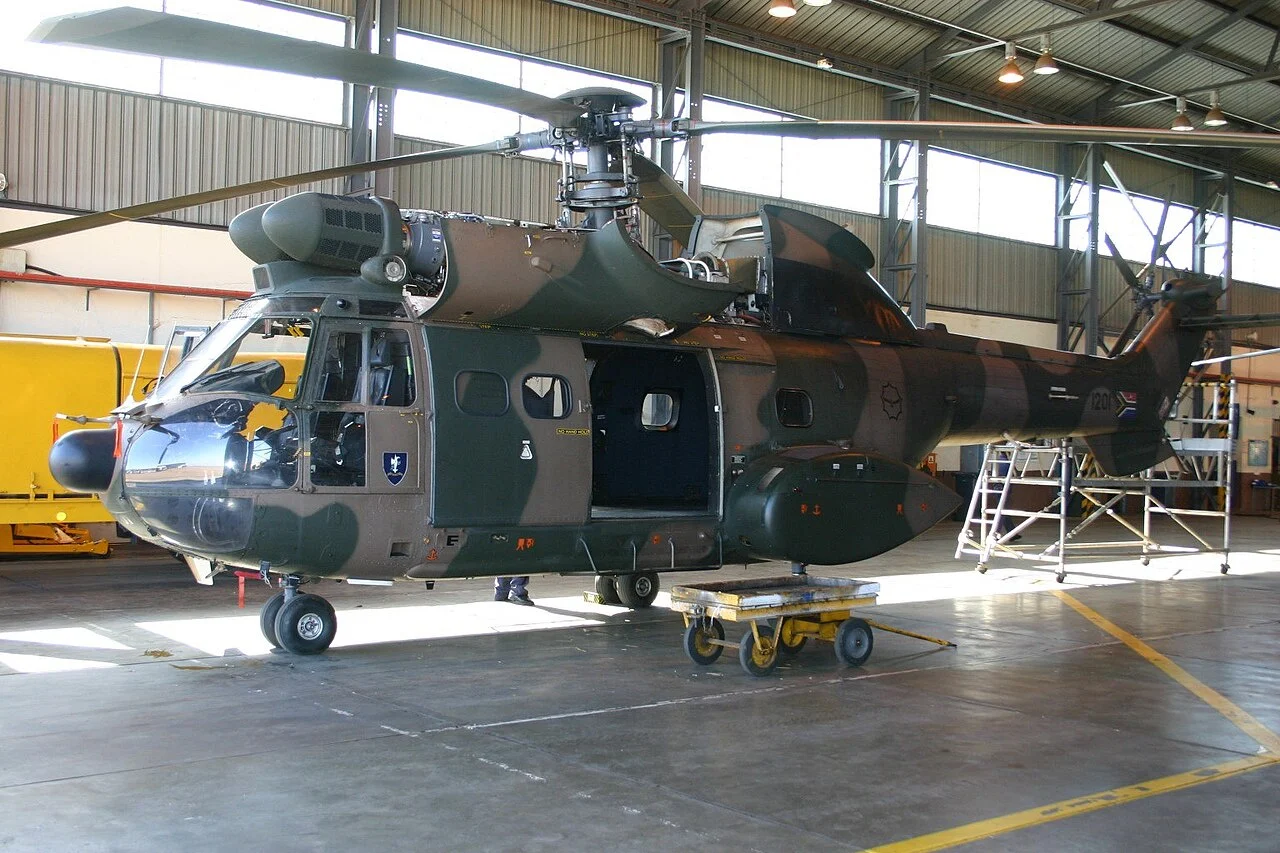
The medium-lift Puma lineage spans three closely related airframes in African service. South Africa never imported the Super Puma directly; instead, Denel’s Atlas division remanufactured roughly 50 SA 330 Pumas, inherited from the apartheid-era air force, into the locally modified Atlas Oryx, which remains in South African Air Force service today. Elsewhere on the continent, operator listings reviewed for this piece name the original SA 330 Puma or AS 332 Super Puma with Algeria, Côte d’Ivoire, Kenya, Malawi, Morocco, Nigeria, Senegal, Togo and Tunisia, a count of roughly ten African operators across the family when South Africa’s Oryx fleet is included; several of these listings are secondary compilations rather than official fleet data, and should be read as indicative rather than exact.
Airbus Helicopters’ published specifications for the AS 332 put cruise speed at about 262 km/h and standard range near 633 km, with capacity for up to 20-24 troops depending on configuration, well above the Gazelle’s light-utility role. The family’s size and parts commonality across air forces that also fly civil Super Pumas in offshore oil-and-gas work, notably in Nigeria and Angola, has helped keep it supportable even where military budgets are constrained.
5. Harbin/Hafei Z-9 — China’s foothold in African rotary-wing fleets
The Z-9, a licence-derived development of the Airbus/Eurocopter AS 365 Dauphin built in China, has become one of the more visible Chinese exports to African air arms over the past decade. Operator records compiled from Military Africa, Janes reporting and national announcements name Cameroon, Djibouti, Equatorial Guinea, Ghana, Kenya, Mali, Mauritania, Namibia and Zambia as recent or current operators of Z-9 or Z-9W/WE variants, a count of roughly nine African air forces. Status differs by country: Ghana’s fleet suffered a fatal crash near Obuasi in August 2025 that killed eight people including the country’s defence minister, while Mali and Cameroon have also lost airframes to accidents rather than combat.
Harbin’s published figures for the export Z-9WE variant list a maximum speed around 291 km/h and range near 790 km, with a light attack version carrying anti-tank missiles and rocket pods. The type’s appeal mirrors the broader pattern of Chinese defence exports to the continent: financing terms and delivery timelines that often undercut Western and even Russian competitors, at the cost of a smaller established user base for spares and overhaul than the Mi-8/17 or Mi-24/35 enjoy.
6. Bell 206/212/412 family — the Western utility workhorse
Bell’s twin-engine utility helicopters have found a steady, if smaller, African customer base, concentrated among air forces that also buy US and Italian equipment. Recent orders and deliveries reviewed for this piece cover Botswana, Cameroon, Morocco, Niger, Nigeria, Somalia, Tunisia and Zambia, a count of roughly eight African operators of 206/212/412-series aircraft; Zambia alone operates a mixed fleet of Bell 205, 206, 212 and 412 variants. Tunisia’s 2026 order for 12 Subaru-built Bell 412EPX helicopters was the first order for that specific variant in the region, per reporting cited by Shephard Media, while Morocco has taken delivery of Bell 412EPI variants configured for naval anti-submarine roles rather than the air force’s retiring Bell 205/206/212 fleet.
Bell’s published specifications for the 412 put cruise speed near 226 km/h and range around 745 km with a useful load suited to troop transport, medevac and VIP roles rather than attack missions. The family’s African growth has come almost entirely through US Foreign Military Financing and direct commercial sales rather than Soviet-legacy channels, making it one of the few entries on this list expanding rather than contracting.
7. Bell UH-1 Iroquois/Huey — the piston-era holdout

Wikipedia’s operator listing for the UH-1, cross-checked against Military Africa reporting, names Burkina Faso, Ethiopia, Eswatini, Somalia, Uganda and Zambia among African operators, with the Democratic Republic of Congo a likely but less clearly sourced additional user following US-supplied utility helicopter deliveries; a count of roughly seven African operators. Ethiopia’s ground forces are listed with a small UH-1H fleet, while Burkina Faso’s air force added two secondhand UH-1Hs in the past decade for counter-insurgency support duties.
The baseline UH-1H, per figures published by Bell and the US Army’s historical specifications, cruises near 204 km/h with a range around 511 km and carries up to roughly 1,800 kg externally. As one of the oldest airframes on this list, the type persists in Africa chiefly because decades-old examples remain cheap to acquire secondhand and simple for small air forces to maintain, even as the US military itself has largely retired the type in favour of the UH-1Y and other successors.
8. Aérospatiale Alouette III — the retiring veteran
The Alouette III is the oldest type on this list and the one furthest into retirement. Operator records point to South Africa as the best-documented former user, flying the type for 44 years before its official SAAF withdrawal in 2006, while secondary listings place Angola, Chad, Senegal and Zimbabwe among a small number of remaining or recent African operators, a count of roughly five, several unconfirmed against a primary source. By the 2010s, according to industry reporting, most global Alouette III operators, African air forces included, were winding down or had already retired their fleets.
Aérospatiale’s original specifications for the SA 316B list a maximum speed near 210 km/h, a range around 605 km and a light utility role for liaison, training and search and rescue rather than combat. Its inclusion here marks less a continuing operational footprint than the tail end of one: a type that shaped a generation of African military aviators and is now being quietly retired as air forces replace ageing light helicopters with newer Airbus H125/H145 and Chinese Z-9 types.
| Rank | Helicopter family | African operators | Source / year |
|---|---|---|---|
| 1 | Mil Mi-8/Mi-17 | ≥28 | African Aerospace / Military Africa, 2025 |
| 2 | Mil Mi-24/Mi-35 Hind | ≥25 | Military Africa, 2025 |
| 3 | Aérospatiale/Airbus Gazelle | 17 | Military Africa, 2025 |
| 4 | Puma / Super Puma / Atlas Oryx | ~10 | Operator compilations, Wikipedia mirror cross-checked, 2025 |
| 5 | Harbin/Hafei Z-9 | ~9 | Military Africa, Janes, national announcements, 2025 |
| 6 | Bell 206/212/412 family | ~8 | Shephard Media, Military Africa, 2025-2026 |
| 7 | Bell UH-1 Iroquois/Huey | ~7 | Wikipedia operator list, Military Africa, 2025 |
| 8 | Aérospatiale Alouette III | ~5 | Operator compilations, SAAF Museum, 2025 |
Why it matters for Africa
Helicopter fleet composition across Africa tracks the continent’s defence-industrial history more closely than any doctrine document: Soviet and Russian types delivered through Cold War-era alignments and still replenished through Moscow’s remaining African partnerships; French-origin types left behind by decolonisation and sustained, where possible, through European industrial support; and a newer generation of Chinese and American deliveries competing for budgets that favour financing terms and quick delivery over bespoke capability.
That mix has real sustainment consequences. Operators of widely flown types such as the Mi-8/17 and Mi-24/35 can draw on a deeper regional pool of secondhand airframes, spares and locally trained mechanics than operators of less common types, even when the aircraft themselves are decades old. Conversely, air forces buying into newer but thinner ecosystems, whether Chinese Z-9s or American Bell 412s, trade that depth of regional support for faster delivery timelines and, in the Bell case, access to US training and sustainment pipelines. For procurement planners weighing a new helicopter purchase, the existing regional footprint of a type, not just its unit cost, increasingly shapes how affordable it proves to operate over a multi-decade service life.
Sources
- African Aerospace: “Hip replacement?”
- Military Africa operator surveys and reporting
- AIN Online: “African Countries Seek Additional ‘Hinds'”
- Shephard Media: Pentagon approves $100 million Bell 412 sale to Zambia
- Wikipedia: List of Bell UH-1 Iroquois operators
- CitiNewsroom: Spotlight on China’s Z-9 helicopter after Ghana tragedy