France sold Egypt the first export Rafales in 2015, then two Mistral assault ships, a FREMM frigate and four Gowind corvettes, and in 2021 another 30 fighters. In 2026, Cairo reportedly asked for 24 more. This is how a supplier that barely featured in Egypt’s inventory before the 1980s became the largest source of major arms in the 2021–25 period, what has been delivered, and what is still only a proposal.
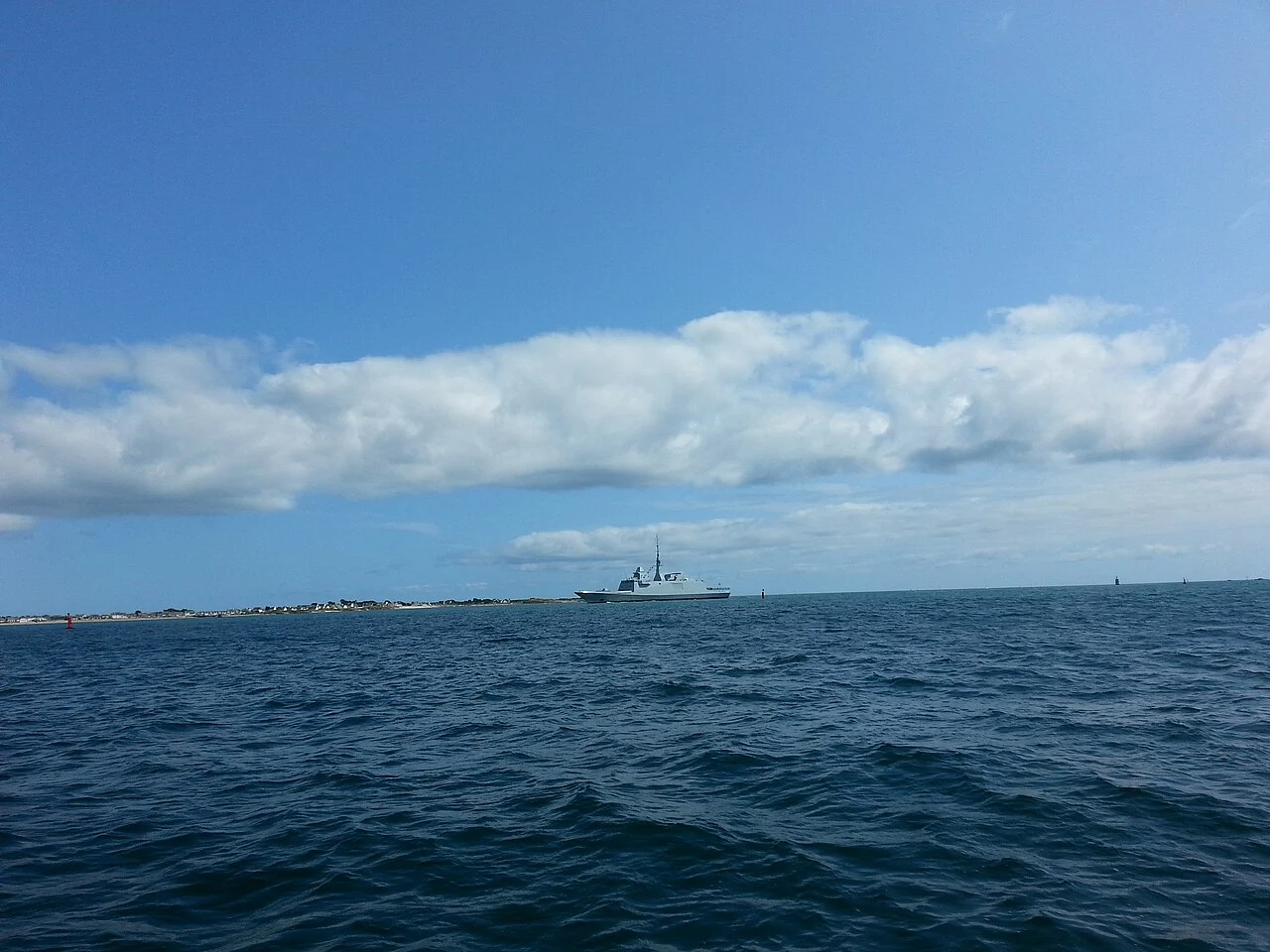
Photo: The FREMM frigate Tahya Misr returning to Lorient after sea trials, 2 July 2015. Credit: Quoique, CC BY-SA 4.0, via Wikimedia Commons
SIPRI’s March 2026 arms-transfer figures put France at 39% of Egypt’s major arms imports in 2021–25, ahead of Germany (30%) and Italy (18%), in a period when Egypt’s total imports fell by about half compared with 2016–20. The French share is large because a small number of very expensive platforms were delivered inside the window. It does not mean France supplies most of what Egypt operates: the F-16 and M1 Abrams fleets, the Russian air defences and the German submarines are still the backbone of their services. The full inventory is in the Egypt military profile; this piece follows only the French line, programme by programme, and labels each with the standard status vocabulary. An order is not a delivery, and a delivery is not an operational unit.
How the relationship formed
France’s history with the Egyptian Air Force goes back roughly half a century; Dassault itself describes the Rafale sales as the continuation of a partnership of nearly fifty years. The most visible earlier programme is the Mirage 2000. Egypt ordered 16 single-seat and four two-seat aircraft in January 1982, and deliveries began in 1986, making it one of the first export customers. Sources disagree on the total delivered (17 to 20), and directories today list about 18 in service, a single small squadron. It was a one-off purchase, and no second Mirage order followed.
The turning point came after 2013. After 2013 Egypt widened its supplier base, and France was ready to sell. In September 2014 Paris suspended the delivery of two Mistral assault ships built for Russia after Moscow’s intervention in Ukraine. Egypt bought them in 2015. On 16 February 2015 it signed the Rafale contract, the first foreign order for the fighter. The first three aircraft arrived in July 2015, taken from the French Air Force’s own allocation. Egypt’s reasoning, as French officials framed it at the time, was the instability in Libya and the militant threat in Sinai.
What followed was not a single deal but a stack: air, naval, missiles, local shipbuilding and, in 2025, local production of Rafale parts. The table below lists every programme in date order.
Anatomy table: French programmes in Egypt
| System | Manufacturer | Contract / announcement | Quantity | Delivery | Current status | Source |
|---|---|---|---|---|---|---|
| Mirage 2000EM / BM | Dassault Aviation | January 1982 order | 16 EM + 4 BM ordered (17–20 delivered, sources differ) | From 1986 | In service, about 18 (Estimated, 2026) | Aviation directories; WAF 2026 via DM data store |
| Gowind 2500 corvettes (El Fateh class) | Naval Group (with Alexandria Shipyard) | 2014, reported about €1 billion for four, option for two | 4 (1 built in Lorient, 3 in Alexandria) | El Fateh Sept 2017; Port Said commissioned 6 Jan 2021; El Moez and Luxor launched 2019 and 2020 | Delivered / In service (handover dates for the last two vary by source) | Naval Technology; Naval News; Military Africa |
| Rafale EM / DM, first batch | Dassault Aviation | 16 Feb 2015, part of a package reported at €5.2 billion (about US$5.9 billion) with a frigate and missiles | 24 (16 DM two-seat, 8 EM single-seat) | July 2015 to November 2017 | Delivered; in service with the 203rd Tactical Fighter Wing (Gebel El Basur) | France 24; The Aviationist; Army Recognition |
| FREMM frigate Tahya Misr (ex-Normandie) | DCNS / Naval Group | 16 Feb 2015, same package | 1 | 23 June 2015 | In service | Defense World; Wikipedia summary of Naval Group release |
| Mistral-class LHDs Gamal Abdel Nasser and Anwar El Sadat | DCNS / STX France | 2015, about €950 million including crew training (French MoD figure as reported) | 2 | June 2016 (first ship); second ship in 2016 | In service | UK Defence Journal; TASS |
| VL MICA NG air defence for Gowind ships | MBDA | 23 Feb 2021 (value not disclosed) | Four ships fitted | Not stated | Contracted; fit status not confirmed publicly | MBDA press release |
| Rafale F3R, second batch | Dassault Aviation; Thales, Safran, MBDA as suppliers | Announced 4 May 2021; in force 15 Nov 2021; reported about €3.75 billion | 30 (one airframe reported lost in testing and replaced) | First aircraft late 2024; batches of 3 in Oct and Nov 2025; balance through 2026 | Under delivery | Dassault Aviation; The Aviationist; Military Africa |
| Weapons bundle: MBDA missiles and Safran equipment | MBDA, Safran | Bundled with 2021 contract, reported about €200 million | Not disclosed | Not disclosed | Contracted; stocks not public | Army Recognition; Military Africa |
| Rafale third tranche | Dassault Aviation | Request for proposal sent 1 Sept 2026 (La Tribune, 2 Sept) | 24 requested | None | Planned / Reported (unconfirmed) | La Tribune via The Defense Post |
| Barracuda-derived or Scorpene-type submarines | Naval Group | Talks only; no contract | 4, reported | 2032–35 if signed, reported | Reported (unconfirmed) | Tactical Report via Army Recognition, Dec 2025 |
Air: Rafale at the centre
The Rafale is the core of the French offer. The 2015 batch of 24 was delivered by November 2017, eight single-seaters and 16 two-seaters. Dassault’s own release says the second contract for 30 aircraft was announced on 4 May 2021 and entered into force on 15 November 2021, lifting the total to 54 and making Egypt the second-largest Rafale operator after France. The 2021 aircraft are in the F3R standard, with Thales RBE2 AESA radar and, according to trade press, the MBDA Meteor and MICA missiles, the AASM Hammer guided bomb and the AM39 Exocet.
For the full order-by-order breakdown, cost scope and operational status, see DefenceMENA’s Egypt Rafale equipment file.
The delivery record is where the caveats sit. Photographs at Dassault’s Mérignac plant show the first 2021 aircraft, EM09, in late 2024, three more (EM10, EM11 and DM21) in October 2025 and a further three in November 2025. The Aviationist counted roughly 30 to 31 Rafales delivered in total by then; directories such as the 2026 World Air Forces listing put the fleet at 46 to 50. Both can be right at different dates, so treat the in-service figure as Estimated until Cairo or Dassault publishes a number. The fleet is expected to reach 54 by the end of 2026.
On 2 September 2026 La Tribune reported that Egypt had sent Dassault a request for proposal for 24 more aircraft, which would make 78. Dassault declined to comment, no price, standard, seat mix or financing has been reported, and no contract exists. The reasons commentators give are the age of about 200 F-16s and the missile options that come with a European fighter; both are analysis, not stated Egyptian policy. Details are in the separate report on the 24-jet request.
Naval: from one frigate to a French-shaped surface fleet
The Navy’s French connection is broader than the fighter story suggests. The FREMM Tahya Misr was handed over on 23 June 2015 only four months after the contract, because it was taken from the French production line. The two Mistral-class helicopter carriers, originally built for Russia, cost about €950 million including training and entered service in 2016; they are among the largest ships in the Egyptian Navy. Egypt’s other two FREMM-type frigates are Italian-built Bergamini-class ships, not French, and the MEKO A-200 frigates are German.
The Gowind programme is the clearest technology-transfer case. Naval Group built the lead ship in Lorient and Alexandria Shipyard the other three under a transfer-of-technology arrangement, so Port Said, commissioned in January 2021, became the first corvette built in Egypt. MBDA supplied the anti-ship and air-defence missiles; in February 2021 Egypt became the first international customer for VL MICA NG. Independent estimates of total programme cost, including missiles and torpedoes, run from about €1.5 to €1.7 billion.
Missiles, electronics and the fighter’s weapons
MBDA is the French firm most embedded across services: Exocet anti-ship missiles for the ships, MICA for both corvettes and fighters, and Meteor and SCALP-class weapons for the Rafale. Only the VL MICA NG order has an official announcement. The rest of the missile picture is trade-press reporting and stock levels are not public. Thales (radar, Talios pod) and Safran (Rafale avionics, electro-optics) sit inside the aircraft contract rather than as separate Egyptian orders in the sources reviewed.
Sustainment, local production and financing
Local work is now a selling point on both sides. At EDEX in December 2025, the Arab Organization for Industrialization displayed Rafale wing sections and fairings made at its Helwan aircraft and engine factories, and said Dassault had approved the organisation into its supply chain. The scale and the value of the work have not been published. The Alexandria Shipyard, meanwhile, built three Gowinds and continues to work on the MEKO A-200 line with German technology.
Financing explains why so many contracts were possible with a thin budget (SIPRI puts Egypt’s 2025 military spending at about US$2.5 billion, not counting off-budget items). The 2021 Rafale purchase was reportedly funded by French bank loans over ten years with a French state guarantee of up to 85%, the export-credit insurance role once held by Coface and now handled by Bpifrance Assurance Export. The financing of the 2015 package has not been itemised in sources reviewed here. Treat the loan terms as reported rather than official.
How France competes with Egypt’s other suppliers
| Supplier | What it provides | SIPRI share 2021–25 | Verified deals | Local production / transfer | Maintenance and financing notes |
|---|---|---|---|---|---|
| France | Rafale, Mistral LHDs, FREMM, Gowind, Mirage 2000, MBDA missiles | 39% | 2015 package; 2021 Rafale; Gowind 2014; MICA NG 2021 | Gowind at Alexandria; Rafale parts at AOI | State-guaranteed export credit (2021, reported) |
| Germany | Type 209/1400mod submarines, MEKO A-200EN frigates, IRIS-T SLM | 30% | Submarines, frigates, air defence | MEKO A-200 hull built in Egypt | Government export licences required |
| Italy | FREMM Bergamini frigates, patrol ships | 18% | Frigates delivered from 2020 (Estimated) | Not confirmed | Not stated |
| United States | F-16, M1A1 Abrams, Apache, CH-47 | Not broken out in the source reviewed | Long-running FMS and FMF cases | M1A1 assembly at Factory 200 | US$1.3 billion a year in FMF |
| Russia | MiG-29M/M2, Ka-52, S-300VM, Buk-M2 | Sharply lower than in 2016–20 (SIPRI) | Deliveries through 2010s | Limited | Su-35 order reportedly cancelled |
The comparison shows a market, not a monopoly. France leads in the delivery values of 2021–25 and in the number of platform types, but Germany owns the submarine arm and Washington the largest fleets. For the US side of that balance, see the planned United States and Egypt arms deals analysis. Egypt has also weighed alternatives to French systems; the Patriot alternatives comparison covers the air-defence side. For a neighbouring case of the same supplier, see France’s arms deals with Morocco.
What is pending or reported
- 24 more Rafales: request for proposal only; no reported price, standard or delivery slots (Reported, unconfirmed).
- Submarines: Egypt operates four German-built Type 209/1400mod boats. Tactical Report describes talks with Naval Group over four Barracuda-derived or Scorpene-type boats worth €4.5–6.0 billion, with local manufacturing and re-export rights as Egyptian conditions. No contract or official statement exists; delivery in 2032–35 is a press estimate.
- Mirage 2000 future: retirement or upgrade has been discussed in trade commentary; no programme is confirmed.
- SCALP and Meteor stocks: the presence of the missiles is reported in trade press, but contract dates and quantities are not public.
How many Rafales does Egypt have?
Contracted: 54, of which 24 (2015) are delivered and 30 (2021) are under delivery, with one extra airframe reported as built to replace a test loss. Delivered and photographed: about 30 to 31 by November 2025 (The Aviationist). Estimated in service in 2026: 46 to 50 (directory figures). Proposed: 24 more, which would make 78. Dassault states that Egypt operates the second-largest Rafale fleet after France.
Why the French line matters for Egypt
For readers following the North Africa market, the French line has three consequences. First, Egypt’s fighter fleet now has two Western types, with different weapons and support chains from the F-16. Second, the French financing route means the 2021 payments run into the 2030s. Third, the local work at Helwan and Alexandria shows France is trading industrial access for volume. Follow the country desks for Egypt and France, the Rafale tag, the North Africa desk and the wider Middle East coverage. For how the numbers compare with Algeria, see Egypt vs Algeria Military Power.
A note on the numbers
Contract values for the 2014 Gowind order, the 2015 package and the 2021 Rafale contract are press-reported or derived from French officials; neither Egypt nor the manufacturers publish line items. Delivery counts come from photographic records and directories and can lag reality. SIPRI values are trend indicator values based on production cost, not sale prices, and are recorded when equipment is delivered. Global Firepower is not used here as an inventory count.
Sources
- Dassault Aviation, Rafale contract for Egypt comes into force (2021)
- The Defense Post, Egypt seeks third French deal for additional Rafale jets (September 2026)
- Army Recognition, Egypt sends proposal request for 24 additional Rafale (2026)
- The Aviationist, Egypt receives more Rafales (November 2025)
- Military Africa, Egypt advances Rafale fleet with new F3R deliveries (October 2025)
- France 24, France and Egypt sign Rafale deal (February 2015)
- Meta-defense, the Egyptian Rafale contract and French taxpayers (2021)
- UK Defence Journal, Egypt receives first new assault ship (2016)
- Naval Technology, Gowind corvettes
- Military Africa, ENS Port Said delivered (January 2021)
- MBDA, Egypt first customer for VL MICA New Generation (2021)
- Army Recognition, Egypt begins certified Rafale component production (December 2025)
- Army Recognition, Egypt seeks more production rights for Barracuda submarines (2026)
- SIPRI, Trends in International Arms Transfers, 2025 (March 2026)
- Military Watch Magazine, Egypt’s Mirage 2000 decision (used only for the 17-aircraft count)