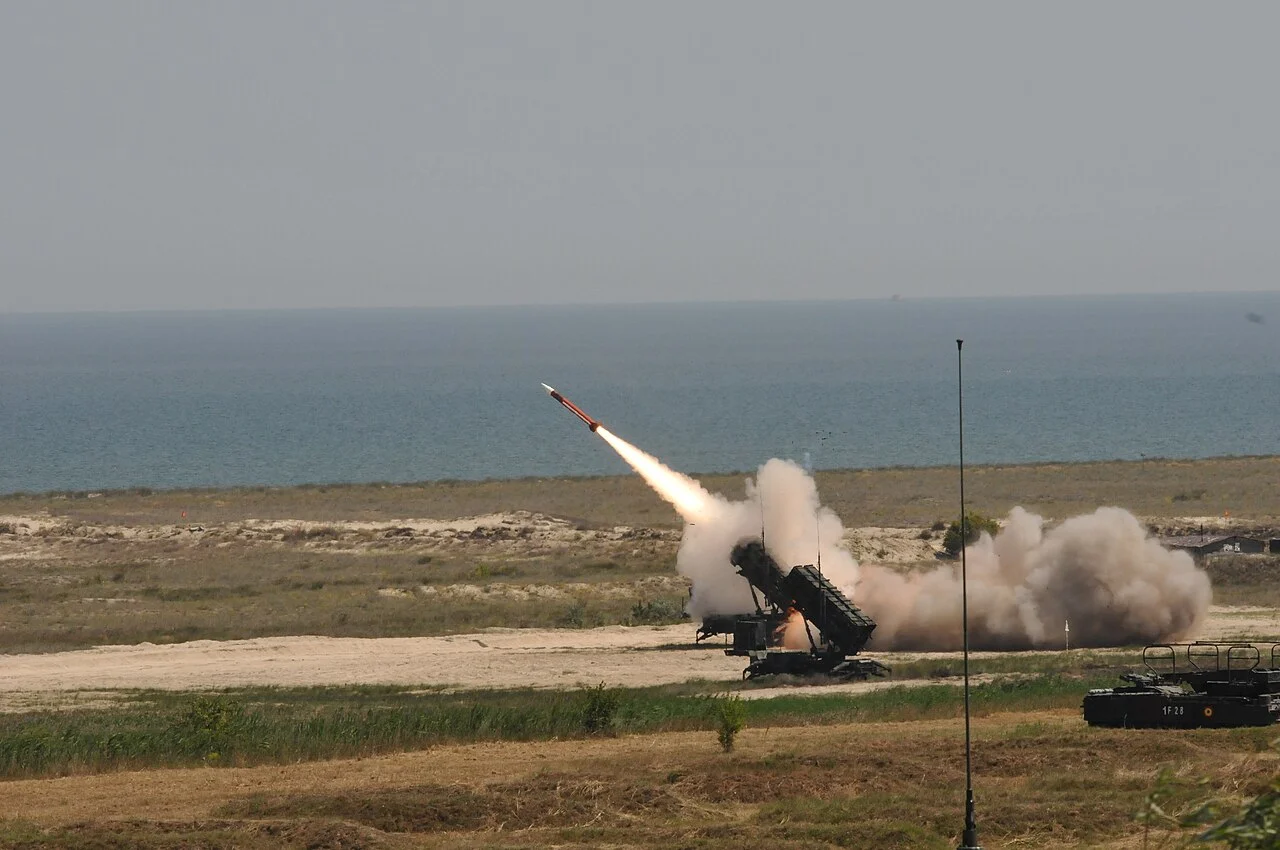
Patriot remains the most widely fielded medium-to-long-range air defence system across the Gulf, but Gulf and North African planners are weighing alternatives on cost, delivery timelines and industrial terms. This piece compares five systems in the same broad mission category — medium-to-long-range surface-to-air and terminal ballistic missile defence — using manufacturer-published specifications and confirmed regional deployments as of September 2026. The entries are ordered alphabetically by system name; this is not a ranking.
DEFENCE MENA | Alternatives gallery | Data as of September 2026
Photo: A Patriot missile fires during a live-fire exercise. Credit: Capt. Aaron Smith, U.S. Army, public domain, via Wikimedia Commons
Six MENA states operate or have ordered the Raytheon (RTX) Patriot system: Saudi Arabia, the United Arab Emirates, Qatar, Kuwait, Bahrain and Jordan, according to Army Recognition and GlobalSecurity.org’s tracking of Patriot foreign military sales. Saudi Arabia and the UAE have used Patriot batteries operationally against Houthi ballistic missiles and drones, and Gulf states have continued adding PAC-3 MSE capacity even as U.S. production competes for interceptors with Ukraine and Indo-Pacific allies.
That competition for interceptor stock, combined with Gulf industrial strategies that increasingly demand technology transfer and local assembly, has pushed procurement offices in Riyadh, Abu Dhabi and Doha to evaluate systems beyond the traditional Patriot and THAAD pairing. The five alternatives below are systems that could perform a broadly comparable medium-to-long-range air and missile defence mission, drawn from confirmed regional interest, existing regional service or, in one case, unconfirmed reporting that is labelled as such.
None of the five is presented as a direct substitute for Patriot’s full engagement envelope. Each entry states its own range, altitude and status so readers can judge fit against a specific mission rather than a single “better” verdict.
Key facts
- The UAE was THAAD’s first export customer, ordering two batteries in 2008; the first was delivered in October 2015 (Lockheed Martin, 2025).
- Saudi Arabia agreed to buy seven THAAD batteries in 2017; two had been delivered and declared operational by 2025 (Army Recognition, 2025).
- The UAE signed a $3.5 billion contract for 10 Cheongung II batteries with South Korea in January 2022, then the largest arms export deal in South Korean history (Defense News, 2022).
- Qatar’s navy already operates the Aster 30 missile at sea and requested a formal offer for the land-based SAMP/T system in 2022 (Army Recognition, 2022).
- No MENA state has signed a confirmed S-400 contract; Saudi-Russia talks that began in October 2017 remain open (Daily Sabah, 2019).
1. Barak-8 / MR-SAM (Barak MX) — Israeli-Indian medium-range missile
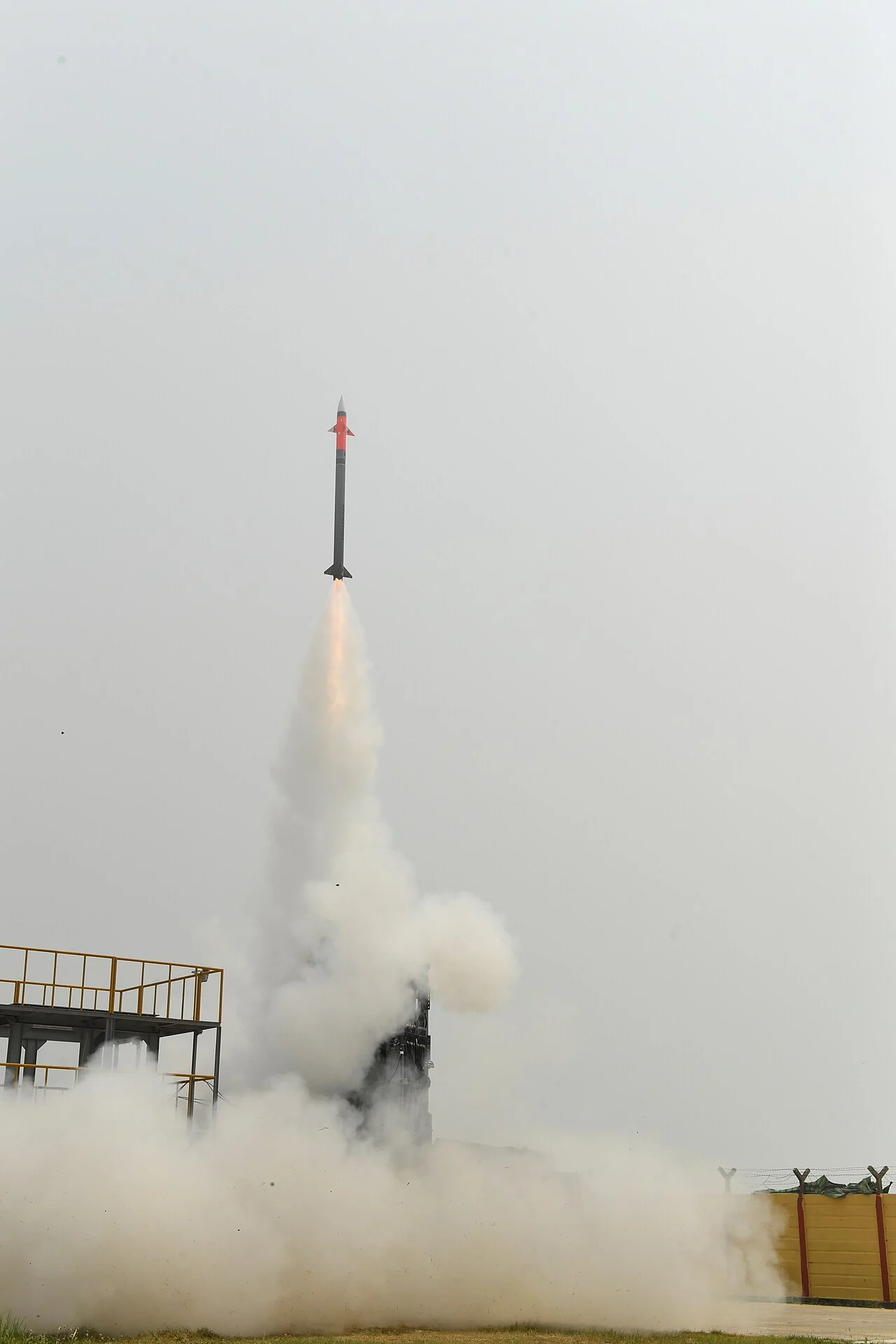
Manufacturer: Israel Aerospace Industries (IAI), co-developed with India’s Defence Research and Development Organisation (DRDO). Origin: Israel and India. Role: medium-range, ship- and land-based air and missile defence.
Published specifications put the missile’s operational range at up to 70 km, extendable to 100 km in later variants, with an engagement altitude of roughly 20-30 km and a top speed near Mach 3 (Wikipedia Barak 8 entry, cross-checked against IAI and Indian Ministry of Defence releases). Its main advantage is a shared naval and land-based missile family with an active radar seeker, proven across India’s Army, Navy and Air Force. Its main limitation is a shorter maximum range than Patriot PAC-3 MSE or THAAD, and the export “Barak MX” variant reportedly omits the dual-pulse rocket motor India’s DRDO developed for the baseline system, reducing performance relative to the Indian configuration.
No MENA government has publicly confirmed a Barak-8 acquisition. Indian and Israeli trade media reported in 2022 that Morocco had signed a roughly $500 million Barak MX contract, a figure that has not been independently confirmed by Rabat or Tel Aviv, so it is presented here as reported rather than confirmed (status: reportedly contracted). Confirmed operators worldwide are India and Azerbaijan, which fields 12 systems with 75 missiles. A regional customer might consider Barak-8 for its lower unit cost than Patriot or THAAD and its dual land/naval production line, where political relations allow the acquisition.
2. KM-SAM Cheongung II — South Korea’s fast-fielded medium-tier interceptor
Manufacturer: Hanwha Systems (radar and systems integration) and LIG Nex1 (missile), with Hanwha Defense supplying transporter erector launchers. Origin: South Korea. Role: medium-range surface-to-air and terminal ballistic missile defence.
Published figures put intercept range at around 40 km, with altitude coverage reported between 20 and 40 km against aircraft and roughly 15-20 km against ballistic missiles using hit-to-kill guidance (CSIS Missile Threat; Wikipedia M-SAM entry, cross-checked). Its main advantage is a newer production line with shorter lead times than the oversubscribed U.S. and French lines, letting South Korea offer rapid delivery with comparatively low diplomatic friction. Its main limitation is a shorter range than Patriot PAC-3 MSE or THAAD, positioning it as a medium-tier layer rather than a one-for-one Patriot replacement.
The UAE signed a $3.5 billion contract for 10 Cheongung II batteries in January 2022, South Korea’s largest arms export deal at the time (Defense News, 2022). The UAE has since taken delivery of at least two batteries, which are on combat duty and reportedly intercepted Iranian-linked ballistic missiles (Defence Express, 2026). Status: contracted, deliveries ongoing. A regional customer might consider Cheongung II to diversify supply away from the traditional U.S.-France axis while fielding a credible medium-range interceptor faster than competing production lines allow.
3. S-400 Triumf — Russia’s longest-range offer, still unconfirmed in the region
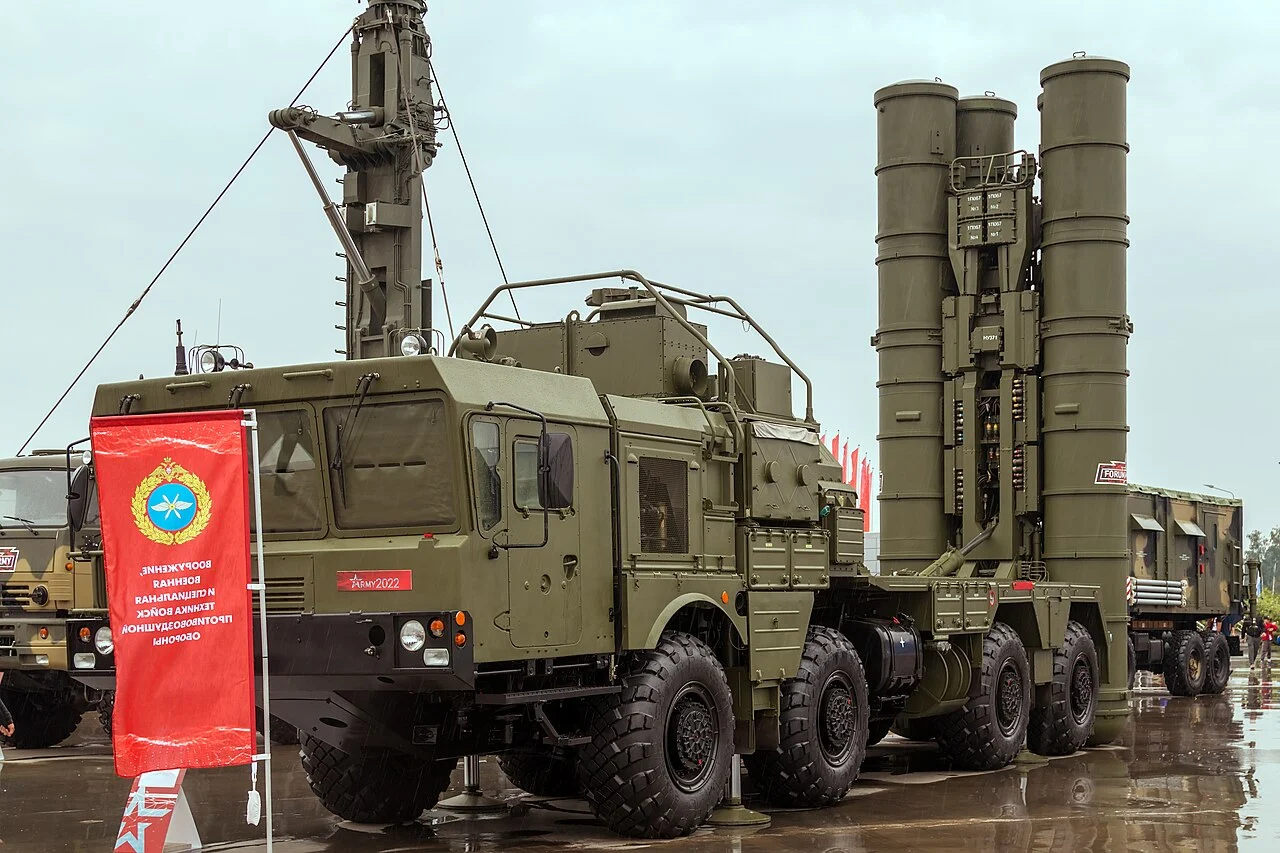
Manufacturer: Almaz-Antey. Origin: Russia. Role: long-range, multi-layered air and missile defence.
The S-400’s missile family spans the 9M96E (40 km) up to the 40N6E (400 km), with the workhorse 48N6 series covering roughly 150-250 km depending on variant (Wikipedia S-400 missile system entry, cross-checked against GlobalSecurity.org). That gives it the longest published intercept range of the five systems here and a single launcher covering multiple engagement envelopes. Its main limitation for MENA buyers is the absence of any confirmed regional sale, exposure to U.S. CAATSA sanctions risk for militaries that also operate American equipment, and Moscow’s historic reluctance to extend full technology transfer.
Saudi Arabia reached a preliminary agreement with Russia during King Salman’s October 2017 Moscow visit; talks on technology transfer and localisation continued for years without a signed contract (TASS reporting, cited by Daily Sabah, 2019; Military Watch Magazine). Qatar held separate exploratory talks with Moscow in the same period (Daily Sabah, 2019). Status for both: reportedly under negotiation, with no confirmed contract to date. Turkey, a non-MENA NATO member, is the only nearby operator, having taken delivery in 2019. A regional customer might use continued S-400 interest as leverage in pricing and technology-transfer talks with Washington and Paris, even without concluding a purchase.
4. SAMP/T NG / Aster 30 — the Franco-Italian system Qatar already operates at sea
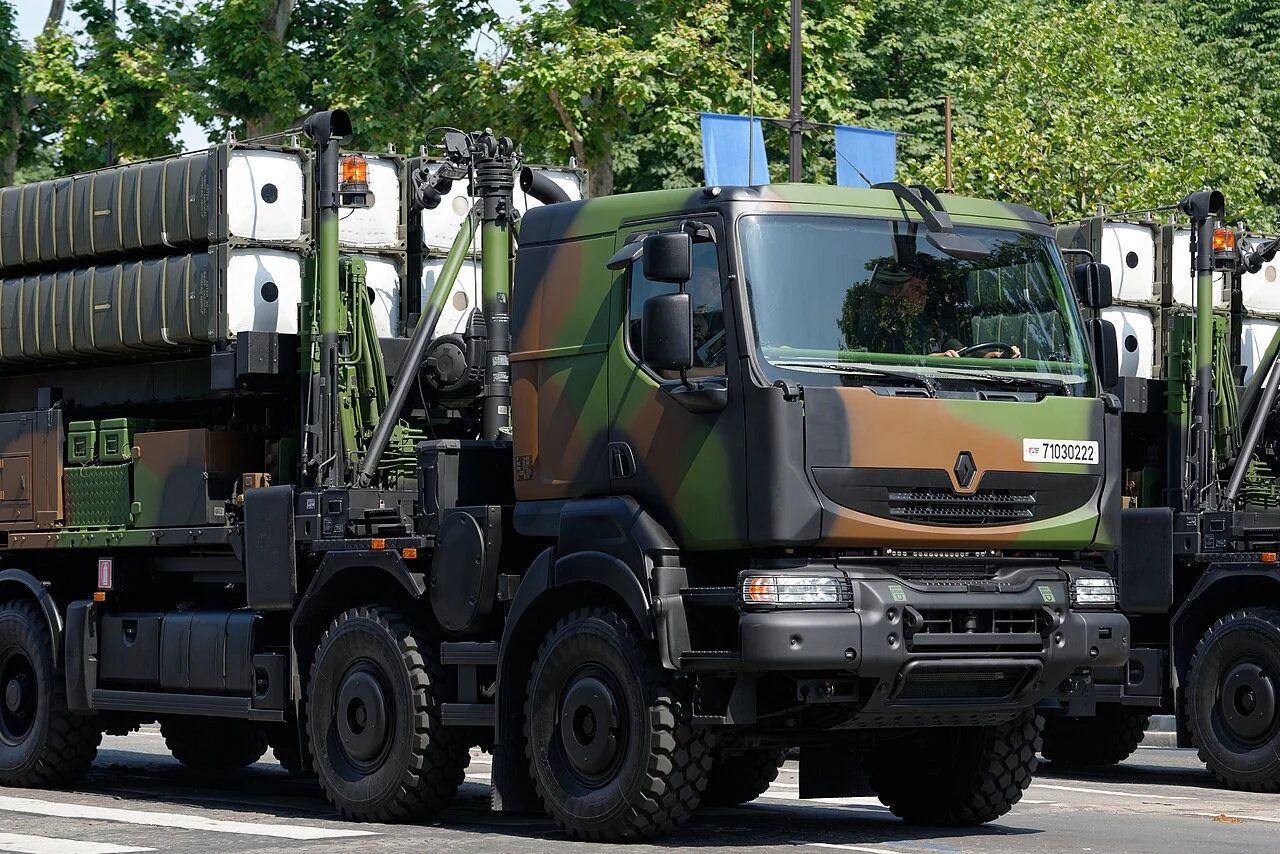
Manufacturer: Eurosam, the Thales-MBDA joint venture. Origin: France and Italy. Role: medium-to-long-range air and missile defence with land (SAMP/T) and naval (Aster 30) variants sharing the same missile family.
The standard Aster 30 Block 1 reaches 100 km against targets above 3 km altitude and 50 km against low-altitude threats; the upgraded Aster B1NT missile, entering French Air Force service from 2023, extends coverage beyond 150 km (Eurosam; UK Defence Journal, cross-checked). Its main advantage for a Gulf buyer already operating the naval variant is shared logistics, training and missile stock across land and sea platforms. Its main limitation is constrained production capacity, since European demand since 2022 has lengthened delivery timelines for new export customers.
Qatar’s navy operates the Aster 30 missile aboard its Al Zubarah-class corvettes and its new Al Fulk-class landing platform dock, delivered by Fincantieri in November 2024 (Naval News, 2024) — status: operational (naval). Qatar separately requested a formal offer from Eurosam for the land-based SAMP/T system in 2022 (Army Recognition, 2022) — status: reportedly under negotiation (land-based); no contract has been confirmed since. A regional customer might consider SAMP/T NG to add a land-based air defence layer without introducing an entirely new missile family where the naval variant is already in service.
5. THAAD — the only system here combat-proven in Gulf skies
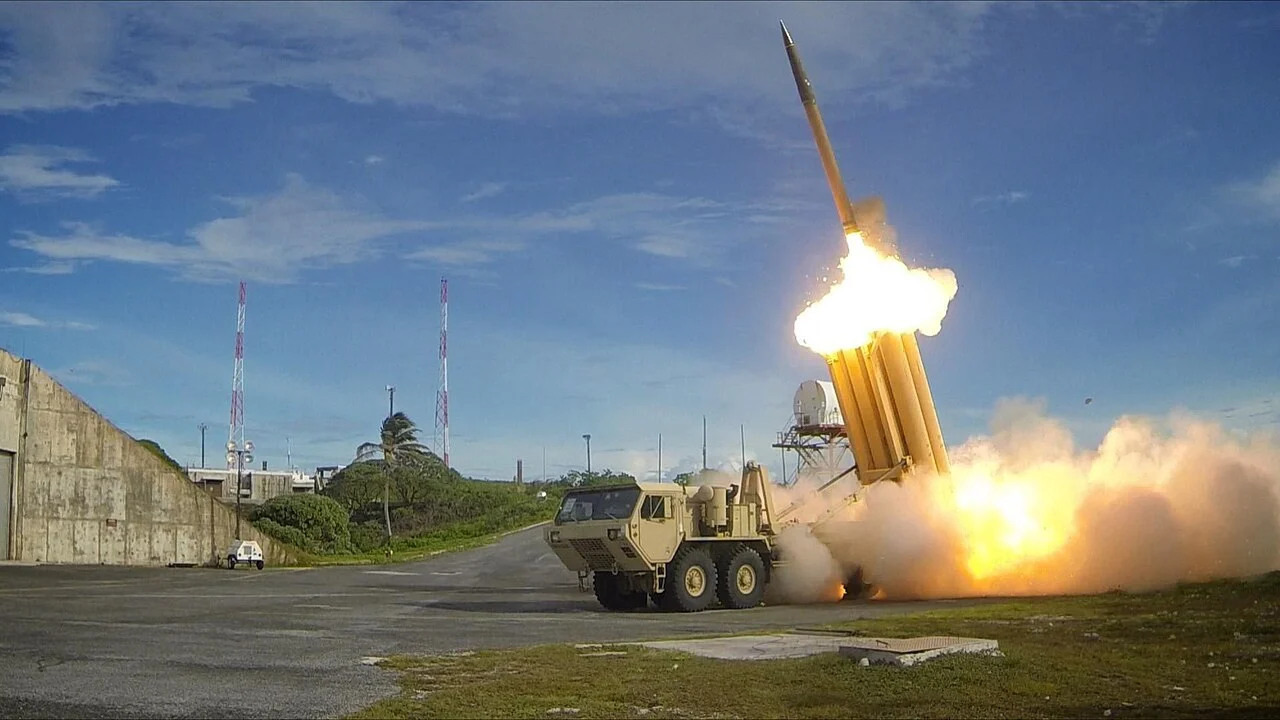
Manufacturer: Lockheed Martin. Origin: United States. Role: upper-tier terminal ballistic missile defence.
THAAD’s published intercept range exceeds 200 km with an engagement altitude up to 150 km, using a hit-to-kill kinetic interceptor that carries no explosive warhead (Lockheed Martin; Wikipedia Terminal High Altitude Area Defense entry, cross-checked). Its main advantage is the highest-altitude terminal intercept layer of the five systems and an operational record inside the Gulf: the UAE-based battery recorded its first combat intercept in January 2022 against a threat to Al Dhafra Air Base (Lockheed Martin, 2025). Its main limitation is the highest unit cost of the group and a narrower mission set than Patriot, since THAAD addresses only the upper terminal layer and needs a lower-tier system such as Patriot alongside it.
The UAE was THAAD’s first international customer, ordering two batteries in 2008; the first was delivered in October 2015, and the system is now operational at sites in northern Abu Dhabi and Al Ruwais (Lockheed Martin, 2025) — status: operational. Saudi Arabia signed an agreement for seven THAAD batteries in 2017; two of the seven have been delivered and declared operational as of 2025, with the remaining five still pending (Army Recognition, 2025) — status: contracted, partially delivered. A regional customer might add THAAD specifically for its combat-demonstrated upper-tier coverage, which Patriot alone cannot replicate at the same altitude band.
| System | Manufacturer / Origin | Published max range | MENA status | Key trait |
|---|---|---|---|---|
| Barak-8 / MR-SAM (Barak MX) | IAI / DRDO — Israel, India | Up to 100 km (extended variant) | Reportedly contracted (Morocco, 2022, unconfirmed) | Shared land/naval missile family |
| KM-SAM Cheongung II | Hanwha Systems, LIG Nex1 — South Korea | ~40 km | Contracted, deliveries ongoing (UAE, 2022) | Fast-fielded medium-tier interceptor |
| S-400 Triumf | Almaz-Antey — Russia | Up to 400 km (40N6E) | Reportedly under negotiation (Saudi Arabia since 2017) | Longest published range, multi-layer coverage |
| SAMP/T NG / Aster 30 | Eurosam (Thales, MBDA) — France, Italy | 100 km standard; 150+ km (Aster B1NT) | Operational at sea (Qatar); land system reportedly under negotiation | Shared land/naval missile family |
| THAAD | Lockheed Martin — United States | 200+ km, altitude to 150 km | Operational (UAE); contracted, partially delivered (Saudi Arabia) | Combat-proven upper-tier terminal layer |
Why it matters for the MENA region
Patriot’s dominance in Gulf air defence inventories is not in question, but the region’s exposure to ballistic missile and drone threats from Yemen and Iran-linked actors has made interceptor availability a strategic variable rather than a purely budgetary one. When Patriot and THAAD production queues lengthen because of demand from Ukraine and Indo-Pacific allies, Gulf states have shown they will evaluate South Korean, French-Italian and even Russian and Israeli-Indian alternatives, whether or not those evaluations result in a signed contract.
The UAE’s Cheongung II purchase and long-standing THAAD relationship show that diversification is already underway, not merely theoretical. Qatar’s naval Aster 30 fleet gives Doha a similar option to add a land-based SAMP/T layer using a missile family it already operates. Saudi Arabia’s parallel THAAD deliveries and unresolved S-400 talks illustrate how procurement leverage, not just capability, shapes which alternative a Gulf state ultimately pursues.
For African and Middle Eastern defence industrial strategies built around technology transfer and local assembly, the terms attached to each alternative often matter as much as range or altitude figures. A system offered with local production, as Gulf states have sought from multiple suppliers, can outweigh a marginal performance gap on paper.
Who makes Patriot? Our RTX company profile covers Raytheon’s air defence range, its SIPRI ranking and its documented African and Middle Eastern customers.
Sources
- Lockheed Martin — Ten Years of THAAD in the UAE (2025)
- Army Recognition — Saudi Arabia’s first THAAD unit (2025)
- Army Recognition — Qatar requests SAMP/T offer from Eurosam (2022)
- Naval News — Fincantieri delivers air defence LPD Al-Fulk to Qatar (2024)
- Defense News — South Korea-UAE Cheongung II contract (2022)
- Defence Express — South Korea supplies KM-SAM II to UAE (2026)
- Daily Sabah — Russia in talks over S-400 with Qatar, Saudi Arabia (2019)
- India.com — Barak-8/Barak MX exports to Azerbaijan and Morocco
- Wikipedia — Barak 8 specifications and operators
- GlobalSecurity.org — Patriot Theater Missile Defense foreign military sales
- Army Recognition — Gulf states and Raytheon air defence (2025)
Related: Evolution of the UAE’s Integrated Air and Missile Defence | The Biggest Defence Deals of Saudi Arabia | More on Qatar | More on the UAE