EDGE Signs Deal to Arm Morocco’s Drone Fleet With Precision Weapons



UAE defence conglomerate EDGE Group has signed a weapons supply contract with Morocco’s Administration of National Defence (ADN), arming the Royal Moroccan Air Force’s growing fleet of armed drones with new precision-guided munitions. A parallel memorandum of understanding opens the door to local production of small arms and aero engines inside the kingdom.
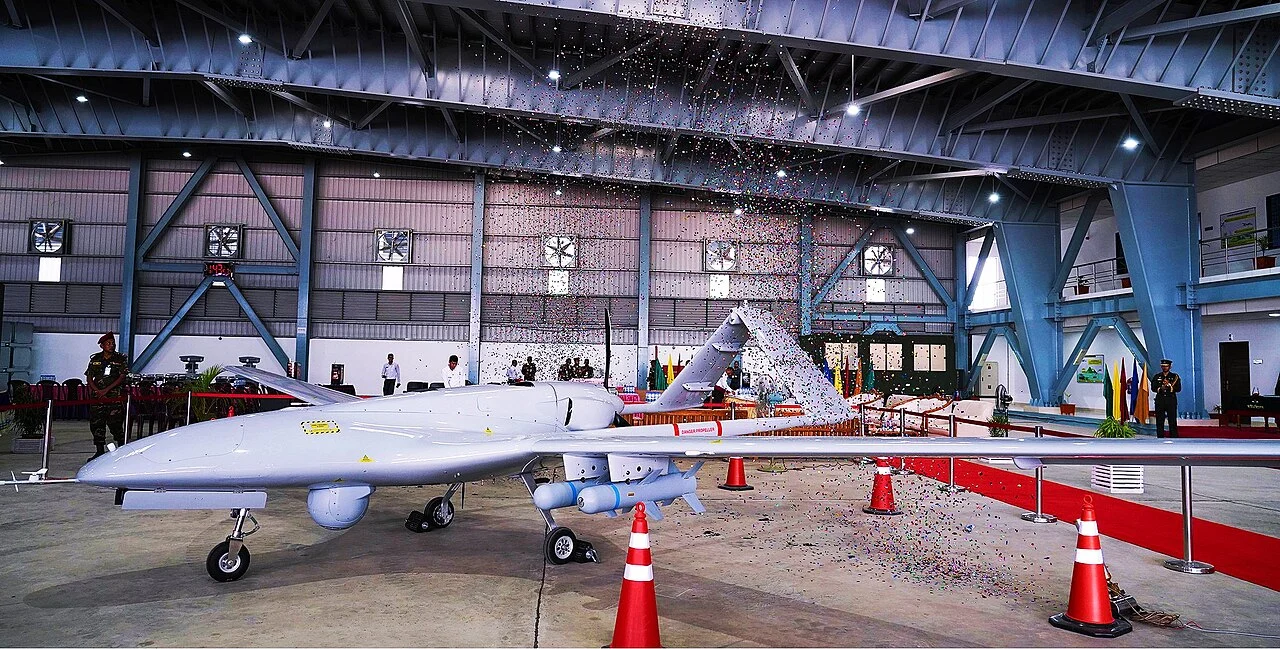
Photo: A Bayraktar TB2 unmanned combat aerial vehicle, one of the drone types in Moroccan service. Credit: Defence research forum, CC BY-SA 4.0, via Wikimedia Commons
The agreements were signed on 9 October at the Marrakech Air Show, EDGE and Emirati state media confirmed, though the deal only drew wider attention this week. The Abu Dhabi-based group’s missiles and weapons arm will supply Morocco with two guided munitions and handle their integration across the air force’s unmanned combat aerial vehicle (UCAV) fleet, including the aircraft modifications and software needed to carry them.
What EDGE Is Supplying
The package centres on two systems built by EDGE’s HALCON unit. The DESERT STING 16 (DS-16) is a 23 kg guided glide bomb with a 12 kg warhead and a stated range of up to 15 km when released from 30,000 feet. The THUNDER P-31 is a guidance kit that converts a standard Mk 81 general-purpose bomb into a precision-guided weapon, with a reach of up to 10 km when launched from a drone and up to 20 km from faster, higher-flying aircraft. Both use GNSS-aided inertial navigation and can be fitted with an optional semi-active laser seeker for moving or designated targets.
Neither EDGE nor the ADN disclosed the contract’s value, the delivery schedule, or how the munitions will be split across Morocco’s different drone types. EDGE first announced, in January 2024, a programme to integrate the DS-16 onto Morocco’s Bayraktar TB2s, so this contract appears to formalise and expand that earlier work rather than start from scratch.
Morocco’s Drone Fleet
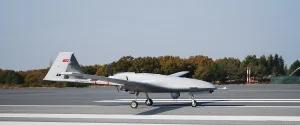
Morocco has built one of Africa’s most diverse armed-drone inventories. The Royal Moroccan Air Force operates Turkish-made Bayraktar TB2s and, reportedly, the larger Akıncı, alongside Chinese Wing Loong II systems. Rabat has layered its air force with hardware from multiple suppliers — it also flies the AH-64E Apache gunship (bought from the United States) and has reportedly explored Israel’s David’s Sling for air defence (talks first reported in 2025). Adding EDGE’s precision munitions gives those drones a standoff strike option that does not depend on Turkish or Chinese ordnance supply chains.
The Production MoU
The second agreement signed in Marrakech is a memorandum of understanding tasking EDGE and the ADN with identifying opportunities for local production of small arms and aero engines, working through partnerships with Moroccan companies rather than EDGE building alone. EDGE’s CARACAL subsidiary, which makes small arms and ammunition, and POWERTECH, its aero-engine and propulsion unit, are the most likely vehicles for that work, though no manufacturing agreements or figures have been announced. EDGE managing director and CEO Hamad Al Marar described the approach as one built on “knowledge exchange, local production, and technology transfer,” and called Morocco a key African partner.
The deal fits a broader pattern of EDGE expansion on the continent this year: the group is delivering a reported €1 billion naval programme in Angola, signed a 2025 letter of intent with Angola’s interior ministry on border security, and is said to be in advanced talks on a $300 million deal with Nigeria. Saif Al Dahbashi, EDGE’s president of missiles and weapons, said the Morocco contract reflects the Royal Moroccan Air Force’s own requirements and offers “assured supply and long-term sustainment” — language aimed at reassuring Rabat that munitions will keep flowing regardless of politics among Morocco’s other suppliers.
Why It Matters for Africa
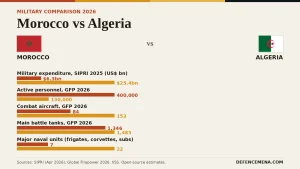
Morocco already ranks among the most capable drone operators on the continent, and precision munitions close a real gap: cheap armed drones are only as useful as the weapons they carry, and reliance on a single supplier for those weapons creates a chokepoint. By diversifying its munitions supplier to the UAE while keeping Turkish and Chinese airframes, Rabat is hedging its drone programme the same way it has hedged its wider arsenal. The local-production MoU, even if it never produces a signed factory deal, also signals how Gulf defence firms are using African markets — not just the Middle East — to pitch co-production and technology transfer as a way to win contracts that pure arms sales alone would not secure. For Morocco’s Sahel-facing security posture, a more capable and better-armed drone fleet also extends its reach along a border region where Algeria and the Polisario Front remain the central strategic concern.
Sources