Morocco Reportedly in Talks to Buy Israel’s David’s Sling Missile Shield



Morocco is reportedly exploring the purchase of Israel’s David’s Sling missile shield, a system built to intercept medium- and long-range threats, according to multiple press reports that remain unconfirmed by either government.
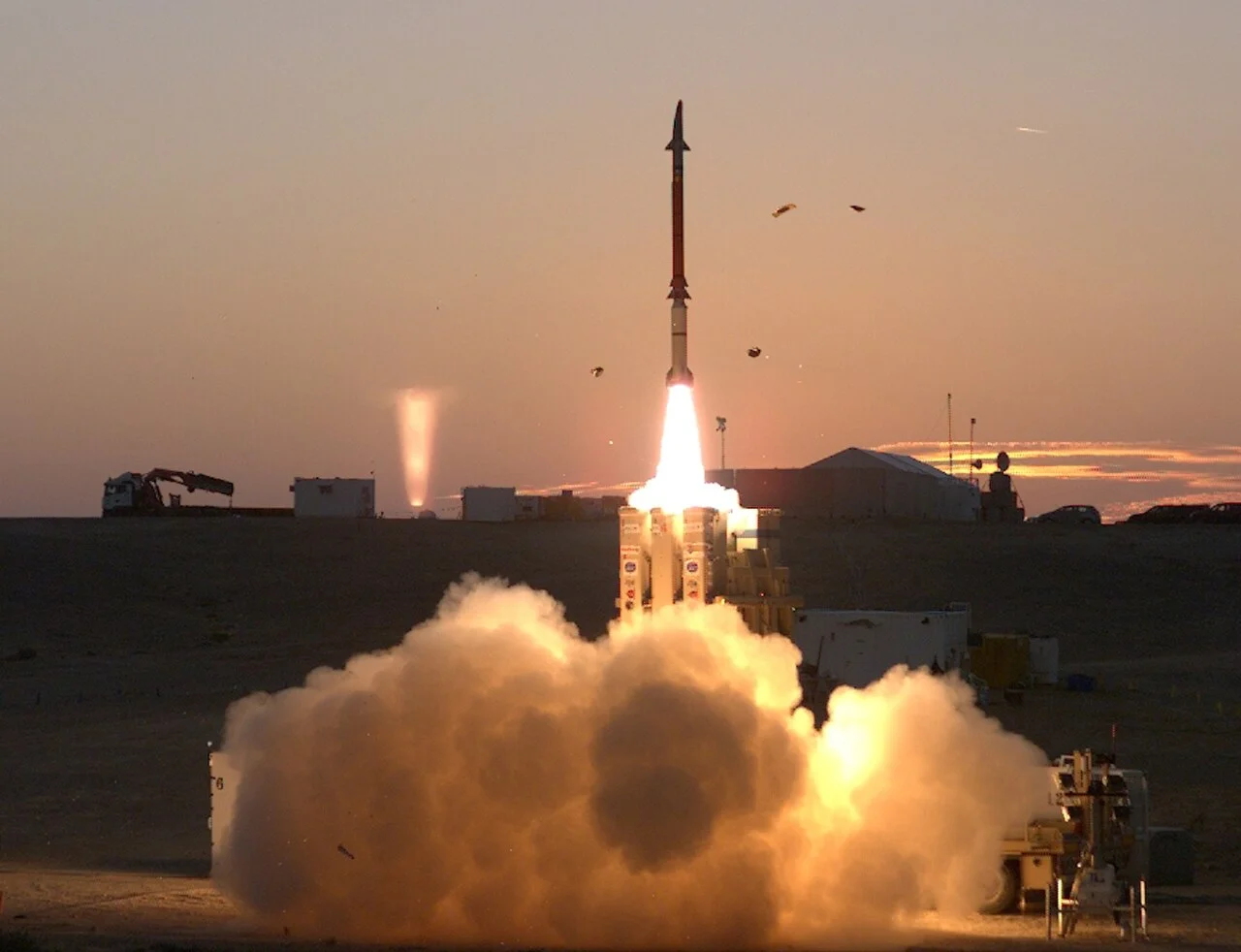
Photo: A David’s Sling Stunner interceptor launches during a flight test. Credit: United States Missile Defense Agency, Public domain, via Wikimedia Commons
The German trade publication Europäische Sicherheit & Technik first reported in mid-October that Rabat and Israeli officials had opened discussions on integrating David’s Sling into the Royal Moroccan Armed Forces’ air defence network. Morocco World News and Military Watch Magazine picked up the report, and Infodefensa relayed it again this week, but no Moroccan ministry, the Israeli Ministry of Defense, Rafael Advanced Defense Systems or RTX (formerly Raytheon) has issued a statement confirming the talks, their scope or their timeline.
What is reportedly being discussed
The reporting describes the talks as having moved beyond an initial technical assessment, though none of the outlets cite an official source, a contract value or a delivery date. According to Morocco World News, it remains unclear whether Rabat intends to buy the full David’s Sling system, a reduced configuration, or simply continue evaluating it against competing offers.
David’s Sling, known in Israel as “Sharvit Ksamim,” was co-developed by Rafael and RTX as the medium-tier layer of Israel’s multi-layer air defence architecture, sitting between the shorter-range Barak MX and SPYDER systems and the long-range Arrow interceptors. The system pairs an ELM-2084 multi-mission radar and a battle management centre with the Stunner interceptor, a hit-to-kill missile with no explosive warhead that relies on a direct collision to destroy its target. Public figures cited in the reporting put its engagement envelope at roughly 40 to 300 km and altitudes up to about 15 km, with the interceptor reaching speeds near Mach 7.5. Each Stunner round has been estimated at close to $1 million.
The Israeli Missile Defense Organization and the US Missile Defense Agency jointly fund and manage the programme, and the two countries have conducted repeated upgrade and intercept trials, including tests against simulated threat profiles since the war in Gaza and the broader regional missile exchanges of recent years. The Jerusalem Post has reported on recent advanced-interceptor trials. Finland signed a David’s Sling purchase reportedly worth around €317 million, making it the first export customer; a Moroccan deal, if confirmed, would be the first in Africa.
Morocco’s existing Israeli air defence inventory
Any Moroccan acquisition would not be a first step into Israeli air defence technology but another layer on top of systems Rabat has already fielded. DefenceMena has previously covered how Morocco bought the Barak MX short-to-medium-range system and why it chose Rafael’s SPYDER for point air defence, both already in Royal Moroccan Armed Forces service, and a look at Morocco’s wider arsenal. Israel has become Morocco’s second-largest arms supplier since the two countries normalised relations in 2020 under the US-brokered Abraham Accords, accounting for close to a quarter of Moroccan arms imports by value, according to SIPRI’s March 2026 trade data — a relationship DefenceMena examined in detail last month. Beyond air defence, Morocco has bought Elbit’s PULS rocket artillery and ATMOS self-propelled howitzers, along with Heron, Hermes 450 and Hermes 900 drones, and has begun licensing some of that drone production domestically.
David’s Sling would sit alongside, rather than replace, the US-supplied Patriot batteries that already anchor Morocco’s medium-to-long-range coverage, and would complement the incoming F-16 Block 72 fleet Rabat has on order. For a continent where medium-range air defence remains scarce, layering an Israeli system onto a Patriot-based network would make Morocco’s air defence architecture one of the most diversified in Africa, though also one of the most complex to sustain, train for and keep interoperable.
A relationship still drawing scrutiny from Spain
The reported talks land as Morocco’s deepening defence ties with Israel continue to unsettle Madrid. Spain has raised concerns over the growth of Moroccan drone operations near Ceuta and Melilla; in September, a Moroccan drone operating close to the border reportedly disrupted an Iberia flight approaching Melilla airport, prompting Spanish requests that Rabat adjust its flight altitudes. Spain has separately imposed a permanent arms embargo on Israel and cancelled Israeli contracts worth more than €1.2 billion, while moving to reinforce its own counter-drone and electronic-warfare posture in the south, including backing a reported €20 million Indra-EDGE loitering-munitions project. A Moroccan David’s Sling buy, should it materialise, would add another data point to a North African arms build-up that Madrid is already watching closely — though a system’s range on paper, as Moroccan analysts have noted, does not by itself signal an operational intent against any particular neighbour.
Why it matters for Africa
If confirmed, Morocco would become the first African military to operate David’s Sling, extending a pattern in which Rabat, rather than any Gulf or Sub-Saharan state, has emerged as the continent’s leading customer for high-end Israeli air defence and precision-strike technology. That would widen the gap between Morocco’s layered, multi-supplier air defence network — blending American, Israeli and increasingly Turkish and local systems — and the far thinner medium-range coverage available to most other African air forces, few of which operate anything beyond short-range point defence or towed guns. It would also reinforce Israel’s position as a defence-industrial foothold on the continent at a moment when Gulf states, Türkiye and China are all competing for African air-defence contracts, and it would keep the Morocco-Algeria-Spain security triangle in the western Mediterranean under continued strain, regardless of whether the talks ultimately produce a signed contract.
Sources