US Army to Evaluate Up to 15 Counter-Drone Systems in Morocco Ahead of African Lion 2027

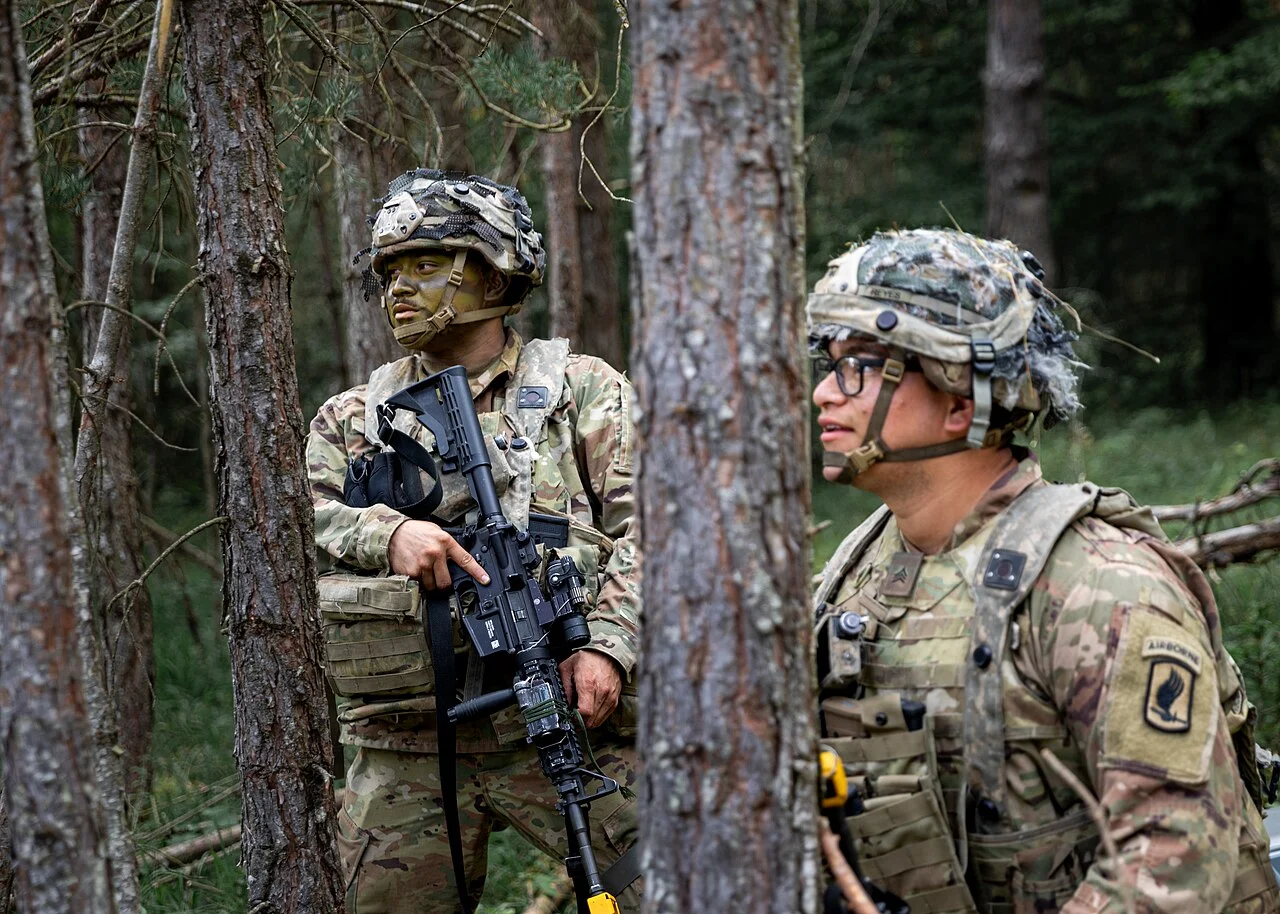


The US Army plans to evaluate up to 15 counter-drone systems in Morocco in 2027, aiming to field proven technology to soldiers within 180 days of selection. The programme, led by Southern European Task Force-Africa (SETAF-AF) and the Global Tactical Edge Acquisition Directorate (G-TEAD), will run soldier-led demonstrations in February and March 2027 at Tan-Tan before folding the winning systems into African Lion 2027 for operational assessment.
Photo: File photo — U.S. Army soldiers watch an unmanned aircraft system during counter-UAS training, illustrative of the kind of systems the Army is evaluating for rapid fielding. Credit: Cpl. Danielle Rayon, U.S. Army, public domain, via Wikimedia Commons
What is being evaluated
The Defense Post, which first reported the plan on 21 October, said the Army intends to run soldier-led demonstrations of candidate counter-UAS (C-UAS) systems at Tan-Tan, in southwestern Morocco, in February and March 2027. Systems that pass that stage move into operational assessments in April and May 2027 during African Lion 2027, the US-Moroccan co-led exercise that has become the largest annual multinational military exercise on the continent. The article did not name specific vendors or systems under consideration; G-TEAD’s stated goal is to shortlist from as many as 15 candidate systems and push a winner into soldiers’ hands within 180 days of a selection decision, an unusually fast timeline for a US Army acquisition programme.
The effort is framed around closing gaps in protecting forward command posts and operating locations — exactly the kind of austere, forward-deployed sites SETAF-AF units occupy across North and West Africa. No contract value has been disclosed, and the programme is still a test-and-evaluation plan rather than a procurement award.
Building on an existing marketplace push
This is not the US Army’s first move to draw Morocco into its counter-drone ecosystem. DefenceMENA reported on 13 October that Morocco, Egypt and Kuwait had signed statements of intent to join US Army drone and counter-drone “marketplaces” — standing contract vehicles meant to let allied forces draw quickly on vetted US systems without negotiating bespoke deals. No purchases or values were announced then either. The Tan-Tan evaluation reads as the operational follow-through on that marketplace sign-up: a venue to actually test candidate systems with Moroccan terrain and Royal Moroccan Armed Forces personnel involved, rather than a paper commitment.
Why Morocco, why Tan-Tan
Tan-Tan and the nearby Cap Draa range have hosted African Lion’s combined-arms and live-fire events in recent years, giving SETAF-AF an established footprint and range infrastructure to run a staged demonstration-then-assessment programme without building new facilities. Morocco’s drone and counter-drone profile has risen quickly in 2026: Rabat has also been arming its own combat drones with UAE-made Desert Sting and Thunder munitions, and its domestic manufacturer Aerodrive won its first loitering-munition contract this month. A US-run evaluation hosted on Moroccan soil sits alongside that buildup rather than replacing it, giving the Royal Moroccan Armed Forces early exposure to whichever systems the US Army eventually selects.
Why it matters for Africa
Cheap commercial and improvised drones have become a standard threat across African conflict zones, from Sahelian jihadist groups to state militaries using quadcopters for reconnaissance and strikes. A US Army programme that tests counter-drone systems on North African terrain, with Moroccan forces present, creates a pathway for African militaries — not just the US — to see which systems perform before committing scarce procurement budgets. If G-TEAD’s 180-day fielding target holds, it would also be one of the fastest US-run capability turnarounds staged anywhere on the continent, a pace that African air defence planners watching their own drone threats will want to track.
Sources
- The Defense Post: “US Army Takes Counter-Drone Evaluation to Morocco in Push for Faster Fielding” (21 October 2026)
- DefenceMENA: Morocco, Egypt and Kuwait Sign Up to US Army Drone and Counter-Drone Marketplaces
- DefenceMENA: Morocco’s MMI to Arm Tata’s New 8×8 With Turrets From 2027