Rwanda in Cabo Delgado: What the Combat Record Shows



Rwandan troops and police have fought alongside Mozambique’s army in Cabo Delgado since July 2021, one of Africa’s longest-running bilateral deployments outside a multilateral mandate — yet five years on, the public record of what the Rwanda Defence Force (RDF) actually brought to that fight remains fragmented and partly unverifiable.
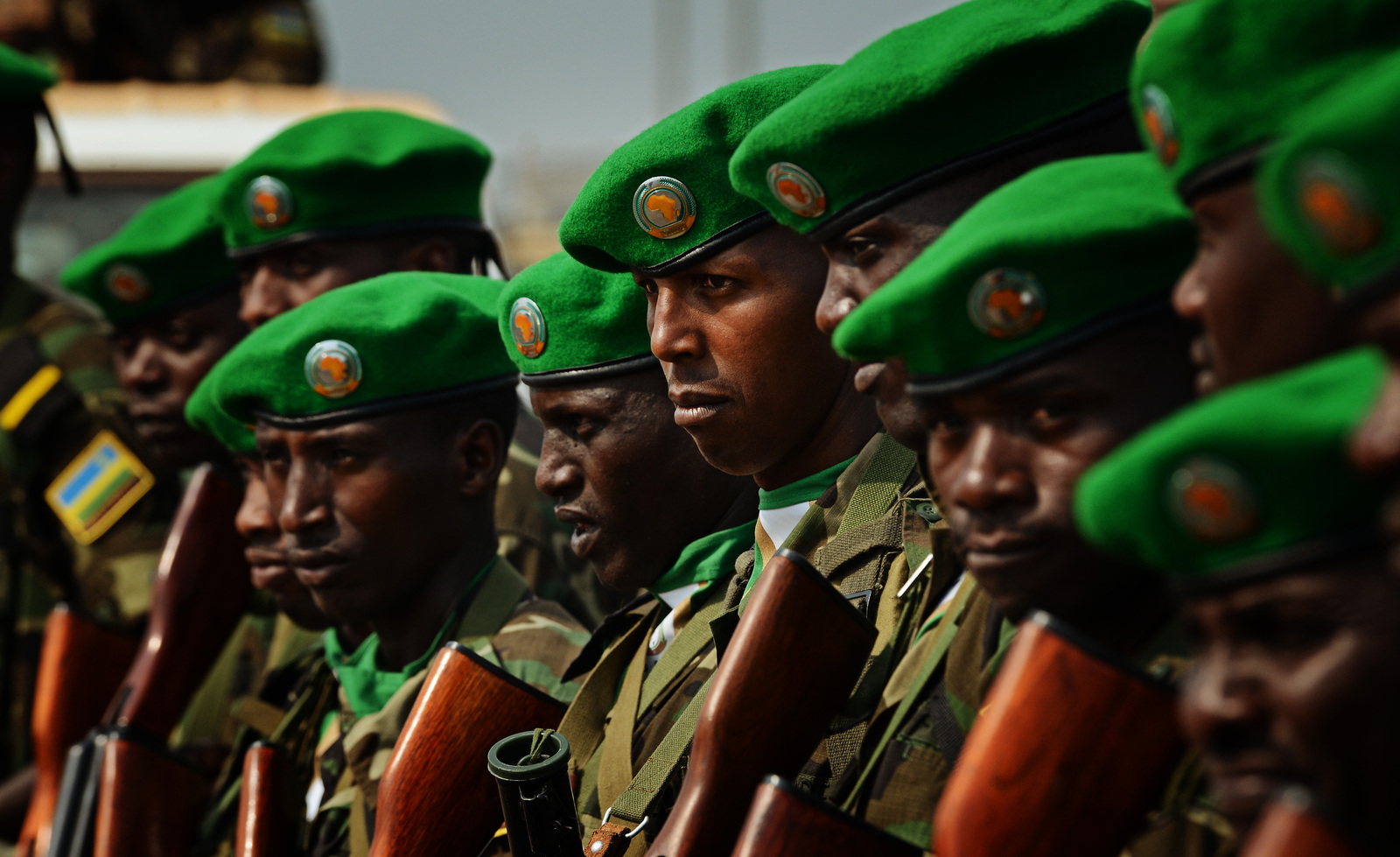
Photo: Rwandan soldiers ahead of an airlift to the Central African Republic, January 2014 — not Cabo Delgado-specific; no freely licensed photo of the Mozambique deployment was found. Credit: U.S. Air Force photo by Staff Sgt. Ryan Crane, public domain, via Wikimedia Commons.
Direct answer
Rwanda deployed roughly 1,000 soldiers and police to Cabo Delgado in July 2021 and helped recapture Mocímboa da Praia within weeks. The force has since grown — reported figures range from just over 4,000 to more than 6,300 — and was formalised under a Status of Forces Agreement signed in August 2025. Documented RDF equipment includes modernised South African-origin Ratel IFVs, Emirati Isotrex Phantom II APCs and Turkish Otokar Cobra II 4x4s. At least seven Rwandan fatalities are confirmed in public reporting, insurgent-casualty claims come only from Rwanda itself, and despite five years of deployment, 154 insurgent attacks hit 16 districts of Cabo Delgado and Niassa between June and October 2026 alone.
| Deploying force | Rwanda Defence Force, with a Rwanda National Police contingent |
| Host nation | Mozambique (Forças Armadas de Defesa de Moçambique, FADM) |
| Theatre | Cabo Delgado province, northern Mozambique |
| First deployment | 9–10 July 2021 |
| Reported strength (2026) | Not publicly disclosed with precision; cited between ~4,000 and 6,300+ depending on source and date |
| Legal basis | Informal bilateral arrangement 2021–2025; Status of Forces Agreement signed 27 August 2025 |
| Documented equipment | Ratel 90/60 IFVs (modernised with Ukrainian-designed BAU-23X2 remote weapon station), Isotrex Phantom II APCs (UAE), Otokar Cobra II 4×4 APCs (Turkey) |
| External funding | EU European Peace Facility, approx. €20m/$23m per tranche, covering personal equipment and airlift; last tranche set to lapse May 2026 |
| Opposing force | Islamic State–Mozambique (Ansar al-Sunna) |
Where was it used?
The RDF contingent operates across Cabo Delgado province in Mozambique’s far north, centre of an insurgency running since 2017. Early operations concentrated on Mocímboa da Praia and the Palma peninsula, near the TotalEnergies-led LNG project suspended after a 2021 insurgent assault on Palma town. Rwandan forces later extended into Muidumbe, Macomia and other interior districts as Mozambique’s SADC-mandated mission, SAMIM, wound down in 2024 and Rwanda expanded to fill the gap.
What was the mission?
Rwanda’s stated mission has been to support FADM in clearing and holding insurgent-held territory, protect the Afungi LNG site, and enable displaced civilians to return. Unlike the SADC mission, the deployment began as a bilateral arrangement that analysts said had “no mandate, no timeframe and no accountability” mechanism until the August 2025 Status of Forces Agreement gave it formal legal footing and set out a gradual transfer of security responsibility to Mozambican forces.
What does the public evidence show?
| Claim / event | Date | Evidence level | Source |
|---|---|---|---|
| Rwanda deploys ~1,000 troops and police to Cabo Delgado | 9–10 Jul 2021 | CONFIRMED | Al Jazeera |
| Joint RDF–FADM force recaptures Mocímboa da Praia; insurgents retreated rather than defended | 8 Aug 2021 | OFFICIALLY CLAIMED / INDEPENDENTLY REPORTED | Al Jazeera; Cabo Ligado Weekly |
| RDF fields modernised Ratel 90/60 IFVs with a Ukrainian-designed BAU-23X2 RCWS in the offensive | Aug 2021 | VISUALLY DOCUMENTED (single outlet) | Military Africa |
| RDF/police contingent operates Isotrex Phantom II APC; army-vs-police attribution disputed | Aug 2021 | VISUALLY DOCUMENTED / DISPUTED | Military Africa, Army Recognition |
| RDF releases own photo confirming Otokar Cobra II 4×4 use in Mozambique | Jun 2022 | OFFICIALLY CONFIRMED | Army Recognition |
| Cumulative RDF losses reach at least 7 killed, 6 wounded (partial tally) | 2021–2024 | OFFICIALLY CLAIMED | Wire-service reporting |
| EU funds RDF personal equipment and airlift, ~€20m/$23m per tranche; final tranche lapses May 2026 | 2022–2026 | CONFIRMED | ADF Magazine; EU/Rwandan statements |
| Mozambique and Rwanda sign Status of Forces Agreement | 27 Aug 2025 | CONFIRMED | Club of Mozambique |
| Reported RDF/police strength reaches “over 6,300” | Apr 2026 | DISPUTED (conflicts with other figures citing “4,000+”) | AllAfrica; ADF Magazine |
| 154 insurgent attacks recorded across 16 districts of Cabo Delgado/Niassa | Jun–Oct 2026, reported 5 Nov 2026 | CONFIRMED | EUMAM commander, via DefenceMENA |
What worked?
The clearest documented success is the rapid recapture of Mocímboa da Praia in August 2021, weeks after the first Rwandan troops arrived. Cabo Ligado’s contemporaneous assessment called it the most significant development in the province that year — but also noted insurgent defenders mostly withdrew rather than fought, so the operation says more about insurgent tactics than about RDF performance against a determined defence. Analysts at the Institute for Security Studies and the Shaf Center credit the RDF’s bilateral structure with more operational agility than SAMIM, the SADC mission it helped replace, and with helping protect the Afungi LNG site and the return of some displaced residents — a claim originating largely with Rwandan government channels and not independently quantified. Rwanda’s mixed fleet of secondhand South African Ratels, Gulf-built Phantom IIs and Turkish Cobra IIs also gave it more armoured mobility than Mozambique’s own forces, described in Rwandan-effectiveness research as reliant on under-equipped Chinese Tiger-type vehicles lacking equivalent remote weapon stations.
What problems appeared?
The deployment has not resolved the insurgency it was sent to contain. Rwandan forces have suffered recurring ambushes years into their presence, and — more significantly for the mission’s trajectory — Mozambique’s EU-backed training mission, EUMAM, recorded 154 insurgent attacks across 16 districts of Cabo Delgado and Niassa between June and October 2026, more than four years after the first Rwandan troops arrived. A researcher cited in DefenceMENA’s coverage of that briefing said years of foreign training and support “have yet to show results.” Funding has proven fragile: EU support — covering personal equipment and airlift, not combat hardware — lapses in May 2026, and Rwandan officials say the mission costs at least ten times the EU’s contribution, with Foreign Minister Olivier Nduhungirehe stating Rwanda “will withdraw” if sustainable funding is not secured elsewhere. Transparency is a further limitation: current troop strength and which institution — army or police — operates specific vehicles remain disputed in open sources, far less documented than a multilateral mission under UN or AU reporting.
Confirmed losses and limitations
Public reporting documents RDF fatalities only in a fragmented way: separate wire-service reports describe ambushes killing three and four soldiers respectively, with a senior Rwandan official cited putting the cumulative total at seven killed, six wounded since deployment began — not formally updated in public since. No independently verified loss of an RDF vehicle has been found in available reporting; this is an evidence gap, not proof none occurred. Insurgent-casualty figures — 14 killed in late July 2021, roughly 26 in Muidumbe, “at least 70” cumulative by mid-2021 — all originate solely from Rwandan military spokespeople and have not been corroborated by independent body counts, UN Panel of Experts reporting, or Mozambican government figures.
| Incident | Date | RDF casualties | Evidence level |
|---|---|---|---|
| Ambush near Awasse; casualty flights to Kigali reported | Late Jul 2021 | Unspecified, “heavy” | UNVERIFIED |
| Ambush, location not specified in sourcing | Date not specified | 4 killed | OFFICIALLY CLAIMED |
| Ambush, location not specified in sourcing | Date not specified | 3 killed, 6 wounded | OFFICIALLY CLAIMED |
| Cumulative total since Jul 2021 | Last official update found | 7 killed, 6 wounded (partial) | OFFICIALLY CLAIMED |
What is still disputed?
Several points remain unresolved. Whether the Isotrex Phantom II units photographed in Cabo Delgado belong to the RDF or the Rwanda National Police is contested between outlets. Rwanda’s current troop strength is reported anywhere between roughly 4,000 and over 6,300, with no single authoritative figure. It is also unconfirmed, beyond Rwandan statements, whether Mozambique has secured alternative funding to replace the lapsing EU tranche. Finally, how much of the security improvement around Mocímboa da Praia and Palma is attributable to RDF equipment and tactics specifically, versus added troop numbers, Mozambican air support, or a temporary drop in insurgent capacity, is not something the available evidence can isolate.
Did the manufacturer or operator change anything?
No manufacturer — South African, Emirati or Turkish — has issued a public statement addressing its vehicles’ performance in Cabo Delgado; typical of African bilateral deployments, which rarely generate the after-action commentary of state-to-state arms deals. The one documented modification is Rwandan, not an OEM programme: the RDF fitted at least some of its secondhand Ratel 90/60s, originally 35 vehicles bought from South Africa in 2007, with a Ukrainian-designed BAU-23X2 remote weapon station ahead of the 2021 offensive — an in-house upgrade, not a change initiated by Ratel’s manufacturer or Ukraine’s KMDB in response to combat use.
Did other countries buy it afterwards?
This entry covers a bilateral deployment rather than a single weapon system, so the picture differs from most Battlefield Proven entries: each of Rwanda’s three documented vehicle types was already in service elsewhere in Africa before Cabo Delgado, and no African buyer has publicly cited Rwanda’s experience there as a reason for a later purchase.
| System | Other African operator | Year | Source |
|---|---|---|---|
| Otokar Cobra II | Morocco, ~200 vehicles ordered | Jan 2024 | Hespress, Telquel |
| Otokar Cobra II | Ghana, Senegal, Ivory Coast, Tunisia | Various | DefenceMENA Cobra operator tracker |
| Isotrex Phantom II | Nigeria (reported); a separate order later cancelled | 2021 | Military Africa |
What does this mean for African procurement?
Rwanda’s deployment is less a single-system case study than a demonstration of a wider pattern: African militaries assembling armoured contingents from whatever secondhand, allied or commercially available equipment is on hand — South African Ratels, Gulf-built Phantom IIs, Turkish Cobra IIs — rather than standardising on one supplier. For procurement planners elsewhere, the bigger lesson may be about financing rather than any one vehicle. A bilateral deployment gave Rwanda operational flexibility that SAMIM’s AU/SADC structure lacked, but also left its continuation hostage to a single donor’s funding cycle: the EU tranche lapsing in May 2026 has already forced public threats of withdrawal. Equipment diversity solved an immediate capability gap; it did not solve sustainment, and the 2025 Status of Forces Agreement — formalising the deployment’s legal basis without resolving who pays long-term — shows how force-generation choices in African counter-insurgency missions often trail financing uncertainty rather than tactical requirements.
Modernised South African-origin Ratel 90/60 IFVs, Emirati Isotrex Phantom II APCs and Turkish Otokar Cobra II 4x4s, not a single platform.
Since July 2021, concentrated first around Mocímboa da Praia and Palma, later extending into Muidumbe and Macomia districts.
Backing Mozambique’s FADM against Islamic State–Mozambique, formalised by an August 2025 Status of Forces Agreement.
Mocímboa da Praia was recaptured in August 2021, but 154 insurgent attacks hit 16 districts between June and October 2026 alone.
Casualty and vehicle-loss reporting is fragmented and partial; no independently verified vehicle loss has been found in available sources.
The 2025 SOFA formalised the deployment just as EU European Peace Facility funding was set to lapse in May 2026.
Shows a multi-source armoured fleet sustaining a five-year deployment — and how dependent that model remains on one donor’s funding cycle.
How many Rwandan troops are in Mozambique?
Public figures vary: roughly 4,000 in some 2025–2026 accounts, “over 6,300” in an April 2026 report. Neither Kigali nor Maputo has published a single authoritative current figure.
Why did Rwanda send troops to Cabo Delgado?
Rwanda deployed under a bilateral agreement in July 2021 to help FADM fight an Islamic State-linked insurgency that had seized Mocímboa da Praia and threatened the Afungi LNG project, alongside broader regional-stability and economic-cooperation interests.
What is the Rwanda-Mozambique Status of Forces Agreement?
Signed 27 August 2025, it is the first formal legal framework for the deployment, replacing an informal arrangement analysts said had no fixed mandate; Mozambican officials say it does not expand the contingent and provides for a gradual transfer of security responsibility to Mozambican forces.
Is Cabo Delgado safe now?
No. EUMAM’s force commander reported 154 insurgent attacks across 16 districts of Cabo Delgado and Niassa between June and October 2026, and researchers say years of foreign military support have not yet resolved the insurgency.
What equipment does the Rwanda Defence Force use in Mozambique?
Documented equipment includes modernised Ratel 90/60 IFVs fitted with a Ukrainian-designed remote weapon station, Isotrex Phantom II APCs from the UAE, and Turkish Otokar Cobra II 4x4s; no Rwandan air assets are independently confirmed as tied to the deployment specifically.
Will Rwanda withdraw troops from Mozambique?
Rwandan officials, including Foreign Minister Olivier Nduhungirehe, have said Rwanda will withdraw if sustainable funding is not secured once EU support lapses in May 2026, though regional analysts view this partly as a negotiating position rather than a firm commitment.
Sources
- Al Jazeera — Rwanda deploys 1,000 soldiers (10 July 2021)
- Al Jazeera — forces recapture port city (8 Aug 2021)
- ACLED — Cabo Ligado Weekly, 26 Jul–1 Aug 2021
- ACLED — Cabo Ligado Weekly, 2–8 Aug 2021
- Military Africa — Isotrex Phantom II armor
- Military Africa — Ratel BAU-23X2 RCWS
- Army Recognition — Otokar Cobra II in Mozambique
- ADF Magazine — Rwanda, Tanzania fill gaps as SAMIM leaves
- Club of Mozambique — SOFA signed
- ADF Magazine — Rwanda staying in Cabo Delgado
- ADF Magazine — Rwanda’s exit would leave a vacuum
- AllAfrica — over 6,300 Rwandan troops
- HeraldLIVE — Rwanda says it killed 14 insurgents
- SABC News — forces reportedly kill 30 insurgents
- Zitamar — forces kill 26 insurgents in Muidumbe
- Club of Mozambique/Lusa — at least 70 insurgent casualties
- The East African — Rwanda warns it may withdraw
- Grey Dynamics — early success, long way to go
- DefenceMENA — 154 insurgent attacks in five months
- DefenceMENA — Mozambique losing ground as partners multiply
More from Battlefield Proven
- Bayraktar TB2 in Libya: What Did Its Combat Use Actually Show?
- Sudan War Drones: What the Evidence Shows on SAF and RSF Since 2023
- Pantsir-S1 in Libya: What the Battlefield Record Revealed
- Drones in the Ethiopia War: What Is Confirmed and What Remains Unverified
- Wing Loong II in Libya: How Did China’s Armed Drone Perform in Combat?
- Bayraktar TB2 and Akinci in Mali and Burkina Faso: What Combat Use Has Shown
- Drones TB2 et Akinci au Mali et au Burkina Faso : ce que montre l’usage au combat
- Nigeria Super Tucano: What Five Years of Combat Use Have Shown
- BMC Kirpi in Africa: What Is Publicly Known About Its Mine and IED Protection Record
- Mi-24 and Mi-35 Attack Helicopters in Africa: What Combat in Nigeria, Mali and Uganda Has Shown
- Casspir and Mamba: What South Africa’s Mine-Protected Vehicles Proved in African Combat
- Rooivalk in the DRC: What Combat Use Actually Showed
- SAMIDRC in the DRC: What Combat Against M23 Showed About South African Equipment
- Chinese Drones in Nigeria: What Five Years of Combat Use Have Shown
See also the DefenceMENA military equipment database, the operators list for the Otokar Cobra and Cobra II, and DefenceMENA’s reporting on 154 insurgent attacks in Cabo Delgado over five months and on South Africa–Mozambique defence cooperation.
This article relies on fragmented, partly single-source public reporting on troop strength, equipment operator attribution and casualty figures; several figures cited here conflict with one another and could not be independently reconciled. This article will be updated at the same URL if significant new evidence appears.