South Africa and Mozambique Defence Chiefs Review Security Cooperation in Pretoria



South Africa’s top soldier told his Mozambican counterpart this week that the security of the two neighbours is now inseparable, as the SANDF hosted Mozambique’s armed forces chief in Pretoria to review cooperation against the Cabo Delgado insurgency and wider regional instability.
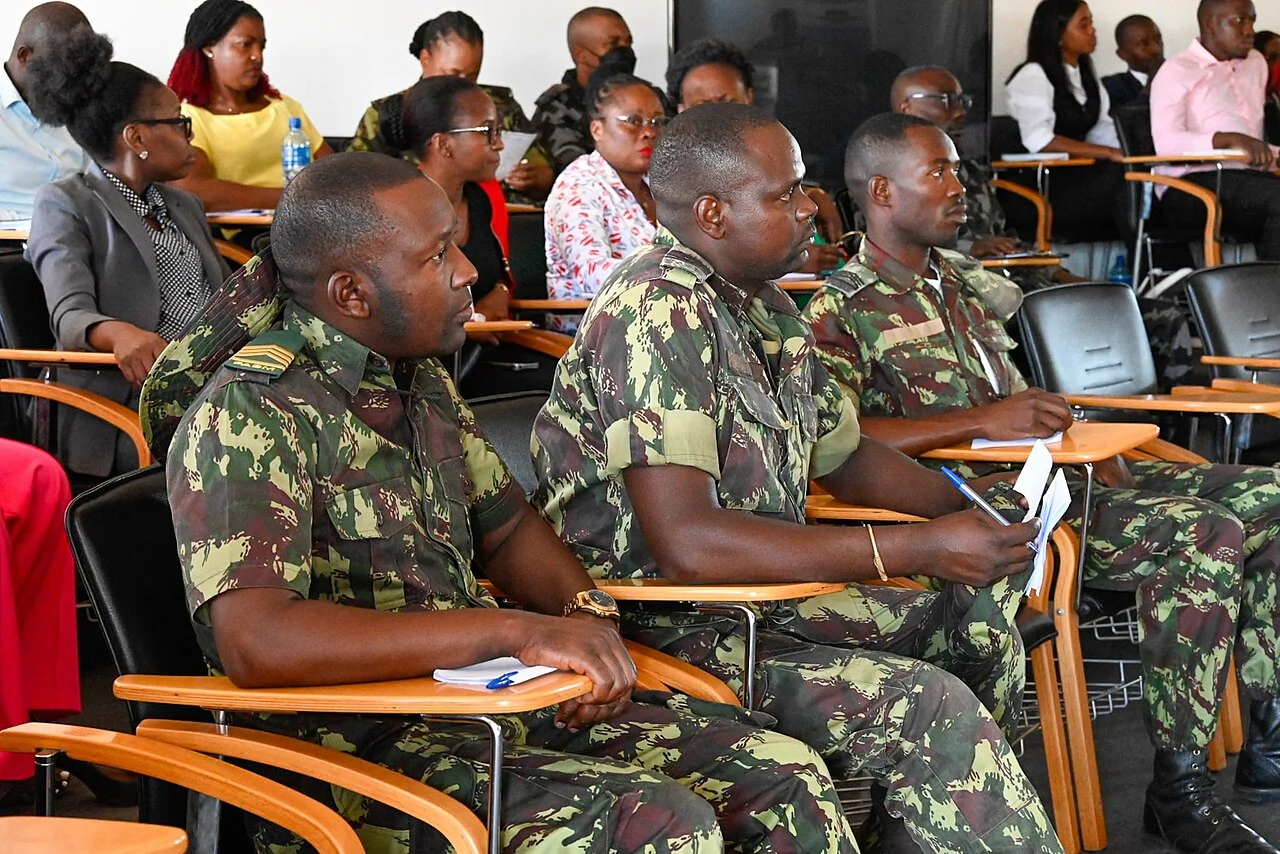
Photo: Mozambican Armed Forces personnel during a professional military exchange, part of the country’s growing web of foreign defence partnerships. Credit: public domain, via Wikimedia Commons
SANDF Chief General Rudzani Maphwanya hosted Mozambique’s Chief of the General Staff, General Júlio dos Santos Jane, at Defence Headquarters in Pretoria in late October, following a welcoming parade at the Armscor sports ground, defenceWeb reported. Maphwanya told Jane that the two militaries “must work together” on the security challenges linking their countries, while Jane responded that “the security of Mozambique and the security of South Africa are deeply interconnected.”
Continuing a dialogue, not launching one
The Pretoria visit was explicitly framed as a follow-up rather than a new initiative. It continues a dialogue that began in March 2026, when Maphwanya travelled to Mozambique for an official visit; this round reviewed how the understandings reached then are being implemented and looked for further ways to deepen cooperation inside the Southern African Development Community framework. Presentations during the visit covered three areas: training, border security and regional stabilisation. No new agreement or signed initiative was announced, and the public remarks from both chiefs stayed at the level of commitment rather than specifics — Jane closed by thanking his hosts and wishing success in “the work we are now beginning,” a phrase that suggests the concrete deliverables, if any, are still to come.
The unspoken backdrop: Cabo Delgado
Neither chief’s public remarks dwelt on the Islamist insurgency that has displaced hundreds of thousands of people in Mozambique’s northern Cabo Delgado province since 2017, but it is the central reason the two militaries have reason to coordinate at all. This site reported in October that Mozambique’s army has continued losing ground in Cabo Delgado despite a growing roster of foreign partners, including Rwandan troops, a SADC regional force that has drawn down since its 2021 deployment, and bilateral training support from several states. South Africa has its own direct stake: SANDF troops served in the SADC Mission in Mozambique (SAMIM) before that force’s drawdown, and Pretoria has consistently framed instability in its northern neighbour as a threat that does not stop at the border, given the shared Indian Ocean coastline and the risk of displacement and extremist movement spilling into South African territory.
The Pretoria meeting also arrived days after South Africa held a separate, higher-profile engagement on the same themes: the EU’s first Peace, Security and Defence Dialogue with South Africa, also held in Pretoria in late October. Taken together, the two meetings suggest Pretoria is simultaneously working multilateral channels with European partners and bilateral channels with its most security-exposed neighbour, rather than relying on any single forum to manage the Cabo Delgado file.
Why it matters for Africa
For the Southern African Development Community, the Mozambique-South Africa relationship is the bloc’s most consequential bilateral security axis: South Africa supplies by far the region’s most capable conventional military, even as its own budget and readiness have come under sustained parliamentary criticism, while Mozambique hosts the insurgency SADC has already spent billions of rand and several years failing to resolve through its own regional force. A closer bilateral channel between Pretoria and Maputo matters less for any single new capability than for coordination — shared border security arrangements and training pipelines are the kind of unglamorous cooperation that determines whether gains against Islamic State-linked militants in Cabo Delgado hold once international attention and funding move elsewhere, as they have in neighbouring conflicts. The absence of a signed agreement from this visit is itself a signal: both governments are choosing to keep deepening an existing framework rather than producing a headline deliverable for public consumption.
Sources