Why African Armies Still Operate Russian Helicopters



African armies still operate Russian helicopters mainly because they already owned Mi-8/17 and Mi-24/35 fleets, and the documented alternatives were either politically closed, slower to arrive or not in the same price and support class. Nigeria ordered Mi-35M gunships in 2015 after Western supply proved uncertain; Mali bought four Mi-171 helicopters in 2021 for about 36 billion CFA francs including weapons and training; Uganda built an overhaul centre with a Russian firm; Egypt had 44 Mi-8/17 airframes overhauled under a 2015 agreement. None of the buyers published a comparative evaluation, so “why” is reconstructed here from deliveries, official statements and named reporting, and gaps are marked as unknown.
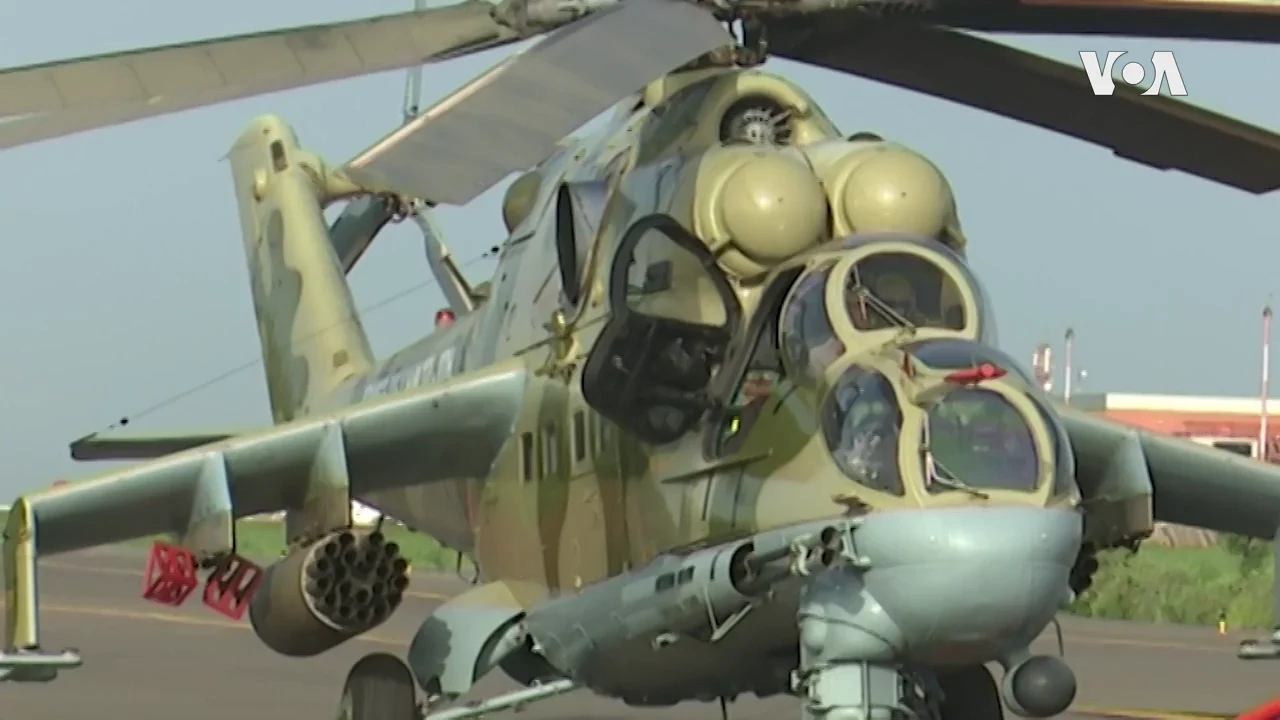
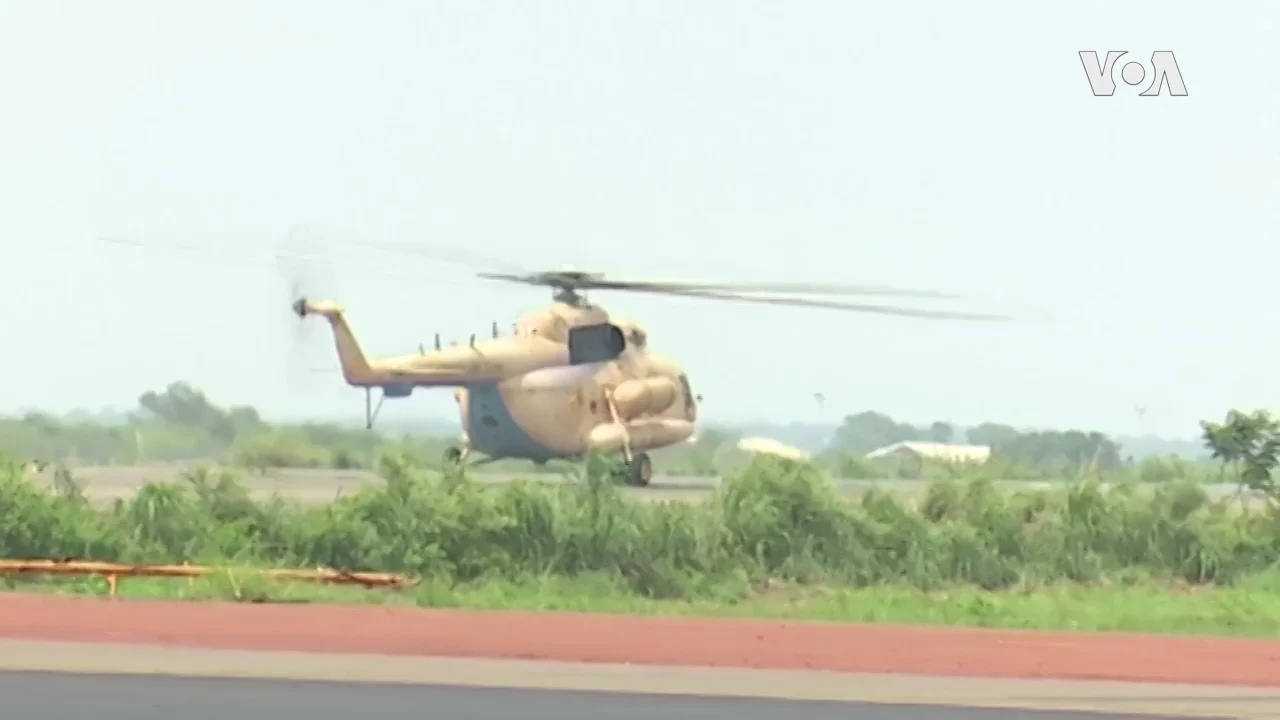
Photo: A Mil Mi-24 of the Malian Air Force at Bamako Air Base, 9 August 2022. Credit: Mohamed Dagnoko / VOA (public domain).
This explainer follows one question: why did these African customers choose, or keep, Russian-designed helicopters? Where the record is silent, it says so. Sources are graded as official, manufacturer, independent or unverified. For context on the largest Russian-built inventory on the continent, see Inside Algeria’s Russian-Built Arsenal.
| Operator | Documented Russian-designed helicopters | Confidence |
|---|---|---|
| Nigeria | 12 Mi-35M ordered September 2015; deliveries in 2016, 2018 and 2019; at least two older Mi-35P reactivated in 2016 | Delivery count contested |
| Mali | Mi-24D (Bulgaria, 2007–2012), Mi-35 (2017–2021), 4 Mi-171 (2021), 2 Mi-24P (2022) | Deliveries documented; fleet size unclear |
| Uganda | About 12 Mi-24/35 plus Mi-8/17 (defenceWeb); local overhaul centre since 2022 | Secondary source |
| Algeria | Mi-24V/Mi-35, Mi-171Sh, 14 Mi-26T2, 42 Mi-28NE ordered | Deliveries documented |
| Egypt | 41 Mi-8T and 3 Mi-17-1V overhauled under a 2015 agreement | Manufacturer announcement |
| Angola | 8 armed Mi-171Sh (2015–2016), overhauled Mi-24P (2016) | Secondary source |
| Ethiopia | Mi-8/17 and Mi-35 in service; two Mi-35P reportedly bought in 2011 | Thin evidence |
What capability did these armies need?
The stated requirement is consistent across the buyers: armed helicopters for counter-insurgency and internal security, plus medium transport. Nigeria’s Air Force described the Mi-35M as a night-capable gunship for operations against Boko Haram in the north-east and internal security in Benue State and the North Central region, according to defenceWeb. Mali’s Defence Minister Sadio Camara presented the Mi-171 as part of strengthening the army against armed groups, and said the helicopters were used on 1 November 2021 to help secure the release of three Chinese hostages (defenceWeb).
What did they operate before?
In most cases the answer is: Soviet-era Mi-8, Mi-17 and Mi-24 types, sometimes acquired second-hand. Mali had at least seven Mi-24D from Bulgaria between 2007 and 2012 (Military Africa). Nigeria was reactivating two older Mi-35P in 2016 alongside other Soviet-era aircraft (defenceWeb). Algeria took 16 Mi-24V/Mi-35 from Ukraine in 2001–2002 and, per defenceWeb, 42 Mi-171Sh in 2002–2004. Angola received six Mi-17 from Ukraine in 1995. Ethiopia flew ten Mi-24D and about three Mi-35 in Somalia between 2006 and 2009, according to reference sources. This installed base is the single most consistent factor in the record: pilots, ground crews, publications and depots already existed.
Procurement timeline
| Country | Date | What happened | Source |
|---|---|---|---|
| Nigeria | Aug–Sep 2014 | Rosoboronexport says a contract signed in August covers a “large batch” of Mi-171Sh and a few Mi-35M; numbers and price withheld | Shephard, citing TASS |
| Nigeria | Sep 2015 | Order for 12 Mi-35M | defenceWeb |
| Nigeria | Dec 2016 / Apr 2017 | First two delivered; inducted April 2017 | defenceWeb |
| Nigeria | 30 Apr 2018 | Two more arrive at Makurdi by An-124; four delivered in total | defenceWeb |
| Nigeria | Oct 2019 | Nigeria’s ambassador in Moscow says CAATSA sanctions hinder the contract; six delivered, six outstanding | defenceWeb; The Defense Post |
| Nigeria | Jul 2023 | Russian export official says the contract is “partially fulfilled” | Defense Express |
| Egypt | 8 Dec 2015 | Russian Helicopters announces overhaul of 41 Mi-8T and 3 Mi-17-1V, with the Helwan Factory for Developed Industries re-tooled | Defense News |
| Algeria | Jun 2015 / May 2016 | First Mi-26T2 delivered (14 ordered); first two of 42 Mi-28NE delivered | defenceWeb |
| Angola | 2015–Sep 2016 | 8 armed Mi-171Sh delivered under a 2013 deal; overhauled Mi-24P delivered | defenceWeb |
| Mali | Sep 2017–Jan 2021 | Four Mi-35 delivered in stages | Military Africa |
| Mali | Dec 2020 / Sep 2021 | Four Mi-171 ordered, then delivered 30 September 2021; formal handover 26 November | defenceWeb |
| Mali | 30 Mar 2022 | Two Mi-24P and a P-18 radar delivered | Military Africa |
| Uganda | 22 Jan 2022 | Overhaul facility opened at Nakasongola with Proheli, a Russian company partnering with Uganda since 2016 | defenceWeb |
| Algeria | 9–10 Aug 2026 | Algeria donates two Mi-24V Super Hind and two Mi-171 to Niger | Military Africa, citing Algerian MoD |
The Nigerian sequence needs care. The Rosoboronexport statement dates the first contract to August 2014, before the November 2014 US refusal to allow an Israeli resale of Cobra gunships. That refusal, explained by a State Department spokeswoman as concern over Nigeria’s “ability to use and maintain” the type and civilian protection (Foreign Policy), is real context, but the record does not show it caused the Russian order.
What was purchased?
The packages differ by country. Nigeria’s 12 Mi-35M carry thermal imaging and a laser rangefinder, with two Klimov VK-2500 engines, and pilot and technician training in Russia was part of the contract (defenceWeb). Pilots were also trained in Nigeria, Jordan and Egypt. Mali’s Mi-171 package included weapons, ammunition and training. Egypt’s was a service contract, not new aircraft: overhaul in Russia at the Novosibirsk plant, and training of Egyptian technicians for later work at Helwan. Angola’s Mi-24P were overhauled with new main and tail rotor blades, engines, transmissions and onboard equipment.
What did it cost?
| Figure | What it is | Source and grade |
|---|---|---|
| 36 billion CFA francs (about $61 million) | Mali’s cost for four Mi-171, weapons, ammunition and training | defenceWeb; reported figure |
| $1 billion | 2013 Angola–Rosoboronexport package that also included 12 Su-30; helicopters are a share of it | defenceWeb; not a helicopter price |
| $3.5 million per helicopter | Cost of overhauling one helicopter abroad, per a UPDF official at the Uganda MRO opening | Official claim, reported by defenceWeb |
| $1.2 million one way | Cost of shipping a helicopter for overseas overhaul, per the same official | Official claim |
| $9.2 million (Mi-8MTV-1) and $6.8 million (Mi-17) | Reported Russian offer to Mali, routed through the Africa Corps, December 2025 | Military Africa citing Africa Intelligence; unverified, single chain |
| Nigeria Mi-35M price | Not disclosed | Unknown |
No reliable unit price for a Mi-35M or Mi-171 sold to an African customer is public, and the Mali package figure covers more than the aircraft. Nothing in the sources reviewed documents barter, credit lines or preferential payment terms for these helicopters, so those terms are marked unknown rather than assumed.
Why were they selected or kept?
| Factor | Evidence | Strength |
|---|---|---|
| Existing Soviet-era fleets and crews | Mali, Nigeria, Algeria, Angola, Uganda and Ethiopia all operated Mi-8/17 or Mi-24/35 before the purchases listed | Documented pattern; motive not stated by buyers |
| Availability when Western supply was restricted | US blocked the Israeli Cobra resale in November 2014; Nigeria’s Russian order pre-dated it | Context only; causation not shown |
| Maintenance ecosystem | Egypt overhaul at Helwan, Uganda MRO at Nakasongola, Angola overhaul in Russia | Manufacturer and official statements |
| Political alignment | Mali’s minister called Russia a “friendly country” and the delivery followed friction with France (defenceWeb) | Official statement |
| Price advantage | No published comparison with a Western or Turkish type | Unknown |
| Payment or barter terms | None documented in sources reviewed | Unknown |
| Local production | Uganda’s operator states an aim to build a helicopter locally; no production documented | Aspiration only |
Were alternatives considered?
| Category | Aircraft | Evidence |
|---|---|---|
| Confirmed competitor | Bell AH-1 Cobra (Nigeria) | Nigeria sought Israeli surplus Cobras in 2014; the US declined the transfer (Foreign Policy). A denied request, not a bid lost on merit |
| Reported alternative | Belarusian attack helicopters (Nigeria) | Foreign Policy reported Nigeria ordered helicopters from Belarus; type not identified |
| Parallel purchase, not a competitor | AgustaWestland helicopters (Algeria) | 78 Western aircraft worth about $1.3 billion in the five years before 2016 (defenceWeb) |
| Theoretical alternatives | UH-60, H225M, AW139 in transport; T129, AH-64, Z-10 in attack | Same class; no evidence any was formally evaluated against the Mi types by these customers |
It would be wrong to say any of these armies “chose Russian helicopters over” a named rival. Only the Cobra case shows a documented Western option, and there the US declined.
Training and support
Nigerian personnel were trained in Russia under the Mi-35M contract, and other pilots in Nigeria, Jordan and Egypt. Egypt’s deal sent technicians to the Novosibirsk repair plant. Mali’s Mi-171 handover in November 2021 followed delivery by An-124; defenceWeb does not give the number of Russian trainers involved. Russian security personnel are present in Mali more broadly, and the December 2025 offer noted above was reportedly routed through the Africa Corps, but this article does not attribute maintenance or training of specific helicopters to those personnel because the sources reviewed do not document it.
Delivery and operational service
| Claim | Who made it | Grade |
|---|---|---|
| Nigeria Mi-35M: 4 delivered by May 2018 | defenceWeb, citing NAF statements | Official-derived |
| Nigeria: 6 delivered by October 2019, six outstanding; Military Balance 2023 shows about ten Mi-35 in service | defenceWeb; Defense Express | Independent; counts conflict |
| Contract “partially fulfilled” | Russian federal military-technical cooperation service director, July 2023 | Official; Defense Express argues no delivery followed after 2019 |
| Mali Mi-171 used in a hostage operation, 1 November 2021 | Mali Defence Minister | Official claim |
| Uganda: first Mi-24P overhauled in about 15 months instead of about three years | Proheli CEO and UPDF officials | Manufacturer-side and official claim |
| Mali losses: Mi-24D crash in Bamako, April 2023; Mi-24 and Mi-8 destroyed at Tinzaouatene, July 2024 | Military Africa | Independent, secondary |
| Mali fleet: 5 Mi-8/171 and 2 Mi-24 operational, 3 Mi-8 stored | Defense Express, no stated source | Unverified; conflicts with Military Africa’s figure of about 11 Mi-35M |
Readiness rates are not published for any of these fleets. The Mali figures illustrate the problem: two outlets give incompatible counts for the same air force, and neither names its source. This article does not choose between them.
Industrial cooperation
The documented cooperation is maintenance, not manufacture. Uganda’s Nakasongola centre is a joint venture between the UPDF’s National Enterprise Corporation and Proheli, and it overhauls Mi-17 and Mi-24 helicopters. Its CEO said the aim includes local personnel development and, eventually, a Ugandan-made helicopter; no such aircraft exists in the sources. In Egypt, the 2015 agreement re-tooled the Helwan Factory for Developed Industries and trained technicians, which is overhaul capability, not assembly of new helicopters. Nigeria was reported in 2015 to be in talks on a Russian Helicopters MRO facility (Defense News); no facility is documented. Local MRO does not equal indigenous production, and none of these countries is documented building a Mi-series helicopter.
Was it a good fit? Documented trade-offs
| Dimension | Evidence in favour | Trade-off or open question |
|---|---|---|
| Mission | Armed transport and gunship roles match counter-insurgency; Mali used Mi-171 in a hostage operation | Attrition is documented in Mali; loss causes are not independently established |
| Environment | Long service in Sahelian and East African conditions | Sahel sand and heat wear, per Military Africa, without readiness data |
| Support | Overhaul centres in Uganda and Egypt shorten repair chains | Reliance on Russian parts supply; Nigeria’s outstanding aircraft show delivery risk |
| Political | Access when Western sales are conditioned | CAATSA was cited by Nigeria in 2019 as an obstacle to completing its own order |
| Cost | Uganda says local overhaul saves about $3.5 million per airframe | Uganda’s figure is a claim by the operator side; unit prices remain unknown |
How it compares with same-class alternatives
A specification table would mislead because no customer published a test. What the record allows: Western medium helicopters have entered these same air forces in parallel rather than as replacements, as with Algeria’s AgustaWestland purchases and Egypt’s AH-64 and UH-60 fleets alongside its Russian types. Nigeria has since added US-supplied AH-1Z and Turkish-built T129 attack helicopters to its Mi-35M fleet (see our Nigerian Air Force aircraft inventory). Chinese-designed helicopters are not documented in the sources reviewed as replacements for Mi types in the countries above. Comparative operating costs for Mi-17, UH-60 and H225M in African service are not established in public sources.
Africa-wide consequence
The Mi-8/17 and Mi-24/35 families remain among the most widely held military helicopters on the continent, and the export relationship created service ecosystems, in Uganda and Egypt, that outlast individual deliveries. Algeria’s August 2026 transfer of two Mi-24V Super Hind and two Mi-171 to Niger shows older Russian-design airframes being redistributed within Africa; Military Africa reads it as a possible sign that Algeria is phasing out older Hinds, which is inference and not confirmed policy. See also Egypt vs Algeria military power.
What happened next: the Ukraine war and spares
The documented effects are thinner than the general claim that Russian helicopter support has collapsed. What is on record:
- Nigeria: the contract was already delayed before February 2022; the ambassador cited sanctions in 2019, and Russia described the contract as partially fulfilled in 2023. The sources reviewed do not attribute the shortfall to the Ukraine war specifically.
- Mali: deliveries continued after the invasion, including two Mi-24P in March 2022 and a further Mi-35 reported in August 2022. No source reviewed documents a spare-parts shortage for Mali’s Mi types.
- Uganda: the in-country overhaul centre was opened in January 2022, weeks before the invasion. No shortage is documented; how well it has performed since is unknown.
- Ghana: The Africa Report reported that sanctions stalled the upgrade of Ghana’s air force, and other outlets say its four ordered Mi-35 remain undelivered. We could not retrieve the full article, so the mechanism is not verified here.
- General claims: Global Defense Corp reported in July 2025 that Russia suspended Mi-17 production and spare-parts exports to Asia, the Middle East and Africa, citing only unnamed Russian industry sources. Treat as unverified. Outside Africa, The Defense Post reported in February 2023 that Iraq asked the US to replace Mi-17 helicopters because of a spares shortage.
The Sahel realignment is a political story as much as a supply one: Mali’s post-2021 shift toward Moscow was accompanied by new helicopter deliveries, and a reported Russian offer of further Mi-8/17 helicopters at stated prices in late 2025, which remains unverified.
FAQ
Why do African armies still buy Russian helicopters?
The record points to installed Soviet-era fleets, existing crews and overhaul chains, and access when some Western sales were restricted. No buyer has published a price or performance comparison.
How many Mi-35M did Nigeria receive?
Nigeria ordered 12 in September 2015. defenceWeb reported six delivered by October 2019, with six outstanding; Russia called the contract “partially fulfilled” in 2023.
What did Mali pay for its Mi-171 helicopters?
About 36 billion CFA francs (about $61 million) for four helicopters plus weapons, ammunition and training, as reported by defenceWeb. The aircraft-only price is not public.
Does Uganda build Russian helicopters?
No. It overhauls Mi-17 and Mi-24 helicopters at Nakasongola with Proheli. A locally built helicopter is an aim stated by the company, not a documented product.
Has the Ukraine war cut spares to African operators?
Some reporting says so, including for Ghana, but the sources reviewed do not document a specific shortage for Nigeria, Mali or Uganda. The broader production-halt claim rests on unnamed sources.
Related reading
- Inside Algeria’s Russian-Built Arsenal
- Egypt’s defence supplier diversification
- Egypt vs Algeria military power
- Nigerian Air Force aircraft inventory
- Nigeria’s military strength in 2026
- Why Nigeria Bought the A-29 Super Tucano
- Military equipment database
Sources
- defenceWeb, Nigeria confirms order for a dozen Mi-35 helicopters (2019)
- defenceWeb, Nigerian Air Force takes delivery of two Mi-35M
- defenceWeb, Nigerian Air Force receives additional Mi-35Ms
- Shephard, Nigeria orders Mi-171Sh, Mi-35M (2014)
- Defense Express, Mi-35 contract for Nigeria “partially fulfilled” (July 2023)
- Foreign Policy, No Helicopters for You (2015)
- defenceWeb, Mali officially takes delivery of Mi-171 helicopters
- defenceWeb, Mali receives four Mi-171 helicopters and weapons from Russia
- Military Africa, Russia expands Mali’s airpower (2022)
- Military Africa, Malian Air Force seeks additional Russian combat helicopters (December 2025)
- Defense Express, Africa Corps trains airborne troops in Mali
- defenceWeb, Uganda commissions helicopter MRO facility (2022)
- Defense News, Russian Helicopters to overhaul Egyptian Air Force Mi-8T, Mi-17 fleet (2015)
- defenceWeb, Angola, Egypt receiving refurbished Russian helicopters (2016)
- defenceWeb, Algeria receiving first Mi-28 attack helicopters (2016)
- Military Africa, Algeria donates helicopters to Niger (August 2026)
- The Africa Report, Russia sanctions stall Ghana’s Air Force fleet upgrade
- Global Defense Corp, Russia shut down Mi-8/Mi-17 production and spare parts supplies (July 2025; unverified)
- The Defense Post, Iraq asks US to replace Russian Mi-17 helicopters (February 2023)