Why Nigeria Bought the T129 ATAK: Timeline, Cost and Results



Nigeria bought six T129 ATAK attack helicopters from Turkish Aerospace Industries (TAI) because its air force needed a modern, armed and sensor-equipped gunship for counter-insurgency, counter-banditry and other internal security operations, and the T129 was available and deliverable on a timetable Nigeria could use. The contract was reported as signed in July 2022; the first two aircraft landed at Makurdi on 1 November 2023 and a second pair on 3 September 2024. Nigeria has not published the contract value, the only price figure in circulation is a reported estimate of about $45 million per helicopter, and no Nigerian evaluation report explaining the choice has been found.
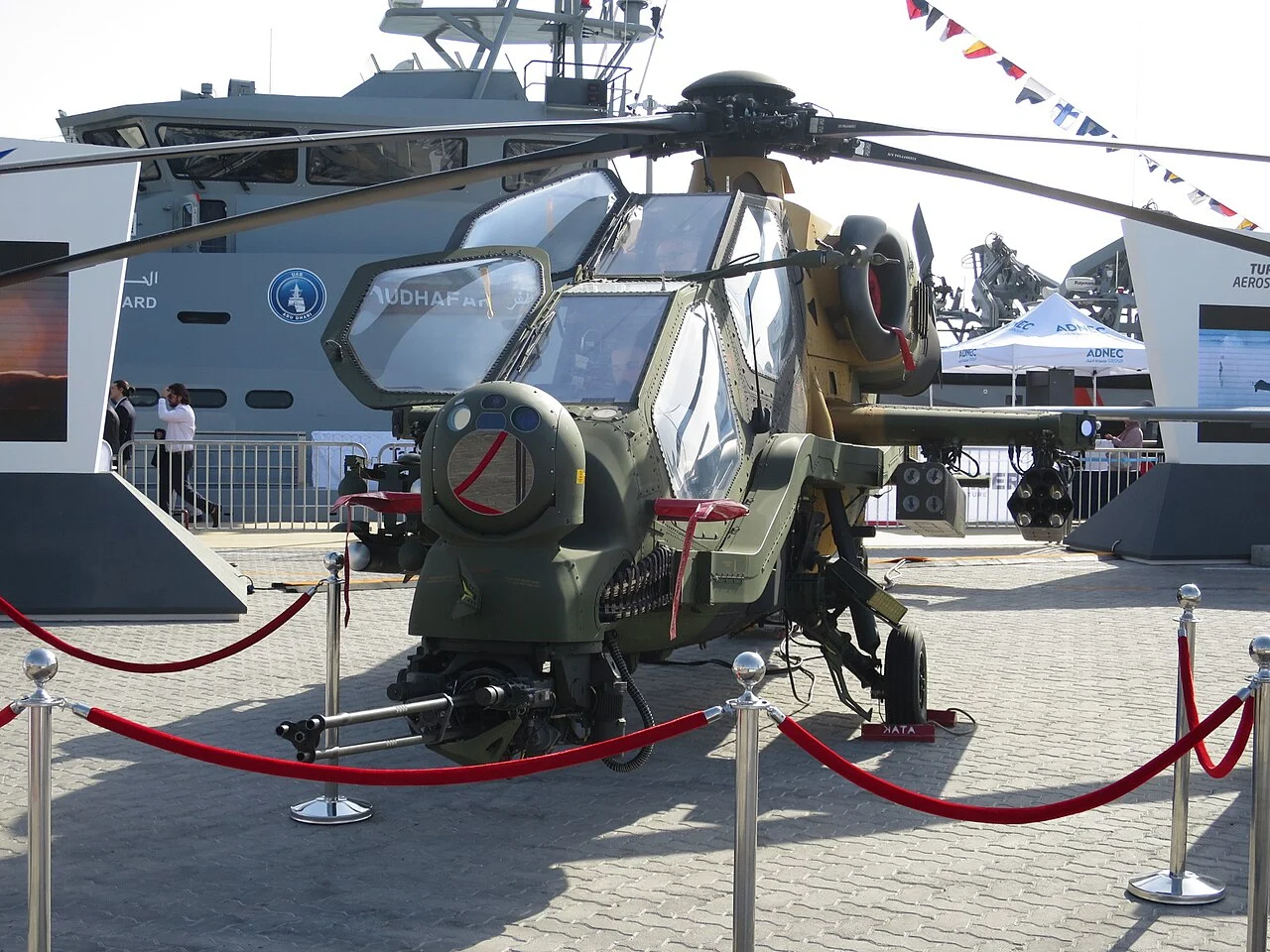
Photo: A T129 ATAK on static display at IDEX 2023, Abu Dhabi. This is a file photo of the type and does not show a Nigerian aircraft. Credit: Mztourist, CC BY-SA 4.0, via Wikimedia Commons.
This explainer follows one question: why did this African customer choose this system? The answer below comes from official statements, delivery reports and named trade reporting. Where the record is silent, this article says so rather than filling the gap with a plausible motive. It does not judge the helicopter; it looks at what the buyer’s documented situation and choices show.
| Item | What the record shows | Status |
|---|---|---|
| Customer | Nigerian Air Force (NAF) | Confirmed |
| System | T129 ATAK twin-engine attack helicopter (Turkish Aerospace Industries; Leonardo A129 lineage) | Confirmed |
| Quantity | Six ordered; two delivered November 2023, two in September 2024; delivery of all six reported by January 2025 | Six confirmed; completion reported, not officially announced in sources found |
| Contract | Announced by TAI at Farnborough, July 2022; reported signed July 2022 | Confirmed (announcement) |
| Contract value | Not disclosed by TAI or Nigeria | Unknown |
| Price estimate in circulation | About $45 million per helicopter (about $270 million for six), from a trade-press estimate | Estimate, not a contract figure |
| Base and unit | Inducted at Makurdi; assigned to 115 Special Operations Group, Port Harcourt | Reported by defenceWeb |
| Local production | None documented | — |
What capability did Nigeria need?
The requirement was an armed helicopter able to escort, reconnoitre and strike in the north-east against Boko Haram and ISWAP and in the north-west against armed banditry. At the February 2024 induction ceremony, Chief of the Air Staff Air Marshal Hasan Abubakar called the aircraft “testimony of the Federal Government’s resolve to reequip the NAF in line with combating terrorism and other threats,” and Vice President Kashim Shettima said he was confident they would “significantly assist the NAF address security challenges, both domestically and within the West African region,” according to defenceWeb.
A December 2021 report by Military Africa described a requirement for roughly 12 helicopters for the Air Force and the Army, able to engage ground and air targets including small drones and gun trucks, for armed escort, reconnaissance and convoy protection in the north-east. That description comes from the outlet, not from a Nigerian procurement document, and the final T129 order was for six.
What did the Air Force operate before?
The NAF’s helicopter strike capability rested on Russian-built gunships. defenceWeb lists 7 Mi-24V/P and 17 Mi-35M/P in service. Nigeria ordered 12 Mi-35Ms in September 2015; the first two were delivered in December 2016 and inducted in April 2017, and two more arrived on 30 April 2018, with crews trained in Russia (defenceWeb). Military Africa also lists Agusta A109 Power light armed helicopters. The T129 was therefore an addition to an existing gunship fleet, not a first attack-helicopter capability. For the current fleet, see our Nigerian Air Force aircraft inventory.
Procurement timeline
| Stage | Date | What happened | Source |
|---|---|---|---|
| Requirement / reported tender | Dec 2021 | Airbus, TAI and HAL reported as competing for a Nigerian attack-helicopter requirement of about 12 aircraft | Military Africa (citing Africa Intelligence for TAI pricing) |
| US approval of a parallel AH-1Z sale | Apr 2022 | US notifies Congress of a possible $997 million sale of 12 AH-1Z helicopters to Nigeria | DSCA; Defense Daily |
| Announcement | Late Jul 2022 | TAI General Manager Temel Kotil confirms T129 exports to Nigeria at Farnborough; value not disclosed | The Defense Post |
| Contract | Jul 2022 | Six-helicopter T129 contract reported signed | Military Africa |
| Training starts | May 2023 | First group of NAF pilots and maintainers in Turkey; one report puts the group at 26 | Military Africa; trade press |
| First delivery | 1 Nov 2023 | Two aircraft flown from Ankara to Makurdi on a Turkish Air Force A400M | Military Africa; defenceWeb |
| Induction | 6 Feb 2024 | Two aircraft (NAF 500 and 501) inducted at Makurdi with the Vice President attending | defenceWeb; NAF; Janes |
| Second delivery | 3 Sep 2024 | Second pair lands at Makurdi | Military Africa |
| Delivery complete | By Jan 2025 | All six reported delivered | Social-media report; no official release found |
| Additional order | — | Follow-on orders have been mentioned in reporting; none confirmed | Unknown |
Two points stand out. Contract signature to first delivery took about 16 months, and to the second batch about 26 months. And the contract value, unlike the value of the parallel US programme, never entered a public notification.
What was purchased?
The order was for six T129 ATAK helicopters. According to defenceWeb, the aircraft carry a 20 mm cannon and can be armed with unguided rockets, UMTAS anti-tank missiles, Cirit laser-guided rockets and Stinger air-to-air missiles, with an Aselsan Aselflir-300T sensor turret. Military Africa adds electro-optical/infrared sensors and electronic-warfare countermeasures. At induction, Janes observed a 12-round pod for 70 mm rockets and a four-round pod for Cirit. Each aircraft has two CTS800-4A engines of about 1,373 hp. Published performance figures include a cruise speed of 280 km/h and a range of 537 km. The numbers of missiles and rockets bought, the spares package and any support contract have not been published.
What did it cost?
| Figure | What it is | Source |
|---|---|---|
| Not disclosed | Contract value: TAI said in 2022 it had not disclosed the cost of the orders | The Defense Post |
| About $45 million per helicopter | Estimated unit price; first reported in a 2021 article on the tender, later repeated for the signed contract | Military Africa (citing Africa Intelligence) |
| About $270 million | Six multiplied by $45 million; an arithmetic result of the estimate, not a contract figure | Military Africa |
| $997 million | Ceiling of the separate US sale of 12 AH-1Z helicopters; not the T129 | DSCA |
No unit price should be treated as a contract fact. It is not known what the estimate includes: training, weapons, spares and support may or may not be covered. The AH-1Z figure is shown only to prevent confusion between the two programmes; the two cannot be compared per aircraft because their scopes differ.
Why was the system selected?
| Factor | Evidence | Strength |
|---|---|---|
| Need for modern armed helicopters for internal security | Chief of the Air Staff and Vice President statements at induction (defenceWeb) | Official, general |
| Delivery timing | First aircraft about 16 months after the reported contract; the parallel AH-1Z entered production only in September 2026, with deliveries to early 2029 (our reporting) | Fact pattern; Nigeria has not named it as a reason |
| Training in Turkey | Personnel trained from May 2023; the defence minister asked TAI for defence-technology transfer (Shephard) | Reported; no evidence it decided the purchase |
| Weapons package | Cannon, UMTAS, Cirit and Stinger listed for the type | Type specification, not a Nigerian evaluation |
| Price | Reported estimate of $45 million per aircraft; no published comparison with the alternatives | Weak; unverified |
| Availability of an export route | The engine is US-origin (see below); deliveries went ahead | Inference from delivery; no licence statement found |
| Existing relationship with Turkish industry | Nigeria was the first foreign buyer of the Hürkuş trainer in 2022 (The Defense Post) | Context; not stated as a reason |
No public Nigerian evaluation explains why the T129 was preferred on cost or performance. Nigerian officials have spoken about capability and re-equipment, not a comparison.
Were alternatives considered?
| Category | Aircraft | Evidence |
|---|---|---|
| Confirmed competitor | None confirmed by Nigeria | No official tender result or evaluation has been published |
| Reported alternative | Airbus (type unspecified, possibly Tiger), HAL Light Combat Helicopter | Named as competitors in a December 2021 Military Africa report citing Africa Intelligence; LCH price reported at about $17 million per unit |
| Reported later interest | HAL LCH Prachand | Indian media in September 2024 reported a possible sale of four to Nigeria on soft credit; no signed contract found |
| Parallel purchase, not a competitor | Bell AH-1Z Viper | US-approved sale of 12 notified April 2022, running alongside the T129 |
| Theoretical same-class alternatives | Other attack helicopters | No evidence Nigeria evaluated them for this requirement |
The evidence does not support the statement that Nigeria “chose the T129 over” a named rival. It supports a narrower one: an outlet reported that several suppliers were in the frame, and Nigeria signed with TAI. Reported price figures for the LCH and the T129 are trade-press estimates and are not a like-for-like comparison. The AH-1Z was ordered as a separate programme, not a substitute.
Training and support
According to Military Africa, NAF personnel began training in Turkey in May 2023, covering operation and maintenance, with the programme expected to run several months. One report puts the first group at 26 pilots and maintenance personnel. The Nigerian defence minister and the Chief of the Air Staff visited TAI to speed delivery, and the minister called for closer synergy through defence-technology transfer, Shephard reported. The terms of any maintenance, spares or in-country support contract have not been published.
Delivery and operational service
The first two helicopters arrived at Makurdi on 1 November 2023, were inducted on 6 February 2024 and assigned to 115 Special Operations Group at Port Harcourt. Two more followed on 3 September 2024. Janes quoted Air Marshal Abubakar in February 2024 saying that a further 46 aircraft of various types were expected within 18 months; that figure covers the whole NAF programme, not the T129 alone.
| Claim | Who made it | Grade |
|---|---|---|
| Two aircraft inducted 6 February 2024 | NAF, defenceWeb, Janes | Official, confirmed |
| Four aircraft delivered by September 2024 | Military Africa | Trade press |
| All six delivered | Social-media account | Unverified |
| Combat use of the T129 in Nigeria | None found | No documented strike or availability data located |
No published source reviewed gives T129 flying hours, serviceability rates or named engagements in Nigeria. Any statement about its combat performance there goes beyond the record.
Engine and export licensing
The T129 is powered by the LHTEC CTS800-4A, an engine from a Honeywell and Rolls-Royce venture, so US export authorisation is part of any sale. The best-documented case is Pakistan: a 2018 contract for 30 T129s worth about $1.5 billion was held up because the US did not issue export licences for the engines, Defense News reported in 2021. In the same report a Turkish procurement official explained that such licences are issued per end-user country, and that the Philippines had received one for its six aircraft. For Nigeria, several secondary outlets state that the US approved the transfer; the primary sources reviewed contain no published Nigerian licence decision, and delivery of aircraft with these engines is the evidence that the transfer was cleared. It is not known whether US approval influenced the timing of Nigeria’s choice.
Industrial cooperation
None is documented in Nigeria. The Nigerian defence minister publicly called for technology transfer, but no assembly line, local production or maintenance-repair-overhaul facility for the T129 has been announced in the sources reviewed. Local assembly would not amount to indigenous manufacture, and a maintenance facility would not amount to production. Any claim that Nigeria builds or overhauls the T129 domestically goes beyond the record.
Was it a good fit? Documented trade-offs
| Dimension | Evidence in favour | Trade-off or open question |
|---|---|---|
| Mission | Designed for armed reconnaissance, escort and anti-armour; matches the internal-security requirement | Six aircraft is a small force for several theatres (DefenceMENA analysis) |
| Sensors and weapons | Cannon, rockets, UMTAS, Cirit and Stinger with an infrared turret | Holdings of missiles and resupply arrangements are not public |
| Fleet complexity | Adds a modern platform to the Mi-24/35 gunships | Nigeria will operate at least three attack-helicopter families once the AH-1Z arrives, each with its own spares chain |
| Supply and licensing | Deliveries were made on a reported timetable | US-origin engines keep a US export dimension in support and resupply |
| Training | Training in Turkey from May 2023 | Long-term sustainment arrangements are not published |
| Price | Reported estimate of about $45 million per aircraft | Unverified; scope unknown |
How it compares with same-class alternatives
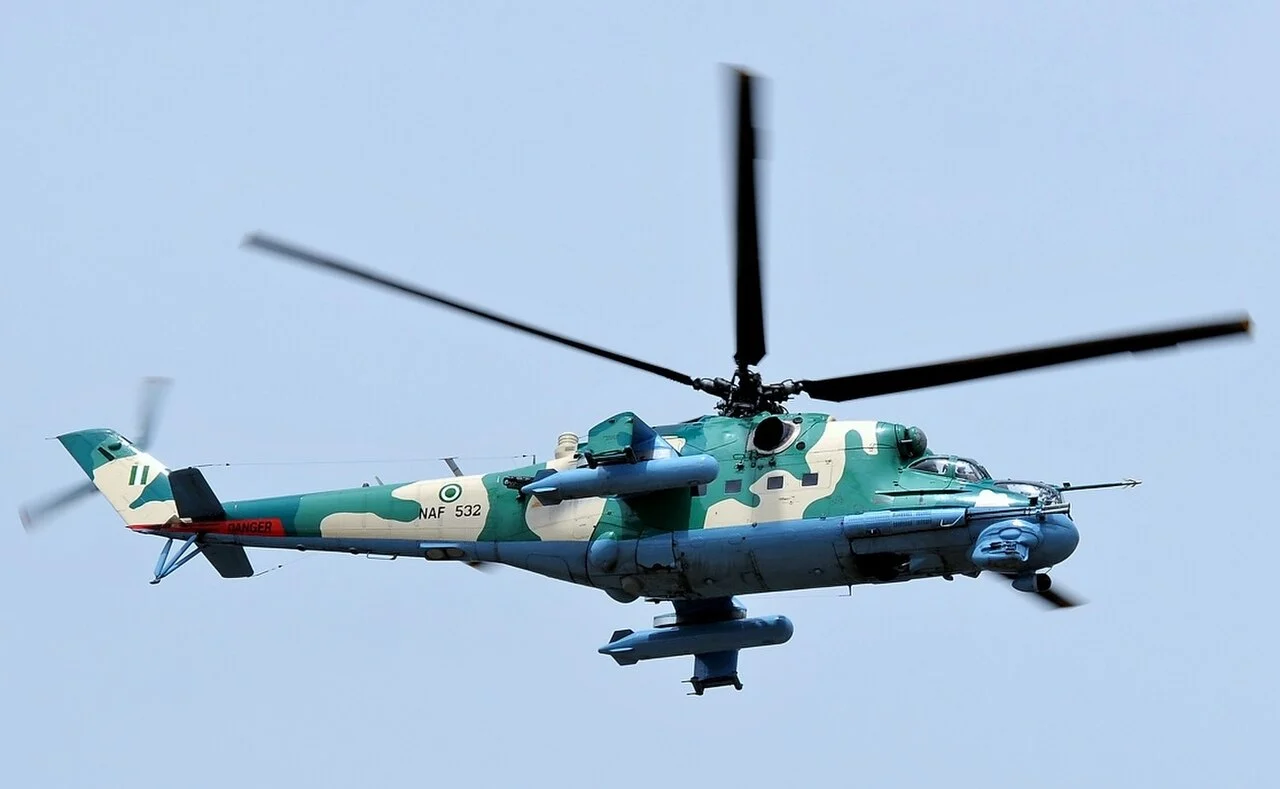
A strict specification comparison would mislead, because Nigeria has not published one and the aircraft serve overlapping but different niches. What can be said from the record: the Mi-35M is a heavier gunship that can also carry up to eight soldiers, in NAF service since 2017 and used in the north-east and north-central regions; the AH-1Z is a US-built attack helicopter with an electro-optical targeting system and APKWS guidance sections for 70 mm rockets, in a package with 28 T700 engines, with deliveries expected to run to early 2029; the T129 is a twin-engine attack helicopter with an anti-armour missile, laser-guided rockets and a cannon, already delivered. Operating-cost and serviceability comparisons between the three types are not established in public sources. The AW109 Trekker, of which Nigeria has 10 on order, is a light armed and utility helicopter in a different class; our report on the Leonardo and Airbus helicopter expansion covers it.
Africa-wide consequence
In the sources reviewed, Nigeria is the only African operator of the T129; the other export customer to receive aircraft is the Philippines, which took six by May 2024. Nothing in the available sources shows other African buyers deciding on the basis of Nigeria’s purchase, so no influence should be assumed. What Nigeria’s order established is a working export precedent for the type in West Africa, alongside a US-supplied AH-1Z and Italian AW109 and M-346 buys, which illustrates the supplier diversification that Nigeria’s air force is pursuing.
What happened next
Nigeria kept buying attack and light-attack helicopters from other suppliers. Bell began building its first AH-1Z on 16 September 2026 under a $997 million package; see Nigeria’s first AH-1Z enters production. Deliveries of AW109 Trekkers to Lagos continue in tranches. On the T129 itself, no additional order, in-country support facility or combat-performance report was found. Reports in 2024 that India might supply LCH Prachand helicopters had not been followed by a confirmed contract in the sources checked.
FAQ
Why did Nigeria buy the T129 ATAK?
To equip its air force with a modern armed helicopter for counter-terrorism and internal security, per Nigerian officials at the 2024 induction. No comparative evaluation has been published.
How many T129 helicopters did Nigeria buy?
Six, ordered in July 2022. Two were delivered in November 2023 and two in September 2024; delivery of all six has been reported.
How much did the Nigeria T129 deal cost?
The contract value has not been disclosed. A reported estimate of about $45 million per helicopter, or roughly $270 million in total, is not confirmed.
Did Nigeria pick the T129 over other helicopters?
Airbus and HAL were reported as competitors in 2021, but Nigeria has not confirmed a competition or published an evaluation.
Did the US have to approve the T129 sale?
The T129’s CTS800 engine is US-origin, and US licensing held up Pakistan’s order. The sources reviewed do not publish a licence decision for Nigeria; the aircraft were delivered.
Does Nigeria assemble or maintain the T129 locally?
No such arrangement is documented.
Related reading
- Nigeria’s military strength in 2026 (country inventory)
- Nigerian Air Force aircraft inventory (operator page)
- Why Nigeria bought the A-29 Super Tucano (procurement explainer)
- AH-1Z Viper deal (parallel US helicopter purchase)
- NAF Leonardo and Airbus helicopter expansion
DefenceMENA’s companion equipment file, Nigeria’s T129 ATAK Fleet: What’s Actually Delivered, and Where It’s Deployed, tracks the regional comparison, technical specifications and operational deployment in more depth.
Sources
- Military Africa, Nigeria takes delivery of second batch of T-129 ATAK (October 2024)
- Military Africa, Nigeria takes delivery of T-129 ATAK helicopters from Turkey (November 2023)
- Military Africa, Airbus, TAI and HAL compete for Nigeria’s attack helicopter contract (December 2021)
- defenceWeb, First Nigerian T-129 helicopters delivered
- defenceWeb, Nigerian Air Force inducts T-129 attack helicopters into service
- defenceWeb, Nigerian Air Force receives additional Mi-35Ms
- Janes, Nigerian Air Force inducts T129 attack helicopters (February 2024)
- Shephard Media, TAI delivers first Nigerian T-129 Atak helicopters
- The Defense Post, Nigeria, Chad to receive Turkish attack helicopters and trainer aircraft (August 2022)
- Nigerian Air Force, NAF set to induct the T-129 combat helicopters
- Defense News, Turkey to export T129 helos to Philippines despite block on Pakistani order (May 2021)
- DSCA, Nigeria – AH-1Z Attack Helicopter Related FMS Acquisitions
- The Aviationist, Philippine Air Force receives last two of six Turkish T129 attack helicopters (May 2024)
- The Week, HAL and the Nigerian LCH Prachand deal report (September 2024)