A Nigerian Air Force ATR-42 aircraft, tail number NAF 931, crashed into a swamp near Igbokoda in Ondo State on the morning of 5 October 2026, during what the Air Force called a routine flight from Benin City to Lagos. No survivors have been found. Early official figures put 32 people on board. On 6 October the Air Force published names showing 25 people aboard: five crew and 20 passengers. The cause is not yet known.
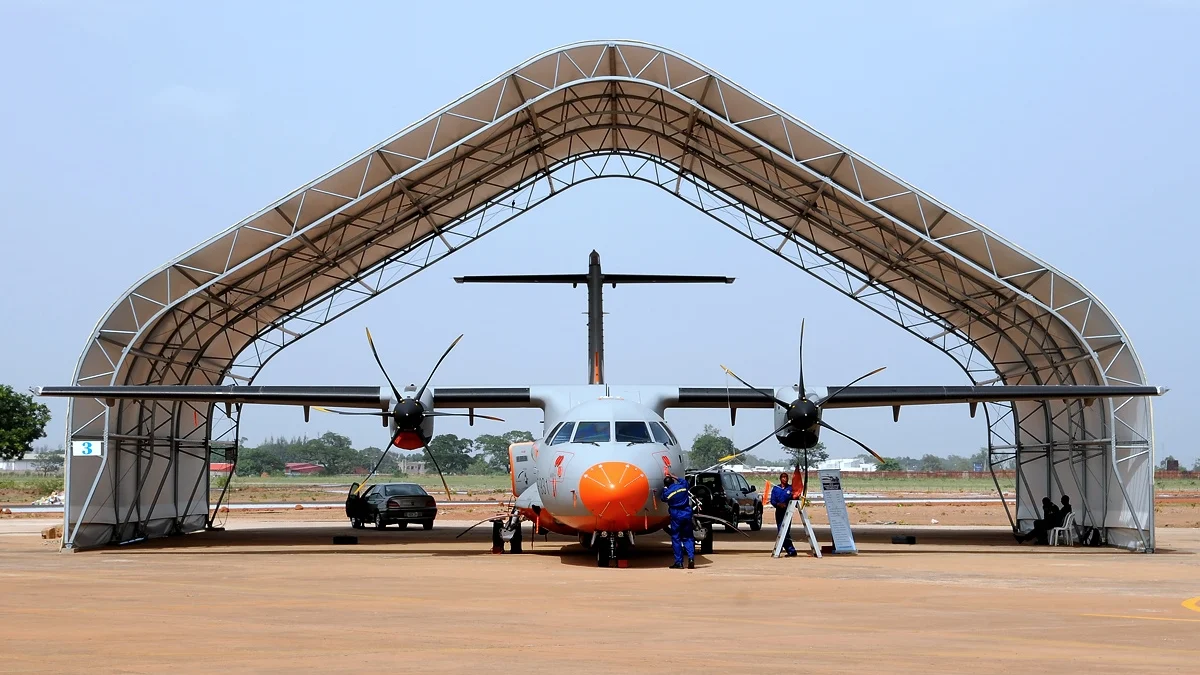
Photo: A Nigerian Air Force ATR 42-500MP Surveyor maritime patrol aircraft on display in May 2012 (file photo; DefenceMENA has not confirmed whether this is the aircraft that crashed). Credit: Kenneth Iwelumo, GFDL 1.2, via Wikimedia Commons
Update, 14 October 2026, 13:30 GMT: Both chambers of Nigeria’s National Assembly have opened inquiries into the crash. On 13 October the Senate adopted a motion by Senator Osita Ngwu, chairman of its Committee on Air Force, and directed its Air Force and Aviation committees to visit the crash site, engage the Air Force and audit the serviceability and airworthiness of aircraft in the presidential and military fleets, Channels Television and The Nation reported. The House of Representatives also resolved to investigate and to audit the Air Force fleet’s airworthiness. Lawmakers cited funding shortfalls, late budget releases and spare-parts shortages. Ondo lawmaker Donald Ojogo pressed for an independent probe because of “claims and counterclaims” since the crash, and Speaker Abbas Tajudeen referred the motion to the committees on Air Force, Aviation and Defence, Premium Times reported. Separately, the Air Force has set up a 12-member Aircraft Accident Investigation Board headed by Air Vice Marshal Francis Ankeli. It includes representatives of the Nigerian Civil Aviation Authority and the Nigerian Safety Investigation Bureau, and will examine operational, technical, environmental, human and organisational factors, according to the News Agency of Nigeria and TheCable. No cause has been announced.
Update, 8 October 2026, 13:30 GMT: Three days after the crash, the main body of the aircraft had still not been found. Ondo State Governor Lucky Aiyedatiwa visited the site on 7 October and said the fuselage was believed to be submerged in the swamp, while Navy personnel and local divers searched deeper water for the cockpit and remaining victims, BusinessDay and The Guardian (Nigeria) reported. The Chief of the Naval Staff, Vice Admiral Idi Abbas, has deployed the Navy’s Hydrographic Department, and a side-scan sonar survey has begun to map the site because the swamp water is too murky for divers to see far. Air Force drone crews are searching the surrounding mangrove. The governor said residents described the aircraft descending towards the town with a sound suggesting an engine problem, and that the pilot appeared to steer it away before it came down about 200 metres from the community. That is a witness account relayed by the governor, not a finding of the investigation, which has not reported.
In Abuja, Aviation Minister Festus Keyamo and the Chief of the Air Staff, Air Marshal Sunday Aneke, agreed on 7 October to set up a joint committee of the Nigerian Civil Aviation Authority and the Air Force covering airworthiness, certification, training and safety. Keyamo said NAF personnel could join civil aviation training programmes. The framework does not change who investigates military accidents. It is an early policy response to the crash rather than a change to the inquiry.
What happened to NAF 931?
Aviation Minister Festus Keyamo said air traffic controllers lost contact with the aircraft at about 09:13 local time while it was flying from Benin to Lagos. He said it was later confirmed to have crashed close to the Navy base at Igbokoda, in the Ilaje area of Ondo State. Military aircraft are outside the authority of his ministry and Nigeria’s civil aviation regulator, but he said he had offered help to the Chief of the Air Staff, Air Marshal Sunday Kelvin Aneke.
The Air Force’s spokesman, Air Commodore Ehimen Ejodame, confirmed that an ATR-42 had crashed and said search and rescue had started. Residents and the local traditional ruler told The Guardian (Nigeria) that the aircraft came down in a river and mangrove swamp during morning rain, did not catch fire, and sank largely out of sight. That made recovery work difficult.
President Bola Tinubu ordered the Air Force to “immediately commence a thorough investigation”. He declared three days of national mourning and ordered flags flown at half-mast, according to BBC News and Reuters.
32 or 25 on board? Correcting the early figure
On 5 October, the aviation minister, the Presidency and international wire reports all used preliminary figures of 25 passengers and seven crew, 32 people in total. On 6 October, the Air Force released a list of everyone on board, carried by the News Agency of Nigeria and TheCable. It named 25 people: a flight captain, two co-pilots and two aircraft technicians, plus 20 passengers. Fourteen of the passengers are listed with military ranks and six without one. The Air Force said no survivors had been found.
Until the Air Force explains the difference, the named list from the service itself is the most authoritative figure available. Headlines still saying “32 killed” are based on the earlier preliminary numbers. Some early reports also called the aircraft a helicopter. The ATR-42 is a twin-turboprop fixed-wing aircraft.
What is the ATR-42MP, and why does Nigeria fly it?
Nigeria signed a contract with Alenia Aeronautica, now part of Leonardo, in March 2007 for two ATR-42MP maritime patrol aircraft. The first was delivered in December 2009, Airforce Technology reported at the time. The second was handed over at Turin-Caselle in March 2010, according to AvioNews. Nigeria was the first export customer for the type.
The aircraft is an ATR 42-500 regional turboprop fitted with the ATOS mission system, originally developed by Selex Galileo. ATOS combines a search radar, an electro-optical sensor and operator workstations in the cabin. Nigeria bought it for exclusive economic zone patrol, reconnaissance and search and rescue over the Gulf of Guinea, where piracy, oil theft and illegal fishing are long-running problems. The Aviation Safety Network database lists the aircraft lost as an ATR 42-500 “MP Surveyor” built in 2008. The service dates suggest NAF 931 was the second of the pair, but the Air Force has not formally confirmed that. Military Africa reported that NAF 931 came back from Germany around the turn of 2025, after several years of depot maintenance there. That shows how hard it has been to keep the small fleet available.
What the loss means for maritime surveillance
If NAF 931 was one of the two ATR-42MPs, the Air Force now has at most one aircraft of the type. That would leave more of the crewed maritime surveillance work to the newer Beechcraft King Air 360ER ISR aircraft and to smaller types. DefenceMENA’s guides to ISR aircraft in African air forces and the Nigerian Air Force aircraft inventory set out that fleet. The Navy’s patrol ships, listed in our Nigerian Navy ships guide, depend on that airborne coverage for cueing over a large offshore area.
Investigation and Nigeria’s military air safety record
The cause has not been established. Ondo State Governor Lucky Aiyedatiwa suggested a technical fault may have caused the aircraft to lose contact. Local residents described rain at the time. The Air Force has asked the public to avoid speculation. The Nigerian Safety Investigation Bureau said military accidents are investigated by the military. It added that it would only take part if formally invited, and offered help with recovering and reading the flight data and cockpit voice recorders.
The crash adds to a series of Nigerian military aviation losses. The Guardian’s own review counted 16 military aircraft crashes or losses since 2016, including the May 2021 King Air 350 crash that killed the then army chief, Lt Gen Ibrahim Attahiru, and ten others. By any count, the Ondo accident is among the deadliest in Nigerian military aviation in recent years. It comes as the Air Force takes on large numbers of new aircraft, including AH-1Z attack helicopters and M-346FA jets, which puts training, maintenance and airworthiness oversight under closer scrutiny.
Sources
- The Guardian (Nigeria): “NAF plane crash: Civil, military aviation authorities strengthen safety pact as recovery intensifies” (8 October 2026)
- BusinessDay: “Pilot averted bigger disaster as aircraft crashed 200 metres away from community — Aiyedatiwa” (8 October 2026)
- Defense News Nigeria on X: Navy Hydrographic Department deployed to Igbokoda crash site (7 October 2026)
- News Agency of Nigeria: “NAF names crew, passengers on board ill-fated flight”
- TheCable: “FULL LIST: Names of 25 air force personnel who died in Ondo crash”
- Reuters: “Nigerian military aircraft crashes, killing 32”
- BBC News: “Nigeria mourns as 32 killed in military plane crash”
- The Guardian (Nigeria): “Tinubu orders probe of NAF plane crash amid safety record concerns”
- Aviation Safety Network: ATR 42-500 (512MP Surveyor) NAF931 accident record
- Airforce Technology: “Nigeria Receives First ATR-42MP Maritime Patrol Aircraft from Alenia” (2009)
- AvioNews: “Alenia Aeronautica delivers second ATR-42MP airplane to the NAF” (2010)
- Military Africa: “Second Nigerian ATR-42 ISR aircraft returns from maintenance in Germany”
- Channels Television: NAF plane crash: Senate, Reps to probe Air Force aircraft maintenance (13 October 2026)
- Premium Times: Reps seek independent probe, audit of military aircraft after fatal crash (13 October 2026)
- The Nation: Senate, House, NAF launch probe into crash (14 October 2026)
- News Agency of Nigeria: NAF constitutes 12-member board to investigate aircraft crash