EDGE Signs MoU to Localize Small-Arms and Aero-Engine Production in Morocco



Alongside the drone weapons contract it signed with Morocco’s Royal Armed Forces earlier this month, the UAE’s EDGE Group has quietly put something potentially bigger on the table: a memorandum of understanding to manufacture small arms and aircraft engines on Moroccan soil.
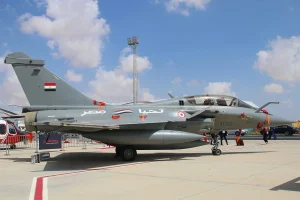
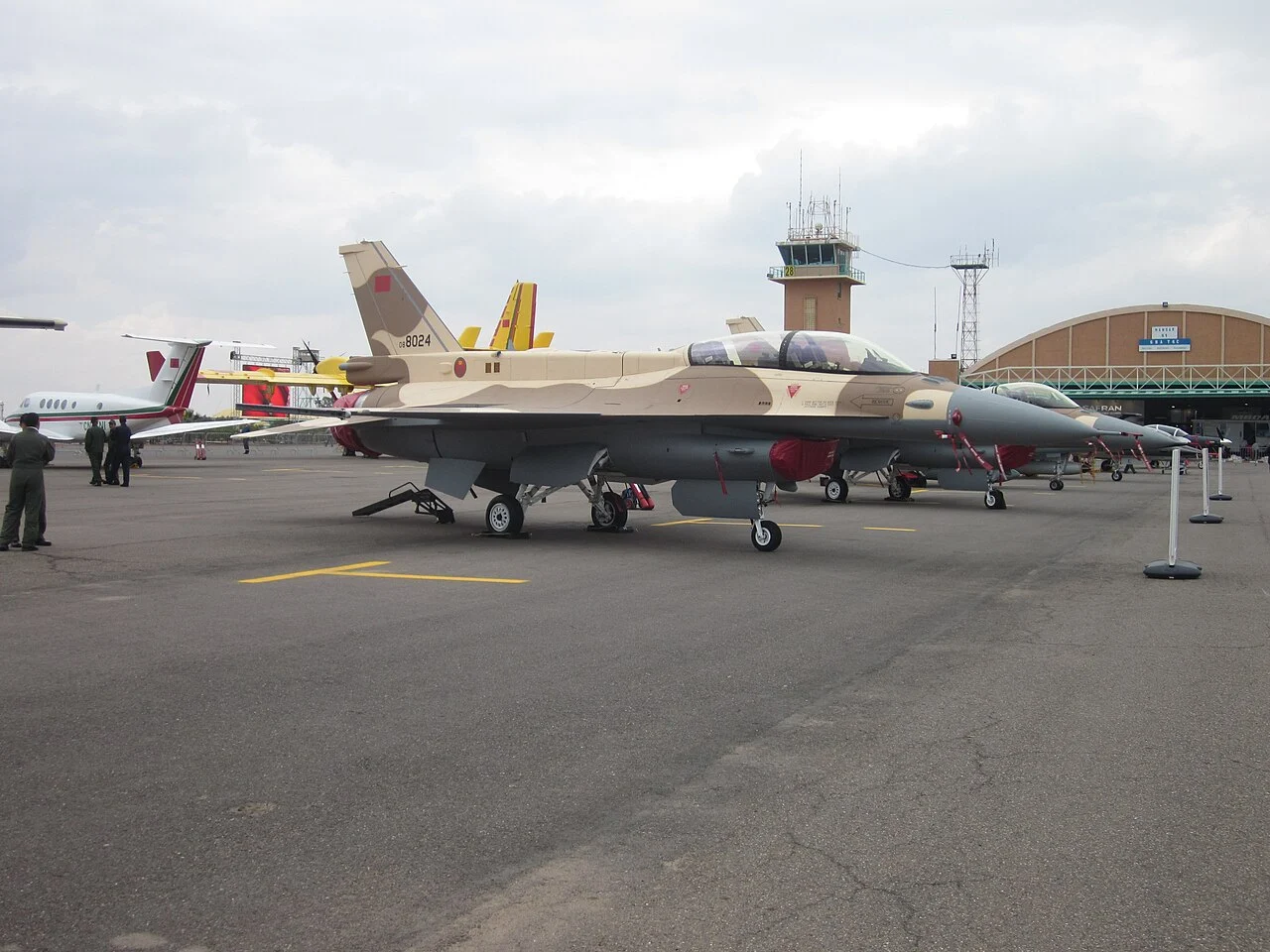
Photo: A Royal Moroccan Air Force fighter jet. Credit: Ndunruh, CC BY-SA 3.0, via Wikimedia Commons
EDGE and Morocco’s Administration of National Defence (ADN), the Royal Armed Forces’ procurement authority, signed two separate documents on 9 October 2026 at the Marrakech Air Show. The first was a firm contract for DESERT STING 16 and Thunder P-31 precision-guided weapons for Morocco’s armed drone fleet, already covered by DefenceMENA. The second, reported in detail this week by Military Africa and Army Recognition, is a non-binding MoU to explore local production of small arms and aeronautical engines through partnerships with Moroccan companies.
What is actually on the table
The MoU points to two EDGE subsidiaries. CARACAL, the group’s small-arms and small-calibre-ammunition unit, would be the vehicle for any domestic firearms manufacturing. POWERTECH, which builds aero engines and propulsion systems for unmanned platforms, would lead any local engine work, drawing on a product line that runs from the P145i piston engine up to turbojets rated between 400 N and 5,500 N of thrust.
Beyond that, the agreement is light on specifics. Army Recognition’s reporting notes it names neither a selected engine model nor a factory site, investment figure or production timeline, and it does not extend to local manufacture of the DS-16 or Thunder P-31 weapons covered by the same day’s separate contract. EDGE’s own language, delivered by group CEO Hamad Al Marar, describes Morocco as “a key partner for EDGE in Africa” under what the company calls a partnership-first model, alongside a quote from Saif Al Dahbashi, EDGE’s President of Missiles & Weapons, on “assured supply and long-term sustainment” for the weapons side of the relationship.
Morocco has built the legal and physical scaffolding for exactly this
The MoU lands on ground Rabat has spent several years preparing. Law 10-20 created the legal framework for private defence production in Morocco, and the kingdom has since designated 675 hectares of industrial land for the sector, split between a 75-hectare site at Nouaceur and a 600-hectare site at Sidi Yahya. Seven industrial land agreements were announced at this year’s Marrakech Air Show alone.
Morocco’s aerospace base already counts around 160 companies and some 25,000 employees, generating roughly $3 billion a year in exports, with a government target of reaching $5 billion within three years. A defence-focused partner willing to localise firearms and engine work would plug directly into that growth plan, rather than starting a new industrial track from scratch — though, as with the MoU’s missing specifics, that remains a direction of travel rather than a signed commitment.
Part of a wider EDGE push into Africa
Morocco is one of several African markets where EDGE has moved in 2025 and 2026. In Angola, the group is executing a roughly €1 billion naval modernisation programme that includes three Combattante-class corvettes and six naval unmanned helicopters, and it signed a letter of intent in 2025 with Angola’s interior ministry on a border-security programme. In Nigeria, EDGE is reportedly in advanced talks on a $300 million equipment package for army ground-forces and counter-terrorism units. Seen alongside those deals, the Moroccan production MoU fits a pattern: land the hardware contract first, then follow with an offer of local manufacturing and technology transfer to deepen the relationship.
Why it matters for Africa
For Morocco, the MoU is another data point in a strategy that increasingly favours co-production over simple imports, the same logic behind its domestic Aerodrive loitering-munition programme and its Berrechid armoured-vehicle line with Tata Advanced Systems. For the rest of the continent, it is a reminder that Gulf industrial groups are no longer just selling finished weapons into African markets; EDGE, like Turkish and Chinese suppliers before it, is increasingly offering local content and technology transfer as the price of entry — a trend that gives African governments more leverage, provided the MoUs convert into real factories rather than remaining announcements. Until EDGE and the ADN name an engine, a site and an investment figure, the Caracal and Powertech plans remain exactly what Morocco’s broader industrial build-out has made routine: a credible possibility, not yet a programme.
Sources
- Military Africa: “EDGE, Morocco signs drone weapons contract, production MoU”
- Army Recognition: “Morocco expands drone strike capabilities with DS-16 and P-31 precision weapons from UAE’s EDGE Group”
- GDN Online: “EDGE in deal to boost localised small arms production in Morocco”