Drones in the Ethiopia War: What Is Confirmed and What Remains Unverified


The use of drones in Ethiopia war zones is no longer a matter of rumour: satellite imagery, recovered munition fragments and, since January 2024, the Ethiopian government’s own ceremonies show that Addis Ababa built much of its air campaign around imported armed drones. What remains contested is who flew some of them, how decisive they were, and what they cost civilians in Tigray and Amhara.
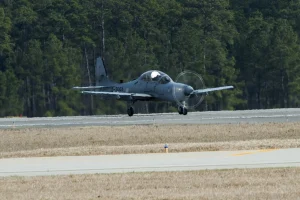
Photo: A Bayraktar TB2, the Turkish drone type imaged at Ethiopia's Harar Meda air base in December 2021 (file photo, Turkish airframe). Photo: CeeGee, CC BY-SA 4.0, via Wikimedia Commons. Credit: CeeGee, CC BY-SA 4.0, via Wikimedia Commons.
Direct answer
Yes, Ethiopia has military drones, and it has used them in combat since 2021. Independent satellite analysis placed Iranian Mohajer-6, Chinese Wing Loong I and Turkish Bayraktar TB2 drones at Ethiopian air bases during the Tigray war, and the armed forces formally unveiled Turkish Akinci drones in January 2024. Analysts credit drones with helping halt the Tigrayan advance on Addis Ababa in late 2021, while UN and Human Rights Watch investigators have documented strikes by government drones that killed civilians in both Tigray and Amhara.
| System | Armed drones: Bayraktar TB2 and Akinci (Türkiye), Wing Loong I (China), Mohajer-6 (Iran) |
| Manufacturer | Baykar; AVIC/Chengdu Aircraft Industry Group; Qods Aviation Industries |
| Origin | Türkiye, China, Iran |
| Operator(s) in this conflict | Ethiopian Air Force / Ethiopian National Defence Force (ENDF). A reported UAE role remains disputed |
| Period | August 2021 (first imagery) to September 2026 |
| Evidence level summary | Akinci: officially confirmed. TB2, Wing Loong I, Mohajer-6: visually documented by satellite imagery and munition remnants, not formally itemised by Addis Ababa. UAE-flown strikes from Eritrea in 2020: disputed |
Where was it used?
The first confirmed drone deployments came in the second half of 2021, as the war that began in Tigray in November 2020 spread into Amhara and Afar. Bellingcat reported in August 2021 that two drones and a ground control station had arrived at Semera airport in Afar, with features matching the Iranian Mohajer-6. PAX for Peace then used Airbus imagery from 2 and 11 November 2021 to identify a Wing Loong I outside a hangar at Harar Meda, the air base at Bishoftu south of Addis Ababa, and Planet SkySat imagery dated 9 December 2021 to identify a TB2 and matching ground control containers at the same base. VOA later reported TB2s imaged at Bahir Dar.
Strikes documented in early 2022 were concentrated in Tigray, including Dedebit and May Tsebri. After the Pretoria agreement ended the Tigray war in November 2022, the focus shifted to Amhara, where federal forces have fought Fano militias since August 2023. In late September 2026, drones were again reported over Tigray and Afar as full-scale fighting resumed. For the longer history of how this fleet was assembled, see our record of the evolution of Ethiopia’s air force.

What was the mission?
In 2021 the mission was urgent and defensive. Tigrayan forces had pushed south through Amhara towards Shewa, and Ethiopia’s small crewed strike fleet could not provide persistent coverage. Medium-altitude drones offered surveillance and precision strike without depending on scarce fast-jet pilots. Alex de Waal of the World Peace Foundation wrote in December 2021 that the drones hit Tigrayan logistics hardest, above all along the main road south from Tigray.
From 2023 the mission became counter-insurgency against Fano in Amhara, a dispersed militia rather than an army moving in columns. That shift matters: a platform suited to interdicting a road-bound advance produces very different results in populated rural areas.
What does the public evidence show?
The record rests mainly on open-source imagery, human rights investigations and trade data rather than Ethiopian government disclosures. Ethiopia’s air force chief denied using foreign drones in December 2020, and VOA reported in early 2022 that the government had not answered questions on drone purchases. The Akinci, handed over at a public ceremony, is the exception.
| Claim / event | Date | Evidence level | Source |
|---|---|---|---|
| Mohajer-6 drones and ground station at Semera airport | Aug 2021 | Visually documented | Bellingcat |
| Türkiye–Ethiopia military framework and military financial cooperation agreements signed in Ankara | 18 Aug 2021 | Officially confirmed | Fana Media Corporation |
| Wing Loong I at Harar Meda | Nov 2021 | Visually documented | PAX for Peace |
| TB2 and ground control station at Harar Meda | 9 Dec 2021 | Visually documented | PAX for Peace |
| Turkish defence exports to Ethiopia rose to almost $95m in the first 11 months of 2021 | 2021 | Independently reported (exporters’ data) | Reuters, via Cyprus Mail |
| Drones helped halt the Tigrayan advance on Addis Ababa | Nov–Dec 2021 | Independently reported (analyst assessment) | Alex de Waal; ECFR |
| Dedebit school/IDP camp strike: at least 57 civilians killed; TB2 with MAM-L munitions identified from fragments | 7 Jan 2022 | Independently reported (HRW investigation) | Human Rights Watch |
| UAE-operated Wing Loong strikes from Assab, Eritrea | Nov 2020 | Disputed | Bellingcat; PAX via VOA |
| Akinci drones inducted, in service since Nov 2023 | Jan 2024 | Officially confirmed | The Defense Post; Janes |
| 18 drone strikes in Amhara caused 248 civilian deaths and 55 injuries | 4 Aug – 31 Dec 2023 | Independently reported (UN) | OHCHR |
| SkyWin Aeronautics drone plant inaugurated | 8 Mar 2025 | Officially confirmed | Fana Media Corporation |
| Sudan says drones striking its territory were launched from Bahir Dar | Mar–May 2026 | Disputed (denied by Ethiopia and UAE) | Al Jazeera; Centre for Information Resilience |
| ENDF airstrikes, including reported drone strikes, hit five schools in Tigray | 22 Sep 2026 | Officially reported by UN, not independently verified | OHCHR statement |
What worked?
The strongest case for effectiveness comes from late 2021. By December that year, the European Council on Foreign Relations wrote in 2025, “the government’s drone-backed counteroffensive turned the tide of the war”, pushing Tigrayan forces from within 200km of the capital back to Tigray. De Waal described a dozen or more drones in the air at any one time over the main supply route. Those are analyst judgements, not operational data: no sortie rates or strike tallies have been published, and de Waal himself listed other factors, including mass mobilisation, Eritrean involvement and diplomatic shifts.
Acquisition was fast: imagery shows three drone types from three suppliers arriving within about four months of August 2021. Drones also let Ethiopia generate persistent air presence without expanding its small pool of fighter pilots, the same logic that has since driven purchases across the continent. Our overview of military drones operated across Africa tracks how widespread that choice has become.
What problems appeared?
The largest problem is civilian harm. Human Rights Watch found that the strike on a school compound sheltering displaced people in Dedebit on 7 January 2022 killed at least 57 civilians, identified remnants of MAM-L guided munitions of the type carried by the TB2, and attributed the strike to the Ethiopian government, the only party known to operate armed drones. HRW called it an apparent war crime and urged a government investigation. VOA reported UN figures of at least 108 civilians killed by air attacks in Tigray in the first weeks of 2022.
The pattern continued in Amhara. The UN human rights office recorded 18 drone strikes by the ENDF/Ethiopian Air Force that caused 248 civilian deaths and 55 injuries between 4 August and 31 December 2023, and HRW reported an apparent drone strike on a truck carrying civilians on 19 February 2024 that killed at least 30 people. The Ethiopian government has not published findings on these incidents.
There is also a strategic limit. Drone strikes did not end the Fano insurgency; ECFR reported that Fano adapted its behaviour to reduce exposure, and in September 2026 Fano factions joined the TPLF and other armed groups in a new alliance against the government, according to Al Jazeera. Air power bought time in 2021; it has not produced a political settlement.
Confirmed losses and limitations
No reliable public figure exists for Ethiopian drone losses in the Tigray war or in Amhara. We found no Oryx-style documented list for Ethiopia and no official acknowledgement of any loss. Claims by armed groups to have downed Ethiopian aircraft circulate regularly but have not been matched to verifiable imagery of drone wreckage in the sources reviewed.
One disputed case sits outside Ethiopia. Sudan’s army said it recovered a drone on 17 March 2026 that it identified as a Baykar Akinci and presented flight data it said traced the aircraft to Bahir Dar. The Centre for Information Resilience said it could not verify that flight data, and both Ethiopia and the UAE denied involvement. The ownership of that aircraft, and how it came down, remain unverified.
The better-documented limitations are non-military: reputational damage from civilian casualties, diplomatic friction with Washington and Cairo, and continued dependence on foreign suppliers for aircraft, munitions and spares.
What is still disputed?
The most persistent dispute concerns the United Arab Emirates. Tigrayan leaders said in November 2020 that Emirati drones based at Assab in Eritrea were striking Tigray. Bellingcat’s imagery showed Wing Loong-type drones at the UAE’s Assab base, but PAX analyst Wim Zwijnenburg told VOA in December 2020 that he had found no indication they were flown over Ethiopia. De Waal later cited circumstantial evidence of an Emirati role. Without flight data or official records, the question remains open.
Also disputed: whether foreign personnel flew or maintained Ethiopian drones in 2021, which has never been established publicly; exact fleet sizes, which Addis Ababa has not disclosed; and Sudan’s 2026 allegation that drones staged at Bahir Dar attacked Sudanese territory, which CIR said it could not corroborate from satellite imagery. The September 2026 fighting has added new strike reports that cannot yet be independently checked because communications in Tigray were disrupted.
Did the manufacturer or operator change anything?
Ethiopia moved up the scale rather than away from drones. The Akinci, a heavier high-altitude platform, entered service around November 2023 and was formally handed over in January 2024 alongside Su-30K fighters, with Field Marshal Birhanu Jula presenting both as part of a modernisation drive. In March 2025 Prime Minister Abiy Ahmed inaugurated the SkyWin Aeronautics plant, saying Ethiopian engineers now designed and built drones; Janes analyst Jeremy Binnie said the SW01 drone shown at the launch closely resembled a commercially available Chinese model. Addis Standard reported in September 2026 that a second plant, Aeroabay, opened in late 2025 and reportedly produces small first-person-view (FPV) attack drones. ECFR reported satellite imagery of a new Akinci hangar near the main air base. See our guide to which African countries operate the Bayraktar Akinci.
On the supplier side, Türkiye’s position did not change under pressure. Reuters reported in October 2021 that Egypt had asked the US and European governments to help freeze any drone deal, and in December 2021 that Washington had “profound humanitarian concerns” about TB2 sales to Ethiopia. Ankara continued the relationship. The United States had already set up a sanctions framework for the conflict in September 2021, but no public drone-specific measures against suppliers were announced.
Did other countries buy it afterwards?
Ethiopia’s campaign coincided with a wave of Horn of Africa drone purchases. Combat use in Ethiopia cannot be shown to have caused them, and each buyer had its own security drivers, but the timing is consistent. Our Bayraktar TB2 operator list and Wing Loong operator list carry the continental picture.
| Country | System | Year | Status | Source |
|---|---|---|---|---|
| Ethiopia | Bayraktar Akinci | 2023–2024 | Officially inducted | The Defense Post |
| Djibouti | Bayraktar TB2 | 2022 | Displayed at national day parade | defenceWeb |
| Sudan (army) | Bayraktar TB2 | 2023 contract | Reported from leaked documents | Africa Defense Forum, citing The Washington Post |
| Kenya | Bayraktar TB2 | 2024 | At least six photographed; not officially confirmed | Military Africa |
| Somalia | Bayraktar Akinci | 2025 | Two announced by a Somali minister | Military Africa |
For how the Chinese alternatives compare in African service, see Bayraktar TB2 vs Wing Loong II vs CH-4 and why African countries buy Chinese drones.
What does this mean for African procurement?
Ethiopia shows that a government under pressure can field armed drones from several suppliers within months, and it shows the costs that follow. Four points stand out.
First, supplier diversity brings speed and parallel burdens: three drone families in 2021, then a fourth, means separate ground stations, munitions, spares chains and training pipelines. Second, targeting discipline and civilian-harm mitigation are procurement issues, not afterthoughts; the reputational and diplomatic costs of Dedebit and the Amhara strikes have shaped how Ethiopia is discussed in Washington, Brussels and the UN. Third, drones are not a political strategy: they helped defend the capital in 2021 but did not settle the Amhara conflict or prevent the 2026 escalation. Fourth, neighbours will respond. Ethiopia’s rivals and insurgents now plan around drone threats, which pushes the region towards counter-drone investment; our review of counter-drone systems in African armies covers what is in service. Buyers weighing Turkish platforms can compare the wider record in Turkish defence systems in African service.
Battlefield file: 7 cards
Turkish TB2 and Akinci, Chinese Wing Loong I and Iranian Mohajer-6 have all been identified in Ethiopian service since 2021.
Imagery placed drones at Semera, Harar Meda and Bahir Dar; strikes were documented in Tigray in 2021–22 and in Amhara from 2023.
Drones first targeted Tigrayan supply lines during the 2021 advance, then Fano militias in populated rural Amhara.
PAX and Bellingcat imagery, HRW munition analysis and the January 2024 Akinci ceremony form the core record.
No documented loss list exists; the UN recorded 248 civilian deaths from 18 drone strikes in Amhara in late 2023.
Ethiopia added the Akinci in 2023–24 and opened the SkyWin drone plant in March 2025.
Drones can be fielded in months, but training, targeting discipline and sustainment decide whether they help or harm the buyer.
FAQ
Does Ethiopia have military drones?
Yes. Satellite imagery has documented Turkish Bayraktar TB2, Chinese Wing Loong I and Iranian Mohajer-6 drones at Ethiopian bases since 2021, and the armed forces officially inducted Turkish Akinci drones in January 2024.
Were Bayraktar TB2 drones used in the Ethiopia war?
Imagery analysed by PAX for Peace showed a TB2 at Harar Meda in December 2021, and Human Rights Watch linked munitions carried by the TB2 to the January 2022 Dedebit strike. Ethiopia has not publicly itemised its TB2 purchase.
Did drones stop the TPLF advance on Addis Ababa?
Analysts including Alex de Waal and the European Council on Foreign Relations judge that drones were central to reversing the advance in late 2021, mainly by disrupting Tigrayan supply lines. Other factors, including mass mobilisation, also mattered.
How many drones does Ethiopia have?
There is no reliable public figure. The government does not disclose fleet sizes; estimates in the thousands reported in 2026 include small FPV drones and have not been verified.
Did the UAE fly drones in the Tigray war?
This remains disputed. Emirati-operated Wing Loong drones were imaged at Assab in Eritrea in 2020, but no public evidence has confirmed they struck targets in Ethiopia.
Does Ethiopia have a drone factory?
Yes. Prime Minister Abiy Ahmed inaugurated the SkyWin Aeronautics plant in March 2025. Analysts have questioned how much of the technology is Ethiopian in origin.
Sources
- Bellingcat — Is Ethiopia flying Iranian-made armed drones? (Aug 2021)
- PAX for Peace — Ethiopia now confirmed to fly Chinese armed drones (Nov 2021)
- PAX for Peace — Turkish drones join Ethiopia’s war, satellite imagery confirms (Dec 2021)
- Bellingcat — Are Emirati armed drones supporting Ethiopia from an Eritrean air base? (Nov 2020)
- VOA — Expert: no evidence UAE drones are being used in Tigray (Dec 2020)
- Fana — Ethiopia, Turkey sign water, military financial cooperation agreement (Aug 2021)
- defenceWeb / Reuters — Turkey expands armed drone sales to Ethiopia and Morocco (Oct 2021)
- Cyprus Mail / Reuters — US concerned over Turkey’s drone sales to conflict-hit Ethiopia (Dec 2021)
- Responsible Statecraft — Alex de Waal: how foreign drone intervention and more turned the tide (Dec 2021)
- Human Rights Watch — Ethiopia: airstrike on camp for displaced likely war crime (Mar 2022)
- VOA — Ethiopia ups use of drone strikes, prompting worries about civilian toll (Feb 2022)
- The Defense Post — Ethiopia inducts Turkish drones, Su-30 fighters (Jan 2024)
- OHCHR — Update on the human rights situation in Ethiopia (June 2024, PDF)
- Human Rights Watch — World Report 2025: Ethiopia
- ECFR — Deadly skies: drone warfare in Ethiopia and the future of conflict in Africa (Feb 2025)
- Fana — Premier Abiy inaugurates SkyWin Aeronautics Industries (Mar 2025)
- Addis Standard via AllAfrica — Ethiopia expands domestic drone production as conflicts persist (Sept 2026)
- Centre for Information Resilience — Strikes in Khartoum (May 2026)
- Al Jazeera — Sudan blames Ethiopia, UAE for recent drone attacks: what we know (May 2026)
- OHCHR statement via GlobalSecurity — Türk alarmed by civilian impact of hostilities in Ethiopia (Sept 2026)
Evidence note: Ethiopia has not published an inventory of its drones, strike records or loss data, and independent access to conflict areas has been restricted throughout. Identifications here rest on satellite imagery, munition analysis and official ceremonies, and casualty figures are those reported by the UN and Human Rights Watch. Additional regional context: Al Jazeera (26 Sept 2026) on the new armed alliance; Africa Defense Forum, defenceWeb and Military Africa on Horn of Africa purchases. This article will be updated at the same URL if significant new evidence appears.
More from Battlefield Proven
- Bayraktar TB2 in Libya: What Did Its Combat Use Actually Show?
- Sudan War Drones: What the Evidence Shows on SAF and RSF Since 2023
- Pantsir-S1 in Libya: What the Battlefield Record Revealed