Nigeria AH-1Z Viper Deal: What the $997 Million Covers

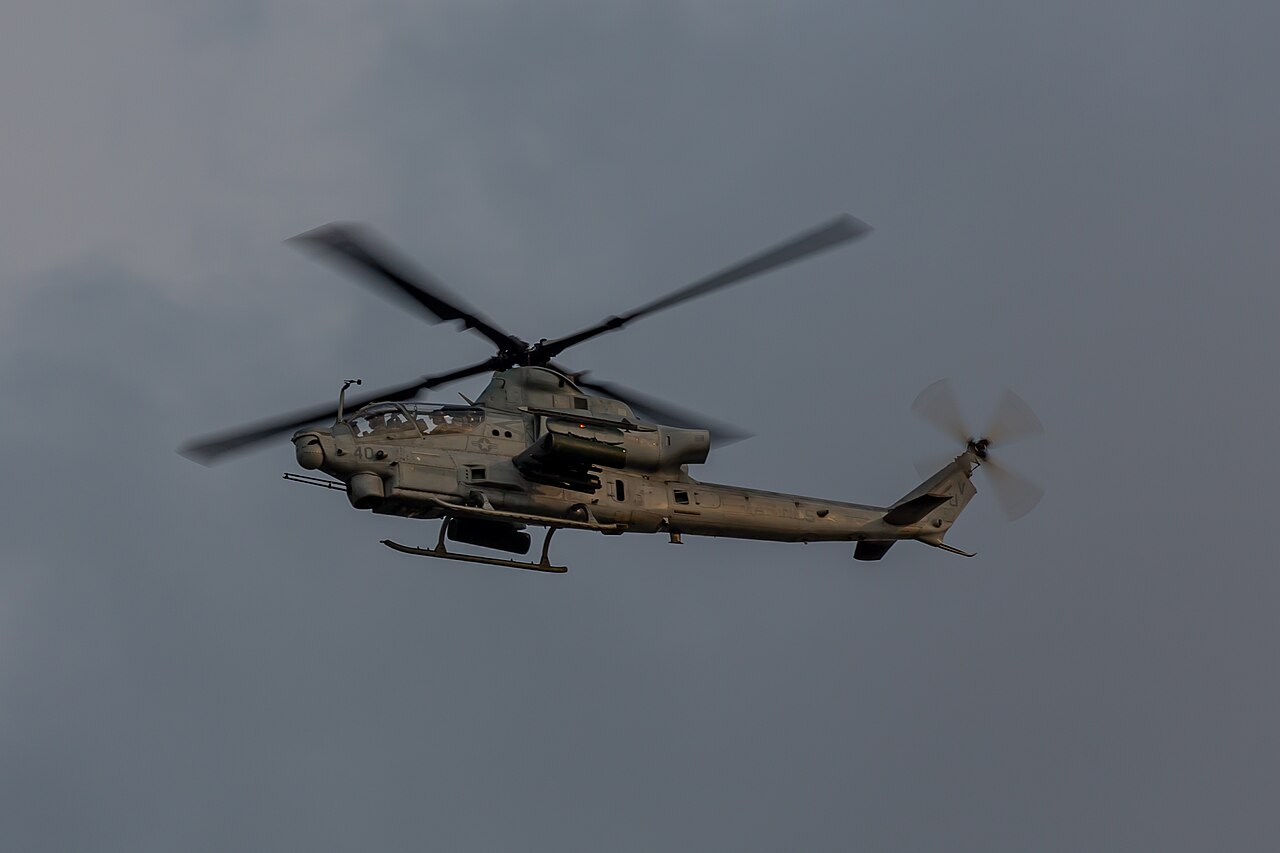


The Nigeria AH-1Z Viper programme covers 12 Bell attack helicopters for the Nigerian Air Force, and its headline figure of $997 million is easy to misread. That number is the ceiling set in a 2022 US notification, not the price of the aircraft. The production contract is reported at about $455 million, and a third figure, roughly $18 million, covers a training device. This guide separates the three, explains what each one buys and sets out where production stands after the September ceremony at Bell’s plant in Texas.
What the Nigeria AH-1Z Viper Deal Is Worth
The US State Department approved a possible Foreign Military Sale of 12 AH-1Z Viper helicopters to Nigeria in April 2022. The Defense Security Cooperation Agency published the notice on 14 April, putting the estimated value at $997 million. The notice describes that sum as the highest estimated value based on initial requirements, so the final amount can be lower.
A notification is not a contract. It tells Congress what Washington is prepared to sell and sets the upper limit for the case. Nigeria then accepts an offer, pays into the case, and the US government places contracts with the manufacturer. Army Recognition reports a first Nigerian payment in August 2023, although the amount has not been disclosed.
Nigeria was described at the time as the third foreign customer for the AH-1Z, after Bahrain and the Czech Republic. For a detailed chronology of the earlier steps, see the DefenceMENA programme tracker.
Reading the Figures: Ceiling, Contract and Training Award
Five different dollar amounts circulate in coverage of the Nigerian Viper order. They describe different things and cannot be added together or compared as unit prices.
| Figure | What it is | Date | Basis |
|---|---|---|---|
| $997 million | Estimated upper value of the full sale case | April 2022 | DSCA notice |
| About $455 million | Bell production contract for 12 helicopters, plus engineering, programme management and logistics | March 2024 | US contract announcement, as reported by FlightGlobal and Military Africa |
| $25 million | Part of the case for facilities and Air Ground Integration assistance, including targeting procedures | Inside the 2022 notice | DSCA notice |
| About $18 million | Bell award for one flight training device and an initial spares kit, completion due January 2029 | August | US contract announcement, as reported by The Defense Post |
| $346 million | Separate munitions notification; the notice does not name the aircraft | August 2025 | DSCA notice |
Dividing $455 million by 12 gives about $37.9 million per helicopter. That is arithmetic on a contract total, not a flyaway price, because the same contract pays for engineering, programme management and logistics. A trade-press estimate of about $45 million for each Turkish T129 ATAK is likewise not a contract figure, so the two should not be set side by side as unit costs.
The public record does not itemise how the other roughly $542 million of the ceiling is divided. Some of it may never be spent, since a notification states a maximum.
What the $997 Million Ceiling Covers
The DSCA notice lists the contents of the case.
- 12 AH-1Z attack helicopters.
- 28 T700-GE-401C engines, of which 24 are installed and four are spares.
- 2,000 APKWS guidance sections for 2.75-inch rockets.
- The M197 20 mm three-barrel cannon and ammunition.
- The Target Sight System, night vision goggles, a night vision cueing display, electronic warfare equipment and communications gear.
- A mission planning system, training equipment, spare parts, tools and technical publications.
- US government and contractor engineering and logistics support, plus oversight of facilities construction.
The prime contractors named are Bell, in Fort Worth, Texas, and General Electric, in Lynn, Massachusetts. The notice states that Nigeria can absorb the equipment and services into its armed forces and presents the sale as support for regional stability and interoperability with Western partners.
AH-1Z Viper Production and Delivery Timeline
Bell began building the first Nigerian aircraft on 16 September 2026 at its Amarillo Assembly Center in Texas. A Nigerian delegation led by Air Marshal Sunday Kelvin Aneke, the Chief of the Air Staff, toured the line and signed the first airframe. Officials from the US Naval Air Warfare Center Training Systems Division, which oversees the contract, also attended, according to The Defense Post.
In its press release of 17 September, Bell said the contract covers 12 Vipers built at Amarillo with engineering, programme management and logistics support, and that production is expected to finish in early 2029. Bell’s H-1 programme director, Scott Sims, said the company was honoured to host the Nigerian Air Force at the milestone.
No date for the first delivery has been published. Early 2029 is the only completion milestone given, and it applies to the whole batch of 12. Army Recognition reports that the contract originally pointed to July 2028, which would put the schedule about half a year later than first planned. That comparison rests on a single outlet and Bell has not confirmed it.
Preparation on the ground has started. Work on facilities and sustainment between Nigeria and the US H-1 programme office was already under way in February 2026, and the August award for a flight training device, covered by The Defense Post, is the first visible step toward training aircrew.
Weapons: What Is Confirmed and What Is Not
The Viper can carry a wide range of weapons, but a customer only receives what its sale case lists. For Nigeria the confirmed items are narrower than the aircraft’s catalogue.
| Weapon | Status for Nigeria | Basis |
|---|---|---|
| M197 20 mm cannon | Included in the 2022 notice | DSCA notice |
| APKWS guidance sections (2,000) | Included in the 2022 notice | DSCA notice |
| AGM-114 Hellfire | Supported by the aircraft; not listed in the 2022 notice | Aviacionline, Army Recognition |
| AIM-9 Sidewinder | Supported by the aircraft; not listed in the 2022 notice | Bell, as cited by The Defense Post |
| APKWS II rounds (5,000) | Separate August 2025 notification; aircraft not named | DSCA notice |
The August 2025 notice covers 1,002 Mk 82 bombs, Paveway II guidance kits and 5,000 APKWS II rounds. It does not say which Nigerian aircraft will use them, so linking that package to the Vipers would go beyond what is published. The Nigerian Air Force also flies A-29 Super Tucano light attack aircraft.
The absence of Hellfire from the 2022 list has drawn comment in the specialist press. Aviacionline read it as a sign of limited US confidence, but that is the author’s inference and not a position stated by Washington. A separate request or a later notification would be needed if Nigeria wants the missile.
How the Viper Fits Nigeria’s Attack Helicopter Fleet
The Nigerian Air Force has fought Boko Haram and ISWAP in the north-east, and armed bandit groups in the north-west, with Russian-supplied Mi-24V and Mi-35 gunships and a small number of Turkish T129 ATAK helicopters. Six T129s were ordered; the delivery record is covered in why Nigeria bought the T129 ATAK.
| Type | Origin | Status |
|---|---|---|
| Mi-24V and Mi-35 Hind | Russia | In service; the inventory is not publicly itemised |
| T129 ATAK | Türkiye | Six ordered; deliveries began in November 2023 |
| AH-1Z Viper | United States | 12 on order; first airframe in production since mid-September |
The Nigeria AH-1Z Viper order would add a third attack helicopter type, and the first from a Western supplier with a US support chain. Military Africa notes that 12 helicopters is a modest number for a country the size of Nigeria and that a fleet built from American, Turkish, Italian and Chinese equipment spreads political risk while complicating maintenance.
Operational tempo shows why the Air Force wants more rotary-wing strike capacity. Military Africa, citing Air Force figures, reports more than 6,100 flying hours and over 2,900 sorties between November 2025 and September. The current inventory is listed in the Nigerian Air Force aircraft guide, and a regional comparison is available in the piece on Morocco’s attack helicopters.
What to Watch Next in the Nigeria AH-1Z Viper Programme
- A published delivery schedule, including when the first aircraft is expected to leave Amarillo.
- The start of pilot and maintainer training, and whether the flight training device is installed in the United States or in Nigeria.
- Completion of the facilities that the 2022 case funds, and the base from which the Vipers will operate.
- Any new US notification covering Hellfire or other missiles for the Vipers.
- Further delivery reports on the T129 fleet, which will determine how many modern attack helicopters the Air Force has in service before the Vipers arrive.
Status is stated as at the time of writing. The ceiling, contract and training figures come from US government notices as reported by the press, and Nigerian authorities have not published their own breakdown.
Frequently Asked Questions
How much is Nigeria paying for the AH-1Z Viper helicopters?
No single price has been published. The US approved a sale with an estimated maximum value of $997 million, which covers weapons, spares, training and support. The Bell production contract is reported at about $455 million for 12 helicopters. The final cost depends on what Nigeria actually buys under the case.
When will the first Nigerian Viper be delivered?
No delivery date has been announced. Bell began building the first aircraft on 16 September and expects production of all 12 to finish in early 2029. Crew training, facilities and acceptance steps will also affect when the Air Force can fly the helicopters operationally in Nigeria.
Will the Nigerian Vipers carry Hellfire missiles?
The 2022 notice does not list Hellfire. It lists the M197 cannon and 2,000 APKWS guidance sections for 2.75-inch rockets. The AH-1Z can fire Hellfire, but Nigeria would need approval to buy it. No US notification for Hellfire missiles for Nigeria has been published at the time of writing.
How many helicopters are in the Nigeria AH-1Z Viper order?
Nigeria has ordered 12 AH-1Z Vipers for the Air Force. The package includes 28 engines, 24 installed and four spares. Bell is building them at its Amarillo Assembly Center in Texas, under a contract managed by the US Navy’s training systems command on behalf of Nigeria.
Sources
- Seapower Magazine: State Dept. approves possible sale of AH-1Z helicopters to Nigeria (DSCA notice, April 2022)
- Helis: AH-1Z Nigeria DSCA notice summary
- Aviacionline: US authorises sale of AH-1Z Viper to Nigeria without Hellfire missiles
- Bell Textron press release, 17 September 2026, via Vertical
- FlightGlobal: Nigeria’s first Bell AH-1Z attack helicopter enters production
- The Defense Post: Bell starts Viper helicopter build for Nigeria
- The Defense Post: US taps Bell for $18M Nigeria AH-1Z training deal
- Army Recognition: Bell starts production of 12 AH-1Z Viper helicopters for Nigeria
- Military Africa: Nigeria’s AH-1Z Viper order enters production as Air Force expands
- DSCA notice, Nigeria munitions, 13 August 2025 (GlobalSecurity mirror)