Senegal Tells AFRIDEX: Judge Africa’s Defence Partnerships by Results, Not Donations



At Africa’s first dedicated continental defence exhibition, Senegal’s armed forces used their platform not to announce a purchase, but to challenge how African militaries measure the partnerships they already have. The message from Dakar: stop counting donated kit and training slots, start counting operational gaps actually closed.
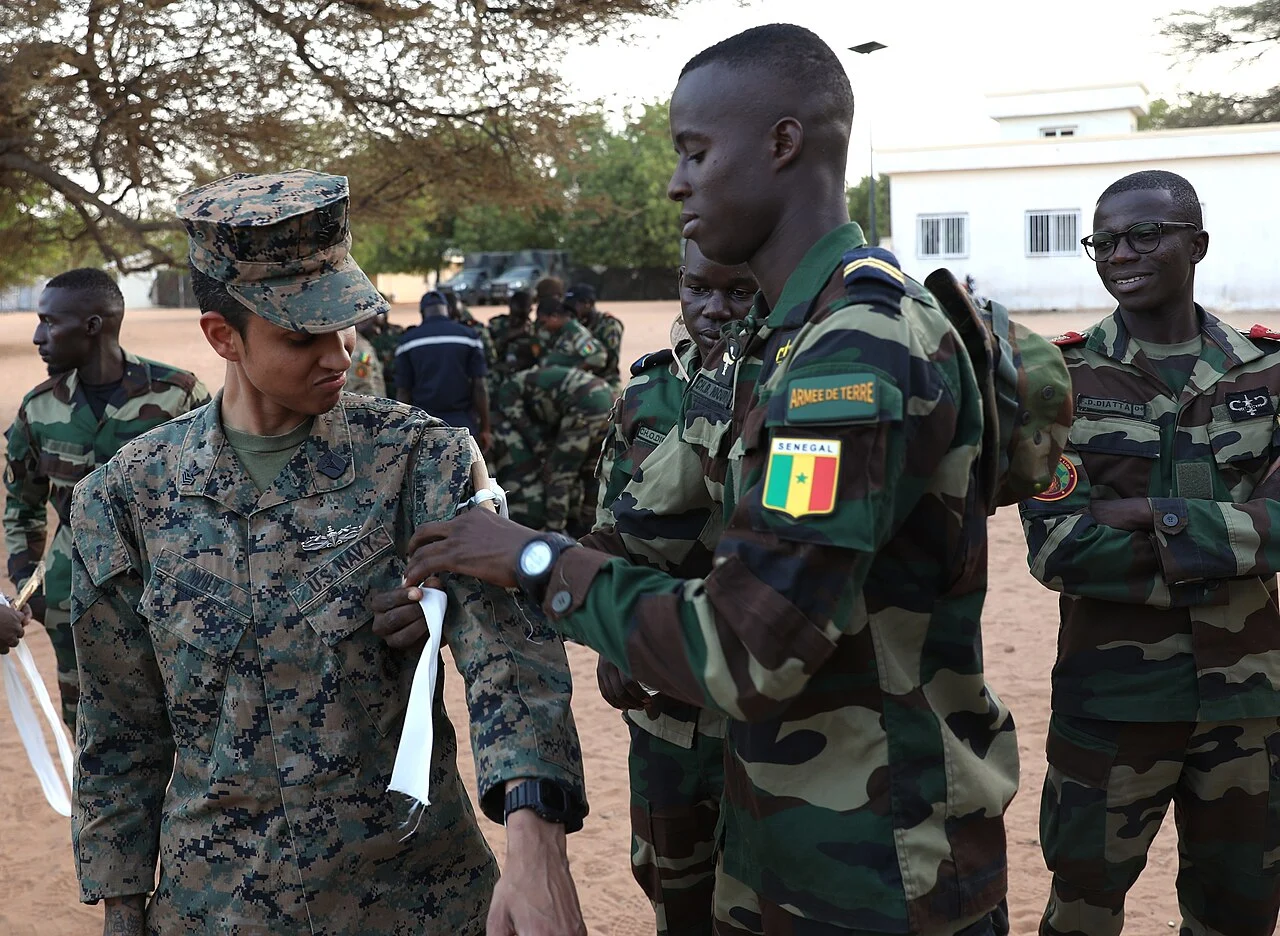
Photo: A Senegalese soldier applies a tourniquet during a combat-lifesaver exchange with US Marine Forces Europe and Africa at Exercise African Lion 2024, Dodji, Senegal. Credit: U.S. Army Reserve photo by Sgt. Ricky Gavilan, public domain, via Wikimedia Commons
Speaking on a panel at the inaugural Africa International Defence Exhibition (AFRIDEX) in Lagos on 27 October, Brigadier General Latif Kamara, Director General of the Senegalese Institute of Defence, delivered a case on behalf of Vice Admiral Oumar Wade, Chief of the General Staff of the Senegalese Armed Forces, for what he called action-oriented defence partnerships, defenceWeb reported. The argument was blunt: donated equipment and training packages, on their own, no longer meet the scale of the threat African forces face.
A region carrying half the world’s insurgent violence
The panel, moderated by retired British Army officer Major General Neil Sexton, cited a striking figure: the Sahel now accounts for roughly 50 percent of global deaths from insurgency and terrorism, a burden that has pushed Sahelian and coastal West African states alike to look past bilateral aid packages toward deeper structural cooperation.
Wade’s position, delivered through Kamara, was that partnerships should be judged by what they change on the ground: interoperability between allied forces, the closing of specific operational gaps, and whether African militaries come out of a programme more able to sustain themselves. Priority areas he named included joint training, intelligence sharing, coordinated operational planning, maintenance capacity and logistics — the unglamorous infrastructure that determines whether a mission succeeds once the cameras leave.
Logistics, not hardware, as the limiting factor
That point was reinforced by Major General John Clark, Commander of the Integrated Global Defence Network at the UK Ministry of Defence, who addressed logistics coordination for multinational task forces operating across sub-Saharan Africa. Clark argued that well-planned missions are routinely undone not by a lack of equipment but by mismatched supply chains, incompatible communications systems and divergent national procedures between contributing forces — frictions that surface the moment several African armies, or African and foreign forces, try to operate side by side.
Both speakers pointed to the same underlying problem that has dogged multinational counter-insurgency efforts from the defunct G5 Sahel Joint Force to current AU-mandated missions: coalitions assembled quickly on paper tend to stall in the field over who maintains what equipment, whose radios talk to whose, and which army has authority to call in support from another’s assets. Discussions at the Lagos panel also touched on local defence production, through-life equipment support, technical skills development and the need for agreed command and accountability arrangements before multinational operations begin, rather than improvised once they are under way.
Senegal’s own procurement record backs the argument
Senegal is not a bystander making the case from the sidelines. Dakar has spent the past several years diversifying its own suppliers rather than relying on a single partner, buying a Thales Ground Master 400 air-surveillance radar from France to close a long-standing air-domain gap, acquiring OCEA-built offshore patrol vessels to extend its navy’s reach into the Atlantic approaches it must police for fishing and trafficking, and hosting recurring multinational exercises such as Flintlock that bring Nigerien, Nigerian, European and American forces onto Senegalese soil. That record of acquiring capability deliberately, rather than accepting whatever training slot or donation is on offer, is consistent with the framework Kamara described in Lagos.
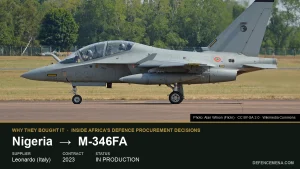
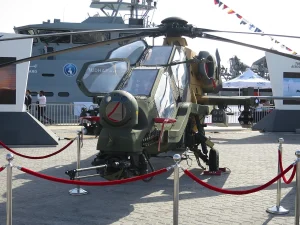
Nigeria, hosting AFRIDEX for the first time, has been making a parallel argument from the industrial side of the same problem. Lagos used the exhibition’s opening to pledge domestically produced tanks, armoured vehicles and drones within a year, while Turkish manufacturers used the show to pitch co-production rather than one-off hardware sales — both gestures toward the same shift Wade described, away from transactional arms purchases and toward sustainable local capability.
Why it matters for Africa
The Sahel’s insurgencies have exposed the limits of donated-hardware diplomacy: Mali, Burkina Faso and Niger inherited substantial Western-supplied arsenals before expelling the forces that trained their crews, and the equipment that remains is only as useful as the maintenance pipelines and command structures behind it, something Mali’s own post-rupture force structure illustrates clearly. For West African and Sahelian states weighing new offers from France, Türkiye, Russia, China, Gulf states and multilateral bodies alike, Wade’s framework offers a concrete test: does an agreement build a capability the recipient force can run and fix itself, or does it simply create another dependency with a different flag attached? For militaries across the region still negotiating which partners to deepen ties with, that distinction is likely to shape procurement decisions well beyond Lagos.
Sources
- defenceWeb: “Senegal calls for action-oriented African defence partnerships at Afridex”
- DefenceMENA: Nigeria pledges local tank, APC and drone production at AFRIDEX 2026
- DefenceMENA: Why Did Senegal Buy the Ground Master 400 Radar?