Nigeria Pledges Local Tanks, APCs and Drones Within a Year as It Opens AFRIDEX 2026



Nigeria used the opening of its first pan-African defence exhibition to make a concrete industrial pledge: locally built tanks, armoured personnel carriers and drones within a year. President Bola Tinubu paired the announcement with a continent-wide call for African states to stop simply buying their way to security.
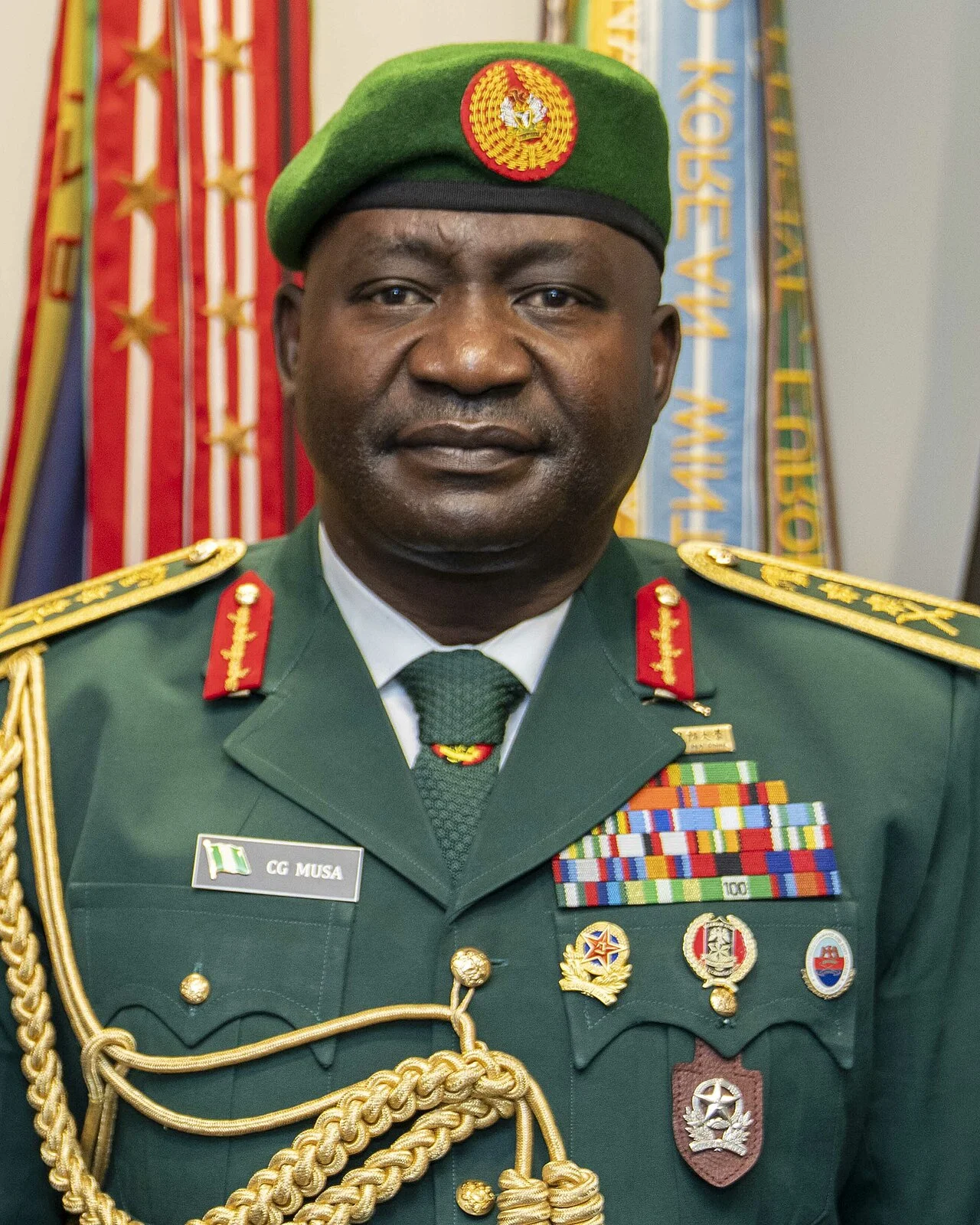
Photo: Nigerian Defence Minister Gen. Christopher Gwabin Musa (rtd), pictured during a 2024 Pentagon meeting as Chief of Defence Staff. Credit: DoD photo by Staff Sgt. Alexander Nieves, Public domain, via Wikimedia Commons
The Africa International Defence Exhibition (AFRIDEX) 2026 opened on 26 October at Eko Atlantic in Lagos, drawing delegations from more than 20 African countries and, according to Defence Minister Gen. Christopher Gwabin Musa (rtd), participants from over 66 nations in total. It is the first edition of what organisers — the Federal Ministry of Defence, the Defence Industries Corporation of Nigeria (DICON) and exhibition organiser dmg events — hope will become a recurring, Africa-hosted counterpart to shows such as AAD in South Africa or IDEX in the Gulf.
A presidential message on self-reliance
President Tinubu did not attend in person; his message was read to the opening-day audience by Senate President Godswill Akpabio. According to defenceWeb, Tinubu said Africa “must become more self-reliant” and build partnerships that “strengthen African strategic resilience,” arguing that “the measure of a successful partnership is the capability it leaves behind.”
Nigeria’s state broadcaster Voice of Nigeria reported that Tinubu called for more local military-equipment production, technology transfer and strategic defence partnerships, warning that threats “ranging from terrorism and cross-border crime to cyberattacks” were becoming increasingly interconnected. He said defence deals should strengthen African engineers and build institutional capacity rather than simply deliver hardware, and he pressed for predictable funding for African-led peace operations — a recurring complaint among African militaries that rely on donor-funded missions.
Musa’s one-year production pledge
The sharpest news line came from Musa himself. Speaking at the opening ceremony, the minister said Nigeria intends to begin “large-scale local production of defence equipment within the next year,” including locally made tanks, armoured personnel carriers and drones, according to Voice of Nigeria‘s account of the ceremony. He urged manufacturers attending AFRIDEX to invest directly in Nigeria’s defence sector rather than treat the country purely as a buyer’s market, and said the exhibition was “designed to strengthen the country’s position in the global defence manufacturing industry.”
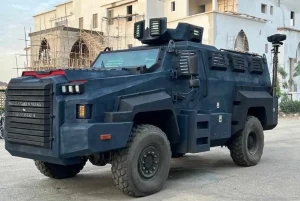
That is an ambitious timeline for armoured-vehicle and drone manufacturing, even accounting for Nigeria’s existing industrial base. DICON already produces small arms, ammunition and some armoured vehicles at its Kaduna complex, and Nigerian firm Proforce has been building and upgrading MRAPs domestically for several years, most recently unveiling its PF Terminator. Nigeria has also been assembling and operating a mixed Turkish-Chinese drone fleet rather than building UAVs from scratch, and its wider armoured vehicle fleet is still dominated by imported Chinese, South African and Russian-origin designs. A credible “tanks within a year” claim would most plausibly mean assembly or licensed local production of an existing foreign design — most likely in partnership with one of the OEMs Nigeria has been courting — rather than an indigenously designed main battle tank.
Nigeria has spent the past several months opening the door to exactly that kind of partnership. In early October, DICON formally invited foreign original equipment manufacturers to set up local partnerships ahead of AFRIDEX, and ASELSAN has separately been scouting a Nigerian manufacturing partner. Those moves track a broader pattern: Lagos-based reporting on the opening noted that Minister of State for Defence Bello Muhammad Matawalle, Chief of Defence Staff Gen. Olufemi Oluyede and DICON Director-General Maj. Gen. B.I. Alaya all attended, alongside Lagos State Deputy Governor Obafemi Hamzat, who delivered a goodwill message tying the exhibition to Lagos’s role as a maritime and commercial gateway.
A continental argument, not just a Nigerian one
The self-reliance theme was echoed from outside Nigeria. ECOWAS Commission President Gen. Birame Diop, in remarks carried by both defenceWeb and Voice of Nigeria, said “Africa’s future security lies not in dependence on others, but in our collective ability to design” solutions suited to the continent’s own threats — which he listed as terrorism, transnational organised crime, banditry, piracy, unconstitutional changes of government, cyber-attacks and disinformation. Diop argued that in an increasingly multipolar world, access to defence equipment and critical technologies “can be limited by external powers’ interests,” making readiness and self-reliance a necessity rather than a preference.
That framing matters for how the pledge should be read. Nigeria is not alone in talking about reducing dependence on foreign suppliers: DefenceMENA has tracked similar arguments from Tunisia’s debate over US military aid dependence to Gulf states restructuring their own industrial base. What AFRIDEX adds is a Nigerian-hosted platform for African governments to make that case to each other and to the OEMs in the room, rather than relying on shows held in Europe, the Gulf or South Africa.
Why it matters for Africa
For Nigeria specifically, a one-year pledge on tanks, APCs and drones sets a public benchmark that will be easy to check against: either DICON, Proforce or a new OEM partnership rolls out tangible local production within the stated timeframe, or it does not. For the wider region, the political signal is arguably more significant than the hardware. West African armed forces — several of them, like Nigeria’s, stretched across Boko Haram and Islamic State West Africa Province operations in the northeast — have spent the past decade buying whatever combination of Turkish, Chinese, Russian and Western equipment was available and affordable. A serious push toward licensed local assembly, maintenance capacity and technology transfer would reduce the logistics and spare-parts dependency that has repeatedly grounded African air forces and armour fleets, and it would give Nigeria leverage to negotiate better terms with the OEMs now competing for a seat at AFRIDEX. Whether the one-year timeline survives contact with procurement reality is the next thing to watch.
Sources
- defenceWeb — “Africa needs to be more self-reliant and strengthen its security capabilities – Tinubu”
- Voice of Nigeria — “President Tinubu Calls for Stronger African Defence Cooperation”
- Voice of Nigeria — “Nigeria Woos Global Defence Investors at AFRIDEX 2026”