What to Expect at AFRIDEX 2026: Nigeria’s First Pan-African Defence Exhibition



Nigeria hosts Africa’s first dedicated, continent-wide defence and security exhibition next week, bringing more than 60 exhibitors and 14 national pavilions to Lagos. For a country pushing its own arms industry into export markets, AFRIDEX is as much a statement as a trade show.
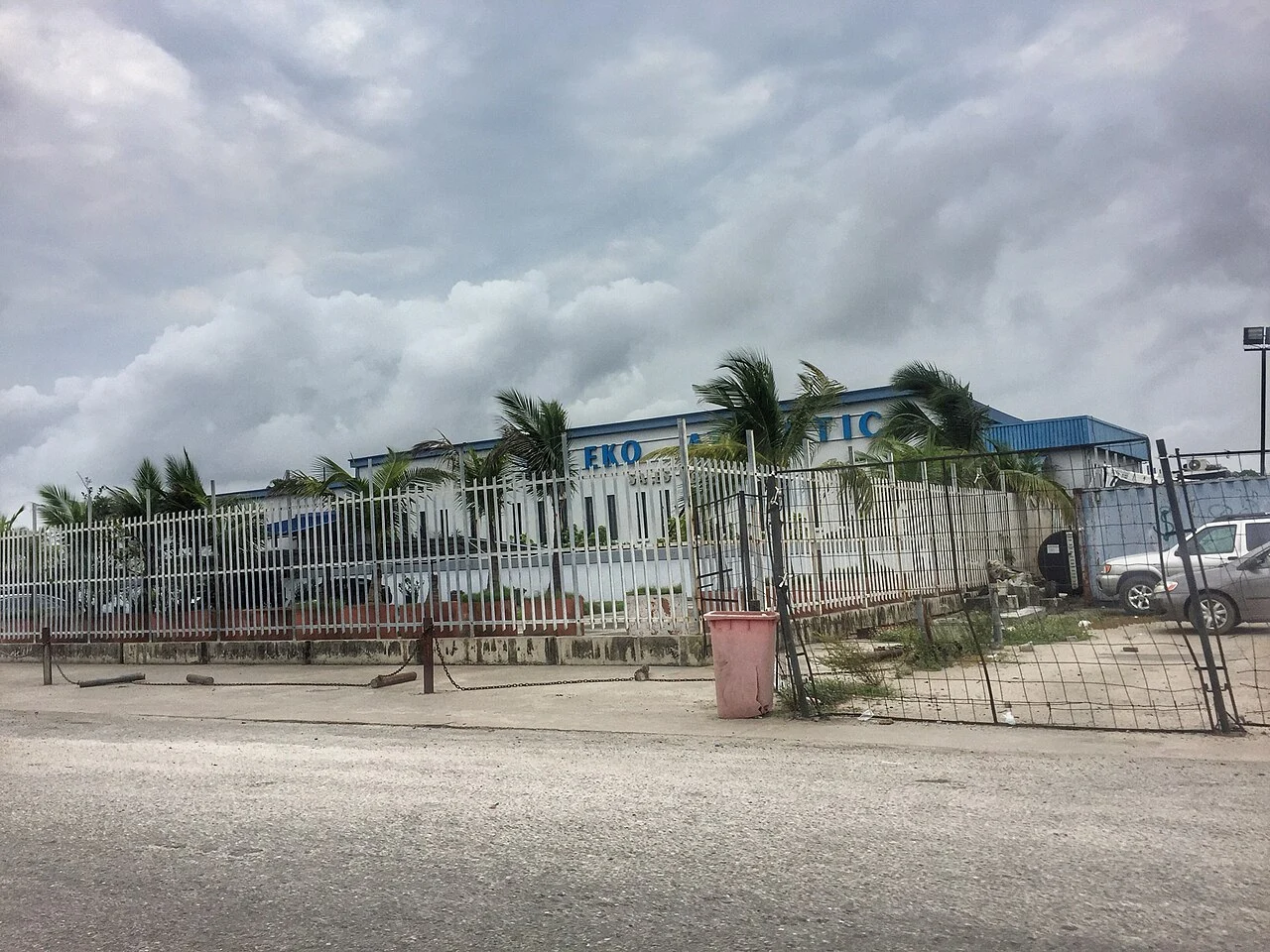
Photo: Eko Atlantic City, Lagos, the venue for AFRIDEX 2026. Credit: Kaizenify, CC BY-SA 4.0, via Wikimedia Commons
The Africa International Defence Exhibition, AFRIDEX 2026, opens on 26 October at Eko Atlantic, the reclaimed waterfront district on Victoria Island, and runs for four days until 29 October. It is organised by dmg events under the patronage of the Federal Republic of Nigeria and is hosted by the Defence Industries Corporation of Nigeria (DICON), with the Nigerian Army, Navy, Air Force, Ministry of Defence, Ministry of Interior, Office of the National Security Adviser, Nigeria Police Force, NIMASA, DSS and the Civil Defence Corps all listed as supporting agencies. ECOWAS is also named as a backer, giving the show a regional as well as a national mandate.
Organisers project more than 30,000 trade visitors and over 500 exhibitors by the time the halls close, figures that would make it comparable in scale to established regional shows such as South Africa’s AAD or Jordan’s SOFEX. The exhibitor list published on the event’s own site currently runs to roughly 70 confirmed companies, with 14 national pavilions — Azerbaijan, Bulgaria, Canada, China, Cyprus, Czech Republic, Germany, India, Italy, Poland, Türkiye, the UAE, Ukraine and the United States — a sign of how many governments are treating the Nigerian market as worth a coordinated push rather than leaving it to individual firms.
Who is actually showing up
The published exhibitor roster mixes global primes, mid-tier manufacturers and Nigerian firms. Rheinmetall and Embraer are the best-known Western names on the list. Türkiye has sent one of the largest national contingents of any country: ASELSAN, HAVELSAN, MKE (Mechanical and Chemical Industry Corporation), Turkish Aerospace Industries (TUSAŞ), STM and the UAV maker Uniccon Group are all confirmed, alongside armoured-vehicle specialist Arquus of France and naval systems house Med Marine. Qatar’s Barzan Holdings and China’s Norinco and Poly Technologies round out a notably international land, air and naval systems showing. On the host side, Nigerian firms including Proforce, DICON Magnifique, Solyd Nigeria and Tantita Security Services — one of two gold sponsors alongside the event’s own ARRIDEX brand — are using the show to put domestic manufacturing in front of foreign buyers and partners rather than the other way around.
The programme is built around five domains — land, air, maritime, cyber and space — with a Strategic Defence and Security Summit, a Technical Theatre and a Ministers of Defence in Africa Summit (MODIAS) running alongside the exhibition floor. An invitation-only “Defence Club” and a Hosted Delegation Programme are aimed at drawing in procurement officials rather than only industry visitors, and organisers have listed 47 official delegations, including the UK and US defence ministries and a long list of African armed forces and ministries.
Why Nigeria is hosting it
AFRIDEX did not appear out of nowhere. Nigeria has spent much of 2026 trying to turn DICON from a state ordnance factory into a platform foreign manufacturers can build through. DICON opened itself to OEM partnerships ahead of the show, and ASELSAN has separately been searching for a local manufacturing partner in Nigeria after opening a sales and support office in Abuja. Domestic manufacturer Proforce has used the run-up to the show to put new hardware in front of the army, unveiling its PF Terminator MRAP at a Nigerian Army Day event earlier this year, and the country’s wider armoured-vehicle fleet — a mix of imported and locally assembled platforms — has become a reference point for what local production can realistically add. Hosting a continental exhibition is the next step in that strategy: it puts Nigeria, rather than Pretoria or Abu Dhabi, at the centre of the conversation about how African armies buy equipment, at least for one week.
For the Turkish industry delegation, the show is a continuation of a push that is already well under way. ASELSAN, HAVELSAN, TAI and MKE used September’s AAD exhibition in South Africa to reinforce a continent-wide expansion, and Turkish armoured vehicle and drone exports to African armies have grown steadily on the back of price, financing terms and willingness to transfer production know-how — a pattern Envanter Medya examined in a look at why African buyers keep choosing Turkish armoured vehicles. A heavy Turkish presence in Lagos, barely a month after a heavy Turkish presence in Pretoria, underlines how central the African market has become to Ankara’s defence-export strategy.
What to watch for once the show opens
No contracts have been announced yet — this is a preview, not a report on deals signed — but a few things are worth tracking once the halls open. First, whether any of the OEMs on the exhibitor list use the show to announce local-assembly or technology-transfer agreements with DICON or Nigerian private manufacturers, extending the pattern already set by ASELSAN’s search for a partner. Second, whether the MODIAS ministerial summit produces any joint procurement statements or framework agreements involving ECOWAS members, given the bloc’s formal backing of the event. Third, whether Gulf and Chinese exhibitors — Barzan Holdings, Norinco, Poly Technologies — announce anything concrete, since both have been expanding sales to African militaries through financing packages that Western and Turkish competitors have struggled to match. And fourth, simply how many of the 500 exhibitors organisers project actually materialise; the published list of roughly 70 confirmed names is still some way short of that figure with less than a week to go.
Why it matters for Africa
African states spent an estimated $58 billion on arms and defence industry over the past several years even as many of them wrestle with budget shortfalls, and a growing share of that spending is going to manufacturers willing to localise production rather than simply ship finished platforms. A dedicated, pan-African exhibition hosted by the continent’s largest economy — with ECOWAS lending its name and more than a dozen governments sending national pavilions — gives African defence ministries a venue to compare suppliers, financing terms and local-content offers side by side, rather than negotiating bilaterally show by show in Europe, the Gulf or Asia. If AFRIDEX becomes a recurring fixture, as organisers clearly intend, it could do for West African procurement what AAD has long done for Southern Africa: concentrate competition, and leverage, in one place. For now, the test is simpler — whether the exhibitor list and the ministerial turnout match the ambition organisers have set for a first edition.
Sources
- AFRIDEX 2026 official exhibition site
- Engineering News: New African defence exhibition formally launched in Nigeria
- Military Africa: Lagos prepares to host inaugural AFRIDEX 2026
- SecurityInformed: AFRIDEX 2026 — Africa’s defence and security hub