Egypt’s 10 Biggest Defence Deals, 2011-2026

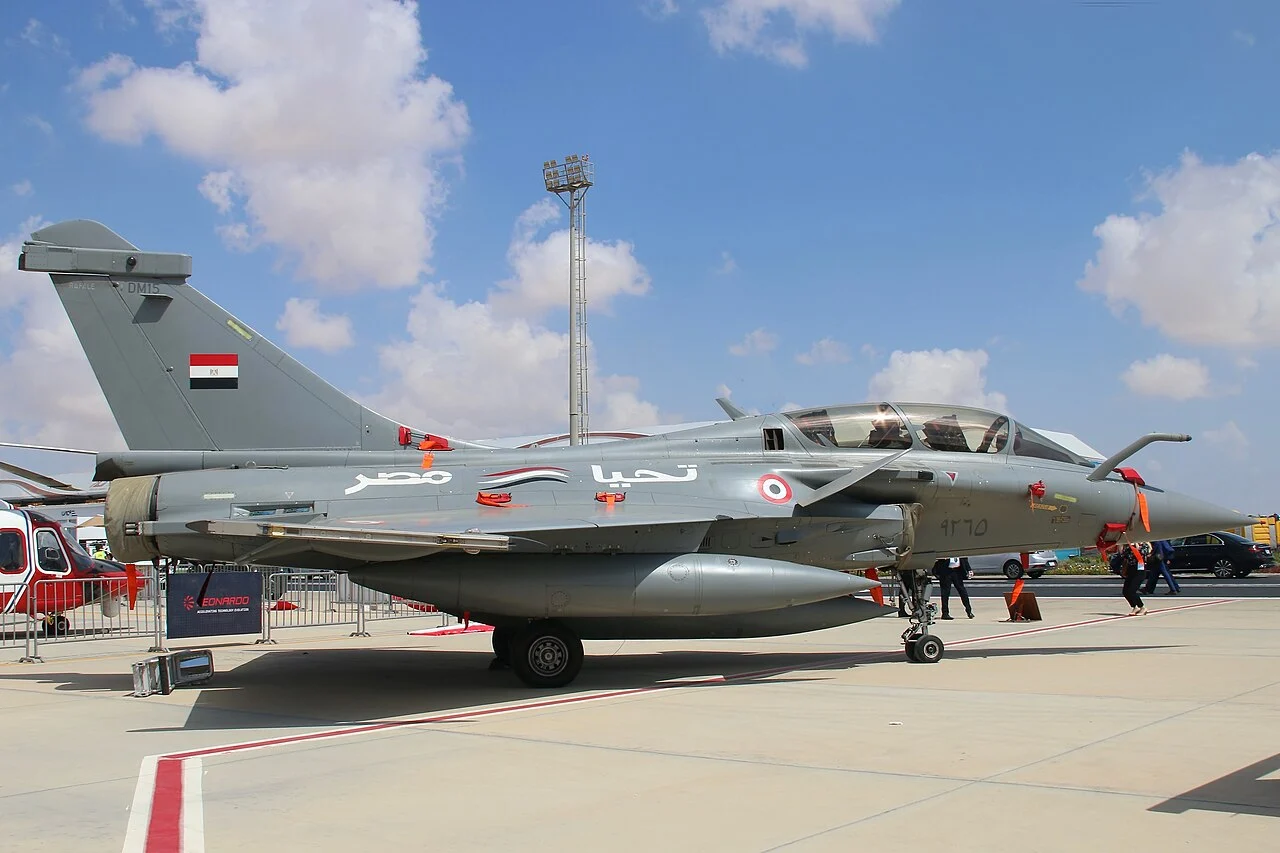


Egypt has signed more large, individually-priced defence contracts since 2011 than any other African state, spanning French fighters and frigates, Russian jets and missiles, South Korean artillery and German submarines. This list ranks Egypt’s ten biggest confirmed defence contracts by publicly reported signed value, 2011-2026, using the figure most consistently cited by named outlets for each deal.
DEFENCE AFRICA | Biggest defence deals | Data as of October 2026
No African air force or navy has diversified its suppliers as aggressively as Egypt’s over the past decade and a half. Cairo has bought front-line fighters from France and Russia within months of each other, commissioned frigates from Italy and Germany, licence-built artillery from South Korea, and kept a four-decade-old American tank co-production line running in parallel with all of it. The result is one of the most supplier-diverse, and best-documented, defence shopping lists on the continent, underpinning the force structure detailed in our Egypt military strength profile.
Because Egypt rarely discloses official contract values, every figure below comes from financial or defence-trade press reporting, cross-checked against at least two outlets where possible, and is labelled with the year it was reported. Where sources disagree, both figures are given. Deals that were only ever described as proposals, notifications or unexecuted contracts are kept out of the ranking and listed separately.
How we ranked
Entries are ranked by the signed contract value most consistently reported by defence-trade and financial outlets at signing, converted to US dollars where original reporting used euros. Egypt’s government has not published official figures for most of these contracts, so the values here are press estimates; each entry names the outlets and year. Deals reported only as intentions, notification ceilings, letters of intent or unexecuted contracts are excluded and appear instead under “Reported but unconfirmed.” Framework figures covering several unrelated systems are not counted as single contract values.
Key facts
- Egypt’s February 2015 Rafale-and-frigate package, worth more than €5 billion ($5.9 billion), was Dassault’s first export sale of the Rafale after nearly three decades without one (Defense News, 2015).
- Egypt signed a second Rafale contract for 30 more jets in May 2021, reported at roughly $4.5-4.8 billion (Al Jazeera, 2021).
- South Korea’s February 2022 K9A1 EGY howitzer deal, reported at about $1.7 billion, is described by industry press as the largest export contract in the K9 Thunder’s history (The Defense Post, 2022).
- Egypt operates both Russian MiG-29M/M2 and French Rafale fighters at the same airbase, a rare case of an air force fielding top-tier jets from opposing geopolitical blocs.
- A reported $2 billion Su-35 contract, signed in late 2018 according to Russian media, has never been executed; the jets remain undelivered amid US sanctions pressure (JNS, 2019).
1. Rafale and FREMM frigate package — contracted, delivered
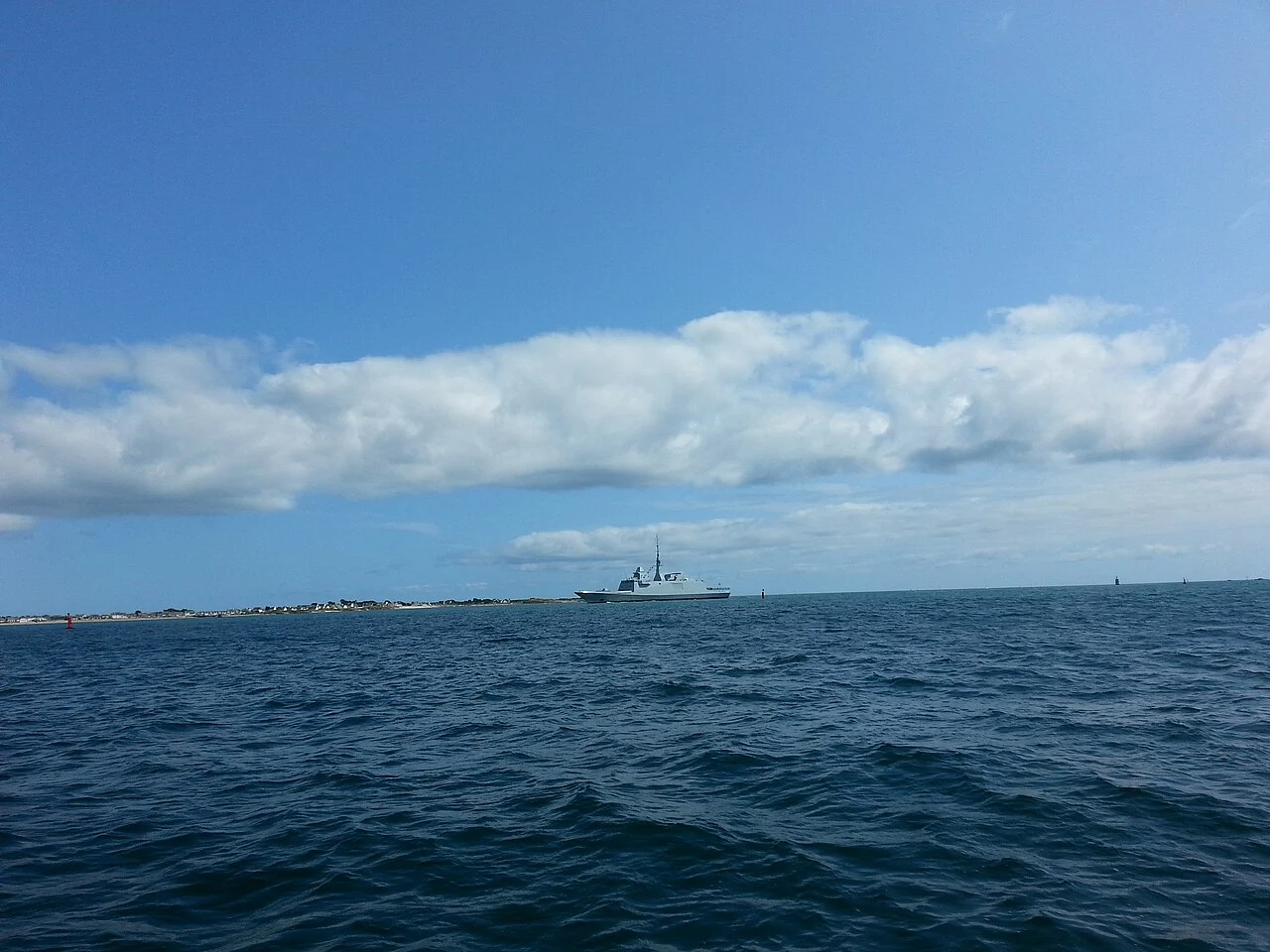
Buyer: Egypt. Supplier: France (Dassault Aviation, DCNS/Naval Group, MBDA). System: 24 Rafale EM/DM fighters, air-to-air and air-to-ground missiles, and one FREMM-class multimission frigate. Contract value: more than €5.2 billion (reported as $5.9 billion), per Defense News and Aviation Week, February 2015. Quantity: 24 jets, 1 frigate. Contract year: 2015. Delivery status: delivered.
Signed in Cairo on 16 February 2015, this was Dassault’s first Rafale export sale after 28 years without a foreign buyer. The package bundled 24 single- and two-seat Rafales with MBDA missiles and one FREMM frigate, originally built for the French Navy as the Normandie and handed to Egypt as Tahya Misr within months of signing. Half the cost was covered by Egyptian funds, the rest by French export-credit-backed loans. By mid-2017 Egypt had received 11 of the 24 jets, with deliveries completed afterward. It remains Egypt’s single largest confirmed defence contract and made Cairo the Rafale’s launch export customer, ahead of Qatar and India.
2. Second Rafale contract, 30 aircraft — contracted
Buyer: Egypt. Supplier: France (Dassault Aviation). System: 30 additional Rafale fighters with associated weapons and support. Contract value: reported between €3.75-4 billion and $4.5-4.8 billion, depending on outlet (Al Jazeera, Reuters via Arab News, 2021). Quantity: 30 jets. Contract year: 2021. Delivery status: contracted; deliveries expected 2024-2026 per the French defence ministry.
Egypt’s defence ministry confirmed the contract in May 2021 but, as with the 2015 deal, did not disclose an official price; published figures vary by outlet, from roughly €3.75 billion for aircraft alone to €3.95 billion including MBDA and Safran weapons and support. Because Egypt is heavily indebted, the purchase is financed through an export-credit-guaranteed loan covering up to 85 percent of the total, repayable over at least ten years. The order brought Egypt’s total Rafale commitment to 54 aircraft, reinforcing Cairo’s position as the type’s largest export operator. See our Egypt Rafale programme tracker for the full contract-by-contract history.
3. MiG-29M/M2 fighters, 46 aircraft — delivered
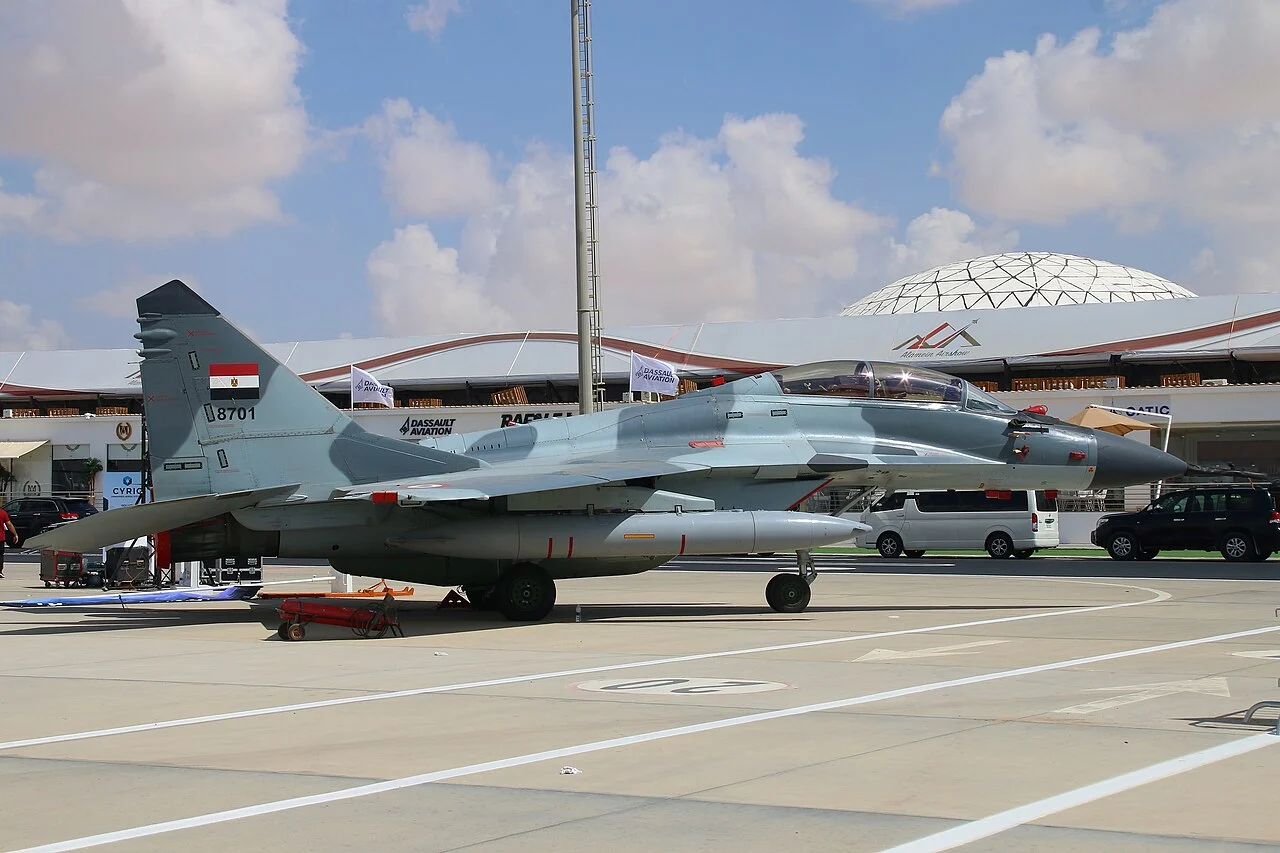
Buyer: Egypt. Supplier: Russia (Rosoboronexport/RAC MiG). System: MiG-29M single-seat and MiG-29M2 two-seat multirole fighters. Contract value: reported at up to $2 billion (Vedomosti via The Moscow Times, 2015-2016). Quantity: 46 aircraft. Contract year: 2015. Delivery status: delivered, completed by 2020.
Signed the same year as Egypt’s first Rafale contract, this order made Cairo the launch customer for the modernised MiG-29M/M2, effectively rescuing the MiG design bureau’s production line. Russian industry sources cited the deal as worth up to $2 billion, though Moscow never published an official figure. Egypt now operates the type alongside Rafales and F-16s at the same bases, an unusually broad spread of Western and Russian avionics to sustain at once. Spares have grown harder to source since 2022 as US sanctions on Russia complicate the supply chain.
4. K9A1 EGY self-propelled howitzers — contracted
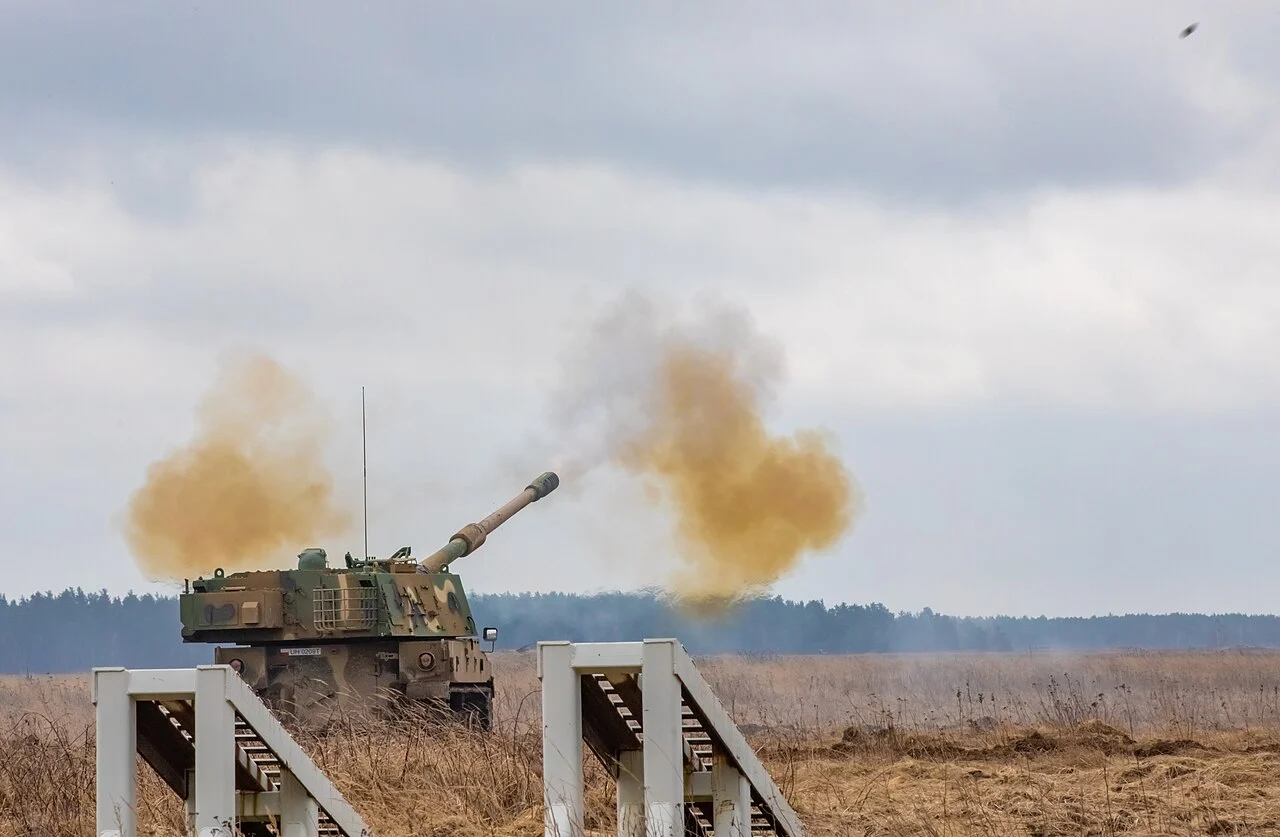
Buyer: Egypt. Supplier: South Korea (Hanwha Defense). System: K9A1 EGY 155mm self-propelled howitzers, K10 ammunition resupply vehicles and K11 fire-direction vehicles. Contract value: reported at $1.66-1.7 billion, or more than two trillion won (The Defense Post, Asian Military Review, 2022). Quantity: several hundred vehicles across the K9A1 EGY family (exact total not disclosed). Contract year: 2022. Delivery status: contracted; licensed production under way.
Signed on 1 February 2022, this was, at the time, the largest single export contract in the K9 Thunder’s history. Hanwha Defense delivers an initial batch of complete vehicles, with the bulk built under technology transfer at Egypt’s state-run Military Factory 200, which analysts call more significant for the country’s industrial base than the howitzers themselves. South Korea’s own disclosure described the package only in won, leaving the dollar figure to press conversion. The deal gave Egypt’s land forces modern, mobile long-range fires to replace Soviet-era artillery. Read more in our feature on why Egypt bought the K9.
5. Type 209/1400mod submarines, four boats — delivered
Buyer: Egypt. Supplier: Germany (ThyssenKrupp Marine Systems). System: Type 209/1400mod diesel-electric attack submarines. Contract value: about €1.4 billion, reported as roughly $1.7 billion, across two contracts (Defense News, citing DPA, 2021). Quantity: 4 boats (two contracts of two each). Contract year: first pair 2011, second pair exercised by 2015. Delivery status: delivered; the fourth boat, S44, handed over in 2021.
Egypt ordered its first two Type 209/1400mod boats in 2011 for roughly €900 million, then exercised an option for two more, reportedly worth over €500 million, bringing German media’s estimate of the total to about €1.4 billion ($1.7 billion). Built at Kiel, the four boats replaced Egypt’s ageing Romeo-class submarines, giving the navy a modern undersea capability covering both the Mediterranean and Red Sea approaches. Berlin’s approval of the later tranches drew domestic criticism over Egypt’s human-rights record, a tension our feature on Germany’s arms relationship with Egypt covers in detail.
6. FREMM frigates, second pair — delivered
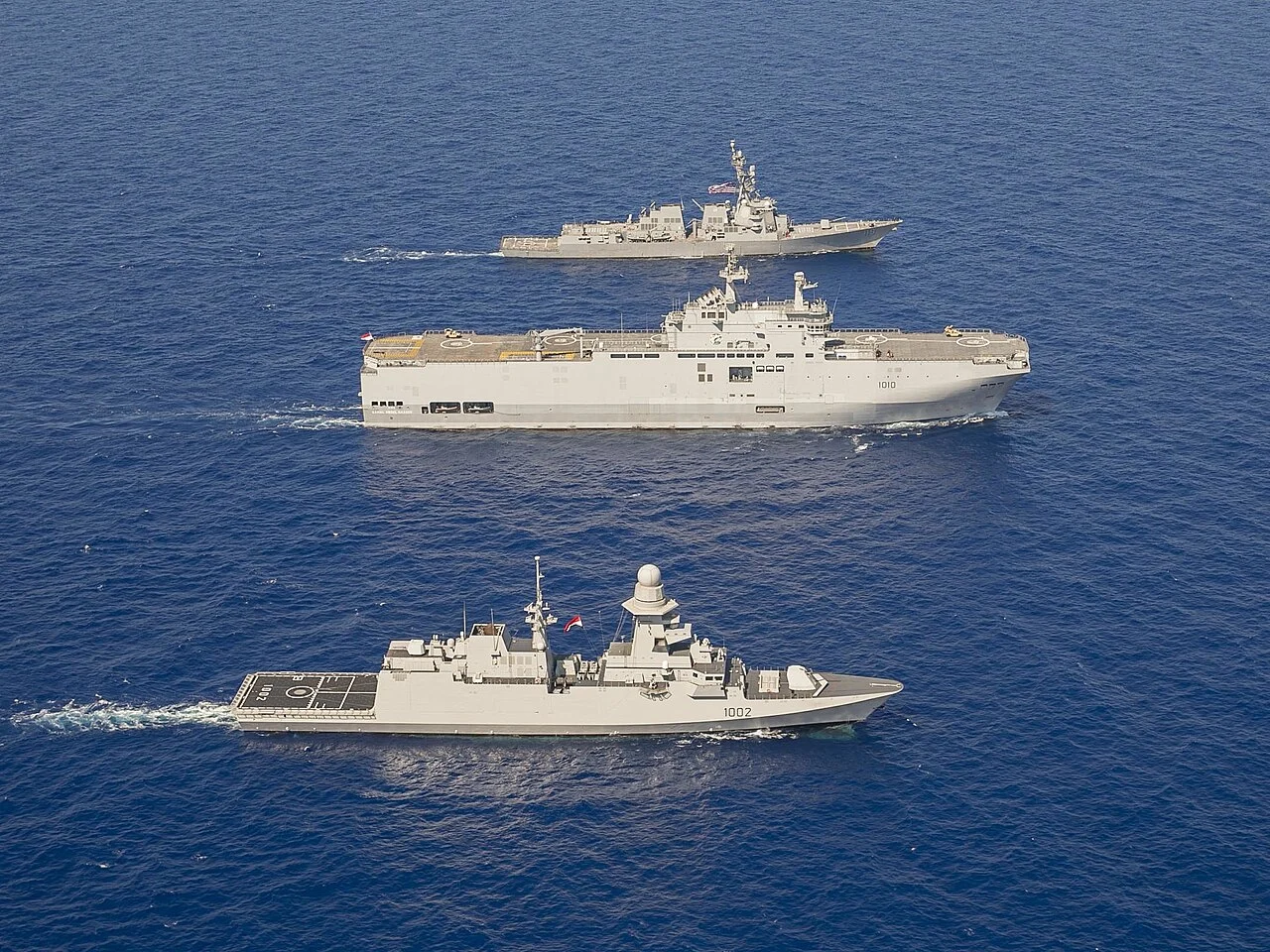
Buyer: Egypt. Supplier: Italy (Fincantieri). System: two additional Bergamini-class FREMM multimission frigates, ex-Italian Navy hulls Spartaco Schergat and Emilio Bianchi, renamed for Egyptian service. Contract value: about €1.2 billion ($1.2 billion), reported by Naval News and Janes, 2020. Quantity: 2 frigates. Contract year: 2020 (government approval; Italy’s export clearance followed in August 2020). Delivery status: delivered, December 2020 and April 2021.
Five years after taking the one-off Tahya Misr, Egypt returned to Fincantieri for two more FREMM frigates, diverted from Italian Navy orders in a deal Rome approved under Prime Minister Giuseppe Conte. Reported pricing again varied by outlet, from about €1.2 billion for the pair to higher per-ship estimates, with a state-backed financing facility of up to €500 million from Cassa Depositi e Prestiti easing the burden on Egypt. The acquisition gave Egypt’s navy four FREMM hulls in total, consolidating its position as the largest FREMM operator outside France and Italy.
7. Gowind 2500 corvettes, four ships — delivered
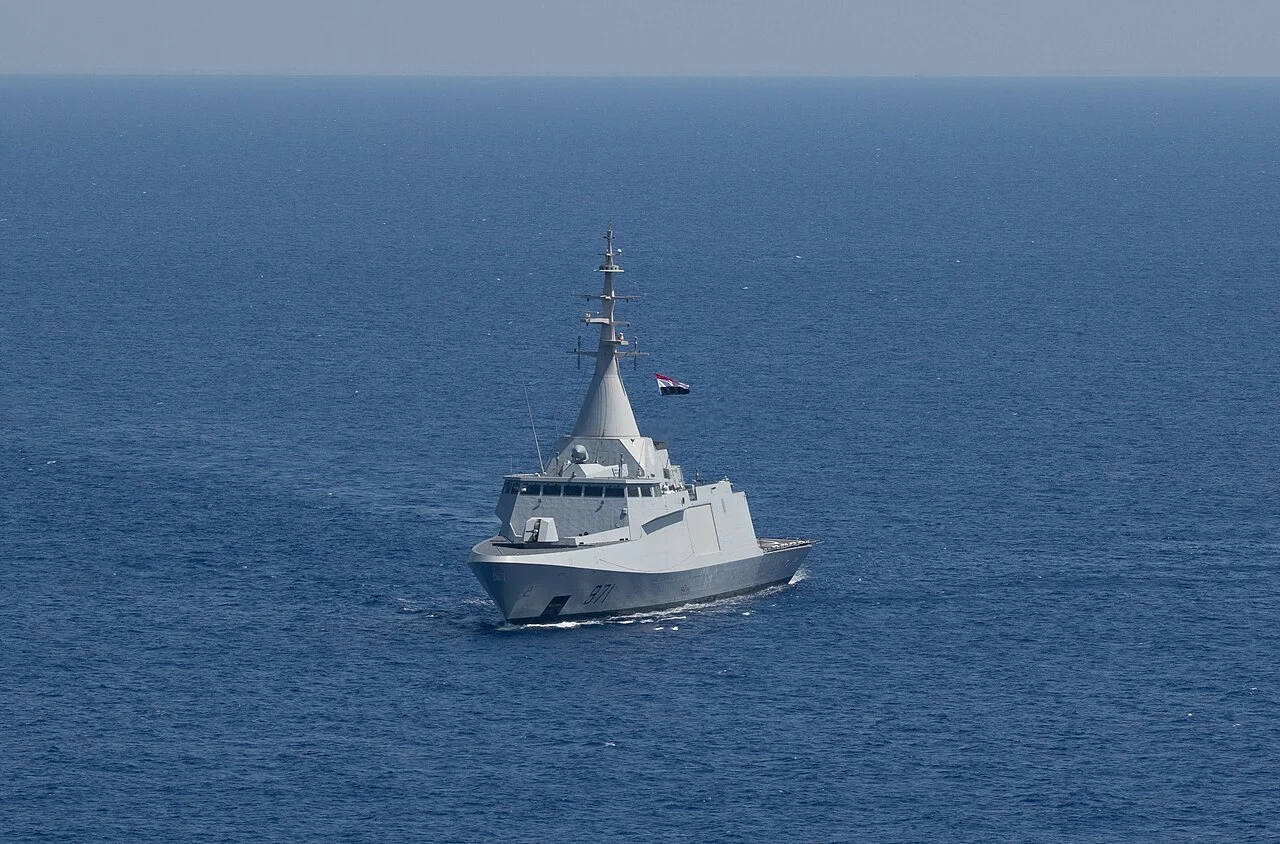
Buyer: Egypt. Supplier: France (DCNS, later Naval Group), with local construction at the Alexandria Shipyard. System: Gowind 2500-class corvettes. Contract value: about €1 billion for the hulls (naval-technology.com, 2014), plus a separately reported MBDA missile package of about €400 million. Quantity: 4 corvettes, with an option for two more. Contract year: 2014. Delivery status: delivered; all four commissioned by 2021.
DCNS won the roughly €1 billion order over TKMS’s MEKO A-200 and Damen’s Sigma designs, building the lead ship in France and transferring technology for the remaining three hulls to the Alexandria Shipyard, a flagship case of local assembly in Egypt’s naval sector. MBDA’s separate missile-integration package, reported at roughly €400 million, armed the class with Exocet anti-ship and VL MICA air-defence missiles. The corvettes now patrol Egypt’s economic exclusion zones and gas-field approaches alongside the FREMM and Mistral fleets.
8. Mistral-class amphibious assault ships, two hulls — delivered
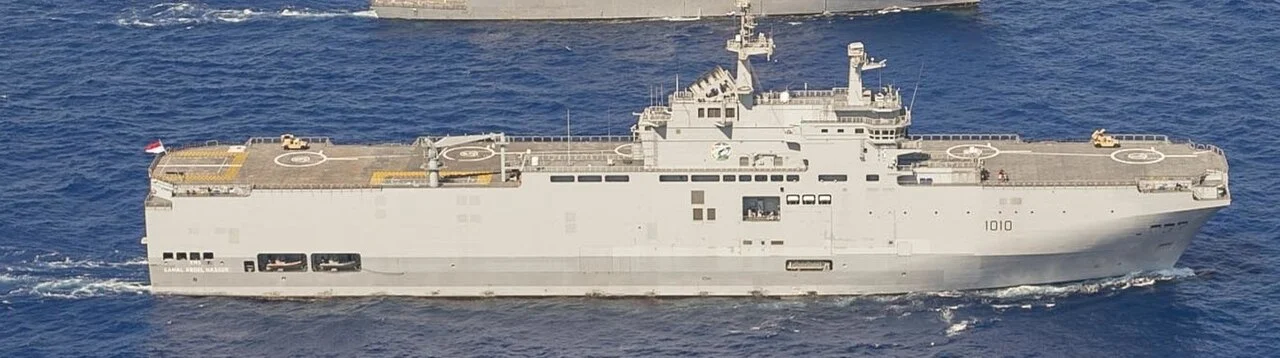
Buyer: Egypt. Supplier: France (DCNS). System: Mistral-class helicopter carriers/LHDs, originally built for Russia. Contract value: €950 million ($1.06 billion), per Reuters reporting carried by Defense News, September-October 2015. Quantity: 2 ships. Contract year: 2015. Delivery status: delivered, June and September 2016.
France redirected these two helicopter carriers to Egypt after cancelling their original sale to Russia over the annexation of Crimea, reimbursing Moscow roughly €1 billion in the process before selling the ships on to Cairo for €950 million, with Saudi Arabia reportedly covering a significant share of the payment. No technology transfer came with the deal, and some French systems were removed before handover. Renamed Gamal Abdel Nasser and Anwar El Sadat, the ships gave Egypt’s navy its first large amphibious and command capability, now split between the Mediterranean and Red Sea fleets.
9. Antey-2500 (S-300VM) air defence system — delivered
Buyer: Egypt. Supplier: Russia (Rosoboronexport). System: Antey-2500 (S-300VM) long-range surface-to-air and anti-ballistic-missile system. Contract value: published figures vary: TASS reported more than $1 billion in 2015, while an earlier Vedomosti report cited about $500 million for a 2014 agreement. Quantity: not publicly disclosed. Contract year: reported as 2014-2015. Delivery status: delivered, deliveries reported under way by 2016.
Russia’s state arms exporter never confirmed an official figure, and the fact of a signed contract was initially denied by Russia’s federal service for military-technical cooperation before later reporting treated deliveries as under way. The system gave Egypt its first long-range, high-altitude air and missile defence layer independent of ageing Soviet-era S-125 and S-200 batteries.
10. M1A1 Abrams co-production, 11th increment — delivered
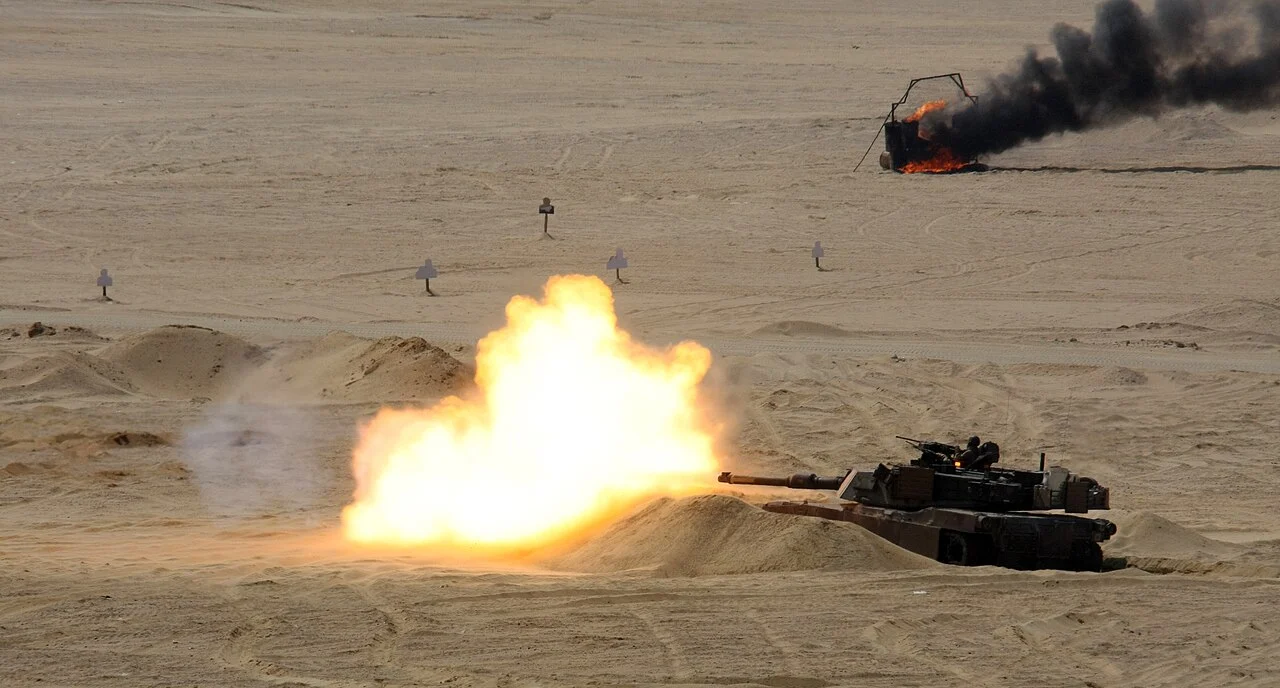
Buyer: Egypt (US Army Tank-automotive and Armaments Command, acting on Egypt’s behalf). Supplier: United States (General Dynamics Land Systems). System: M1A1 Abrams main battle tank co-production kits. Contract value: $395 million (militaryaerospace.com, November 2011). Quantity: 125 tank kits. Contract year: 2011. Delivery status: delivered, 2013-2016.
This single increment is the smallest entry here by value, but it is one link in a co-production relationship running since 1988, under which Egypt’s Factory 200 near Cairo has assembled over a thousand M1A1s from US-supplied kits. The November 2011 award covered components for 125 tanks, built across five US sites, bringing Egypt’s domestically-assembled fleet to roughly 1,130 vehicles. A full M1A2-standard upgrade has been discussed publicly for years but, unlike this increment, has not been confirmed as a signed, priced contract.
Reported but unconfirmed
Several further deals are frequently cited in Egyptian procurement coverage but lack a signed, publicly confirmed contract value and are excluded from the ranking above.
- Su-35 fighters (Russia): Russian media reported in 2018-2019 a contract for over two dozen Su-35s worth roughly $2 billion; the jets were never delivered, and the US had warned Cairo the purchase risked CAATSA sanctions (JNS, 2019).
- Ka-52K naval attack helicopters (Russia): a confirmed contract for 46 Ka-52/Ka-52K Alligators, linked to the Mistral carriers, with deliveries from 2017, but no disclosed value.
- Wider Russia-Egypt arms package: Russian officials referenced a combined $3.5 billion set of “preliminary arms contracts” around 2014-2015, spanning multiple systems; a framework figure, not a single contract.
- M1A2-standard Abrams upgrade: discussed publicly for years as a follow-on to the co-production programme, but never confirmed as a signed, priced contract.
Why it matters for Africa
Egypt’s record shows diversification and affordability are not mutually exclusive for an African buyer with the right financing access. Nearly every contract above leaned on export-credit-backed loans, from France’s Coface financing for the Rafales to Italy’s Cassa Depositi e Prestiti facility for the FREMM frigates, letting Cairo acquire top-tier hardware without paying most costs upfront. Technology transfer and local assembly feature just as consistently: the Gowind corvettes are partly built at Alexandria, the K9A1 EGY howitzers assembled at Factory 200, and the M1A1 co-production line has run domestically for nearly four decades. For other African militaries weighing similar trade-offs, Egypt’s experience shows both the industrial upside of sustained offset deals and the sustainment risk of operating rival-bloc equipment side by side, as its parallel Rafale and MiG-29M fleets now illustrate under US sanctions pressure on Russian-sourced spares.
Sources
- Defense News: “Egypt Agrees To Buy French Rafales” (2015)
- Al Jazeera: “Egypt buys dozens of Rafale fighter jets worth $4.5bn from France” (2021)
- The Moscow Times: “MiG Aircraft Company Finds Savior in Egypt”
- The Defense Post: “Egypt Signs $1.7B Deal for South Korean Howitzers” (2022)
- Defense News: “Egypt receives fourth German S-44 submarine at Alexandria base” (2021)
- Defense News: “Italy in talks to sell frigates to Egypt” (2020)
- Naval News: “Second Italian-built FREMM for Egypt started sea trials” (2021)
- naval-technology.com: “DCNS receives $1bn corvette procurement order from Egypt”
- Defense News: “Egypt, France Sign Warships Deal As PM Starts Arab Nation Tour” (2015)
- TASS: “Russia to supply Antey-2500 missile system to Egypt by end of 2016 — source” (2015)
- Military Aerospace: “General Dynamics awarded $395 million for Egyptian Abrams tank-related work” (2011)
- JNS: “US threatens Egypt with sanctions over possible Russian arms deal” (2019)
- SIPRI Arms Transfers Database