Nigeria, US Deepen Counter-Terrorism Cooperation as Bell Starts Building Nigeria’s First AH-1Z Vipers

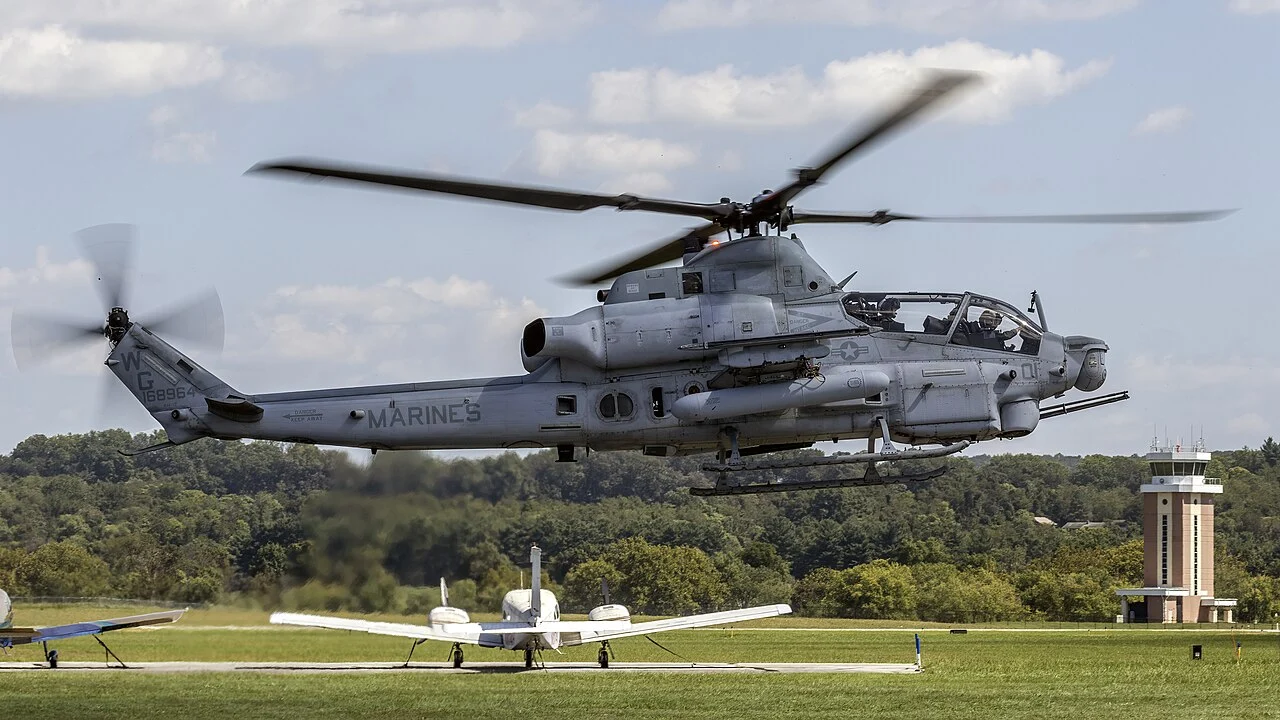


Nigeria’s defence minister met the new commander of the US Army’s Africa task force in Abuja on 30 September, pressing for deeper counter-terrorism cooperation as Bell Textron begins building the Nigerian Air Force’s first AH-1Z Viper attack helicopters under a roughly $997 million programme.
Photo: A Bell AH-1Z Viper attack helicopter. Bell began building Nigeria’s first AH-1Z in September 2026 under a roughly $997 million programme. Credit: Acroterion, CC BY-SA 4.0, via Wikimedia Commons
General Christopher Musa (retd), Nigeria’s Minister of Defence, met Major General Matthew Brown, commander of US Army Southern European Task Force, Africa (SETAF-AF), in Abuja to review ongoing joint security work and push for a more results-oriented framework for future cooperation, according to Military Africa. Brown took command of SETAF-AF in June 2026. No new bilateral agreement was announced at the meeting.
Five priorities from Abuja
Musa set out five areas where he wants deeper US engagement: specialised joint training for Nigerian special forces, intelligence sharing and capacity-building, border surveillance, counter-IED support, and modernisation of defence infrastructure. Brown, for his part, praised recent Nigerian-led operations against ISIS-affiliated groups and described the US presence in Nigeria as temporary and focused on institutional support rather than direct combat roles. Musa credited joint operations in the northeast — particularly around the Lake Chad Basin — with improving troop morale, though neither side released operational details or casualty figures from those campaigns.
A relationship built on equipment as much as diplomacy
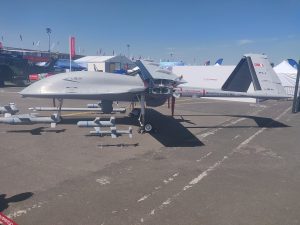
The Abuja meeting sits at the end of a run of US-Nigeria security moves dating to a November 2025 warning on Nigeria from President Trump, US airstrikes on ISIS-linked targets in the country’s northwest in December 2025, and the deployment of roughly 200 US personnel to Bauchi Airfield in February 2026. MQ-9 Reaper surveillance drones have flown over Nigerian territory as part of a bilateral intelligence-fusion arrangement, and the two militaries ran joint unmanned aircraft systems training in June 2026 — part of a wider pattern DefenceMENA has tracked as Nigeria builds out its Turkish-Chinese-American drone fleet.
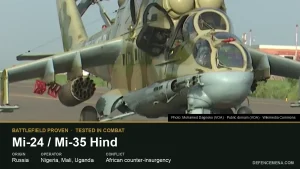
The most tangible item, though, is the AH-1Z. Bell began production of Nigeria’s first AH-1Z Viper on 16 September 2026, Nigerian Air Force spokesperson Air Commodore Ehimen Ejodame confirmed, under a Foreign Military Sale programme reported at roughly $997 million with deliveries expected to run through early 2029. Ejodame said the Viper “will play an important role in strengthening our counterterrorism and counterinsurgency operations.” The AH-1Z would be a significant step up in precision firepower for a force that has relied heavily on Mi-24/35 gunships and more recently Chinese- and Turkish-supplied platforms — see DefenceMENA’s full inventory of Nigerian Air Force aircraft for context on what the Viper is being added to.
Why it matters for Africa
Nigeria sits at the center of two of the continent’s most stubborn insurgencies — Boko Haram and Islamic State West Africa Province in the northeast, and a banditry crisis in the northwest that has increasingly drawn in jihadist elements. US support there, however carefully Washington frames it as “temporary” and “institutional,” is a live test case for how far American counter-terrorism assistance in West Africa extends now that direct US ground combat roles across the Sahel have shrunk. A dedicated attack helicopter fleet, better ISR coverage through Reaper flights, and sustained special-forces training would give Abuja tools it has lacked for sustained operations rather than episodic clearance raids. Whether the “results-focused framework” Musa is asking for translates into faster capability delivery — rather than another cycle of announcements — will be the real measure of whether this meeting changes anything on the ground in the Lake Chad Basin and the northwest.
Sources