Airbus Pushes the C295 as Africa’s Multirole Workhorse, With Angola Leading the Way



Airbus is using Angola’s two new C295 maritime surveillance aircraft as its calling card for the rest of Africa, pitching the twin-turboprop as a single airframe that can cover transport, coastal patrol and medevac for air forces that cannot afford separate fleets for each job.
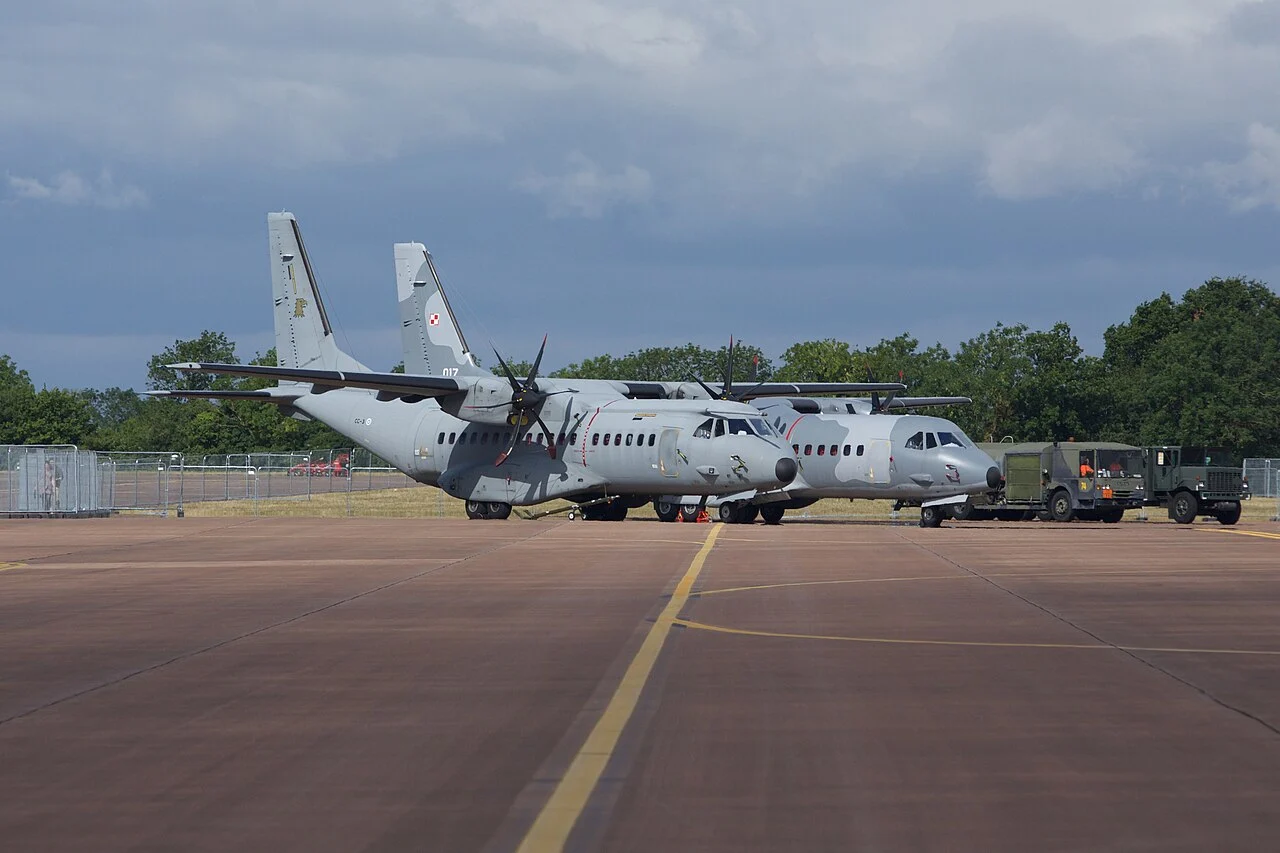
Photo: An Airbus C295 tactical transport, the type now flown by Angola and more than a dozen other African air forces. Credit: Ronnie Macdonald, CC BY 2.0, via Wikimedia Commons
At the Africa Aerospace and Defence (AAD) 2026 exhibition near Pretoria in September, Airbus put its case to African air forces using a very specific example: the Força Aérea Nacional de Angola (FANA), which became the C295’s 38th operator when it took delivery of two maritime surveillance variants in November 2025. According to Military Africa, Fernando Ciria, Airbus Defence and Space’s product marketing lead, described the C295 to defenceWeb as part of an air force’s “skeleton,” sitting alongside larger airlifters and dedicated surveillance types rather than replacing them.
Angola’s order is real and already flying
Angola is not a sales prospect here — it is Airbus’s proof of concept. Luanda ordered three C295s in 2022: one transport-configured aircraft and two maritime surveillance aircraft (MSA). The transport variant arrived in July 2024, and the two MSAs were handed over in November 2025. Angola opted against the heavier anti-submarine warfare configuration, choosing instead a maritime patrol fit that carries a multi-mission radar, electro-optical cameras and an Automatic Identification System (AIS) receiver, built on Airbus’s FITS mission system and Collins Aerospace’s Pro Line Fusion avionics.
That gives FANA a genuine over-water surveillance capability for the first time, relevant to monitoring Angola’s Atlantic exclusive economic zone, where illegal fishing and, increasingly, offshore oil and gas security are state priorities. The aircraft’s entry into service will now be the real test of Airbus’s pitch: whether a maritime patrol conversion of a tactical transport can do useful work against actual fisheries-protection and EEZ-monitoring tasks, rather than just looking capable on a trade-show stand.
The target: South Africa’s aging Dakota fleet
The more pointed sales target at AAD was the host nation. The South African Air Force has flown C-47TP Dakotas — a turboprop conversion of a Second World War-era airframe — on maritime patrol duties for decades, and a replacement programme known as Project Pelican has had command-level approval for years without securing funding, according to defenceWeb reporting from September 2024. Airbus’s own account of the AAD pitch describes this as marketing rather than a live tender: there is no indication South Africa has money allocated, let alone a competition underway. The Angola order is being used as a reference sale to keep the C295 in front of South African budget planners for whenever Pelican does move.
Nigeria is the nearer prospect
A more concrete opportunity sits with the Nigerian Air Force, whose delegation visited Airbus’s final assembly line in Spain from 14 to 18 March 2026 to evaluate the C295 ahead of a possible order. No contract has been reported. Nigeria already operates one of the continent’s larger and more diverse air arms — see DefenceMENA’s rundown of the Nigerian Air Force’s aircraft inventory — and a maritime-capable C295 would slot into its Gulf of Guinea anti-piracy and EEZ-monitoring mission, alongside the Nigerian Navy’s existing surface assets.
Airbus puts the African C295 fleet at 54 aircraft across 11 operators as of its November 2025 count (the introduction to the Military Africa report cites a slightly different 56-aircraft, 10-operator figure, a discrepancy the outlet did not resolve). Egypt remains the continent’s largest C295 operator with 24 aircraft, and Morocco took delivery of its own first C295 transport in September 2026, a deal DefenceMENA covered at the time. Worldwide, Airbus cites more than 337 C295 orders from 46 operators in 40 countries.
Why it matters for Africa
The pitch reflects a real budget constraint across African air forces: few can justify a dedicated maritime patrol aircraft, a separate tactical airlifter and a medevac platform as three distinct fleets. A single airframe that can be reconfigured — or ordered in a maritime-specific fit, as Angola did — lowers the logistics and training burden considerably, since crews, spares and maintenance contracts cover one type instead of three. That matters most for the states with the longest coastlines and the thinnest budgets: Angola’s Atlantic frontage, Nigeria’s Gulf of Guinea exposure to piracy, and South Africa’s dual Atlantic-Indian Ocean coastline all carry maritime-security missions that outstrip what their air forces currently field in dedicated patrol aircraft. Whether Airbus converts that logic into Nigerian and South African orders — rather than just AAD floor talk — will say a good deal about how African defence budgets are actually trending: toward multi-role economy, or toward continued reliance on ageing single-role types like the Dakota for want of funded replacement programmes.
Sources
- Military Africa: “Airbus pitches Angola’s new C295 as Africa’s multirole workhorse”
- defenceWeb reporting on Project Pelican and the C295 pitch