Morocco’s Aerospace Industry Chases a ‘Made in Morocco’ Jet as Baykar and Safran Expand Plants



Morocco’s aerospace sector has grown from five companies in 2000 to roughly 160 today, and the kingdom is no longer content to just bend metal for European primes. At the Marrakech Air Show in October, Safran, Airbus and Turkey’s Baykar all announced plans that push Morocco toward building and maintaining its own aircraft and drones, not just assembling their parts.
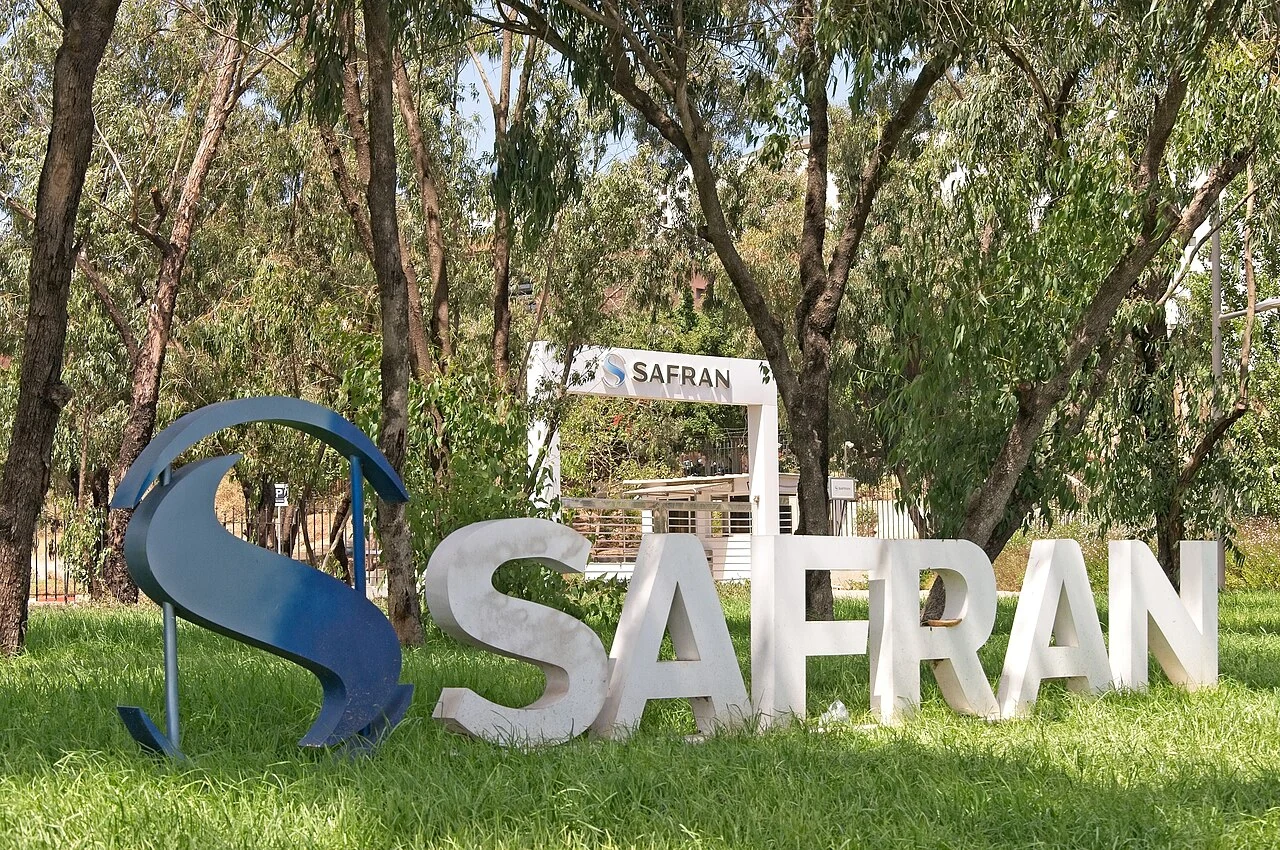
Photo: The Safran aerospace group’s site on Route de Nouaceur in Casablanca, part of the industrial cluster at the centre of Morocco’s aerospace build-out. Credit: Bertrand Soubeyrand, CC BY-SA 4.0, via Wikimedia Commons
Nearly 200 exhibitors from 27 countries came to the eighth Marrakech Air Show, held 7–10 October at the Royal Moroccan Air Force base outside the city, and left three agreements behind that promise 950 direct jobs, defenceWeb reported, citing the French industry bulletin ADIT. The headline numbers are real: Morocco’s aerospace exports rose from roughly $2.9 billion in 2024 to $3.2 billion in 2025 and grew a further 21.5% in the first eight months of 2026, according to the industry group GIMAS, which wants to push annual exports to $5 billion by 2029. Around 25,000 people now work in the sector.
From Subcontractor to Manufacturer
For two decades Morocco’s pitch to aerospace primes was cost: a free-trade zone at Nouaceur near Mohammed V airport, a dedicated training institute, and labour costs European manufacturers could not match. That built real volume — Airbus, Boeing suppliers and dozens of tier-two firms now cut, weld and wire-harness components bound for final assembly lines in Toulouse, Seattle and elsewhere.
What changed at this year’s show is the scale of investment aimed at keeping more of the value chain inside Morocco. Safran alone announced more than €280 million for a landing-gear plant due in 2029 and expected to employ 500 people, a separate €200 million line to assemble LEAP-1A engines from late 2027 (targeting 350 engines a year and 300 jobs), and a €120 million LEAP maintenance centre in Casablanca opening in 2027 that should reach 600 jobs by 2030, servicing 150 engines annually. Safran also stood up a new oil-systems entity at the show — its thirteenth site in the country.
Airbus, which took over Spirit AeroSystems’ Casablanca site in December 2025 and now runs it as Airbus Maroc Aero, is building A220 wing leading edges and A321 flap components there and is preparing a unit to design, not just manufacture, aircraft parts. Pratt & Whitney Canada opened an engine-components plant in April 2026, and China’s Hangyu Technology picked the Tanger Tech zone for a precision-forging unit worth up to €105 million. A new consortium formalised on 7 October — the Africa Centre of Manufacturing Excellence, built around Mohammed VI Polytechnic University with Boeing, Airbus, Lockheed Martin and Safran Nacelles alongside Morocco’s industry ministry and defence administration — is aimed squarely at training the engineers who will run these lines.
Baykar’s Benslimane Plant and the Defence Pivot
The more significant shift, for a site that tracks Africa’s defence industry, is how much of this new investment sits on the military side of the fence. Defence minister Abdeltif Loudyi, who runs Morocco’s National Defence Administration, described a move from buying foreign hardware to building and maintaining it domestically — for the Royal Moroccan Armed Forces first, with export in mind later. A 2020 licensing law opened arms production to private companies, and a state-backed firm created in 2025 now runs two dedicated defence industrial zones. Ten defence projects worth a combined $260 million and more than 2,500 direct jobs have been authorised so far.
Turkey’s Baykar is one of the companies building inside that defence zone: the manufacturer of the Bayraktar TB2 and Akıncı drones is constructing a plant at Benslimane tailored to Moroccan requirements, following years in which Morocco bought the TB2 and Akıncı off the shelf and, this year, added EDGE-made Desert Sting and Thunder precision munitions to arm that fleet. A Benslimane assembly line would put Morocco alongside Nigeria, Ukraine and a handful of other states hosting Baykar production outside Türkiye, rather than simply buying finished aircraft.
Benslimane is also where Maintenance Aero Maroc — a joint venture of Belgium’s Sabena Engineering, Lockheed Martin and the state developer MEDZ — is due to open a heavy-maintenance centre in the second half of 2026, starting with C-130 transports before moving on to Morocco’s F-16 fleet. That fleet is substantial and growing: Rabat ordered 25 F-16 Block 72 jets for close to $3.8 billion, on top of earlier Block 52s, and has separately signed a memorandum with South Korea’s KAI and Belgium’s SABCA Maroc to examine the T-50 trainer, though no order has been placed.
Morocco’s Own Drone Makers Join the Field
Alongside the foreign plants, two homegrown efforts are further along than most outside observers had assumed. Aerodrive Engineering Services flew the Atlas Istar, described as the first military drone designed and built in Morocco, and plans to produce 500 one-way attack drones at Benslimane starting in 2027. Separately, France’s Harmattan AI has signed a letter of intent — not yet a firm contract — to design and build its IRIFI deep-strike drone in the Nouaceur defence zone with Moroccan engineers. Israel’s IAI, through its BlueBird subsidiary, has gone further and already opened a site to build SpyX loitering munitions while training Moroccan staff, part of a pavilion Israel opened at Marrakech for the first time this year despite domestic opposition to normalisation with Israel.
None of this makes Morocco self-sufficient. Much of what is labelled “made in Morocco” still depends on imported components and licensed designs, and the aerospace sector loses engineers to Europe and the Gulf every year — a point the article’s sourcing attributes to former secretary of state Mounia Boucetta. Several of the headline announcements, including the Harmattan AI drone and the KAI trainer talks, are memoranda of understanding rather than signed contracts, and GIMAS itself frames the $5 billion export target as an ambition for 2029, not a current figure.
Why It Matters for Africa
Morocco is already one of the two or three most capable air forces on the continent, alongside Egypt and South Africa, and its industrial strategy differs from both. Where Egypt leans on licensed production tied to Russian and Chinese airframes and South Africa draws on a shrinking state-owned base, Morocco is betting on becoming a plug-in node for multiple foreign primes — American, French, Turkish, Korean and Israeli — at once, inside defence-only industrial zones that keep production, maintenance and eventually design work on Moroccan soil.
If the Benslimane plant materialises as described, it would make Morocco the first North African buyer to host Baykar manufacturing rather than just import finished drones, mirroring the path Baykar has already taken with Nigeria’s local assembly arrangements further south. Combined with F-16 heavy maintenance moving in-country and a homegrown attack-drone line at the same industrial zone, Morocco would be reducing its dependence on sending aircraft and drones abroad for overhaul — a logistics advantage that matters for sustaining operations in the Sahara and along the border with Algeria. For Gulf and Turkish manufacturers courting African markets, Morocco’s defence-zone model — tax incentives plus guaranteed domestic orders in exchange for local jobs — is also becoming a template other African governments are likely to study as they negotiate their own local-production clauses.
Sources
- defenceWeb — “Marrakech Air Show 2026: Morocco pitches itself as Africa’s next aerospace manufacturing hub”
- DefenceMENA — Baykar: Company Profile, Key Products and Customers in Africa
- Envanter Medya — Morocco’s EDGE munitions for its TB2 and Akıncı fleet
- DefenceMENA — Airbus to Open Helicopter MRO Hub in Morocco to Serve All of West Africa
- DefenceMENA — How Israel Became One of Morocco’s Top Arms Suppliers