Why Does Libya Still Have Two Militaries in 2026?




Libya has had no single army since 2014. Two rival administrations each claim to run the country’s armed forces, each is backed by a different set of foreign patrons, and neither publishes a defence budget or an order of battle that the other side, or outside trackers, actually agrees on.
The short answer to the question in the headline: yes, and the split runs all the way from the top of the chain of command to the drones in the sky. The UN-recognised Government of National Unity (GNU) in Tripoli, under Prime Minister Abdulhamid Dbeibah, controls forces in the west armed mainly with Turkish Bayraktar TB2 and Akinci drones. The Benghazi-based Libyan National Army (LNA), commanded by Field Marshal Khalifa Haftar and aligned with the House of Representatives in the east, fields Russian- and Chinese-origin equipment supplied through Moscow, Abu Dhabi and, as of December 2025, a newly reported arms framework with Pakistan. A 4+4 committee agreement reached in August 2026 has revived talk of unifying the country’s institutions and holding elections around 2027, but as of this profile neither side’s forces answer to a single Ministry of Defence, and the GNU lost three of its most senior officers in a single incident in December 2025.
| Indicator | Figure | Year / source |
|---|---|---|
| Active personnel | No recent official figure; open-source trackers range from roughly 32,000 (GNU-aligned forces) to 90,000 (HoR/LNA-aligned, uncited) — treat any single total with caution | 2026, Estimated, wide disagreement between trackers |
| Conscription | None; forces are built on volunteer brigades, tribal militias and, on both sides, foreign personnel | Post-2011, no change reported |
| Military expenditure | No published defence-specific budget for either GNU or LNA; Libya’s first unified state budget in 13 years was approved in 2026 at about LYD167.36 billion (roughly US$26.3 billion total, not defence-specific) | 2026, Libya Herald / Arab News |
| Arms imports rank in Africa | Named among Africa’s four largest arms importers (with Algeria, Morocco and Tunisia) for 2014–2018; no confirmed current-period African ranking located | SIPRI 2019 data, reported by Libya Observer |
| Combat aircraft | No reliable current total; both air arms are small, aged and partly grounded, with Turkish and Chinese armed drones doing most of the actual strike work since 2019 | Estimated / Reported (unconfirmed) |
| Main battle tanks | Legacy Soviet-era T-55/T-62/T-72 stock, heavily reduced since 2011; new Russian-modernised T-72B3M seen in LNA service from 2025 | Estimated / Delivered (small numbers) |
| Navy | A small, divided fleet; one open-source tracker counts 4 active major hulls (1 frigate, 2 amphibious, 1 coastal) across both factions combined | 2026, Estimated |
Current military overview
Libya’s armed forces have not been rebuilt as a single institution since the 2011 fall of Muammar Gaddafi and the civil wars that followed. The 2019–2020 battle for Tripoli, in which Turkish intervention (including Bayraktar TB2 drones and air defence) halted an LNA offensive backed by Russian Wagner Group contractors and Emirati air power, froze the front line roughly where it still sits. A UN-brokered ceasefire has held in its broad outlines since October 2020, but it produced two parallel chains of command rather than one. The GNU’s forces in the west are a patchwork of formal units, such as the 444th Infantry Brigade and the RADA Special Deterrence Force, that answer only loosely to the Ministry of Defence in Tripoli. The LNA in the east is more centralised under Haftar personally, with his son Saddam Haftar now a visible deputy commander in both military and diplomatic roles. Neither side publishes troop strength, an order of battle, or a defence budget that the other recognises, and the UN Security Council’s 2011 arms embargo on Libya remains formally in force even though it is widely and openly violated by both sides’ foreign backers.
Defence budget: what the numbers do and do not show
There is no Libyan defence budget in the normal sense. In April–May 2026, Libya’s rival legislative bodies signed the country’s first unified state budget in more than 13 years, reported at roughly LYD167.36 billion (about US$26.3 billion), but this is a general government budget covering the whole fragmented state apparatus, not a defence ministry line item, and no breakdown by ministry has been published in English-language reporting. Older trackers put total Libyan military spending at roughly US$1.6 billion, but that figure is dated to 2023 and should be treated as indicative only, not as a current official number. Status: no recent official figure for defence-specific spending on either side.
Active personnel
No current, mutually accepted personnel count exists for either Libyan force. Open-source aggregators give wildly different numbers depending on what they count: one 2026 tracker puts total active personnel across all services at about 32,000, while an older estimate for the LNA alone (2019) put regular LNA soldiers at about 7,000 plus roughly 18,000 allied militia and foreign fighters. A separate, uncited infobox figure sometimes circulated puts the GNU at about 32,000 and the HoR/LNA side at about 90,000. None of these come from an official Libyan source or a current IISS Military Balance entry, because Libya has not had one unified force for IISS to assess since 2014. Gaddafi-era figures (roughly 76,000 personnel in 2010) are obsolete: most of that force was dissolved, defected, or was destroyed in the 2011 war. Status: Estimated, with a wide and unresolved range.
Army
| System | Origin | Quantity | Status | Source |
|---|---|---|---|---|
| T-55 / T-62 / T-72 (legacy) | USSR / Russia | Unknown current total; pre-2011 inventory exceeded 2,000 tanks, heavily reduced since | Estimated, many Retired or non-operational | Legacy IISS-era baseline, reproduced by open-source trackers |
| T-72B3M (modernised) | Russia | Small numbers, exact count not disclosed | Delivered (LNA, 2025–2026) | Militarnyi; Defence Blog |
| BMP-3M infantry fighting vehicle | Russia | Reported, exact count not disclosed | Reported (unconfirmed, LNA) | Militarnyi |
| T-72 overhaul programme | Russia (contractor) | Reportedly up to 145 hulls | Reported (unconfirmed) | Defence Talk |
| JF-17 Thunder / Haider MBT (framework deal) | Pakistan / China (co-produced) | Reportedly 16 JF-17 jets plus a wider land/sea/air package; one outlet’s figure of 44 Haider tanks is unconfirmed | Reported (unconfirmed; no delivery) | Reuters via Dawn; PropPakistani; The New Arab |
| BM-30 Smerch 300mm MLRS | Russia | Not disclosed | Delivered (first confirmed public sighting, LNA, May 2025) | Jane’s; Defensemirror |
Both sides’ land forces are still built mainly on Gaddafi-era Soviet stock that has been fought over, cannibalised and partially destroyed since 2011; a precise current tank or artillery count for either side does not exist in open sources. What has changed recently is on the LNA side: Russian-linked suppliers have been modernising part of its armour with drone-resistant cage armour and newer T-72B3M hulls, and a December 2025 framework agreement with Pakistan, if it proceeds, would be the most significant single arms package reported for either Libyan force in years. No comparable modern armour programme has been reported for the GNU’s land forces, which instead lean on drones for firepower (see below).
Air Force
Libya’s air force split into rival GNU and LNA components after 2014, and neither has recovered the roughly 400 combat aircraft the Gaddafi-era air force once operated before most of it was destroyed by NATO strikes in 2011. Both current air arms are small and aged. The GNU’s Tripoli-based element retains a handful of L-39 Albatros jet trainers and is reported to still hold a few MiG-23BN, Mirage F1 and Su-24MK airframes, though serviceability is in doubt and trackers disagree on exact numbers. The LNA’s eastern element similarly operates a small mixed fleet of L-39s, MiG-21MF, MiG-23 and Mirage F1, plus at least one Su-22UM3 — again Estimated rather than confirmed. Separately, Russian-flown MiG-29 and Su-24MK jets have operated from Al Jufra airbase in central Libya since at least 2020; these are flown by foreign personnel linked to Russia’s Africa Corps rather than by the Libyan Air Force, and are not part of either faction’s own order of battle. In practice, neither Libyan air arm provides much actual strike capability today; that role has shifted to armed drones (see UAV section).
Navy
The Libyan Navy was largely disabled by NATO strikes in 2011 and has not recovered. One open-source tracker’s 2026 count puts combined active major hulls at just four: one frigate, two amphibious ships and one coastal craft, split between GNU-aligned (Tripoli) and LNA-aligned (Benghazi/Tobruk) commands; serviceability of even these is questioned by analysts. The LNA’s Benghazi Naval Base has reportedly taken delivery of four fast search-and-rescue boats, though the exact delivery date is unclear in available reporting. A separate Coast Guard — nominally under GNU authority but historically trained and part-funded by the EU and Italy — runs most of the operational patrol work, including contested migrant-interdiction operations; in May 2026 a Libyan Coast Guard vessel reportedly fired on the NGO rescue ship Sea-Watch 5 roughly 55 nautical miles north of Tripoli. The EU is funding a roughly €3 million Maritime Rescue Coordination Centre at Benghazi port, reported in January 2026. Status: mostly non-operational legacy hulls, a handful of newer small craft, and a more active but separately run coast guard function.
UAV and drone fleet
| System | Origin | Operator | Status | Source |
|---|---|---|---|---|
| Bayraktar TB2 | Türkiye (Baykar) | GNU | Operational since 2019–2020; used in 2025 counter-smuggling strikes (Sabratha/Zwara) | Middle East Eye; Military Africa |
| Bayraktar Akıncı | Türkiye (Baykar) | GNU | Operational, small numbers; first confirmed sighting 2023–2024, one lost in a January 2025 crash near Ajaylat | Overt Defense; TurDef; Military Africa |
| Wing Loong II | China (CASC), via UAE | LNA | Operational since 2019–2020 civil war; extensively documented strike history | DefenceMENA archive; open-source trackers |
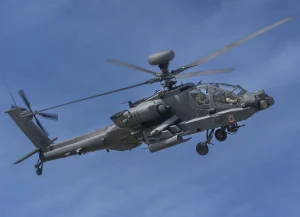
Armed drones, not manned aircraft, now do most of the actual strike flying for both Libyan forces, and they are the clearest case of the country’s foreign-patron split. The GNU’s Turkish-supplied TB2s were the decisive weapon of the 2019–2020 war, helping break the LNA’s siege of Tripoli; GNU officials said drones were used again in July 2025 against smuggling networks around Sabratha and Zwara, though outlets differ on whether those strikes used TB2s or Akinci, and the GNU’s own description — “Turkish UAVs owned and operated by the Libyan Ministry of Defence” — leaves the exact platform unclear. The LNA’s Chinese Wing Loong II, obtained through the UAE rather than directly from Beijing, has a longer and better-documented combat record on the eastern side. Both drone fleets are small by regional standards and neither side has published a confirmed inventory count.
Air defence
Air defence is another area split cleanly along the same line. On the LNA side, UAE- and Russia-supplied Pantsir-S1 short-range systems have been in service since the 2019–2020 war, and in May 2025 the LNA publicly displayed a Russian Tor-M2 short-range air defence system for the first time, confirmed delivered according to Army Recognition and the Missile Defense Advocacy Alliance. The GNU side has no confirmed modern air defence system; it depends on whatever remains of Gaddafi-era Soviet SA-2/SA-3/SA-5/SA-8 stock, most of which is Estimated to be Retired or non-operational, plus point defence and MANPADS held informally by individual brigades. Status: Pantsir-S1 and Tor-M2 Operational (LNA only); no confirmed GNU-side modern SAM.
Missiles and artillery
Gaddafi-era Scud-B and FROG-7 ballistic rockets were largely destroyed or lost during the 2011 war and are treated as Retired; no confirmed current Libyan ballistic-missile capability exists on either side. The one notable 2025 addition is Russian-supplied heavy rocket artillery: a BM-30 Smerch 300mm multiple rocket launcher system was shown publicly at a Benghazi parade in May 2025, the first confirmed sighting of this system in Libya, alongside older towed and self-propelled artillery pieces and anti-drone cage-armoured T-55/T-72 hulls. No comparable new artillery has been reported on the GNU side.
Defence industry
Libya has essentially no functioning defence industry. A state Military Manufacturing Authority nominally exists under the GNU — its chief, Brigadier General Mahmoud Al-Qatawi, was among those killed in the December 2025 Ankara plane crash — but there is no public evidence of meaningful domestic production. Both Libyan forces depend entirely on imported equipment and foreign maintenance support.
Main defence suppliers
| Supplier | Recipient | What has been supplied | Status |
|---|---|---|---|
| Türkiye | GNU (Tripoli) | Bayraktar TB2/Akıncı drones, military advisers, past naval/air base access discussions (al-Watiya, Misrata) | Operational / Delivered |
| Russia | LNA (east) | Pantsir-S1, Tor-M2, BM-30 Smerch, T-72B3M, Africa Corps personnel and base infrastructure (Al Khadim, Al Jufra and others) | Operational / Delivered |
| United Arab Emirates | LNA (east) | Long-standing financial and logistics backer; conduit for Chinese Wing Loong II drones and other equipment | Operational / Delivered |
| China (via UAE) | LNA (east) | Wing Loong II armed drones | Operational |
| Pakistan | LNA (east) | Reported framework for JF-17 jets, Super Mushshak trainers and a broader land/sea/air package | Reported (unconfirmed; December 2025) |
| EU / Italy | GNU-nominated Coast Guard | Training, funding, patrol boats, Maritime Rescue Coordination Centre (Benghazi) | Operational / On contract |
Recent procurement, 2025–2026
| Date | Event | Value | Status |
|---|---|---|---|
| May 2025 | LNA publicly displays Russian BM-30 Smerch MLRS and Tor-M2 air defence system for the first time, Benghazi parade | Not disclosed | Delivered (first confirmed sighting) |
| Jul 2025 | GNU uses Turkish-supplied drones (TB2 and/or Akıncı, reporting is unclear which) against smuggling networks around Sabratha and Zwara | n/a | Operational (reported use) |
| 2025 (date unclear) | Reported Russia-Libya contract to overhaul up to 145 Soviet-era T-72 tanks | Not disclosed | Reported (unconfirmed) |
| Dec 2025 | Pakistan and the LNA reportedly sign a multi-year framework arms deal: 16 JF-17 jets, 12 Super Mushshak trainers, wider land/sea/air package | Reported US$4–4.6 billion | Reported (unconfirmed; no Pakistani government confirmation, no deliveries) |
| Jan 2026 | EU-funded Maritime Rescue Coordination Centre approved for Benghazi port | €3 million | Approved |
| 2025–2026 | Modern Russian T-72B3M tanks with anti-drone cage armour spotted in LNA service | Not disclosed | Delivered (small numbers, Estimated) |
Turkish systems in Libya
See DefenceMENA’s Turkish Defence in Africa desk for how this fits the wider continental picture.
| System | Role | Status | Source |
|---|---|---|---|
| Bayraktar TB2 | Armed reconnaissance/strike drone | Operational since 2019–2020 | Middle East Eye; Military Africa |
| Bayraktar Akıncı | Heavier armed drone | Operational, small numbers | Overt Defense; TurDef |
Turkish drones have the single best-documented operational record of any foreign system in Libya. The 2019–2020 intervention, in which Turkish TB2s, air defence and advisers backed the GNU, is widely credited by analysts with reversing an LNA offensive that had reached Tripoli’s southern suburbs — a genuine, sourced battlefield effect, not a marketing claim. Since the 2020 ceasefire, the role has narrowed: reported 2025 use was against smuggling networks, not against the LNA directly, and Turkey has in parallel pursued diplomatic engagement with Haftar’s camp rather than pure military confrontation. No Turkish systems have been reported with the LNA, which instead draws on Russia for air defence and heavy armour and on China, via the UAE, for its own drone fleet (see DefenceMENA’s continent-wide trackers on Bayraktar Akıncı operators in Africa and Turkish systems in African armed forces, and the Baykar company profile). The comparison is not one of “better” or “worse” hardware: it reflects which patron backs which side. Turkey’s advantage in this specific case was speed of delivery and a demonstrated willingness to commit systems directly into an active war in 2019–2020, when other suppliers to the GNU side were not forthcoming; Russia’s and China’s systems on the LNA side are comparably capable platforms in their own categories, delivered through a different political and financing channel (UAE funding, Russian basing rights) rather than being inferior hardware. For background on how Turkish and Chinese drones have come to coexist across different African militaries, including this same GNU/LNA pattern, see Envanter Medya’s analysis of Turkish-Chinese drone dual-sourcing in Africa.
What is changing?
Two developments stand out going into 2027. First, the GNU suffered a serious leadership blow on 23 December 2025, when a plane carrying its chief of staff, Lieutenant General Mohammed al-Haddad, its ground forces commander, General Al-Fitouri Gharibil, and the head of its Military Manufacturing Authority, Brigadier General Mahmoud Al-Qatawi, crashed shortly after take-off near Ankara, killing all aboard; Turkish officials have pointed to a technical failure rather than sabotage, with the investigation still open. Al-Haddad was widely seen as the GNU’s most capable military officer and a key figure in its dealings with Turkey, so the loss of three senior commanders in one incident leaves a real gap at the top of the western forces. Second, an August 2026 agreement by the rival 4+4 committee to restructure Libya’s electoral commission has revived talk of unified presidential and parliamentary elections, reportedly targeted for around 2027, with one US-floated proposal said to involve Saddam Haftar heading an executive council while Dbeibah-aligned figures retain other roles. Nothing here has produced a unified military command yet, and both sides continue to rearm separately — Russia and, potentially, Pakistan on the LNA side; Turkey on the GNU side — which raises the stakes if the political track fails again, as it has multiple times since 2014.
How Libya compares in Africa
Libya sits in DefenceMENA’s North Africa desk alongside Egypt, Algeria, Morocco and Tunisia (see the Libya tag page for ongoing coverage), but it is unusual on this site’s list of African militaries for a reason that is itself the story: most African states, whatever their budget size, have one army and one line in the national accounts. Libya has had neither since 2014. SIPRI-based reporting put Libya among the four largest African arms importers (with Algeria, Morocco and Tunisia) in 2014–2018, but no confirmed current-period ranking was found for this profile, and the 2019–2023 continental decline in arms imports was driven mainly by Algeria rather than Libya specifically, so readers should not assume Libya still holds that rank today. In hardware terms, neither Libyan force comes close to the air forces, navies or defence budgets fielded by Egypt, Algeria or Morocco elsewhere in this North Africa category; Libya’s relevance is less about scale than about which outside powers are willing to arm which side of an unresolved civil conflict.
A note on the numbers
This profile carries more uncertainty than most on this site, and that uncertainty is the point. Libya has not had one Ministry of Defence, one published budget or one IISS Military Balance entry since the state fractured in 2014; every personnel, budget and inventory figure in this piece comes from open-source trackers, parade footage, leaked contract reports or outlet-to-outlet disagreement rather than an official count. Where two trackers gave different numbers for the same thing — personnel strength above all — this profile has given the range and flagged it Estimated rather than picking one figure and presenting it as fact. Reported procurement, especially the December 2025 Pakistan framework, has not been confirmed by either government and should not be read as a completed sale until deliveries are independently documented.
Sources
- Al Jazeera, Libyan army chief killed in plane crash near Ankara (December 2025)
- The New Arab, Pakistan to sell $4 billion of arms to Haftar’s Libyan National Army
- PropPakistani, Pakistan to export 16 JF-17 jets to Libya in landmark $4 billion deal
- Janes, Eastern Libyan forces parade Russian equipment
- Militarnyi, Latest model of Russian T-72B3M tank spotted in Libya
- Army Recognition, Libya enhances air defense with newly delivered Russian Tor-M2 missile system
- Overt Defense, Footage suggests Libyan GNU operating Bayraktar Akinci drones
- Military Africa, Turkish-made Bayraktar Akinci drone crashes in Libya
- Middle East Eye, Libya’s GNU strikes smuggling networks with Turkish drones
- Libya Observer, Libya among four largest arms importers in Africa
- Arab News, Libya signs first unified state budget in over a decade
- Dispatch Risk Advisory, Libyan coast guard incident reporting, 2026