Africa’s Strongest Air Forces, Ranked by Combat Aircraft and Capability



The strongest air forces in Africa are the ones that pair a large fleet of modern combat aircraft with the missiles, sensors and support aircraft needed to use it, and at the time of writing Egypt, Algeria and Morocco lead on that test. The ranking is transparent: it counts modern fixed-wing combat types in service, checks weapons, surveillance and air-defence support, and discounts fleets of doubtful serviceability. Every figure carries a source and a year, and contested numbers appear as ranges. Helicopters, transports and drones are excluded.
How the strongest air forces in Africa were ranked, and the top 10 at a glance
Three tests were applied in order to rank the strongest air forces in Africa. The first is modern combat aircraft in service: fixed-wing types designed from the 1980s onward, meaning fourth-generation fighters, multirole jets and armed light-attack aircraft such as the A-29. Cold War types such as the MiG-21, MiG-23, Mirage F1 and F-5 are listed but not counted. The second is support, meaning weapons packages, air-defence announcements and the special-mission and tanker aircraft listed by Global Firepower (GFP), with serviceability evidence as the third test.
The editorial rule for ties has three steps. Where fleet ranges overlap, better evidence of aircraft actually flying decides. Aircraft that are ordered, announced or shown at a handover do not count until confirmed in the operator’s country. A remaining tie goes to the larger GFP fighter-plus-attack figure.
GFP’s pages were last reviewed in January 2026 and label their readiness values as estimates. The FlightGlobal World Air Forces directory is paywalled and could not be opened, so its numbers appear only where a secondary outlet reproduced them.
| Rank | Country | Main combat types and numbers | Notes | Source year |
|---|---|---|---|---|
| 1 | Egypt | F-16C/D about 200 to 220; Rafale 54 ordered, 28 to 32 reported delivered; MiG-29M/M2 43 to 45; Mirage 2000 about 18 | GFP lists 242 fighters/interceptors and 90 attack aircraft, including older airframes | GFP Jan 2026; press 2026 |
| 2 | Algeria | Su-30MKA 63 to 65; MiG-29M/M2 35 to 40; Su-24MK2 33 | Su-35 and Su-57E reported, not officially confirmed. GFP: 111 fighters, 42 attack, 4 tankers | GFP Jan 2026; press 2025-26 |
| 3 | Morocco | F-16C/D Block 52+ 23; about 25 Mirage F1 and 22 F-5 (older types) | 25 F-16 Block 72 on order, none delivered. GFP: 84 fighters | GFP Jan 2026; Lockheed Martin Oct 2026 |
| 4 | Angola | Su-30K 12; Su-27 1 to 6; EMB-314 Super Tucano 6 | Legacy MiG-23, Su-22 and MiG-21 listed but likely stored. GFP: 67 fighters, 6 attack | GFP Jan 2026; defenceWeb 2025 |
| 5 | Ethiopia | Su-27 about 16; Su-30K 2 to 6 | Su-35 handover announced 28 October 2026; two airframes shown. GFP: 25 fighters | GFP Jan 2026; press Oct 2026 |
| 6 | Nigeria | A-29 12; JF-17 3; M-346FA 1 accepted of 24 ordered | Combat-tested light-attack force. GFP: 14 fighters, 24 attack, 12 special-mission | GFP Jan 2026; Janes Jul 2026 |
| 7 | South Africa | Gripen 26 on strength | Only 2 combat-capable, per the defence minister. GFP lists 2 fighters | TimesLIVE May 2026 |
| 8 | Sudan | MiG-29 about 11; Su-24M 4 to 7; Su-25 12 (on the books) | War losses since 2023 unpublished; no verified current count | FlightGlobal 2026 via MiGFlug |
| 9 | Uganda | Su-30MK2 5 to 6 | No official count published. GFP: 6 fighters | GFP Jan 2026; Military Africa 2023 |
| 10 | Libya (LNA and GNU) | About 21 to 23 older jets (Mirage F1, MiG-21, MiG-23, Su-24, Su-22) | Two rival forces; 16 JF-17 reported on order for the LNA, unconfirmed | IISS 2025 via MiGFlug |
Ranks 1 to 3: Egypt, Algeria and Morocco
Egypt’s lead among the strongest air forces in Africa is arithmetic: GFP counts 1,088 aircraft of all types, built around the F-16, Rafale and MiG-29M/M2. Rafale numbers show the data problem. Militarnyi reported in May 2026 that 32 of Egypt’s Rafales had been delivered; the two contracts total 54 aircraft, though Militarnyi counts 55. Cairo has reportedly asked for 24 more, but no contract exists.
Fleet detail is in Egypt’s fighter jets in 2026. Talks on Chinese stealth fighters remain reported, not confirmed.
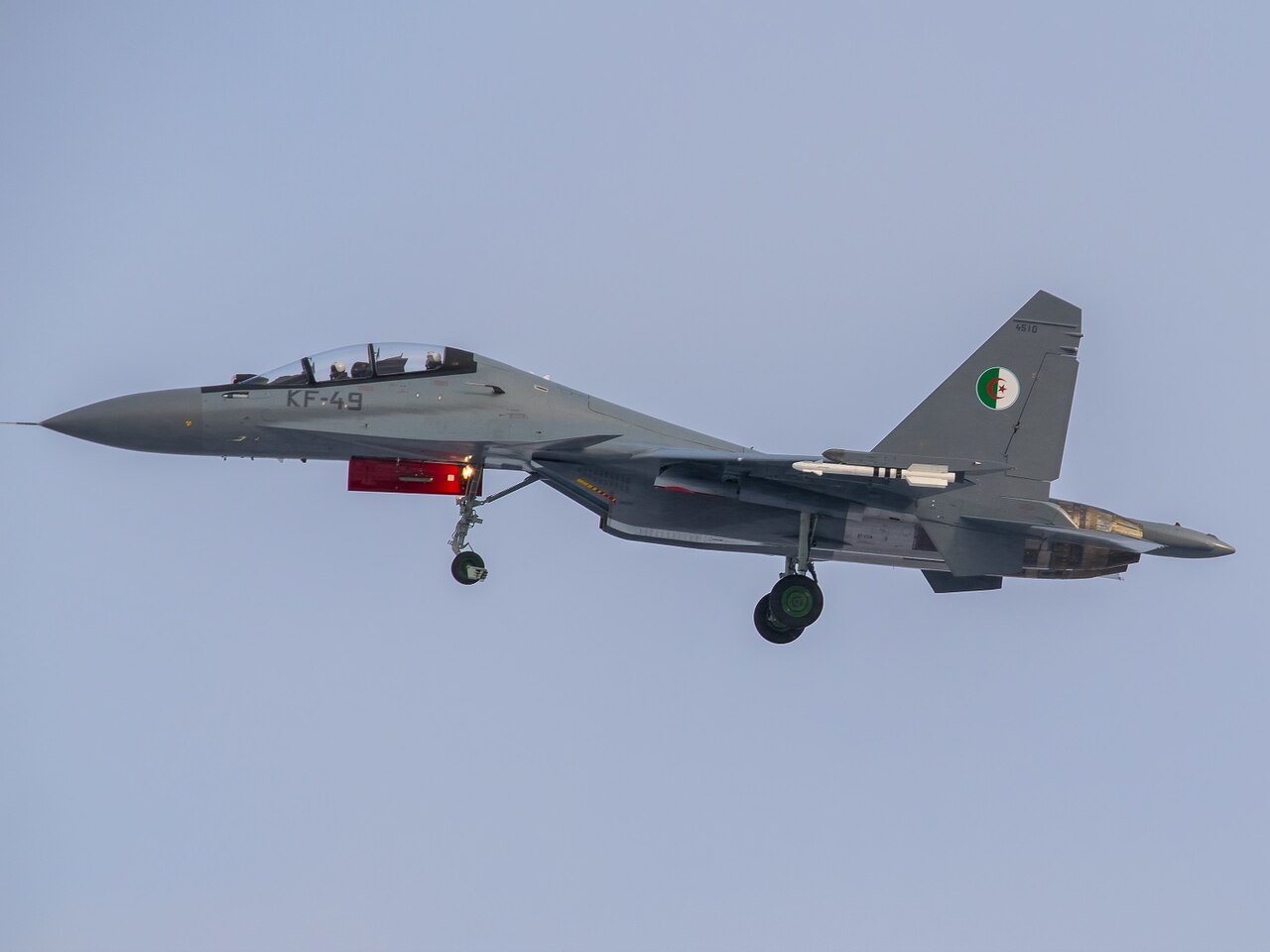
Algeria is a clear second. Its Su-30MKA fleet of 63 to 65 is the largest Flanker-family force among the countries reviewed, and its four tankers are the most on the GFP pages checked.
Satellite imagery from March 2025 showed at least one Su-35 in Algerian markings, though neither government has confirmed the transfer. A February 2026 video is the basis for the Su-57E claim, with the order given as 12 or 14 aircraft. Algeria’s Su-57 fleet tracks that story.
Morocco has fewer aircraft than Algeria but newer ones arriving. Its 23 F-16C/D Block 52+ jets are the operational core.
On 6 October 2026 Lockheed Martin announced the first flight of the first Block 72, reported by The Aviationist. The 25-aircraft package, approved by the US State Department in 2019, includes APG-83 AESA radars and AIM-120C-7 missiles. No delivery date has been given.
Ranks 4 to 6: Angola, Ethiopia and Nigeria
Below the top three, the strongest air forces in Africa are separated by small margins. Angola takes fourth place on its 12 Su-30K fighters, airframes from a batch built for India and stored in Belarus before resale, according to defenceWeb as cited by The War Zone. Older MiG-23, Su-22 and MiG-21 types are probably stored. The type-by-type list is in Angola Air Force Aircraft.
Ethiopia is the likeliest to climb. Prime Minister Abiy Ahmed said on 28 October 2026 that 12 Su-35s had been delivered, with four S-400 batteries also part of the deal. Images show only two airframes, and Rosoboronexport told Reuters that two were handed over, according to The Aviationist.
Until the jets are confirmed in Ethiopia, the rank rests on roughly 16 Su-27s and a few Su-30Ks, and reports of the Su-27 total vary from about 10 to 16. The Ethiopia Su-35 programme tracker follows each delivery claim.
Nigeria is sixth with a light-attack force that sees regular combat. Twelve A-29 Super Tucanos arrived between July and September 2021 and had logged 10,000 flight hours by August 2024, while three JF-17s were delivered in 2021. The Nigerian Air Force accepted the first of 24 M-346FA jets in Italy on 27 July 2026, and no schedule exists for the rest. GFP credits Nigeria with 12 special-mission aircraft, the most on the GFP pages checked.
Ranks 7 to 10: South Africa, Sudan, Uganda and Libya
South Africa owns 26 Gripens, yet the defence minister told parliament that only two have combat capacity, TimesLIVE reported on 8 May 2026. Restoring the fleet is put at R4.96bn. On combat-capable aircraft alone, South Africa would fall below Uganda and probably Sudan; it holds seventh on fleet strength and a defined recovery path.
Sudan appears in eighth place for what is on record: about 11 MiG-29s on FlightGlobal’s 2026 list, with Su-24M and Su-25 aircraft also listed. Reporting cited by MiGFlug says nearly all equipment was lost after 2023, so the rank reflects inventory, not verified flying strength. Uganda is ninth with five or six Su-30MK2s, two of which went to Belarus for maintenance in July 2023. Uganda publishes no fleet count.
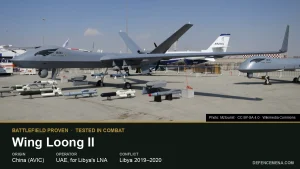
Libya closes the list because it has no unified air force. IISS-based listings show 21 to 23 older jets split between eastern and Tripoli-based forces. Tunisia and Zimbabwe were reviewed on GFP data only; their type-level fleets could not be confirmed, so they sit outside the ten.
Fleets that look big but are hard to keep flying
Raw counts mislead anyone ranking the strongest air forces in Africa. One public ranking lists Egypt at 545 combat aircraft and Angola at 95, with no stated source or date, while GFP’s Egypt fighter and attack total is 332. The gap comes from definitions of what counts as combat, trainer or stored. The MiGFlug order-of-battle pages used here note that their numbers are aircraft on the books, not aircraft available on a given day.
Mali shows the extreme case. Both Su-25s delivered in 2022 and 2023 have crashed, and three of four Super Tucanos remain, reportedly grounded for lack of spares in 2024. The details sit in Mali air force aircraft.
Africa’s strongest air forces: what changed recently
Changes among the strongest air forces in Africa since 2025 came mostly from deliveries and announcements:
- March 2025: imagery showed an Su-35 in Algeria, officially unconfirmed.
- December 2025 to May 2026: more Egyptian Rafale batches delivered or readied.
- February 2026: video claimed to show an Algerian Su-57E.
- May 2026: South Africa’s minister said two Gripens are combat-capable.
- July 2026: Nigeria accepted its first M-346FA.
- October 2026: Morocco’s first Block 72 flew, and Ethiopia announced its Su-35 handover.
All figures reflect the time of writing. One delivery batch, loss or disclosure can change a rank.
FAQ
Which is the strongest air force in Africa?
Egypt. GFP counts 1,088 aircraft of all types in its January 2026 review, including 242 fighters and interceptors and 90 dedicated attack aircraft, though those categories include older airframes. The modern core is the F-16, Rafale and MiG-29M/M2, which puts Egypt ahead of the other strongest air forces in Africa.
Does Algeria operate fifth-generation fighters?
Not officially. Su-57E deliveries are reported, with a video dated 7 February 2026 as the main evidence, but Algeria and Russia have not confirmed a sale. Order size is cited as 12 or 14 aircraft. The confirmed core remains the Su-30MKA, with 63 to 65 reported in service.
How many Gripens can South Africa fly?
Two. The defence minister’s written reply, reported on 8 May 2026, said only two of 26 Gripens have combat capacity. The fleet has been largely grounded since 2021 after maintenance contracts lapsed. Restoring full capability is estimated at about R4.96bn, with no timeline published.
Has Ethiopia received its Su-35 fighters?
Partly, and the details are disputed. Prime Minister Abiy Ahmed announced the delivery of 12 on 28 October 2026, but only two airframes appeared in images at the Moscow handover. The jets had not been confirmed in Ethiopia at the time of writing, and the S-400 delivery schedule is undisclosed.
Sources
- Global Firepower 2026: Egypt aircraft inventory
- Global Firepower 2026: Algeria aircraft inventory
- Global Firepower 2026 pages for Morocco, Nigeria, South Africa, Ethiopia, Angola, Libya, Uganda and Mali
- Militarnyi: Dassault Delivers New Rafale Fighter Jets to Egypt (May 2026)
- Military Africa: Su-35 fighters to Algeria (April 2025)
- The Aviationist: Algeria’s first Su-57E (February 2026)
- The Aviationist: Morocco’s first F-16 Block 72 has flown (October 2026) and Lockheed Martin announcement
- The Aviationist: Ethiopia receives first Su-35 fighters (October 2026) and The War Zone: Ethiopia gets 12 Su-35 fighters
- TimesLIVE: SA air force crisis laid bare (May 2026)
- Nigeria: Janes on the first M-346FA, Africa Defense Forum on the Super Tucano and Air Data News on the JF-17
- MiGFlug order-of-battle pages (secondary compilations, figures verified 1 October 2026): Egypt, Morocco, Angola, Ethiopia, Sudan, Uganda, Libya and Mali
- Military Africa: Ugandan Su-30MK2s flown to Belarus for MRO (July 2023)