6 Alternatives to the Bayraktar TB2 for Africa

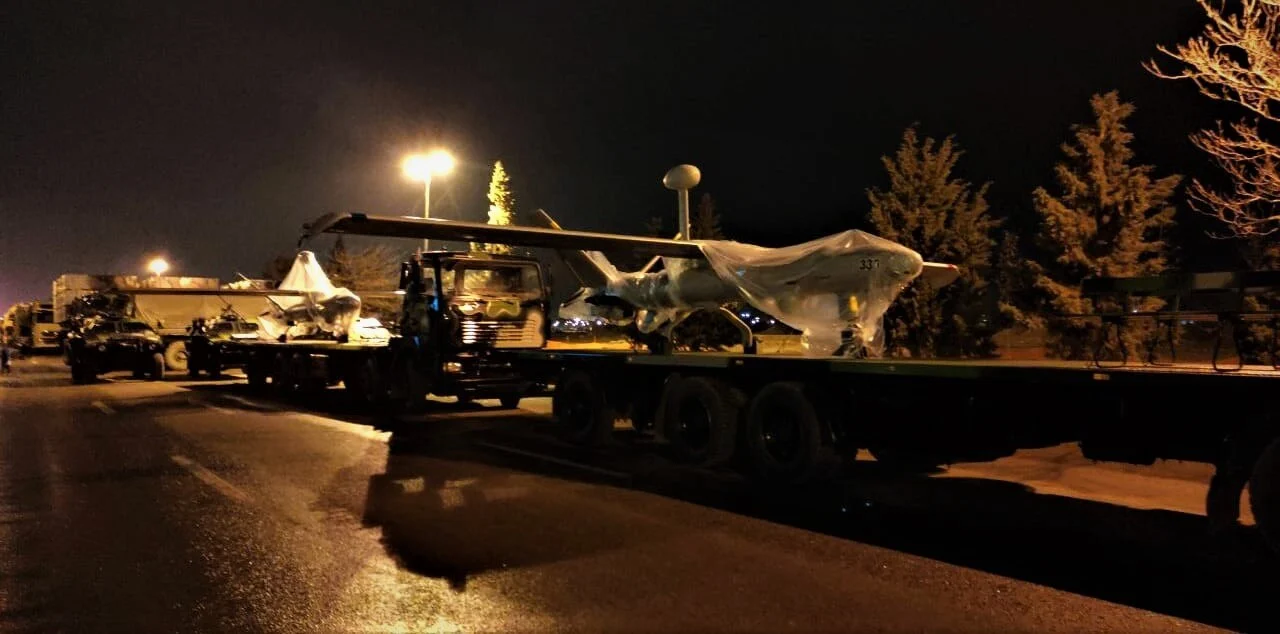


The Bayraktar TB2 has become the default medium-altitude armed drone for African air forces since Niger’s 2022 deliveries, but it is not the only option. This piece compares six systems in the same mission class — tactical ISR and light-strike UAVs flown by or offered to African militaries — by verified specification, origin and current status in African service, data as of October 2026.
DEFENCE AFRICA | Evergreen gallery | Data as of October 2026
Photo: Bayraktar TB2 drones in Azerbaijan’s arsenal, pictured ahead of a parade. Credit: Aykhan Zayedzadeh, CC BY-SA 4.0, via Wikimedia Commons
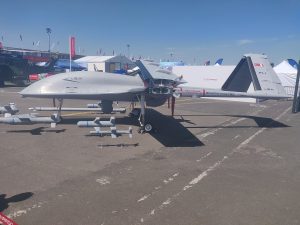
Turkey’s Bayraktar TB2, built by the privately held Baykar, is the medium-altitude long-endurance (MALE) unmanned aircraft most African governments now reach for first. Baykar’s own technical data lists an endurance of 18 to 27 hours, a maximum altitude near 22,000 feet and a payload of up to 150 kg across four hardpoints. Niger took delivery of six TB2s in 2022, and DefenceMENA has covered why Niger bought the Bayraktar TB2 and how the type and its larger Akinci sibling compare with neighbouring Chad’s Anka and Aksungur fleet.
The TB2’s commercial success, tracked in detail by the Turkish trade outlet Envanter Medya’s list of TB2 operator countries, has not stopped African governments from also buying, testing or negotiating for rival systems. Some are cheaper to acquire in bulk, some carry more weight, and some come with different financing or export-control conditions that matter as much to a procurement office as the airframe itself. DefenceMENA’s survey of how military drones evolved across Africa traces this diversification; this piece narrows the focus to six systems that compete directly with the TB2 for the same missions: persistent ISR, strike against unarmoured or lightly defended targets, and border or counter-insurgency surveillance.
The six entries below are ordered alphabetically by system name. This is a survey of realistic alternatives in the same mission class, not a ranking, and no overall winner is declared.
Key facts
- Baykar’s own data sheet lists TB2 endurance at 18-27 hours and payload at up to 150 kg (Baykar, 2026).
- Nigeria operates at least five Wing Loong II drones delivered by 2023, part of an original eight-aircraft order (Army Recognition, 2023).
- Algeria’s CH-4B and Yabhon United 40 fleets both entered service around 2018, according to open-source analysis by Oryx (2021).
- Tunisia’s TAI Anka-S fleet reached five aircraft after a 2023 follow-on delivery (Air Recognition, 2023).
- Morocco’s requested MQ-9B SeaGuardian sale was authorised by the US State Department in December 2020 and has not been confirmed as delivered as of October 2026 (The New Arab, 2020).
- South Africa’s Milkor 380 has no confirmed military customer yet; Milkor cites a published endurance of up to 35 hours (Army Technology, 2026).
1. ADCOM/ADASI Yabhon United 40 — operational in Algeria
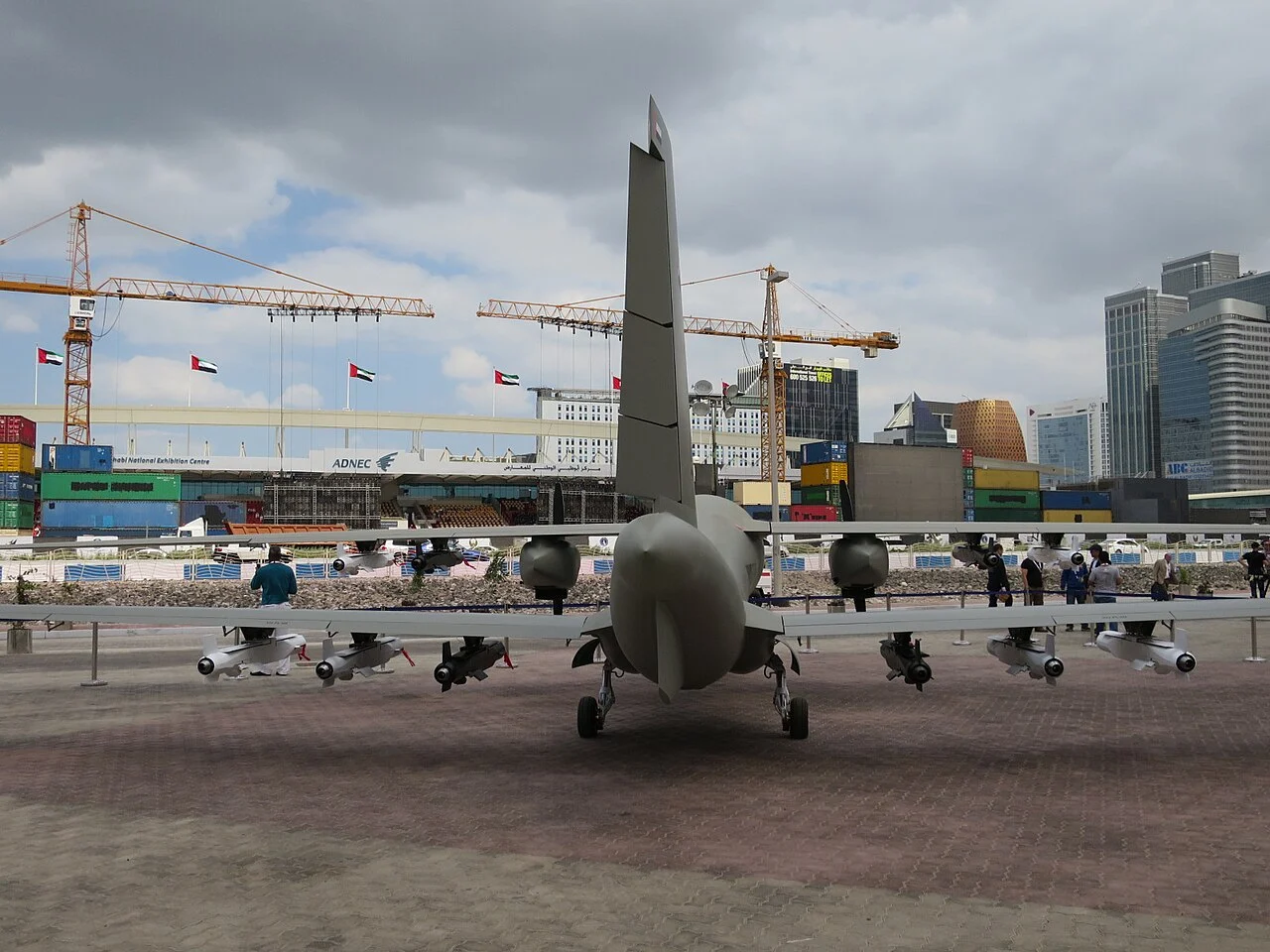
Manufacturer: ADCOM Systems (United Arab Emirates). Origin: UAE, though Algeria says its examples are now built locally. Role: MALE ISR and light-attack UAV.
The Yabhon United 40, also called the U-40, was displayed by ADCOM at Gulf airshows from 2011 with an advertised endurance above 100 hours in its Block 5 configuration and a service ceiling near 7,000 m, according to figures the manufacturer released and that have been repeated in subsequent open-source reporting. Algeria is the only confirmed operator: open-source analysts Stijn Mitzer and Joost Oliemans, writing for Oryx, record the type entering Algerian service around 2018 under the local designation El-Djazair-54, armed with up to ten Namrod air-to-ground missiles or twenty 120 mm mortar rounds, and describe Algeria’s drones as locally assembled rather than imported directly from ADCOM (status: operational). Main advantage: the longest advertised endurance of any system in this list, useful for continuous border or desert surveillance. Main limitation: ADCOM Systems itself is reported by trade press to have gone largely inactive, leaving Algeria’s locally built derivative as the type’s main surviving production line, which limits its availability to other African buyers. For a continent increasingly interested in local assembly and technology transfer, the Algerian experience is itself a case study in what buying the production rights, not just the airframe, can look like.
2. CASC CH-4 Rainbow — operational in Algeria
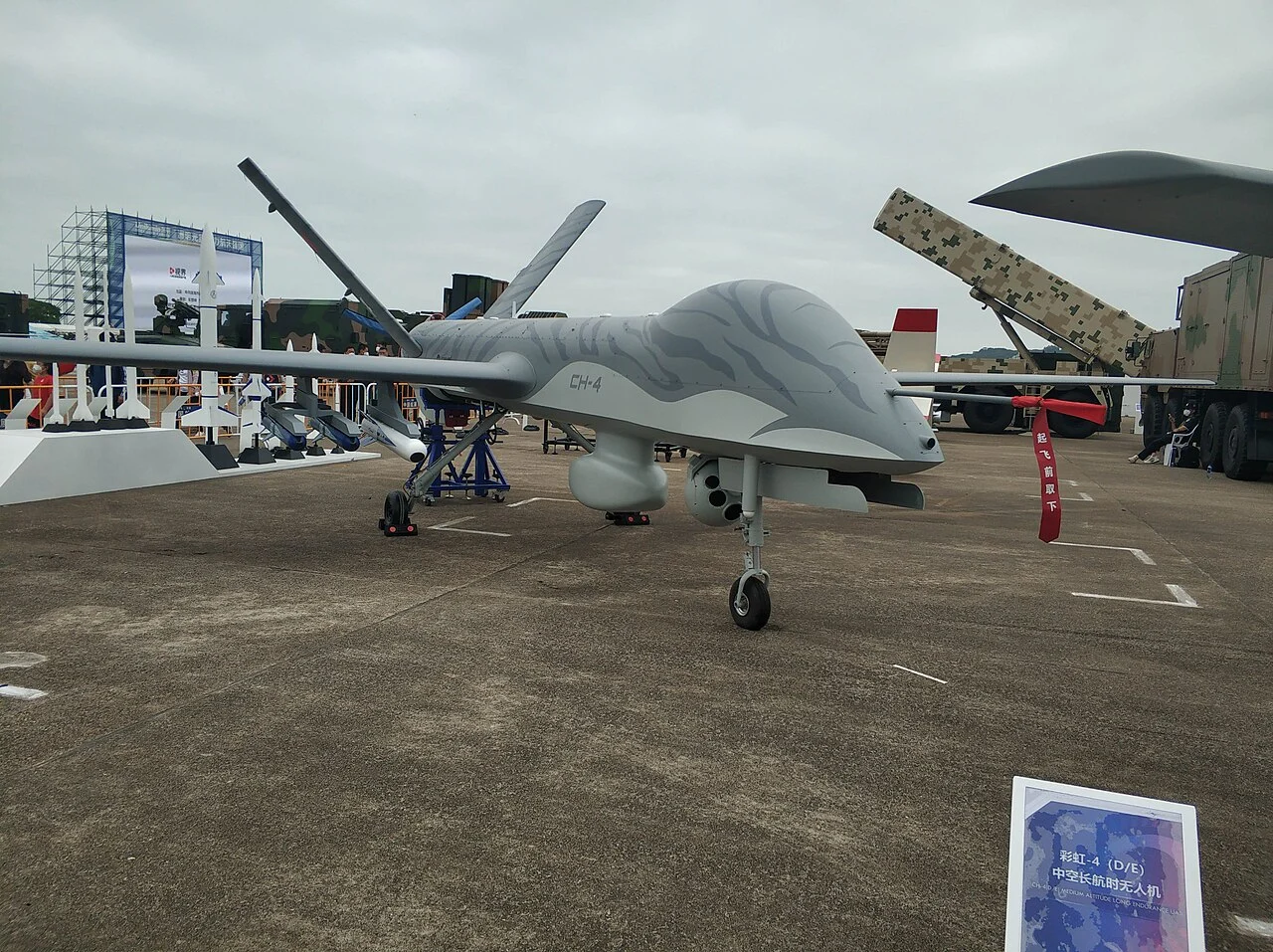
Manufacturer: China Academy of Space Technology (CASC). Origin: China. Role: MALE ISR and strike UAV, the closest Chinese size-class match to the TB2.
Published figures vary on the CH-4B’s exact payload and range: secondary compilations give a weapons payload of roughly 250-345 kg across up to four hardpoints and an endurance commonly cited at 30-40 hours, though the underlying manufacturer data sheet is not public. What is better documented is Algeria’s fleet: Oryx’s December 2021 assessment of Algeria’s drone programme places the CH-4B in service from the late 2010s, based partly at Tindouf air base, and records that three CH-4Bs were lost in crashes, two during the trial phase, without derailing Algeria’s continued use of the type (status: operational). Main advantage: backed by China’s high-volume production and reportedly lower unit cost than the TB2, with an already-proven African operator. Main limitation: the reliability problems documented in Algeria’s early CH-4B use, and a weapons payload that most published figures put below the TB2’s, despite a heavier airframe.
3. Milkor 380 — in development, no confirmed military customer
Manufacturer: Milkor. Origin: South Africa. Role: MALE ISR and strike UAV, marketed as Africa’s largest indigenously developed UAV platform.
Milkor’s own published specification lists a maximum endurance of 35 hours and an external payload capacity of about 210 kg across five hardpoints — two per wing plus a centreline station — with relayed line-of-sight and optional satellite datalinks extending its control range beyond what the unaided radio link allows, according to Milkor’s and Army Technology’s coverage of the design. No air force has yet confirmed acquiring the Milkor 380: the programme remains in development, with Milkor promoting it for South African and export border-surveillance roles rather than reporting a signed contract (status: reportedly under negotiation, no confirmed operator). Main advantage: a genuinely African-designed and African-built platform, which matters to governments prioritising sovereign sustainment and local industrial participation over a purely imported system. Main limitation: without a flying military customer yet, buyers cannot point to the combat record or sustainment track that the TB2, Wing Loong II or CH-4 already have in African hands.
4. General Atomics MQ-9B SkyGuardian — reportedly under negotiation with Morocco
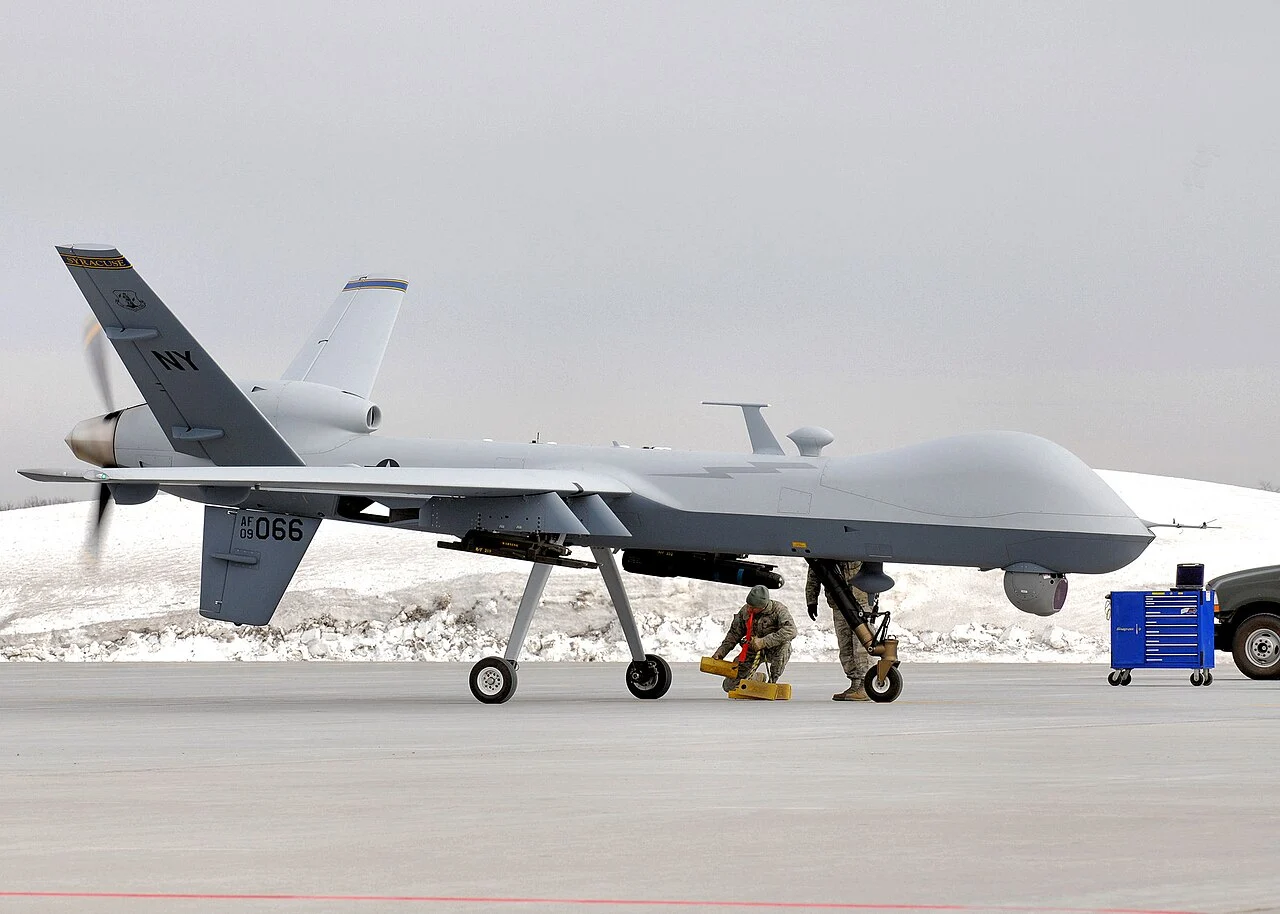
Manufacturer: General Atomics Aeronautical Systems. Origin: United States. Role: MALE ISR and strike UAV, the largest and most capable system in this comparison.
General Atomics’ own data sheet for the MQ-9B SkyGuardian lists an internal payload of 800 lb (363 kg) and an external payload of 4,750 lb (2,155 kg) across nine hardpoints, endurance above 40 hours and a cruise speed of 210 knots — roughly three to four times the TB2’s weapons payload. Morocco is the only African country reported to be pursuing it: the US State Department authorised a sale of four MQ-9B SeaGuardian drones (the maritime-surveillance variant of the same airframe family) to Morocco in December 2020, shortly after the US recognised Moroccan sovereignty over Western Sahara, according to contemporaneous reporting by The New Arab. No delivery or signed contract has been confirmed since (status: reportedly under negotiation). Main advantage: unmatched payload and endurance among the six, plus full NATO interoperability through STANAG 4671 civil-airspace certification. Main limitation: subject to US export-control review on a case-by-case basis, which has left the Morocco request without a confirmed outcome for six years — a friction that has pushed several African governments toward Turkish or Chinese suppliers instead.
5. TAI Anka-S — operational in Tunisia
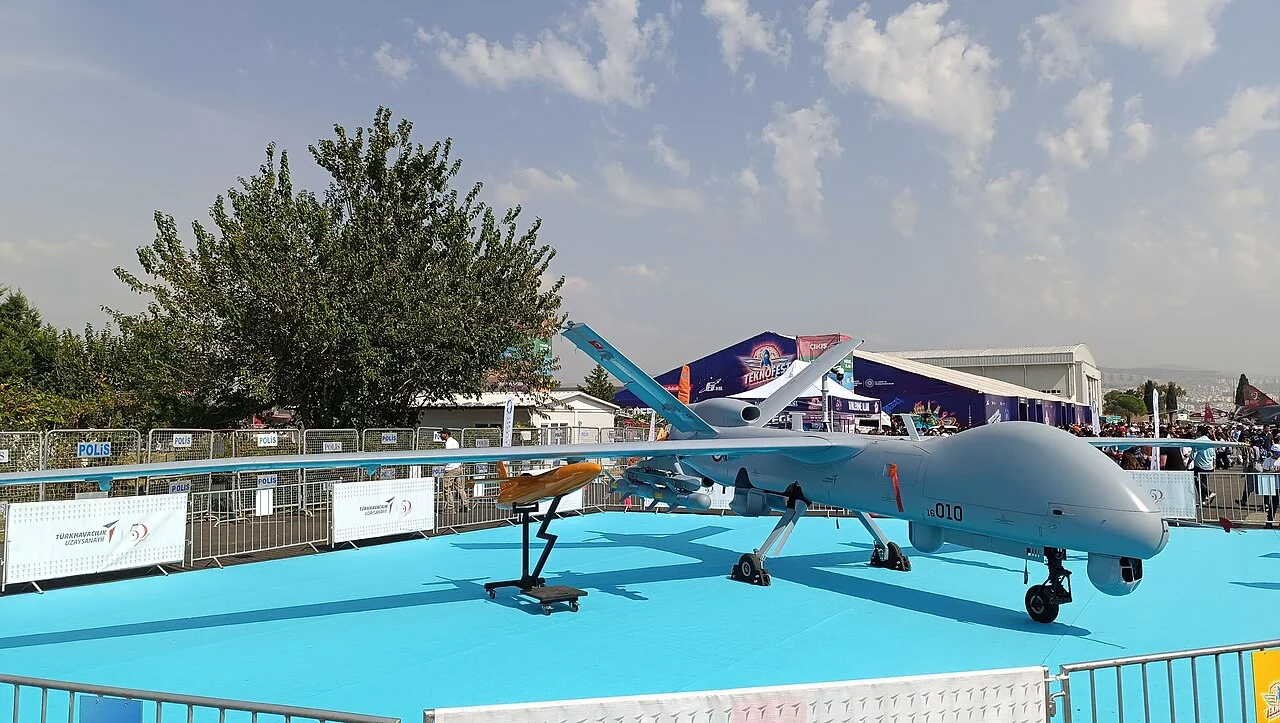
Manufacturer: Turkish Aerospace Industries (TAI), Türkiye’s state-owned aerospace company and a separate industrial base from the privately held Baykar that builds the TB2. Origin: Türkiye. Role: MALE ISR and strike UAV with a satellite-linked variant.
TAI’s figures, reported in May 2021, put the Anka-S at over 350 kg of payload and up to 30 hours of endurance, with a satellite datalink extending beyond-line-of-sight control past 1,000 km, a heavier and higher-flying profile than the TB2’s line-of-sight-limited design. Tunisia is the confirmed operator: an initial three-aircraft, roughly $80 million contract signed in 2020 stalled over financing before Tunisia’s government proceeded with delivery in 2021, and TAI’s marketing head confirmed two further Anka-S deliveries in June 2023, bringing Tunisia’s fleet to five, according to Air Recognition’s reporting (status: delivered, operational). Main advantage: heavier payload and satellite-relay range than the TB2, from a state-owned Turkish supplier offering a second national source alongside Baykar. Main limitation: the Tunisian contract’s financing troubles show that Turkish government-backed terms do not eliminate affordability risk, and TAI’s African export base remains far smaller than Baykar’s.
6. Chengdu Wing Loong II (PLA designation GJ-2) — operational in Nigeria, delivered to Côte d’Ivoire
Manufacturer: Chengdu Aircraft Industry Group, an AVIC subsidiary; exports are marketed by CATIC. Origin: China. Role: MALE ISR and strike UAV, the most widely adopted non-Turkish armed drone in African service to date.
Published figures vary on the Wing Loong II’s exact payload and endurance — secondary compilations give a maximum takeoff weight of 4,200 kg with a published payload commonly cited near 400 kg across six hardpoints, and endurance estimates ranging from roughly 20 to 32 hours depending on configuration and fuel load, figures that are not confirmed by a public Chinese manufacturer data sheet. African deployment is clearer: Nigeria has at least five Wing Loong IIs in service, registered NAF 141 through 145, out of an original eight-aircraft order placed around 2020, according to Army Recognition’s 2023 reporting; and Côte d’Ivoire confirmed its own Wing Loong IIs in August 2026 following a June 2024 contract with CATIC, per Jane’s and Military Africa (status: delivered, operational in both countries). DR Congo has also been reported as negotiating a smaller order. Main advantage: the broadest and most combat-tested African operator base of any TB2 rival, with higher published payload than the TB2 in most configurations. Main limitation: it is a larger and reportedly costlier airframe to sustain than the TB2, and like the TB2 it leaves the operator reliant on a single foreign supplier for spares and technical support.
| System | Origin | Published payload | Published endurance | Status in Africa | Confirmed African operator |
|---|---|---|---|---|---|
| Yabhon United 40 | UAE | Multiple weapons stations (figures not independently verified) | 100+ hours (Block 5, manufacturer figure) | Operational | Algeria |
| CH-4 Rainbow | China | ~250-345 kg (published figures vary) | 30-40 hours (published figures vary) | Operational | Algeria |
| Milkor 380 | South Africa | ~210 kg external | Up to 35 hours | In development | None confirmed |
| MQ-9B SkyGuardian | United States | 2,155 kg external / 363 kg internal | 40+ hours | Reportedly under negotiation (Morocco, since 2020) | None confirmed |
| TAI Anka-S | Türkiye | 350+ kg | Up to 30 hours | Operational | Tunisia |
| Wing Loong II / GJ-2 | China | ~400 kg (published figures vary) | ~20-32 hours (published figures vary) | Operational | Nigeria, Côte d’Ivoire |
Why it matters for Africa
The spread of credible alternatives to the Bayraktar TB2 matters less as a contest between airframes and more as a story about supplier diversification. African air forces buying armed or ISR drones are increasingly weighing financing terms, export-control risk and sustainment access alongside raw performance. Algeria’s parallel use of Chinese CH-4s and a locally built Emirati-derived design, Nigeria and Côte d’Ivoire’s growing Wing Loong II fleets, and Tunisia’s Anka-S all show governments hedging against dependence on any single supplier, Turkish or otherwise. Morocco’s six-year wait for a decision on its MQ-9B request shows the opposite problem: US export-control review can leave a close security partner without a confirmed system years after a request is made, pushing some governments toward Chinese or Turkish systems regardless of unit performance. South Africa’s Milkor 380 points to a third path still being tested: whether a continent that imports nearly all of its medium-altitude drones can build and sustain one of its own. None of these systems displaces the TB2 outright, but together they give African procurement offices real leverage in negotiating price, financing and technology-transfer terms — leverage that did not exist when the TB2 had few credible rivals in its class.
Sources
- Baykar — Bayraktar TB2 technical specifications
- General Atomics Aeronautical Systems — MQ-9B SkyGuardian data sheet
- Milkor — Milkor 380 UAS announcement
- Army Technology — Milkor 380 UAS solution
- Army Recognition — Nigerian Air Force Wing Loong II deliveries, 2023
- Jane’s — Côte d’Ivoire unveils Wing Loong II UAVs
- Military Africa — Côte d’Ivoire confirms Wing Loong II drones
- Air Recognition — Tunisian Air Force receives additional TAI Anka UAVs
- Oryx — Algiers Calling: Assessing Algeria’s UAV fleet
- The New Arab — US negotiating Morocco drone sale following Israel deal
- SIPRI Arms Transfers Database