Armscor Completes Urgent Hull Repair on SAS Amatola, Calls It a Readiness Model

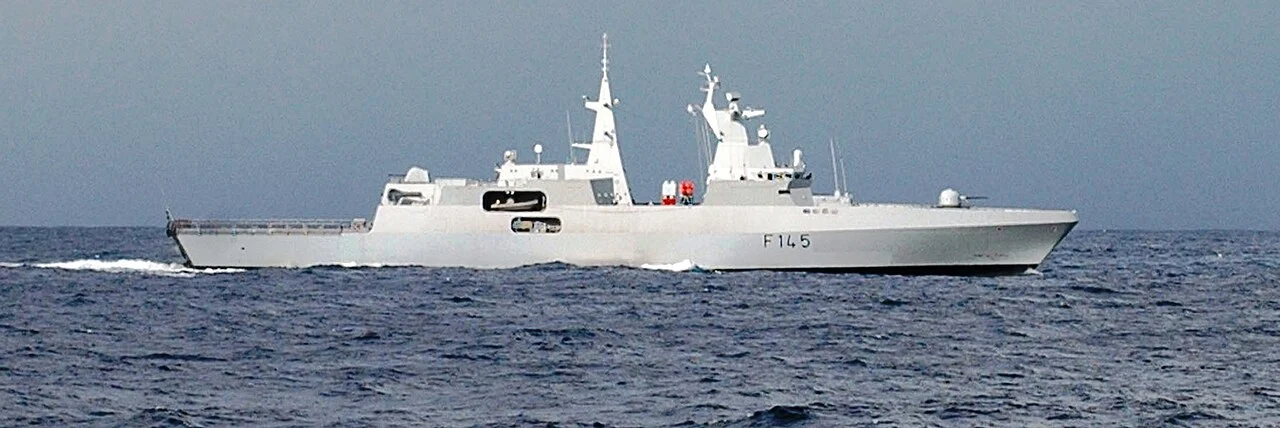


Armscor Dockyard has completed urgent repairs to the South African Navy frigate SAS Amatola, fixing underwater hull defects that had kept the Valour-class ship out of service, in a roughly three-week turnaround the state arms company is citing as a model for future fleet maintenance.
Photo: SAS Amatola (F145) at sea alongside USS Arleigh Burke. Credit: David Holmes, U.S. Navy, Public Domain, via Wikimedia Commons
SAS Amatola needed immediate dry-docking after inspectors found defects on the ship’s underwater hull — the structure responsible for the vessel’s structural integrity and its protection against the marine environment — that made it unsafe to return to sea, according to Military Africa. Armscor Dockyard, working with the Navy, carried out repairs to the identified defects, surface preparation and restoration of the ship’s marine coating system over roughly three weeks.
Armscor frames it as a readiness model
Armscor chief executive Adv. Solomzi Mbada said the project showed “what can be achieved when technical expertise, collaboration and focused execution come together,” calling it the kind of responsiveness clients expect from the dockyard. He described the repair as a model for how the yard should respond to urgent vessel maintenance requests going forward, and said fleet readiness and sustainability remain priorities for Armscor’s work with the Navy and its service providers.
The statement does not give exact start or completion dates for the repair, nor the cost of the work. It follows earlier Armscor Dockyard coverage this year of efforts to restore capacity at the facility, and comes as the Navy has leaned on the yard to keep its small surface fleet — three Valour-class frigates and three Heroine-class submarines, alongside smaller patrol vessels — operational despite years of reported underfunding.
Part of a wider pattern of South African fleet strain
SAS Amatola is one of only three Valour-class (MEKO A-200SAN) frigates in South African Navy service, alongside SAS Spioenkop and SAS Mendi, and the type forms the backbone of the Navy’s blue-water surface combat capability — see DefenceMENA’s overview of frigates and corvettes across African navies for how that compares with other fleets on the continent. Any one of the three being out of service for extended maintenance measurably reduces the Navy’s available surface combat capacity, which is already stretched between anti-piracy patrols, exercises such as October’s IBSAMAR IX drills with India and Brazil, and routine presence missions along South Africa’s Atlantic and Indian Ocean coastlines.
Why it matters for Africa
South Africa operates the most capable blue-water navy in Sub-Saharan Africa, and the Valour class is central to that status — the frigates are the platforms the Navy would actually deploy for a serious maritime crisis, a major regional exercise, or a deployment of national significance. A quick, successful hull repair matters less for its PR value than for what it signals about whether Armscor Dockyard, long criticised for capacity and funding problems, can reliably turn ships around before extended lay-ups erode the fleet’s already-thin readiness margins. For a navy with only three frigates, losing one to a prolonged, poorly managed repair is a capability gap the rest of the fleet cannot easily absorb.
Sources