Denel Posts Revenue Rebound but Faces Ninth Straight Audit Disclaimer



Denel’s revenue rose nearly 16% in the 2025/26 financial year and the company swung back to positive cash flow from operations, but South Africa’s state-owned defence manufacturer was handed a disclaimer audit opinion for the ninth consecutive year, with the Auditor-General describing its financial statements as “not credible.”
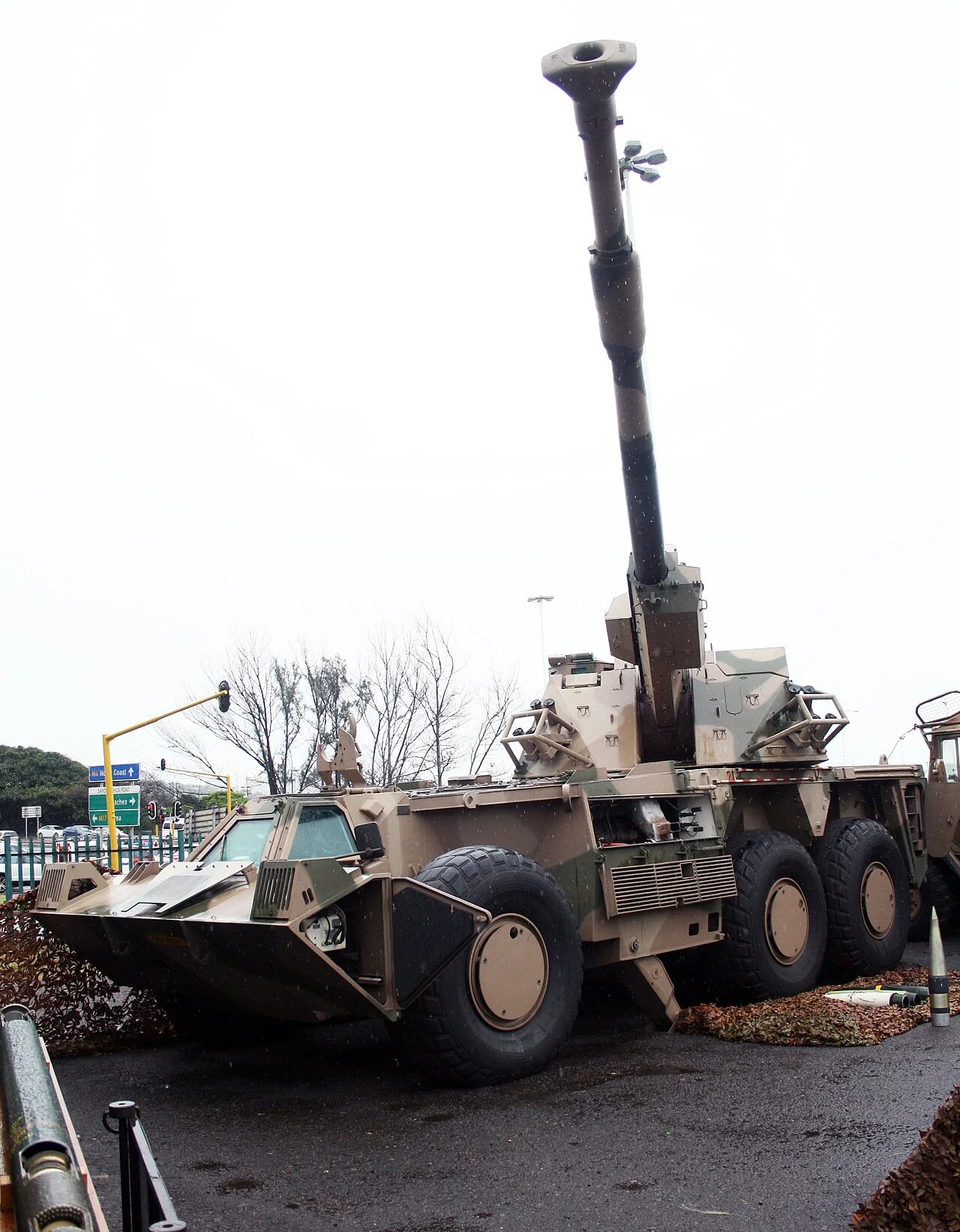
Photo: A South African Army G6 155mm self-propelled howitzer, built by Denel Land Systems. Credit: Bob Adams, CC BY-SA 2.0, via Wikimedia Commons
Denel chief executive Tsepo Monaheng told Parliament’s Portfolio Committee on Defence and Military Veterans on 9 October that the company remains on a “good trajectory for growth, stability, and doing good for the country,” even as its board works through what interim chair Tshidi Mokgabudi called an “exiting disclaimer project” aimed at finally clearing the company’s books, defenceWeb reported.
A revenue recovery, on paper
Denel’s 2025/26 annual report shows group revenue of R1.473 billion, up from R1.272 billion the previous year, a gain of roughly 15.8% that returns the company to levels last seen in 2023. The increase was spread unevenly across Denel’s divisions: Denel Aerospace brought in R880 million, Denel Land Systems R478 million, Denel Dynamics R84 million and Denel Integrated Systems Solutions R29 million.
Gross profit more than doubled on a margin basis, rising to R361 million at a 24% margin from 11% a year earlier, and the company’s share of profit from its joint ventures and associates climbed 74% to R305 million. Net profit for the year came in at R156 million. Cash generated from operations reached R261 million, a reversal from the R122 million cash outflow recorded in 2023/24.
The headline numbers mask a persistent operating loss of R364 million, only marginally better than the R370 million loss posted the year before. Denel attributed the gap to a cost base that remains higher than planned and to legacy contracts signed before the company’s ongoing turnaround programme began. Liquidity remains the most immediate concern: Denel’s own figures show cash reserves could turn negative as early as September 2026, and of the R3.378 billion in state recapitalisation funding Denel has received since 2023, only R81 million was left as of 30 April.
Missed targets, a ninth disclaimer
Against the performance targets set out in its shareholder compact with the state, Denel met only 41%. Revenue growth of roughly 15% fell short of a 25% target, operating expenses crept up to 55% of revenue against a 30%-or-better goal, and Denel PMP’s ammunition-focused revenue of R157 million missed its R235 million target, which the company again blamed on legacy contracts the turnaround plan did not account for.
The Auditor-General’s disclaimer opinion — the ninth in a row — found Denel’s financial statements “not credible,” without defenceWeb’s report detailing the specific line items in dispute. Mokgabudi said the board is reviewing the underlying evidence and trying to understand why a company that has orders and signed contracts on its books continues to struggle to execute them and convert that work into revenue. A disclaimer opinion is the most serious qualification an auditor can issue, indicating the auditor could not obtain enough evidence to form any opinion on the accounts at all.
Programmes moving ahead regardless
Despite the governance and liquidity troubles, Denel said two flagship programmes are progressing. Deliveries under an export contract to upgrade G6 self-propelled howitzers are reportedly running ahead of schedule, continuing a product line that has underpinned Denel Land Systems’ export book for decades and remains in service with several African and Middle Eastern operators. Project Hoefyster, the long-delayed programme to field the Badger infantry fighting vehicle for the South African Army, has completed its first phase, though mine-blast testing has slipped into the 2026/27 financial year.
Denel’s struggles have pushed some of its traditional roles toward joint ventures and private partners. Rheinmetall Denel Munition, the Denel-linked ammunition joint venture, has continued to win export orders independently of its parent’s troubles, and South Africa’s wider defence industry told government last week that private exporters, not Denel alone, are now carrying the bulk of the roughly R10 billion a year the sector sells abroad.
Why it matters for Africa
Denel remains the only African company that designs and builds a full range of artillery, guided munitions, attack helicopters and land systems from the ground up, and its G5/G6 howitzer family and Rooivalk attack helicopter are still reference platforms across the continent’s defence industry. A ninth consecutive disclaimer, on top of a liquidity position that could turn negative within weeks, raises real doubt about whether the state can keep propping up a company its own shareholder compact says is underperforming, even as it insists Denel’s mandate — sovereign capability — matters more than its balance sheet. For African militaries and industrial partners that depend on Denel for spares, upgrades or licensed production, from G6 operators to Rooivalk maintenance customers, the gap between Denel’s programme announcements and its financial reality is now a continental supply-chain risk, not just a South African budgeting problem.
Sources