No single country arms Africa. The United States is the continent’s largest arms supplier overall (19% of African imports of major arms in 2021–25), but in sub-Saharan Africa specifically, China is the largest supplier (22%), followed by Russia (12%) and, for the first time, Türkiye (11%), according to the Stockholm International Peace Research Institute’s most recent data, published in March 2026. Africa’s total arms imports fell by 41% between 2016–20 and 2021–25, driven mainly by a collapse in North African purchases, even as West Africa’s imports rose sharply on the back of Sahel counterinsurgency spending.
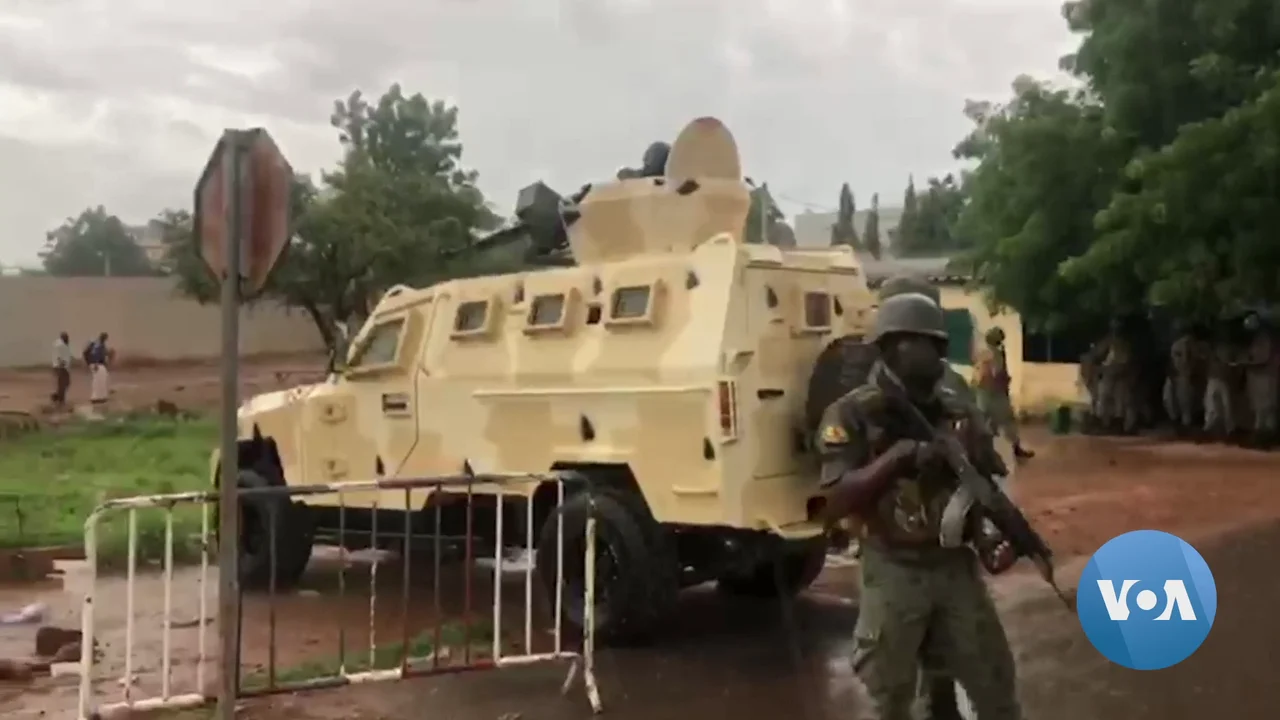
Photo: A Malian Army armoured personnel carrier in Bamako. Mali is one of sub-Saharan Africa’s three largest arms importers and a case study in supplier diversification, discussed below. Credit: Wikimedia Commons (public domain).
This piece answers one question with open, citable data: who actually supplies Africa’s weapons, and how has that changed. The main source is SIPRI’s Trends in International Arms Transfers, 2025 fact sheet, published March 2026, which covers deliveries of major arms — aircraft, armoured vehicles, ships, missiles, air defence systems and similar — between 2021 and 2025. It does not cover small arms, ammunition, or the security and mercenary contracts (like Russia’s Africa Corps) that shape some African conflicts without appearing in formal arms-transfer statistics. Where the picture is incomplete or disputed, this article says so.
Direct answer: Africa’s suppliers, continental and sub-Saharan
| Supplier | Share of African arms imports | Notes |
|---|---|---|
| United States | 19% | Exported major arms to 17 African states in 2021–25 |
| China | 17% | 13% of China’s global arms exports went to Africa |
| Russia | 15% | Down sharply in volume terms globally, but still a top-three African supplier |
| France | 8.3% | Concentrated in Morocco and a shrinking group of Francophone states |
Source: SIPRI Arms Transfers Database, March 2026. Figures are SIPRI trend-indicator values (TIV), a measure of the volume of major-arms transfers, not a dollar figure. Africa’s total imports of major arms fell 41% between 2016–20 and 2021–25, and the continent accounted for 4.3% of global arms imports in 2021–25.
| Supplier | Share of sub-Saharan imports | Notes |
|---|---|---|
| China | 22% | Supplied major arms to 23 of the subregion’s states |
| Russia | 12% | Second-largest, despite a 64% fall in Russia’s global arms exports over the same period |
| Türkiye | 11% | New entry to the top three; Turkish global arms exports rose 122% between 2016–20 and 2021–25 |
Source: SIPRI, March 2026. Sub-Saharan Africa’s imports of major arms rose 13% compared with 2016–20 and made up 2.2% of the global total in 2021–25. The three largest sub-Saharan recipients were Nigeria (16% of subregional imports), Senegal (8.8%) and Mali (8.0%).
Why the continental and sub-Saharan rankings differ
Africa’s arms-import statistics are dominated by two North African states, Morocco and Algeria, whose rivalry drives large purchases from Western and Russian suppliers respectively. SIPRI ranks Morocco 28th and Algeria 33rd among the world’s largest arms importers for 2021–25. Morocco’s declared suppliers in the period were the USA (60% of its imports), Israel (24%) and France (10%); Algeria’s were Russia (39%), China (27%) and Germany (18%), though SIPRI notes Algeria is secretive about its purchases and unverified reports point to additional, unconfirmed Russian contracts. Because Morocco and Algeria import far more major-arms volume than any sub-Saharan state, they pull the continental supplier ranking toward the USA and Russia. Strip North Africa out, and the sub-Saharan picture — the one that matters for most of DefenceMENA’s coverage area — looks different: China, not the USA, leads, and Türkiye outranks France.
China: the largest supplier south of the Sahara
China supplied major arms to 23 sub-Saharan African states in 2021–25 and accounted for 22% of the subregion’s imports, SIPRI’s largest confirmed share for any single supplier. Independent reporting from the Africa Defense Forum and the International Institute for Strategic Studies (IISS), citing SIPRI’s underlying transfer data, has described a similar pattern of broad Chinese penetration across armoured vehicles, artillery and increasingly drones — this is an INDEPENDENT REPORT characterisation, not a SIPRI headline figure, and DefenceMENA has not independently verified claims about the exact share of African militaries using Chinese-made armoured vehicles. What is confirmed: China’s arms exports rose 11% globally between 2016–20 and 2021–25, of which 13% went to African states, and unlike Western suppliers, Chinese sales are not typically conditioned on governance or human-rights benchmarks — a policy difference documented by multiple African and Western outlets rather than a SIPRI metric.
Russia: smaller globally, still present in Africa
Russia’s worldwide arms exports fell 64% between 2016–20 and 2021–25 — the sharpest drop of any top-10 supplier — as sanctions, the war in Ukraine and prioritisation of Russia’s own forces cut into its export capacity. Even so, Russia remained the third-largest supplier to Africa overall (15%) and the second-largest to sub-Saharan Africa (12%) in the same period. This is a case where the percentage share is more stable than the absolute volume: Russia is exporting a shrinking pool of major arms worldwide, but still commands a meaningful share of Africa’s smaller, and in the Sahel and West Africa growing, import market. Separately, Russia’s Africa Corps (successor to the Wagner Group) provides paid security and training services to several African governments, including Mali and the Central African Republic; these are security-service contracts, not recorded in SIPRI’s major-arms transfer data, and should not be conflated with formal Russian arms exports. Equipment moving alongside Africa Corps personnel has been reported by independent outlets (UNVERIFIED SOCIAL CLAIM / OSINT ASSESSMENT in individual cases) but is not part of the confirmed SIPRI figures cited above.
Türkiye: a new top-three sub-Saharan supplier
Türkiye’s global arms exports grew 122% between 2016–20 and 2021–25, the fastest growth rate of any top-11 global supplier, taking its worldwide share from 0.9% to 1.8%. In sub-Saharan Africa the effect was large enough to put Türkiye ahead of France as a supplier: an 11% share of subregional imports in 2021–25, according to SIPRI. This is consistent with open reporting on Turkish drone exports: independent trackers cited by Africa Defense Forum and defenceWeb report Bayraktar TB2 deliveries to states including Burkina Faso, Ethiopia, Mali, Niger, Nigeria, Somalia and Togo, alongside Turkish armoured vehicles and, in Sudan’s civil war, transfers to the Sudanese Armed Forces confirmed by SIPRI (see below). DefenceMENA labels country-by-country TB2 delivery figures as INDEPENDENT REPORT / OSINT ASSESSMENT pending official confirmation from each importing state; SIPRI’s aggregate 11% sub-Saharan share is the only figure in this section drawn from a primary, systematic dataset.
France: a shrinking footprint after the Sahel withdrawal
France’s arms exports grew 21% worldwide between 2016–20 and 2021–25, but its African share fell to 8.3% continentally, and it no longer appears among the top three suppliers to sub-Saharan Africa. The context is well documented: France closed its military bases in Mali, Burkina Faso, Niger, Chad, Senegal and Ivory Coast between 2022 and 2025, after Sahel governments ended defence cooperation agreements with Paris. Where France’s African arms relationships persist, they are increasingly concentrated in Morocco and a smaller group of coastal and Indian Ocean states rather than the Sahel. This is a documented, dated shift — not a claim that French equipment failed or was rejected on performance grounds; the terminations were political and security-cooperation decisions by Sahel governments, as reported contemporaneously by Reuters, AFP and regional outlets.
Sudan: a live case study in wartime supply
Sudan’s civil war, which began in April 2023 between the Sudanese Armed Forces (SAF) and the Rapid Support Forces (RSF), is the clearest current example of how supply lines split along conflict lines. Per SIPRI’s confirmed 2021–25 data, the SAF received armed drones, armoured vehicles and transport aircraft from five identified suppliers — Belarus, Iran, Kyrgyzstan, Türkiye and the United Arab Emirates — plus one combat aircraft from an unidentified supplier. For the RSF, SIPRI’s major-arms tracking identified only four artillery pieces and one air-defence system, both from unknown suppliers; SIPRI’s methodology, focused on major weapons systems, is known to undercount the lighter arms and ammunition flows that dominate irregular-force logistics.
Separately from SIPRI’s confirmed transfer data, the United Nations Panel of Experts on Sudan, Amnesty International and Human Rights Watch have published INDEPENDENT REPORT findings alleging that the UAE has supplied the RSF with armoured vehicles and other equipment via routes through Chad, and that some of this equipment includes Chinese-, French- and Turkish-made components. The UAE has denied arming the RSF. DefenceMENA presents this as a documented but disputed and unresolved allegation, not as a confirmed fact, and applies the same evidentiary caution to it that this article applies to claims about every other supplier state.
A note on the numbers
Three technical points matter for reading any arms-supplier ranking correctly. First, SIPRI’s trend-indicator value (TIV) measures the volume of major-arms transfers using a standardised unit based on weapon characteristics, not a dollar price — it cannot be read as “Africa spent $X” or converted directly into contract values. Second, SIPRI presents data in five-year blocks specifically because annual transfers swing sharply with individual large deliveries; a single big order can move a country’s ranking for the whole period. Third, “Africa” and “sub-Saharan Africa” are different datasets in SIPRI’s own tables: North Africa’s two large importers, Morocco and Algeria, are excluded from the sub-Saharan figures used throughout the second half of this article, and conflating the two will produce a misleading picture of any single country’s or supplier’s real position.
Frequently asked questions
Who is Africa’s single largest arms supplier?
For Africa as a whole (2021–25), the United States, at 19% of the continent’s major-arms imports, according to SIPRI. For sub-Saharan Africa alone, China leads at 22%.
Is Russia still a major arms supplier to Africa?
Yes, despite a 64% fall in Russia’s worldwide arms exports since 2016–20. Russia remained the third-largest supplier to Africa overall (15%) and the second-largest to sub-Saharan Africa (12%) in 2021–25.
Which African countries import the most weapons?
Morocco and Algeria are the largest importers on the continent by volume. Within sub-Saharan Africa, Nigeria, Senegal and Mali were the three largest recipients of major arms in 2021–25.
Is Türkiye a major arms supplier to Africa now?
In sub-Saharan Africa specifically, yes: SIPRI data puts Türkiye’s share of subregional imports at 11% in 2021–25, ahead of France, making it the third-largest supplier to the subregion after China and Russia.
Why did France’s arms sales to Africa decline?
Largely because several Sahel governments — Mali, Burkina Faso, Niger and Chad — ended defence cooperation with France and closed French bases between 2022 and 2025, a political and security shift rather than a judgement on French equipment.
Does this data include mercenary groups like Russia’s Africa Corps?
No. SIPRI’s arms-transfer data covers deliveries of major weapons systems between states. Security and training contracts, including those involving Russia’s Africa Corps, are a separate category not captured in these figures.
Last updated: 25 September 2026.
Related coverage on DefenceMENA
- Nigeria: military strength, budget and equipment profile — sub-Saharan Africa’s largest arms importer, at 16% of the subregion’s 2021–25 total
- Egypt: military strength, budget and equipment profile — how a seven-supplier arsenal compares with the sub-Saharan pattern described here
- DefenceMENA coverage tagged Mali — the Sahel’s clearest case of supplier substitution after France’s withdrawal
- Strongest militaries in Africa in 2026, ranked — how the Global Firepower order compares with the supplier and spending picture set out here
Sources
- SIPRI Fact Sheet, “Trends in International Arms Transfers, 2025,” March 2026
- Ecofin Agency, “U.S. Tops Arms Supplies to Africa in 2021-2025, SIPRI Says”
- Africa Defense Forum, “Arms Sales Drop Across Most of Africa,” April 2026
- Africa Defense Forum, “China Becomes Africa’s Top Weapons Supplier, But Motive and Quality Stir Debate,” July 2024
- IISS, “Chinese arms sales in Sub-Saharan Africa,” December 2024
- defenceWeb, “Turkey’s booming defence exports”
- defenceWeb, “African arms imports dropped by nearly half over the last decade; West African imports soar”
- Africa Defense Forum, “Evidence of UAE Supplying RSF Continues to Mount,” January 2025
- Human Rights Watch, “Fanning the Flames,” September 2024
- Defense News, “Russian arms export plummet amid war, sanctions: think tank,” March 2024
- French military withdrawal from West Africa, 2022–2025 — background timeline