Which Border Surveillance Systems Have African Armies Bought for Land Borders?



African armies watch their land borders with five different kinds of equipment: US-funded mobile radar and camera systems in Egypt, a US and German-funded sensor network on Tunisia’s border with Libya, portable ground radars in Nigeria and Kenya, Turkish Bayraktar TB2 drones in Niger and Burkina Faso, and Chinese CH-4 and Wing Loong aircraft in North Africa. Each solves a different part of the problem, and none of the public sources reviewed gives comparable prices.
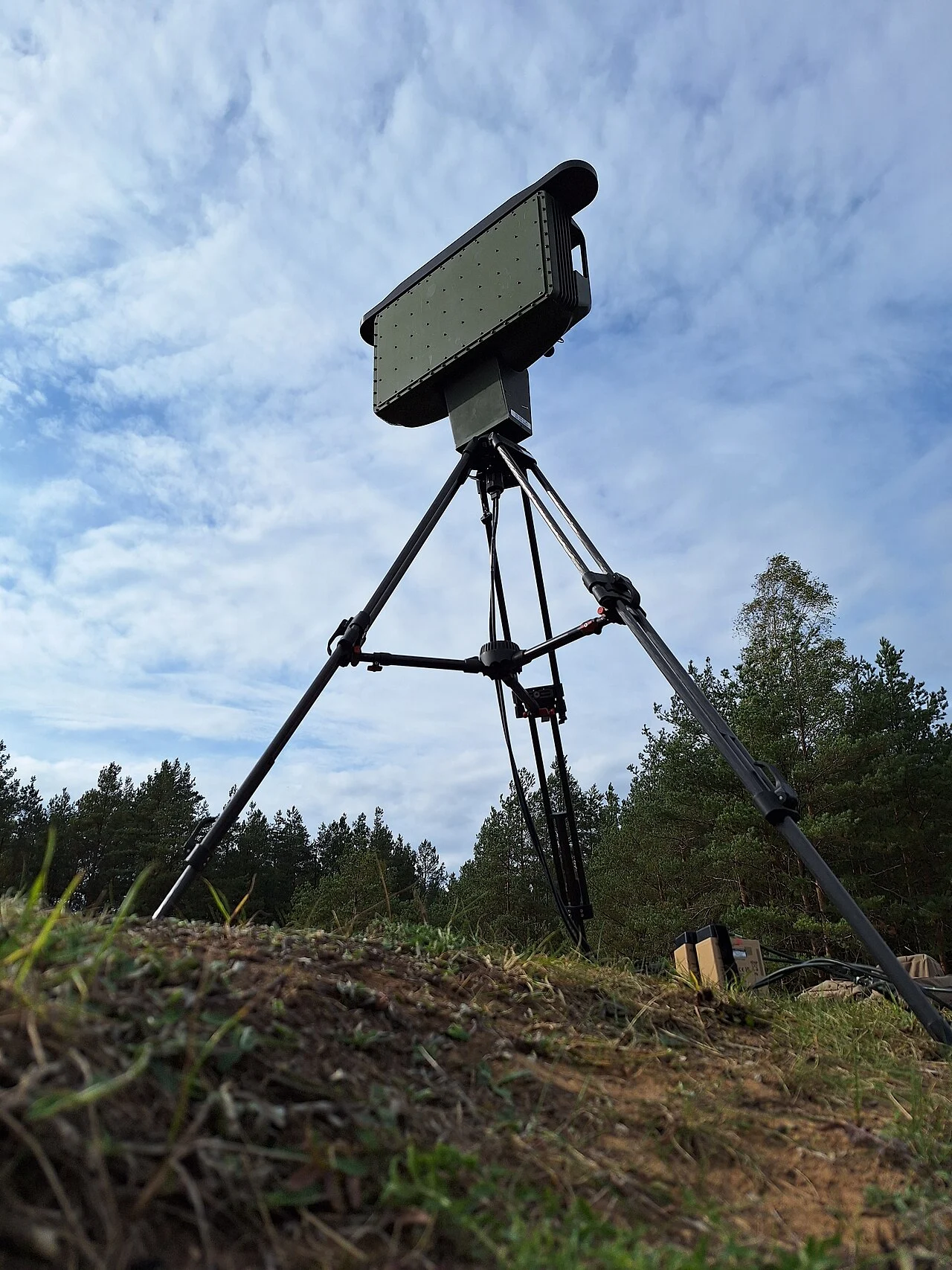
Photo: A Thales Ground Observer 12 portable ground surveillance radar. Credit: Airborne373, CC BY-SA 4.0, via Wikimedia Commons.
Direct answer
For a ministry that needs to see people and vehicles crossing a long, thinly populated land border, five options have documented African users: the ATSC Mobile Border Surveillance System family (Egypt), an integrated fixed-sensor border network as built in Tunisia, portable and vehicle-mounted ground radars from Thales, Elbit, Pro Patria and Kelvin Hughes (Nigeria, Kenya), the Baykar Bayraktar TB2 (Niger, Burkina Faso, reported in Nigeria) and Chinese CH-4 and Wing Loong drones (Algeria, Morocco, Egypt, Nigeria, DR Congo). Ground sensors give continuous coverage of a chosen stretch. Drones cover more ground but only while airborne. Tethered aerostats are marketed for this role, but no African army operating one on a border was found. The right choice depends on border length, terrain, who is paying and whether the buyer wants a sensor network or an aircraft.
| Requirement | Persistent surveillance of African land borders: detect, classify and track people and vehicles, and pass the picture to a command post |
| Options compared | ATSC MBSS/MS3, Tunisia-type integrated sensor network, portable ground radars, Bayraktar TB2, Chinese CH-4/Wing Loong |
| Largest documented package | Egypt MS3 Phase II: $93.8 million US contract, completion due February 2027 |
| Newest approval | Tunisia Border Security Project Phase III: $95 million (reported, April 2026) |
| Price data | Package values only; no comparable unit prices published |
The African requirement
Land borders in Africa are long, often unmarked and patrolled by few personnel. The requirement is rarely to stop every crossing. It is to detect movement early enough for a patrol or quick-reaction force to respond, and to do so across places where roads, power and communications are limited. The cases in this article show three distinct versions of that problem: a desert frontier with a neighbouring state in crisis (Tunisia and Libya, 459 km), insurgent and smuggling routes in the Sahel and Lake Chad basin (Niger, Nigeria, Burkina Faso), and a frontier with an active armed group (Kenya and Somalia).
Operating environment
- Open terrain and long distances. Tunisia built a 250 km barrier of earth mounds and trenches along its 459 km Libya border and added cameras and radar behind it (Africa Defense Forum). Sensor spacing and radar range decide how many towers a border needs.
- Power and communications. The Tunisian package includes solar power units, generators, microwave relay links and an LTE data network, which shows how much of a fixed system is supporting infrastructure rather than sensors.
- Insurgent activity near the border. Niger’s presidency said its TB2s were bought to fight terrorism and secure its borders, with attention on Libya and Mali (defenceWeb). Drones operate in that setting; fixed towers near active groups need their own security.
- Heat, dust and rain. Manufacturers claim all-weather operation for radars such as the SR Hawk, but none of the sources reviewed publishes independent comparative test data for the systems below. That gap is stated here and not filled.
What capabilities matter?
The same criteria are applied to every option: sensor type and reported detection range, whether the system is fixed, mobile or airborne, how the picture reaches a command post, documented African users, funding route, status, and public price data. Where a source does not state a figure, the table says so.
Comparison table
| Option | Origin | Type | Sensors and range (reported) | Documented African users | Funding route | Status | Price data |
|---|---|---|---|---|---|---|---|
| ATSC MBSS-80 / MBSS-1300 / MS3 | United States | Truck and trailer mobile towers plus fixed towers | Radar 48 km (people, vehicles, low aircraft); EO/IR 25 km | Egypt | US Foreign Military Sales | MBSS-80 delivered (45+ by May 2020); MS3 Phase II contracted | Contract values only |
| Integrated border network (Tunisia project) | United States, with German co-funding | Fixed towers, cameras, radar, relay links and command software | Radar reported to locate a person at 10 km; thermal cameras | Tunisia | US grant and FMS | Phase II concluded March 2022; Phase III approved April 2026 (reported) | Contract values only |
| Portable and vehicle-mounted ground radars | France, Israel, Hungary, UK | Man-portable or mast-mounted radar | Thales GO12: up to 27 km on vehicles (manufacturer); Pro Patria PGSR-3i: 6 to 24 km | Nigeria (Thales, Elbit, Pro Patria); Kenya (Kelvin Hughes) | Not stated in sources reviewed | Nigeria: operational, observed July 2025; Kenya: contracted 2015, delivery not confirmed | Not stated in sources reviewed |
| Bayraktar TB2 | Türkiye | Tactical armed UAV | 24 h endurance, 150 km mission range (as reported) | Niger, Burkina Faso; Nigeria (reported, type not officially confirmed) | Direct purchase | Niger and Burkina Faso delivered 2022 | Not stated in sources reviewed |
| Chinese CH-4 / Wing Loong | China | MALE UAV | CH-4: up to 40 h endurance, EO/IR and SAR payload | Algeria, Morocco, Egypt, Nigeria, DR Congo, Ethiopia | Direct purchase | Operational | Not stated in sources reviewed |
The options are not like-for-like substitutes. Rows one to three are ground sensor systems; rows four and five are aircraft. A border service would normally combine them, and the table separates them because their costs and support needs differ.
ATSC MBSS and MS3 (Egypt)
Advanced Technology Systems Company (ATSC) received a contract of about $64 million in October 2017 and reported delivering more than 45 MBSS-80 units, each with a ground radar, electro-optical/infrared sensor, laser rangefinder and GPS, by May 2020, ahead of schedule (defenceWeb). A second award, announced by the US Department of Defense on 1 February 2022, is worth $93.8 million and covers fixed-site surveillance towers, a truck-based Mobile Border Surveillance Vehicle, the trailer-mounted MBSS-1300, a mobile field workshop and contractor logistics support, with completion due in February 2027. The MBSS-1300 raises a 13 m mast with a 25 km EO/IR sensor and a radar reported at 48 km. SRC supplies the SR Hawk radar (defenceWeb). The maintenance workshop and logistics support in the contract are the most specific sustainment terms found for any option here. Status: MBSS-80 delivered; MS3 Phase II contracted. Egypt’s wider inventory is covered in DefenceMENA’s Egypt military strength profile.
Integrated sensor network (Tunisia)
Tunisia’s Libya border programme is the clearest African example of an integrated system rather than individual sensors. The US Defense Threat Reduction Agency funded the first phase with Germany, at about $24.9 million, and added $20 million in 2018 for cameras, elevated towers, unmanned aerial systems and trench and wall works (defenceWeb). The package includes thermal cameras, surveillance radars, microwave relay links, perimeter cameras, LTE data links, chemical and explosive detectors, command-and-control software and a common operating picture platform. Phase II concluded in March 2022. In April 2026 a $95 million Phase III was reported approved under Foreign Military Sales, with L3Harris named for communications and software (Military Africa). The figure comes from a secondary report of a US State Department notice and should be checked against the original. Status: Phase I and II delivered; Phase III approved.
Portable ground radars (Nigeria and Kenya)
Lightweight radars are the cheapest way to add coverage to a patrol base or a checkpoint, and the only category here where several suppliers appear in one army. Military Africa reported that the Nigerian Army displayed the Thales Ground Observer 12, Elbit’s Foxtrack and Pro Patria’s PGSR-3i Beagle at a 199 Special Forces Battalion base in Maiduguri in July 2025, for operations against insurgents and border threats (Military Africa). Quantities and contract details were not disclosed. That report also quotes a very low unit cost; the figure is unsupported and is not used here. Thales describes the GO12 as a man-pack radar that sets up in under five minutes and detects targets at up to 27 km (Thales), which is a manufacturer claim. In Kenya, Kelvin Hughes announced in 2015 that its SharpEye SxV radar, at about 20 kg, was contracted through C4 Planning Solutions for Kenyan forces against illegal border movements on the Somali frontier (Strategic Intelligence Service, citing the manufacturer). Delivery and current use are not confirmed. See also DefenceMENA’s Nigerian Army weapons list.
Turkish option: Bayraktar TB2
The Turkish option belongs in this article because a medium-altitude drone with day and night sensors addresses the same requirement on the airborne side, and African users have bought it for border work. What is documented:
- Niger: ordered in November 2021 and six aircraft delivered on 20 and 21 May 2022, with the presidency describing the purpose as fighting terrorism and securing borders (defenceWeb). That gives an order-to-first-delivery interval of about six months for this case only.
- Burkina Faso: five TB2s commissioned in March 2023 after arriving in April and May 2022, for surveillance and strike against armed groups (defenceWeb).
- Nigeria: the Army’s “Project Guardian” fleet of 43 drones is believed to be TB2s, with personnel trained in 2022, but the type is not officially confirmed (Military Africa).
For a wider operator list see DefenceMENA’s guide to which African countries operate the Bayraktar TB2.
What is verified for the Turkish option: delivered aircraft in Niger and Burkina Faso, a stated border purpose in Niger’s case, and training in Nigeria. What is not verified: unit prices, any delivery-speed advantage beyond the single Niger interval, local assembly, maintenance in Africa, and the confirmed type in Nigeria. ASELSAN also markets border security products in Africa, including the ACAR-K ground radar and the MİDAS fibre-optic detection system, and says its equipment is in use in 21 African countries (defenceWeb). No article reviewed names an African border surveillance contract for these products. In South Africa the company was reported in April 2026 to be assembling local partners for a border security offer, still in the development stage (defenceWeb). Both are marked Not confirmed as African border deployments.
Chinese CH-4 and Wing Loong
defenceWeb’s January 2025 survey counts Chinese drones in Algeria (24), Morocco (14), the DR Congo (9), Egypt (4 or more), Nigeria (3 or more) and Ethiopia, with surveillance and detection of improvised explosive devices and smuggling tunnels among the roles (defenceWeb). The CH-4 carries an EO turret and synthetic aperture radar with up to 40 hours of endurance. These fleets are counterinsurgency and general ISR assets, and the sources reviewed do not say how much of their flying is border patrol. Status: operational. See DefenceMENA’s comparison of the TB2, Wing Loong II and CH-4 in Africa.
Aerostats: no African border operator found
Tethered aerostats appear in border surveillance discussions because a radar at 1,500 m can cover a large area for long periods, and South Africa’s CSIR has studied the concept. The only African deployment found in this research is a Rheinmetall system ordered by Germany for its own base in Niger, at about €21 million (Military Africa). That is a foreign force-protection purchase, not an African army border programme, so aerostats are left off the shortlist. Status for African border use: Not confirmed.
African operators at a glance
- Egypt: ATSC MBSS-80 (45+ delivered), MS3 Phase II (contracted), Chinese Wing Loong drones
- Tunisia: US and German-funded integrated network (Phases I and II delivered, Phase III approved)
- Nigeria: Thales GO12, Elbit Foxtrack and Pro Patria PGSR-3i radars; Project Guardian drones; Chinese CH-3, Wing Loong
- Kenya: Kelvin Hughes SharpEye SxV (contracted 2015; delivery not confirmed)
- Niger: six Bayraktar TB2 (2022)
- Burkina Faso: five Bayraktar TB2 (commissioned 2023)
- Algeria and Morocco: Chinese CH-4 and Wing Loong fleets of 24 and 14 aircraft
Procurement and price evidence
Only contract and package values are public: about $64 million (2017) and $93.8 million (2022) for Egypt’s ATSC systems, about $24.9 million plus $20 million for Tunisia’s first phases, and a reported $95 million for Tunisia’s Phase III. Each bundles towers, vehicles, communications, training and support, and each covers a different number of sensors, so dividing any value by a unit count would be misleading and this article does not do it. No comparable prices were found for the radars or drones. SIPRI trade-indicator values are not dollar prices and were not used.
Delivery speed
The documented sequences cannot be ranked. ATSC delivered its Egyptian MBSS-80 batch about two and a half years after the October 2017 award. Niger’s TB2s arrived about six months after the November 2021 order, and Burkina Faso’s aircraft arrived in the same window. Tunisia’s programme ran in phases from 2016 to 2022. Contract dates for the radars in Nigeria and Kenya are missing, so no supplier can be called faster.
Training, maintenance and local production
Egypt’s contract includes a mobile field workshop and contractor logistics support, and Tunisia’s project includes installation, training and sustainment. Nigeria trained 46 personnel for its drone fleet in 2022. No source reviewed documents local assembly or licensed production of any of these systems in Africa, and technology transfer should not be assumed from one country’s deal to another’s. Buyers should ask specifically about spares, in-country training, software updates for the command system and how a mixed fleet of radars from several suppliers is integrated.
Which requirement fits which option?
| If the priority is | Options with documented African users | Evidence gap |
|---|---|---|
| Continuous coverage of a defined stretch, with a workshop and support package | ATSC MBSS/MS3 | Unit prices; performance in service |
| One command picture across a whole frontier | Tunisia-type integrated network | Independent effectiveness data |
| Quick, low-footprint coverage of patrol bases and checkpoints | Portable radars (Thales, Elbit, Pro Patria, Kelvin Hughes) | Quantities, contracts and prices |
| Wide-area cover and a strike option in insurgent border zones | Bayraktar TB2 | Prices; confirmed Nigerian type; local support |
| Long endurance ISR from an established Chinese supplier | CH-4, Wing Loong | Border-specific use; prices |
See DefenceMENA’s overview of military drones used in Africa and the military equipment database for country files.
FAQ
Which African countries use radar and camera systems on land borders?
Documented cases include Egypt (ATSC mobile systems), Tunisia (a US and German-funded sensor network on the Libya border), Nigeria (portable ground radars) and Kenya (a radar contracted in 2015 for the Somali border).
Are drones a substitute for border towers and radars?
Not fully. Drones cover more ground but only while flying, whereas towers and radars watch a fixed stretch continuously. Niger and Burkina Faso use TB2 aircraft, while Egypt and Tunisia invested in ground sensor networks.
Are Turkish systems used for border surveillance in Africa?
Yes, in the airborne role. Niger received six Bayraktar TB2 in 2022 for counter-terrorism and border security, and Burkina Faso commissioned five. An African border contract for ASELSAN’s ground radars was not found in the sources reviewed.
How much does a border surveillance system cost?
Public figures are package values, such as $93.8 million for Egypt’s MS3 Phase II. They include towers, vehicles, workshops and support, so a per-system price cannot be derived.
Sources
- defenceWeb: Egypt to get mobile border surveillance system
- defenceWeb: SRC to supply radars for Egypt’s mobile surveillance system
- defenceWeb: Tunisia getting $20 million sensor package
- Africa Defense Forum: The Invisible Wall
- Military Africa: Tunisia procures military equipment for border security
- Military Africa: Nigerian Army integrates additional ground surveillance radars
- Thales: Ground Observer 12
- Strategic Intelligence Service: Kenya Army acquires ground surveillance for border security
- defenceWeb: Nigerien Bayraktar TB2 deliveries begin
- defenceWeb: Burkina Faso commissions Bayraktar TB2 UAVs
- Military Africa: Project Guardian, Nigeria acquires 43 Turkish drones
- defenceWeb: Chinese UAVs finding a large market in Africa
- defenceWeb: Africa an important market for ASELSAN
- defenceWeb: ASELSAN South Africa border security overhaul
- Military Africa: Tethered aerostat radar system for German base in Niger
Specifications and contract figures are as reported by the sources named and vary between sources. The US Department of Defense contract announcements, State Department notices and manufacturer data sheets should be checked for any procurement decision.